Water Information Systems  Innovative Applications of Distributed Real-Time Control and Ambient Information Systems for Storm Water and CSO Control  What is Technically Feasible and Practicable Now?  Marcus Quigley, P.E. (CA), D.WRE, CPESC Geosyntec Consultants Brookline, MA
What roles can and should technology play in addressing specific urban water control problems? Can passive approaches achieve optimal solutions given the realities of the built environment? What can we do with dynamic intelligent controls? What is the state of the art? Where are we heading?  The Big Picture
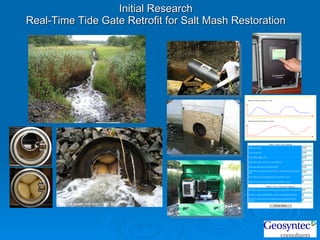
Initial Research Real-Time Tide Gate Retrofit for Salt Mash Restoration Patent # 60/850,600 and 11/869,927
Real-Time Control – EPA 2006
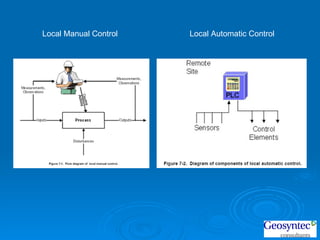
Local Manual Control Local Automatic Control
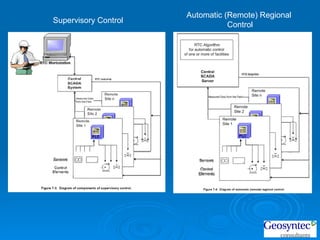
Supervisory Control Automatic (Remote) Regional  Control
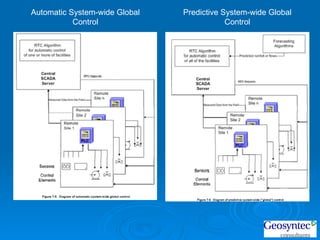
Automatic System-wide Global Control Predictive System-wide Global Control
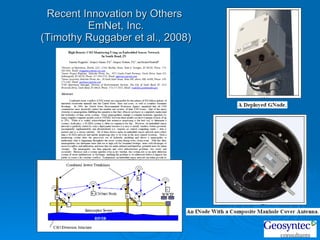
Recent Innovation by Others  EmNet, Inc. (Timothy Ruggaber et al., 2008)
Novel Optimization Strategies (Wan and Lemmon)
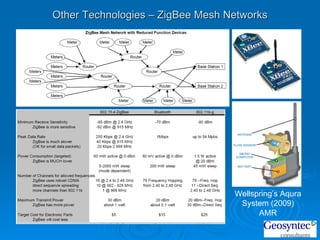
Other Technologies – ZigBee Mesh Networks Wellspring’s Aqura System (2009) AMR
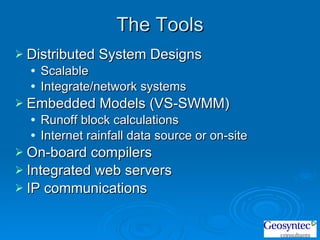
The Tools Distributed System Designs Scalable Integrate/network systems Embedded Models (VS-SWMM) Runoff block calculations  Internet rainfall data source or on-site On-board compilers Integrated web servers IP communications
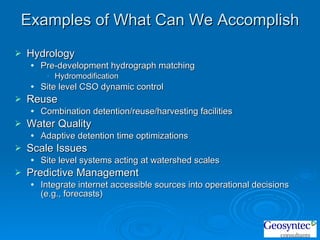
Examples of What Can We Accomplish Hydrology Pre-development hydrograph matching Hydromodification Site level CSO dynamic control Reuse Combination detention/reuse/harvesting facilities Water Quality Adaptive detention time optimizations Scale Issues Site level systems acting at watershed scales Predictive Management Integrate internet accessible sources into operational decisions (e.g., forecasts)
Hydromod
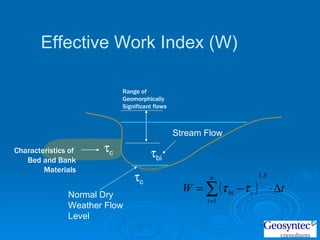
Effective Work Index (W) Range of Geomorphically Significant flows Characteristics of  Bed and Bank Materials  c  bi Stream Flow  c Normal Dry Weather Flow Level
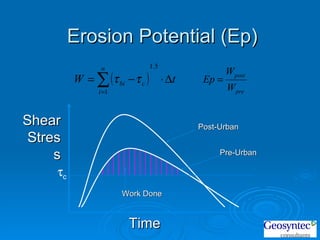
Erosion Potential (Ep) Post-Urban Pre-Urban Work Done Time Shear Stress  c
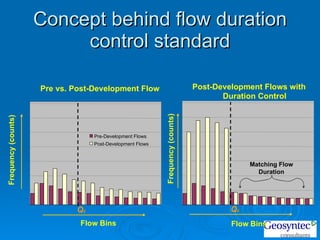
Concept behind flow duration control standard Pre vs. Post-Development Flow  Flow Bins Frequency (counts) Pre-Development Flows Post-Development Flows Post-Development Flows with  Duration Control  Flow   Bins Frequency (counts) Matching Flow Duration Q c Q c
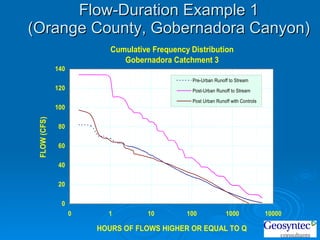
Flow-Duration Example 1 (Orange County, Gobernadora Canyon)
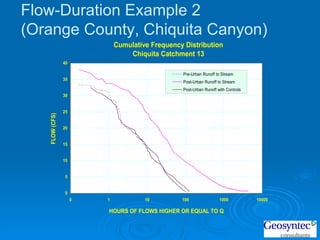
Flow-Duration Example 2  (Orange County, Chiquita Canyon)
What would be ideal? Hydrograph matching Even better - model matching Arbitrary watershed characteristics Embedded model Enables adaptive management VS-SWMM Use desktop Model input files Same algorithms Significant permitting advantages
    Advanced Rainwater Harvesting Systems
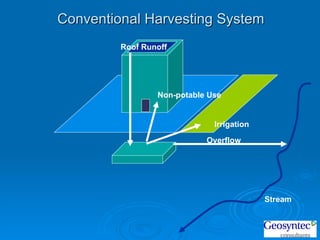
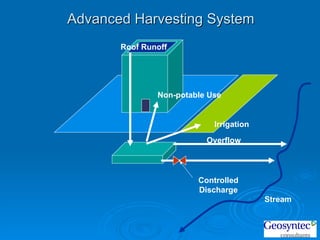
Onsite Rainwater Use Passive Rain barrel with drip hose Manually Controlled On-demand use  Active Conventionally Controlled (“Harvesting”) Connected as non-potable water supply or irrigation Float switch drawdown or siphon Advanced Harvesting Controlled Optimized to minimize bypass or achieve other goals
Advanced Harvesting Simplest Definition Drain storage in advance of predicted rainfall or other trigger
Conventional Harvesting System Roof Runoff Irrigation Stream Non-potable Use Overflow
Advanced Harvesting System Roof Runoff Irrigation Stream Controlled Discharge Non-potable Use Overflow
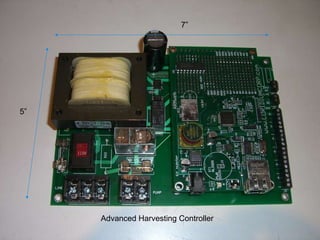
Hardware Design Processor/Controller 32-bit ARM 7  6 x 10 bit A/D I/O 1 x 10 bit D/A I/O 31 Digital I/O channels 5000 lines of code  10Mb Ethernet/IP Stack Built in web server Embedded compiler <1 W power consumption Cost <$40 Rapid prototyping of daughter boards Other Systems – Single Board Computers
Advanced Harvesting Controller 5” 7”
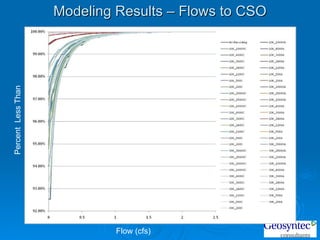
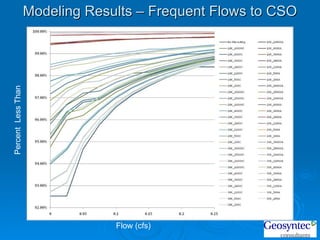
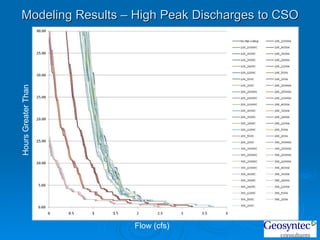
Summary of Findings Advanced harvesting systems function nearly identically to control storm water independent of water use rates. Reasonable conventional systems are relatively ineffective for mitigating storm water peak discharge impacts on CSOs.
Modeling Results – Flows to CSO Flow (cfs) Percent  Less Than
Modeling Results – Frequent Flows to CSO Flow (cfs) Percent  Less Than
Modeling Results – High Peak Discharges to CSO Flow (cfs) Hours Greater Than
Water Information Systems
Saw a need to integrate forecast information into distributed RTC systems. What is the least expensive means for getting data from the internet into the field for real time control?
Move digital information “off the screen into the physical environment, manifesting itself as subtle changes in form, movement, sound, color, smell, temperature, or light. Ambient displays are well suited as a means to keep users aware of… general states of large systems…”  (Ishii et al:, 1998)  Ambient Information Systems
“ Ambient displays have the ambitious goal of presenting information without distracting or burdening the user.” (Mankoff et al. 2003) Ambient Information Systems
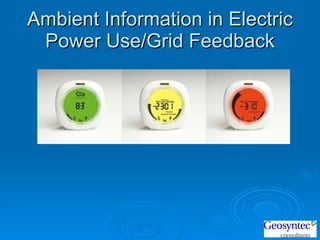
Ambient Information in Electric Power Use/Grid Feedback
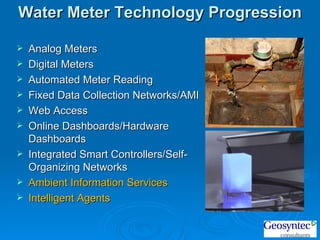
Analog Meters Digital Meters Automated Meter Reading Fixed Data Collection Networks/AMI Web Access Online Dashboards/Hardware Dashboards Integrated Smart Controllers/Self- Organizing Networks Ambient Information Services Intelligent Agents Water Meter Technology Progression
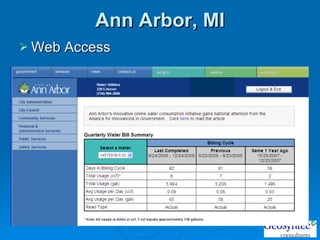
Ann Arbor, MI Web Access
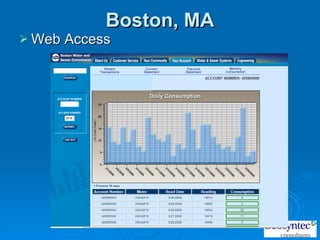
Boston, MA Web Access
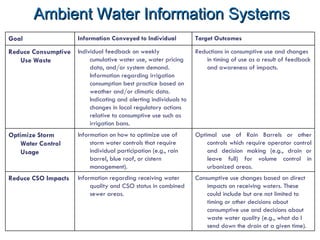
Ambient Water Information Systems Goal Information Conveyed to Individual Target Outcomes Reduce Consumptive Use Waste Individual feedback on weekly cumulative water use, water pricing data, and/or system demand. Information regarding irrigation consumption best practice based on weather and/or climatic data.  Indicating and alerting individuals to changes in local regulatory actions relative to consumptive use such as irrigation bans.  Reductions in consumptive use and changes in timing of use as a result of feedback and awareness of impacts. Optimize Storm Water Control Usage Information on how to optimize use of storm water controls that require individual participation (e.g., rain barrel, blue roof, or cistern management). Optimal use of Rain Barrels or other controls which require operator control and decision making (e.g., drain or leave full) for volume control in urbanized areas. Reduce CSO Impacts Information regarding receiving water quality and CSO status in combined sewer areas. Consumptive use changes based on direct impacts on receiving waters. These could include but are not limited to timing or other decisions about consumptive use and decisions about waste water quality (e.g., what do I send down the drain at a given time).
 
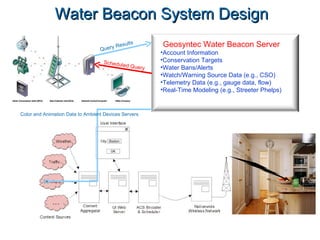
Water Beacon System Design Geosyntec Water Beacon Server Account Information Conservation Targets Water Bans/Alerts Watch/Warning Source Data (e.g., CSO) Telemetry Data (e.g., gauge data, flow) Real-Time Modeling (e.g., Streeter Phelps) Scheduled Query Query Results Color and Animation Data to Ambient Devices Servers
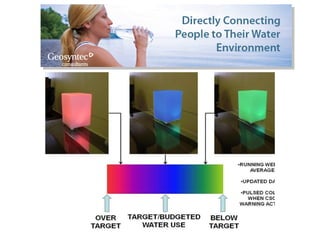
With Permission  - Copyright Ambient Devices © 2008
Thank You!

EPA Edison - Innovative Stormwater Real-Time Control

  • 1.
    WaterInformation Systems Innovative Applications of Distributed Real-Time Control and Ambient Information Systems for Storm Water and CSO Control What is Technically Feasible and Practicable Now? Marcus Quigley, P.E. (CA), D.WRE, CPESC Geosyntec Consultants Brookline, MA
  • 2.
    What roles canand should technology play in addressing specific urban water control problems? Can passive approaches achieve optimal solutions given the realities of the built environment? What can we do with dynamic intelligent controls? What is the state of the art? Where are we heading? The Big Picture
  • 3.
    Initial Research Real-TimeTide Gate Retrofit for Salt Mash Restoration Patent # 60/850,600 and 11/869,927
  • 4.
  • 5.
    Local Manual ControlLocal Automatic Control
  • 6.
    Supervisory Control Automatic(Remote) Regional Control
  • 7.
    Automatic System-wide GlobalControl Predictive System-wide Global Control
  • 8.
    Recent Innovation byOthers EmNet, Inc. (Timothy Ruggaber et al., 2008)
  • 9.
  • 10.
    Other Technologies –ZigBee Mesh Networks Wellspring’s Aqura System (2009) AMR
  • 11.
    The Tools DistributedSystem Designs Scalable Integrate/network systems Embedded Models (VS-SWMM) Runoff block calculations Internet rainfall data source or on-site On-board compilers Integrated web servers IP communications
  • 12.
    Examples of WhatCan We Accomplish Hydrology Pre-development hydrograph matching Hydromodification Site level CSO dynamic control Reuse Combination detention/reuse/harvesting facilities Water Quality Adaptive detention time optimizations Scale Issues Site level systems acting at watershed scales Predictive Management Integrate internet accessible sources into operational decisions (e.g., forecasts)
  • 13.
  • 14.
    Effective Work Index(W) Range of Geomorphically Significant flows Characteristics of Bed and Bank Materials  c  bi Stream Flow  c Normal Dry Weather Flow Level
  • 15.
    Erosion Potential (Ep)Post-Urban Pre-Urban Work Done Time Shear Stress  c
  • 16.
    Concept behind flowduration control standard Pre vs. Post-Development Flow Flow Bins Frequency (counts) Pre-Development Flows Post-Development Flows Post-Development Flows with Duration Control Flow Bins Frequency (counts) Matching Flow Duration Q c Q c
  • 17.
    Flow-Duration Example 1(Orange County, Gobernadora Canyon)
  • 18.
    Flow-Duration Example 2 (Orange County, Chiquita Canyon)
  • 19.
    What would beideal? Hydrograph matching Even better - model matching Arbitrary watershed characteristics Embedded model Enables adaptive management VS-SWMM Use desktop Model input files Same algorithms Significant permitting advantages
  • 20.
    Advanced Rainwater Harvesting Systems
  • 21.
    Onsite Rainwater UsePassive Rain barrel with drip hose Manually Controlled On-demand use Active Conventionally Controlled (“Harvesting”) Connected as non-potable water supply or irrigation Float switch drawdown or siphon Advanced Harvesting Controlled Optimized to minimize bypass or achieve other goals
  • 22.
    Advanced Harvesting SimplestDefinition Drain storage in advance of predicted rainfall or other trigger
  • 23.
    Conventional Harvesting SystemRoof Runoff Irrigation Stream Non-potable Use Overflow
  • 24.
    Advanced Harvesting SystemRoof Runoff Irrigation Stream Controlled Discharge Non-potable Use Overflow
  • 25.
    Hardware Design Processor/Controller32-bit ARM 7 6 x 10 bit A/D I/O 1 x 10 bit D/A I/O 31 Digital I/O channels 5000 lines of code 10Mb Ethernet/IP Stack Built in web server Embedded compiler <1 W power consumption Cost <$40 Rapid prototyping of daughter boards Other Systems – Single Board Computers
  • 26.
  • 27.
    Summary of FindingsAdvanced harvesting systems function nearly identically to control storm water independent of water use rates. Reasonable conventional systems are relatively ineffective for mitigating storm water peak discharge impacts on CSOs.
  • 28.
    Modeling Results –Flows to CSO Flow (cfs) Percent Less Than
  • 29.
    Modeling Results –Frequent Flows to CSO Flow (cfs) Percent Less Than
  • 30.
    Modeling Results –High Peak Discharges to CSO Flow (cfs) Hours Greater Than
  • 31.
  • 32.
    Saw a needto integrate forecast information into distributed RTC systems. What is the least expensive means for getting data from the internet into the field for real time control?
  • 33.
    Move digital information“off the screen into the physical environment, manifesting itself as subtle changes in form, movement, sound, color, smell, temperature, or light. Ambient displays are well suited as a means to keep users aware of… general states of large systems…” (Ishii et al:, 1998) Ambient Information Systems
  • 34.
    “ Ambient displayshave the ambitious goal of presenting information without distracting or burdening the user.” (Mankoff et al. 2003) Ambient Information Systems
  • 35.
    Ambient Information inElectric Power Use/Grid Feedback
  • 36.
    Analog Meters DigitalMeters Automated Meter Reading Fixed Data Collection Networks/AMI Web Access Online Dashboards/Hardware Dashboards Integrated Smart Controllers/Self- Organizing Networks Ambient Information Services Intelligent Agents Water Meter Technology Progression
  • 37.
    Ann Arbor, MIWeb Access
  • 38.
  • 39.
    Ambient Water InformationSystems Goal Information Conveyed to Individual Target Outcomes Reduce Consumptive Use Waste Individual feedback on weekly cumulative water use, water pricing data, and/or system demand. Information regarding irrigation consumption best practice based on weather and/or climatic data. Indicating and alerting individuals to changes in local regulatory actions relative to consumptive use such as irrigation bans. Reductions in consumptive use and changes in timing of use as a result of feedback and awareness of impacts. Optimize Storm Water Control Usage Information on how to optimize use of storm water controls that require individual participation (e.g., rain barrel, blue roof, or cistern management). Optimal use of Rain Barrels or other controls which require operator control and decision making (e.g., drain or leave full) for volume control in urbanized areas. Reduce CSO Impacts Information regarding receiving water quality and CSO status in combined sewer areas. Consumptive use changes based on direct impacts on receiving waters. These could include but are not limited to timing or other decisions about consumptive use and decisions about waste water quality (e.g., what do I send down the drain at a given time).
  • 40.
  • 41.
    Water Beacon SystemDesign Geosyntec Water Beacon Server Account Information Conservation Targets Water Bans/Alerts Watch/Warning Source Data (e.g., CSO) Telemetry Data (e.g., gauge data, flow) Real-Time Modeling (e.g., Streeter Phelps) Scheduled Query Query Results Color and Animation Data to Ambient Devices Servers
  • 42.
    With Permission - Copyright Ambient Devices © 2008
  • 43.
    With Permission - Copyright Ambient Devices © 2008
  • 44.
    With Permission - Copyright Ambient Devices © 2008
  • 45.
    With Permission - Copyright Ambient Devices © 2008
  • 46.