EnzymesBy: Chen Dewei (2P304)
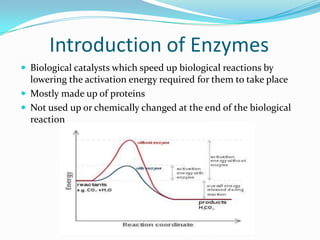
Introduction of EnzymesBiological catalysts which speed up biological reactions by lowering the activation energy required for them to take placeMostly made up of proteinsNot used up or chemically changed at the end of the biological reaction
Introduction of Enzymes (Cont.)Can be used again and againProduced only when neededCatalyse reversible reactionsE + S ⇌ ES -> EP ⇌ E + P (E= Enzyme, S= Substrate, P=Product)
Enzyme-Catalysed ReactionsAnabolic reactionsSynthesis of simpler substances into complex onesAmino acids -> Polypeptides -> ProteinsCatabolic reactionsBreakdown of complex substances into simpler onesHydrogen peroxide -> Oxygen + Water2H2O2-> O2 + 2H2OTo prevent the poisonous effect of hydrogen peroxide
Classification of EnzymesHydrolases (Hydrolysis)Catalyse hydrolytic reactions in the body (eg. Of digestion)Oxidoreductoases (Oxidation – Reduction)Transferases (Transfer groups of atoms)Lyases (Add/Remove atoms to/from a double bond)Isomerases (Rearrange atoms)Ligases (Combine molecules using ATP)
Types of HydrolasesCarbohydrasesDigest carbohydratesAmylase (starch)Maltase (maltose)Sucrase (sucrose)ProteasesDigest proteinsPepsinErepsinLipasesDigest fatsLipase
Characteristics of EnzymesSpeed up chemical reactionsSmall amount is needed to catalyse a reaction because enzymes can be used again and againThe shapes of the active sites make enzymes highly specific, meaning they can only interact with 1 type of substrate to form an enzyme-substrate complexPresented using the ‘lock and key’ hypothesis
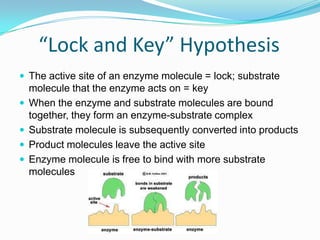
“Lock and Key” HypothesisThe active site of an enzyme molecule = lock; substrate molecule that the enzyme acts on = keyWhen the enzyme and substrate molecules are bound together, they form an enzyme-substrate complexSubstrate molecule is subsequently converted into productsProduct molecules leave the active siteEnzyme molecule is free to bind with more substrate molecules
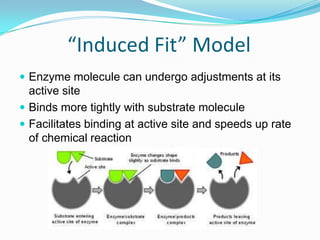
“Induced Fit” ModelEnzyme molecule can undergo adjustments at its active siteBinds more tightly with substrate moleculeFacilitates binding at active site and speeds up rate of chemical reaction
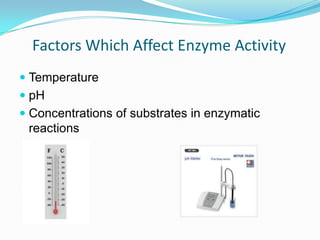
TemperaturepHConcentrations of substrates in enzymatic reactionsFactors Which Affect Enzyme Activity
TemperatureOptimum temperature – the temperature at which an enzyme is the most active (can catalyse the most number of reactions per second)Rise in temperature (till optimum) -> Increase in enzyme activityKinetic energy of particles increasesIncreases the chance of substrate molecules fitting into the active sites of enzyme moleculesMore rapid formation of enzyme-substrate complexesIncrease in formation of products
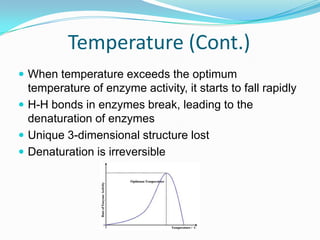
Temperature (Cont.)When temperature exceeds the optimum temperature of enzyme activity, it starts to fall rapidlyH-H bonds in enzymes break, leading to the denaturation of enzymesUnique 3-dimensional structure lostDenaturation is irreversible
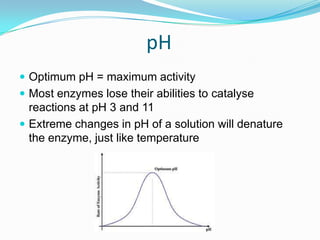
pHOptimum pH = maximum activityMost enzymes lose their abilities to catalyse reactions at pH 3 and 11Extreme changes in pH of a solution will denature the enzyme, just like temperature
pH (cont.)Slight changes in pH is enough to change the electrostatic charges of the active site of enzyme and substrateElectrostatic repulsion occursInhibits the formation of enzyme-substrate complex
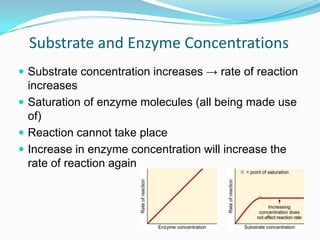
Substrate and Enzyme ConcentrationsSubstrate concentration increases -> rate of reaction increasesSaturation of enzyme molecules (all being made use of)Reaction cannot take placeIncrease in enzyme concentration will increase the rate of reaction again
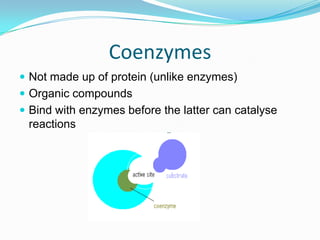
CoenzymesNot made up of protein (unlike enzymes)Organic compoundsBind with enzymes before the latter can catalyse reactions
Referenceshttp://users.rcn.com/jkimball.ma.ultranet/BiologyPages/E/Enzymes.htmlhttp://www.elmhurst.edu/~chm/vchembook/570enzymes.htmlhttp://www.mrothery.co.uk/studentswork/student%20presentations/Enzyme%20Activity.ppt
End of Presentation

Enzymes

  • 1.
  • 2.
    Introduction of EnzymesBiologicalcatalysts which speed up biological reactions by lowering the activation energy required for them to take placeMostly made up of proteinsNot used up or chemically changed at the end of the biological reaction
  • 3.
    Introduction of Enzymes(Cont.)Can be used again and againProduced only when neededCatalyse reversible reactionsE + S ⇌ ES -> EP ⇌ E + P (E= Enzyme, S= Substrate, P=Product)
  • 4.
    Enzyme-Catalysed ReactionsAnabolic reactionsSynthesisof simpler substances into complex onesAmino acids -> Polypeptides -> ProteinsCatabolic reactionsBreakdown of complex substances into simpler onesHydrogen peroxide -> Oxygen + Water2H2O2-> O2 + 2H2OTo prevent the poisonous effect of hydrogen peroxide
  • 5.
    Classification of EnzymesHydrolases(Hydrolysis)Catalyse hydrolytic reactions in the body (eg. Of digestion)Oxidoreductoases (Oxidation – Reduction)Transferases (Transfer groups of atoms)Lyases (Add/Remove atoms to/from a double bond)Isomerases (Rearrange atoms)Ligases (Combine molecules using ATP)
  • 6.
    Types of HydrolasesCarbohydrasesDigestcarbohydratesAmylase (starch)Maltase (maltose)Sucrase (sucrose)ProteasesDigest proteinsPepsinErepsinLipasesDigest fatsLipase
  • 7.
    Characteristics of EnzymesSpeedup chemical reactionsSmall amount is needed to catalyse a reaction because enzymes can be used again and againThe shapes of the active sites make enzymes highly specific, meaning they can only interact with 1 type of substrate to form an enzyme-substrate complexPresented using the ‘lock and key’ hypothesis
  • 8.
    “Lock and Key”HypothesisThe active site of an enzyme molecule = lock; substrate molecule that the enzyme acts on = keyWhen the enzyme and substrate molecules are bound together, they form an enzyme-substrate complexSubstrate molecule is subsequently converted into productsProduct molecules leave the active siteEnzyme molecule is free to bind with more substrate molecules
  • 9.
    “Induced Fit” ModelEnzymemolecule can undergo adjustments at its active siteBinds more tightly with substrate moleculeFacilitates binding at active site and speeds up rate of chemical reaction
  • 10.
    TemperaturepHConcentrations of substratesin enzymatic reactionsFactors Which Affect Enzyme Activity
  • 11.
    TemperatureOptimum temperature –the temperature at which an enzyme is the most active (can catalyse the most number of reactions per second)Rise in temperature (till optimum) -> Increase in enzyme activityKinetic energy of particles increasesIncreases the chance of substrate molecules fitting into the active sites of enzyme moleculesMore rapid formation of enzyme-substrate complexesIncrease in formation of products
  • 12.
    Temperature (Cont.)When temperatureexceeds the optimum temperature of enzyme activity, it starts to fall rapidlyH-H bonds in enzymes break, leading to the denaturation of enzymesUnique 3-dimensional structure lostDenaturation is irreversible
  • 13.
    pHOptimum pH =maximum activityMost enzymes lose their abilities to catalyse reactions at pH 3 and 11Extreme changes in pH of a solution will denature the enzyme, just like temperature
  • 14.
    pH (cont.)Slight changesin pH is enough to change the electrostatic charges of the active site of enzyme and substrateElectrostatic repulsion occursInhibits the formation of enzyme-substrate complex
  • 15.
    Substrate and EnzymeConcentrationsSubstrate concentration increases -> rate of reaction increasesSaturation of enzyme molecules (all being made use of)Reaction cannot take placeIncrease in enzyme concentration will increase the rate of reaction again
  • 16.
    CoenzymesNot made upof protein (unlike enzymes)Organic compoundsBind with enzymes before the latter can catalyse reactions
  • 17.
  • 18.