ENVIRONMENTAL ANALYSIS
OF
APPL
E
Presented by :
22102,22108,22113,22
114,
22115,22119,22120
ENVIRONMENTAL ANALYSIS REFERS TO THE PROCESS OF ASSESSING AND
EVALUATING VARIOUS EXTERNAL FACTORS THAT CAN AFFECT AN
ORGANIZATION, INDUSTRY, OR SITUATION. IT INVOLVES THE SYSTEMATIC
EXAMINATION AND UNDERSTANDING OF THE ENVIRONMENT IN WHICH AN
ENTITY OPERATES TO IDENTIFY POTENTIAL OPPORTUNITIES, THREATS,
CHALLENGES, AND TRENDS THAT COULD IMPACT ITS OPERATIONS,
STRATEGIES, AND OVERALL PERFORMANCE.
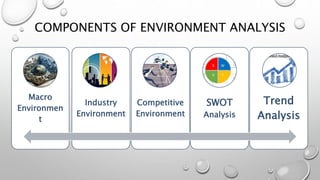
COMPONENTS OF ENVIRONMENT ANALYSIS
Macro
Environmen
t
Industry
Environment
Competitive
Environment
SWOT
Analysis
Trend
Analysis
ENVIRONMENTAL ANALYSIS OF APPLE
ABOUT COMPANY
• APPLE INC. IS AN AMERICAN MULTINATIONAL TECHNOLOGY COMPANY
HEADQUARTERED IN CALIFORNIA.
MISSION STATEMENT
“To bringing the best user experience to customers through
innovative hardware, software, and services.”
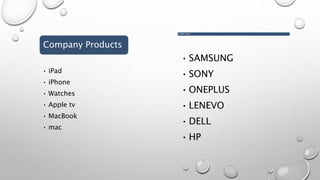
Company Products
• iPad
• iPhone
• Watches
• Apple tv
• MacBook
• mac
COMPETITORS
• SAMSUNG
• SONY
• ONEPLUS
• LENEVO
• DELL
• HP
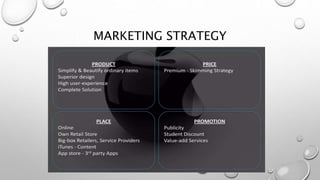
MARKETING STRATEGY
PORTER'S FIVE FORCES ANALYSIS
MACBOOK AND MAC IPHONE ,IPAD
Threat of new entry Low
[Unique design
Strong brand value]
Low
[Differentiation
Unique designs]
Threat of Substitute Moderate
[Smartphones doing pc’s
work]
Low
[unique software]
Buyer power Low
[Increasing switching cost]
Low
[Increasing switching cost]
Supplier Power Moderate
[high order value]
Moderate
[High order value]
Threat of Rivalry High
[Large white box players]
High
[Large competitors firm]
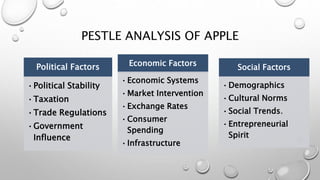
PESTLE ANALYSIS OF APPLE
Political Factors
•Political Stability
•Taxation
•Trade Regulations
•Government
Influence
Economic Factors
•Economic Systems
•Market Intervention
•Exchange Rates
•Consumer
Spending
•Infrastructure
Social Factors
•Demographics
•Cultural Norms
•Social Trends.
•Entrepreneurial
Spirit
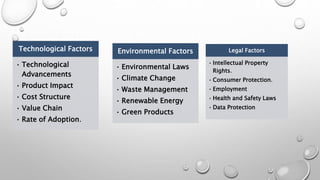
Technological Factors
• Technological
Advancements
• Product Impact
• Cost Structure
• Value Chain
• Rate of Adoption.
Environmental Factors
• Environmental Laws
• Climate Change
• Waste Management
• Renewable Energy
• Green Products
Legal Factors
• Intellectual Property
Rights.
• Consumer Protection.
• Employment
• Health and Safety Laws
• Data Protection
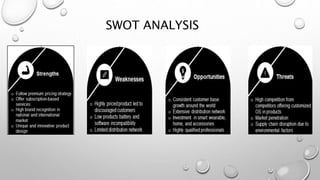
SWOT ANALYSIS
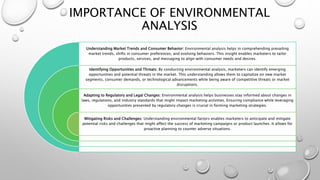
IMPORTANCE OF ENVIRONMENTAL
ANALYSIS
Understanding Market Trends and Consumer Behavior: Environmental analysis helps in comprehending prevailing
market trends, shifts in consumer preferences, and evolving behaviors. This insight enables marketers to tailor
products, services, and messaging to align with consumer needs and desires.
Identifying Opportunities and Threats: By conducting environmental analysis, marketers can identify emerging
opportunities and potential threats in the market. This understanding allows them to capitalize on new market
segments, consumer demands, or technological advancements while being aware of competitive threats or market
disruptions.
Adapting to Regulatory and Legal Changes: Environmental analysis helps businesses stay informed about changes in
laws, regulations, and industry standards that might impact marketing activities. Ensuring compliance while leveraging
opportunities presented by regulatory changes is crucial in forming marketing strategies.
Mitigating Risks and Challenges: Understanding environmental factors enables marketers to anticipate and mitigate
potential risks and challenges that might affect the success of marketing campaigns or product launches. It allows for
proactive planning to counter adverse situations.
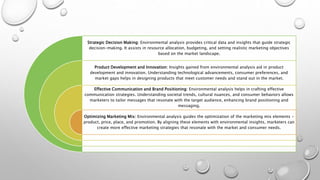
Strategic Decision Making: Environmental analysis provides critical data and insights that guide strategic
decision-making. It assists in resource allocation, budgeting, and setting realistic marketing objectives
based on the market landscape.
Product Development and Innovation: Insights gained from environmental analysis aid in product
development and innovation. Understanding technological advancements, consumer preferences, and
market gaps helps in designing products that meet customer needs and stand out in the market.
Effective Communication and Brand Positioning: Environmental analysis helps in crafting effective
communication strategies. Understanding societal trends, cultural nuances, and consumer behaviors allows
marketers to tailor messages that resonate with the target audience, enhancing brand positioning and
messaging.
Optimizing Marketing Mix: Environmental analysis guides the optimization of the marketing mix elements -
product, price, place, and promotion. By aligning these elements with environmental insights, marketers can
create more effective marketing strategies that resonate with the market and consumer needs.
Environmental analysis (1).pptx

Environmental analysis (1).pptx

  • 1.
    ENVIRONMENTAL ANALYSIS OF APPL E Presented by: 22102,22108,22113,22 114, 22115,22119,22120
  • 2.
    ENVIRONMENTAL ANALYSIS REFERSTO THE PROCESS OF ASSESSING AND EVALUATING VARIOUS EXTERNAL FACTORS THAT CAN AFFECT AN ORGANIZATION, INDUSTRY, OR SITUATION. IT INVOLVES THE SYSTEMATIC EXAMINATION AND UNDERSTANDING OF THE ENVIRONMENT IN WHICH AN ENTITY OPERATES TO IDENTIFY POTENTIAL OPPORTUNITIES, THREATS, CHALLENGES, AND TRENDS THAT COULD IMPACT ITS OPERATIONS, STRATEGIES, AND OVERALL PERFORMANCE.
  • 3.
    COMPONENTS OF ENVIRONMENTANALYSIS Macro Environmen t Industry Environment Competitive Environment SWOT Analysis Trend Analysis
  • 4.
    ENVIRONMENTAL ANALYSIS OFAPPLE ABOUT COMPANY • APPLE INC. IS AN AMERICAN MULTINATIONAL TECHNOLOGY COMPANY HEADQUARTERED IN CALIFORNIA. MISSION STATEMENT “To bringing the best user experience to customers through innovative hardware, software, and services.”
  • 5.
    Company Products • iPad •iPhone • Watches • Apple tv • MacBook • mac COMPETITORS • SAMSUNG • SONY • ONEPLUS • LENEVO • DELL • HP
  • 6.
  • 7.
    PORTER'S FIVE FORCESANALYSIS MACBOOK AND MAC IPHONE ,IPAD Threat of new entry Low [Unique design Strong brand value] Low [Differentiation Unique designs] Threat of Substitute Moderate [Smartphones doing pc’s work] Low [unique software] Buyer power Low [Increasing switching cost] Low [Increasing switching cost] Supplier Power Moderate [high order value] Moderate [High order value] Threat of Rivalry High [Large white box players] High [Large competitors firm]
  • 8.
    PESTLE ANALYSIS OFAPPLE Political Factors •Political Stability •Taxation •Trade Regulations •Government Influence Economic Factors •Economic Systems •Market Intervention •Exchange Rates •Consumer Spending •Infrastructure Social Factors •Demographics •Cultural Norms •Social Trends. •Entrepreneurial Spirit
  • 9.
    Technological Factors • Technological Advancements •Product Impact • Cost Structure • Value Chain • Rate of Adoption. Environmental Factors • Environmental Laws • Climate Change • Waste Management • Renewable Energy • Green Products Legal Factors • Intellectual Property Rights. • Consumer Protection. • Employment • Health and Safety Laws • Data Protection
  • 10.
  • 11.
    IMPORTANCE OF ENVIRONMENTAL ANALYSIS UnderstandingMarket Trends and Consumer Behavior: Environmental analysis helps in comprehending prevailing market trends, shifts in consumer preferences, and evolving behaviors. This insight enables marketers to tailor products, services, and messaging to align with consumer needs and desires. Identifying Opportunities and Threats: By conducting environmental analysis, marketers can identify emerging opportunities and potential threats in the market. This understanding allows them to capitalize on new market segments, consumer demands, or technological advancements while being aware of competitive threats or market disruptions. Adapting to Regulatory and Legal Changes: Environmental analysis helps businesses stay informed about changes in laws, regulations, and industry standards that might impact marketing activities. Ensuring compliance while leveraging opportunities presented by regulatory changes is crucial in forming marketing strategies. Mitigating Risks and Challenges: Understanding environmental factors enables marketers to anticipate and mitigate potential risks and challenges that might affect the success of marketing campaigns or product launches. It allows for proactive planning to counter adverse situations.
  • 12.
    Strategic Decision Making:Environmental analysis provides critical data and insights that guide strategic decision-making. It assists in resource allocation, budgeting, and setting realistic marketing objectives based on the market landscape. Product Development and Innovation: Insights gained from environmental analysis aid in product development and innovation. Understanding technological advancements, consumer preferences, and market gaps helps in designing products that meet customer needs and stand out in the market. Effective Communication and Brand Positioning: Environmental analysis helps in crafting effective communication strategies. Understanding societal trends, cultural nuances, and consumer behaviors allows marketers to tailor messages that resonate with the target audience, enhancing brand positioning and messaging. Optimizing Marketing Mix: Environmental analysis guides the optimization of the marketing mix elements - product, price, place, and promotion. By aligning these elements with environmental insights, marketers can create more effective marketing strategies that resonate with the market and consumer needs.