Environmental Screening
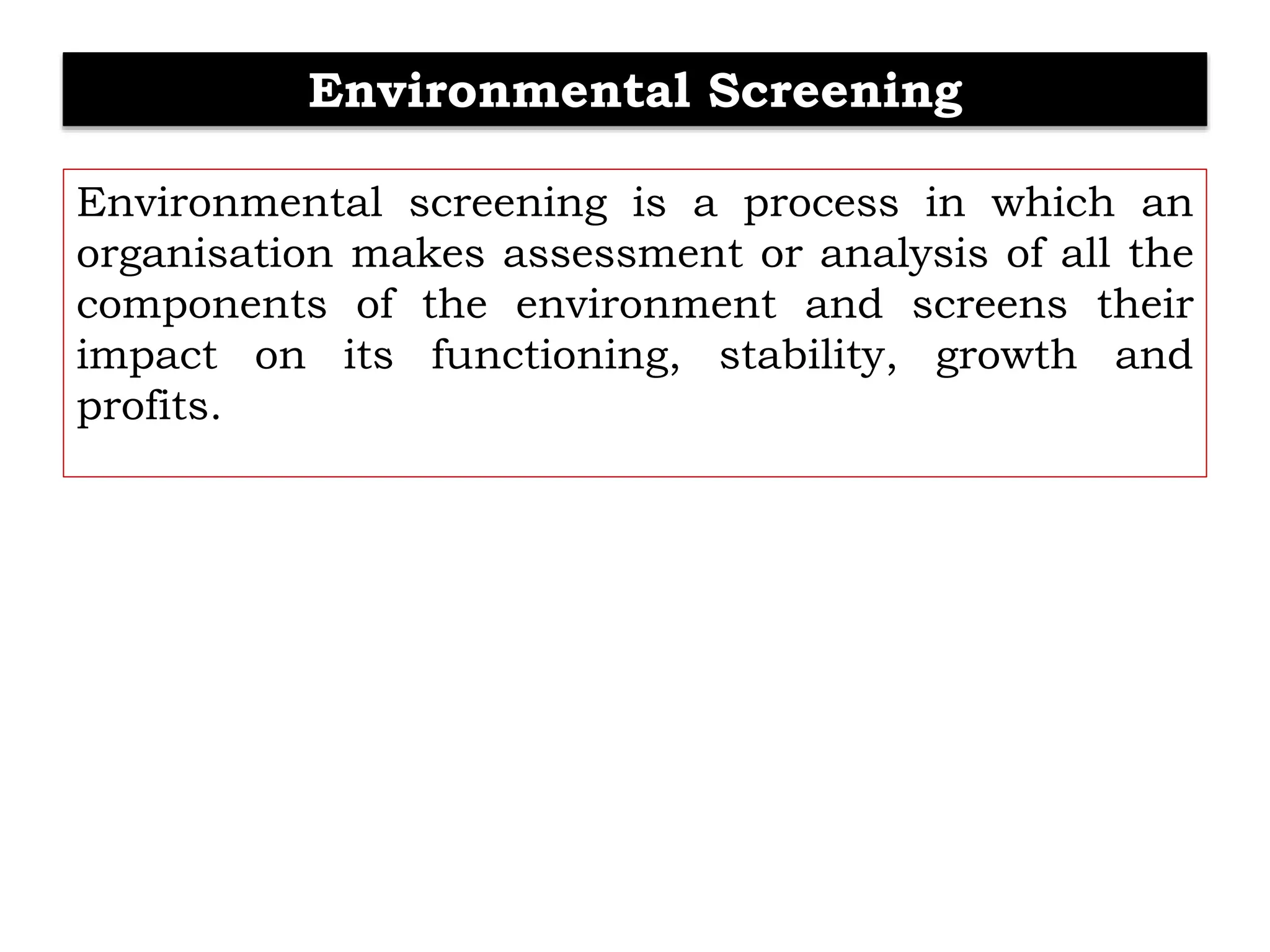
Environmental screening is a process in which an
organisation makes assessment or analysis of all the
components of the environment and screens their
impact on its functioning, stability, growth and
profits.
Importance of effective environmental screening
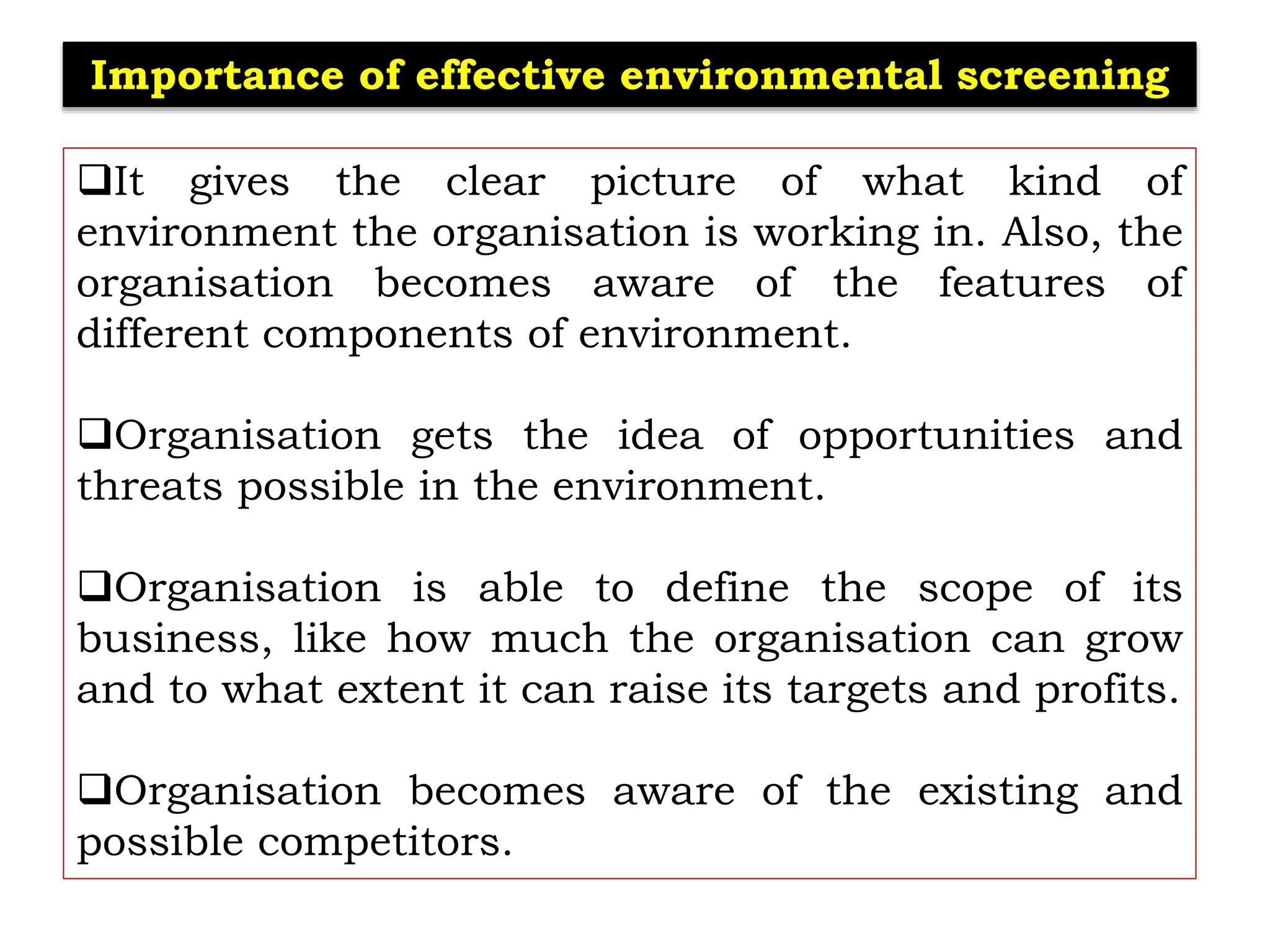
It gives the clear picture of what kind of
environment the organisation is working in. Also, the
organisation becomes aware of the features of
different components of environment.
Organisation gets the idea of opportunities and
threats possible in the environment.
Organisation is able to define the scope of its
business, like how much the organisation can grow
and to what extent it can raise its targets and profits.
Organisation becomes aware of the existing and
possible competitors.
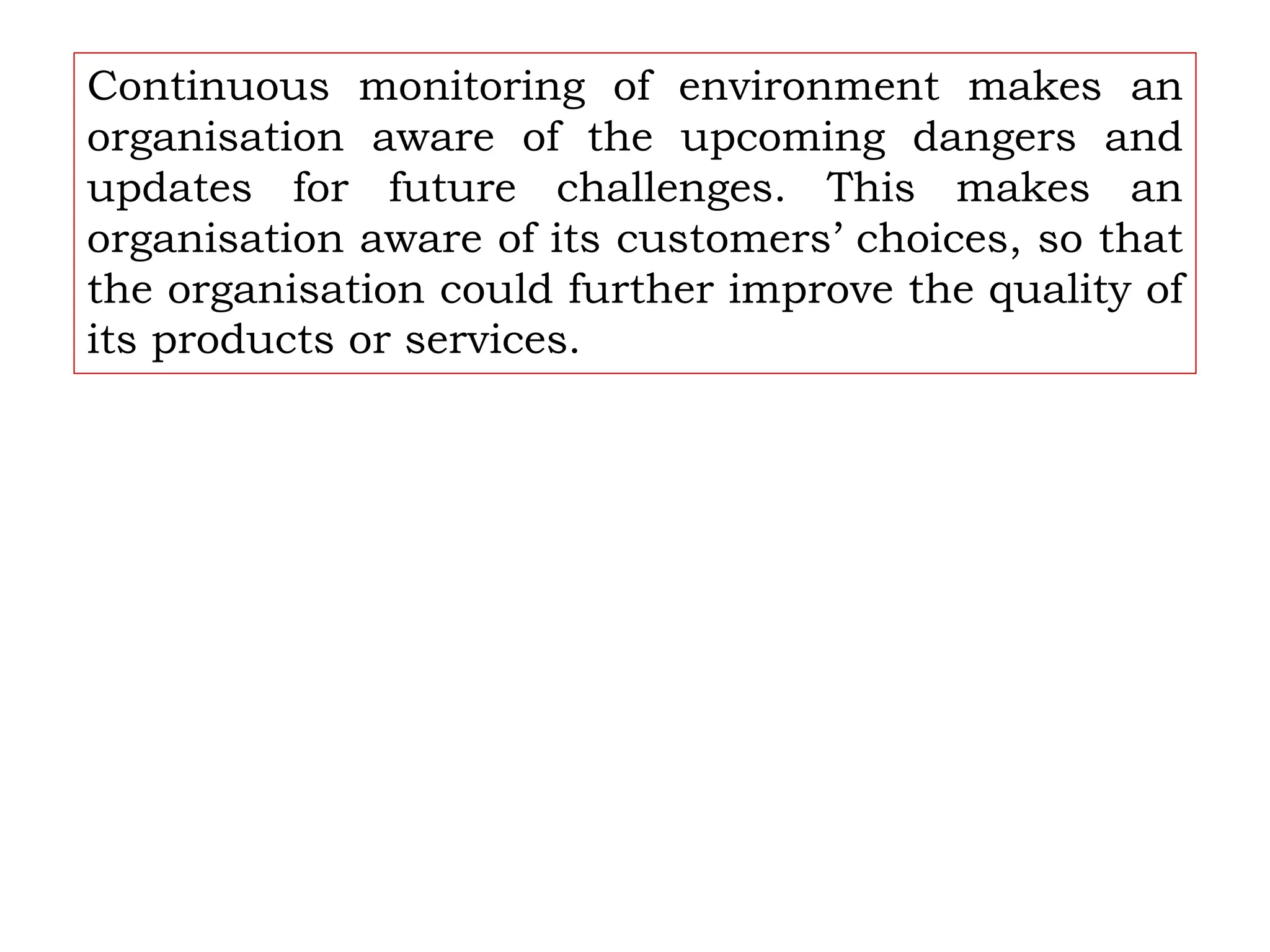
Continuous monitoring of environment makes an
organisation aware of the upcoming dangers and
updates for future challenges. This makes an
organisation aware of its customers’ choices, so that
the organisation could further improve the quality of
its products or services.
Business Environmental Analysis
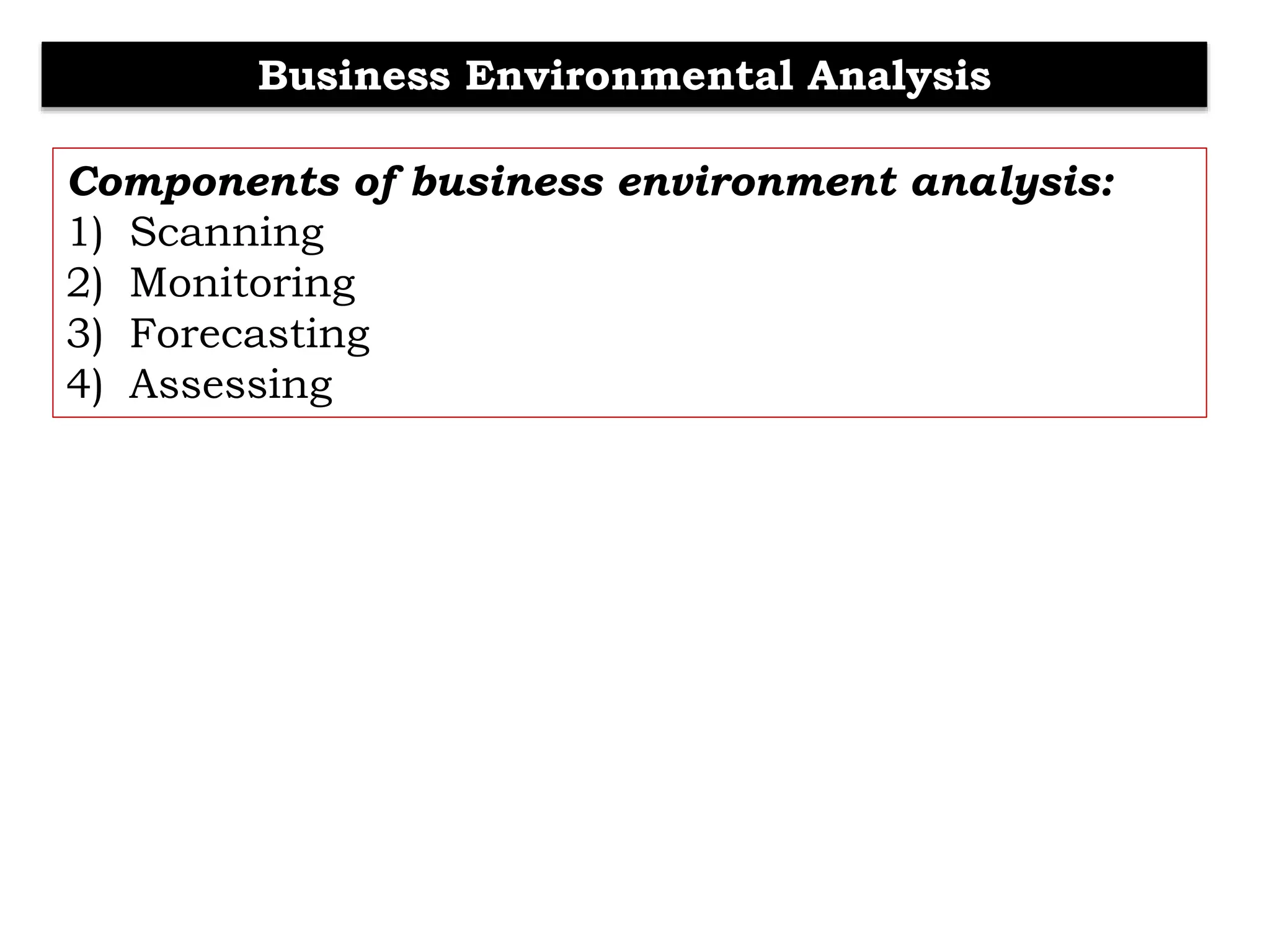
Components of business environment analysis:
1) Scanning
2) Monitoring
3) Forecasting
4) Assessing
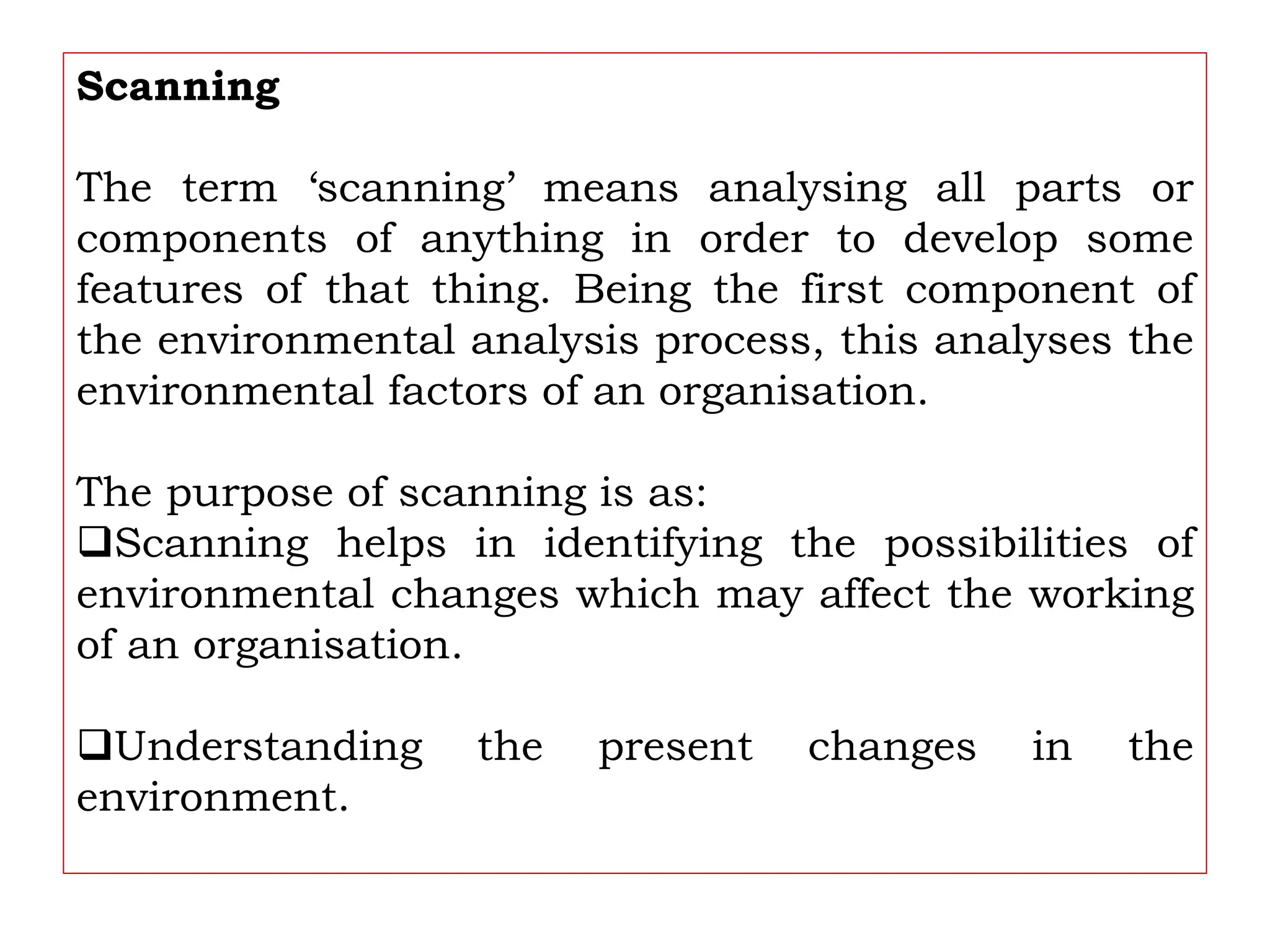
Scanning
The term ‘scanning’ means analysing all parts or
components of anything in order to develop some
features of that thing. Being the first component of
the environmental analysis process, this analyses the
environmental factors of an organisation.
The purpose of scanning is as:
Scanning helps in identifying the possibilities of
environmental changes which may affect the working
of an organisation.
Understanding the present changes in the
environment.
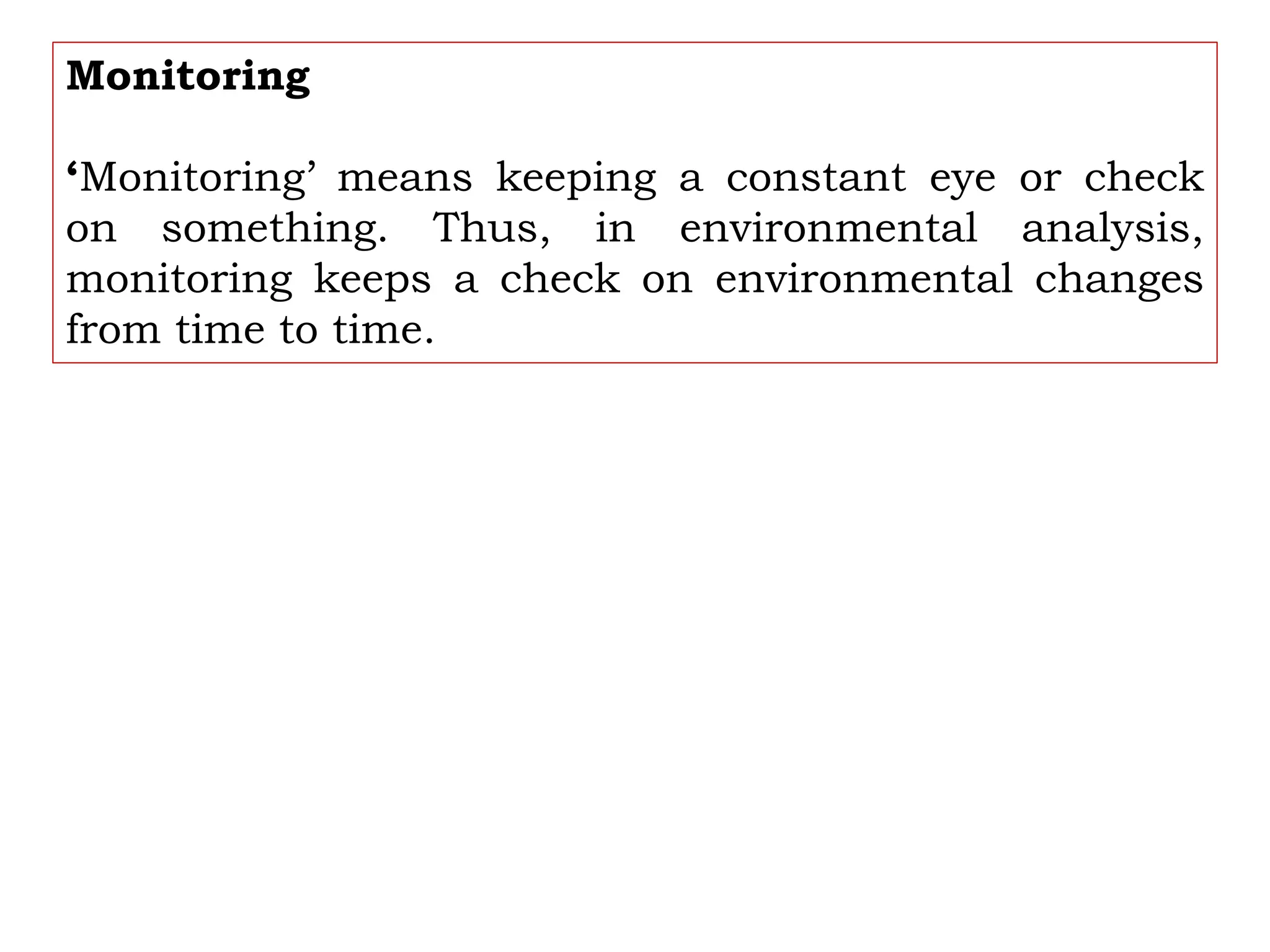
Monitoring
‘Monitoring’ means keeping a constant eye or check
on something. Thus, in environmental analysis,
monitoring keeps a check on environmental changes
from time to time.
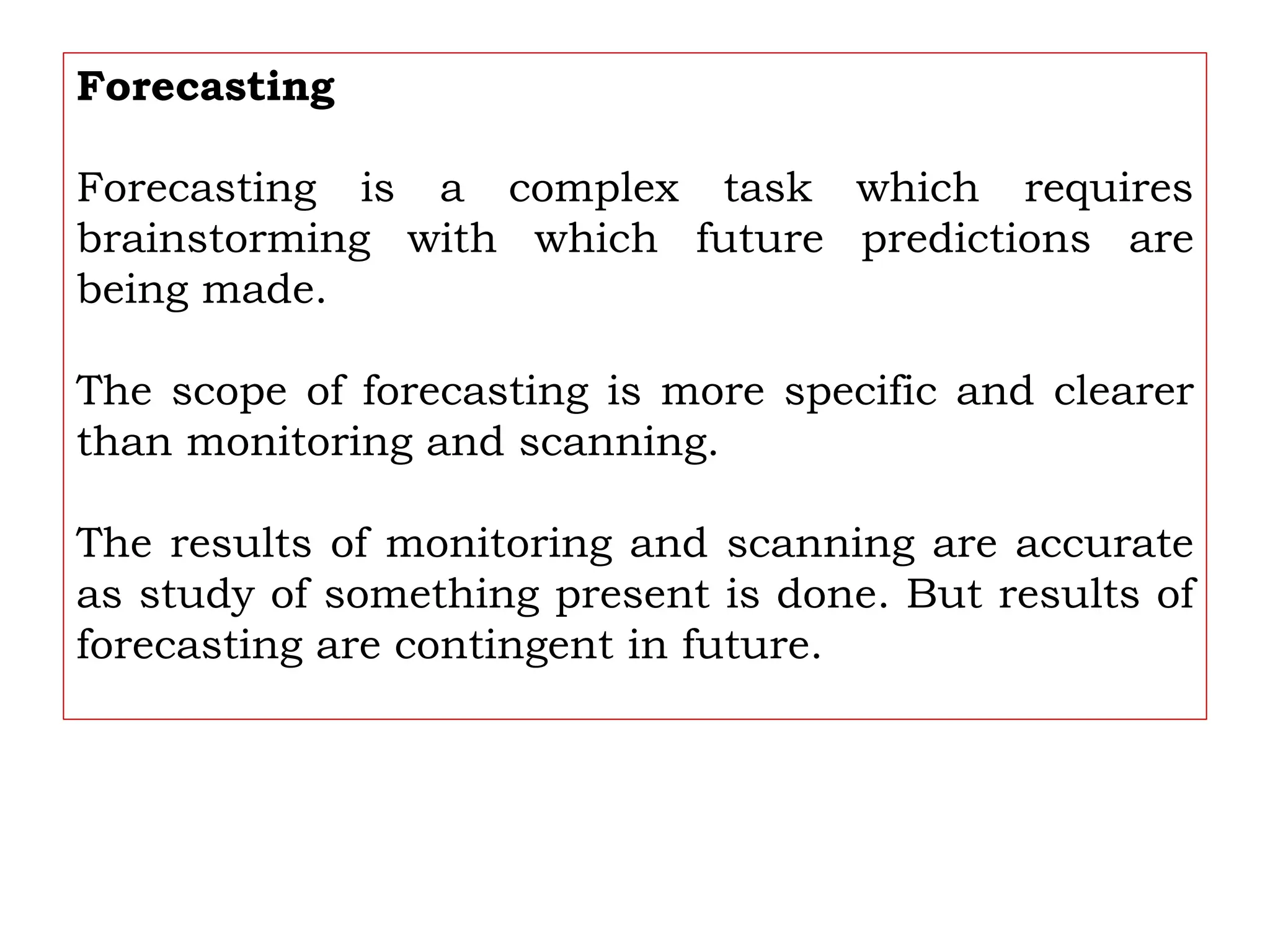
Forecasting
Forecasting is a complex task which requires
brainstorming with which future predictions are
being made.
The scope of forecasting is more specific and clearer
than monitoring and scanning.
The results of monitoring and scanning are accurate
as study of something present is done. But results of
forecasting are contingent in future.
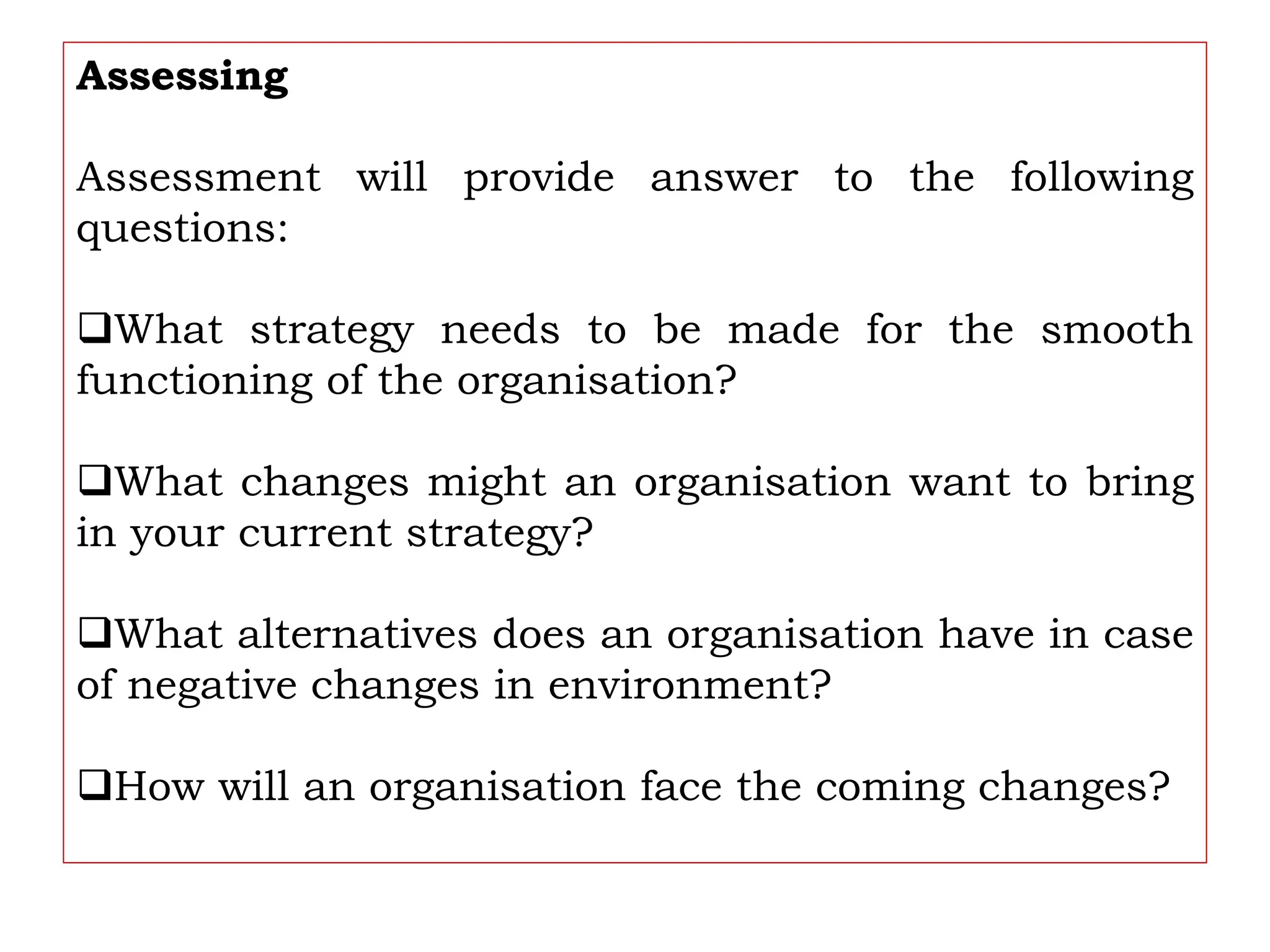
Assessing
Assessment will provide answer to the following
questions:
What strategy needs to be made for the smooth
functioning of the organisation?
What changes might an organisation want to bring
in your current strategy?
What alternatives does an organisation have in case
of negative changes in environment?
How will an organisation face the coming changes?
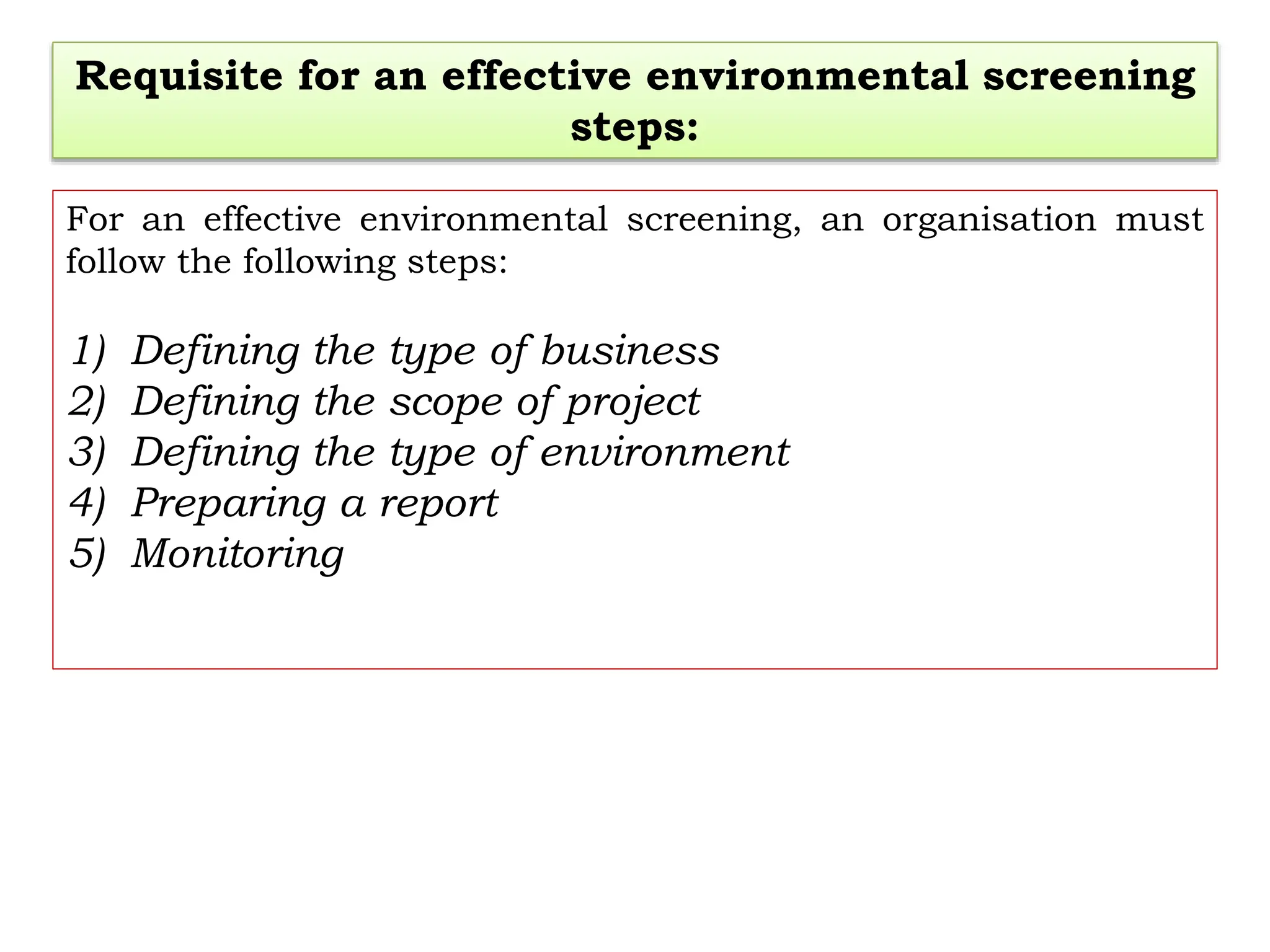
Requisite for an effective environmental screening
steps:
For an effective environmental screening, an organisation must
follow the following steps:
1) Defining the type of business
2) Defining the scope of project
3) Defining the type of environment
4) Preparing a report
5) Monitoring
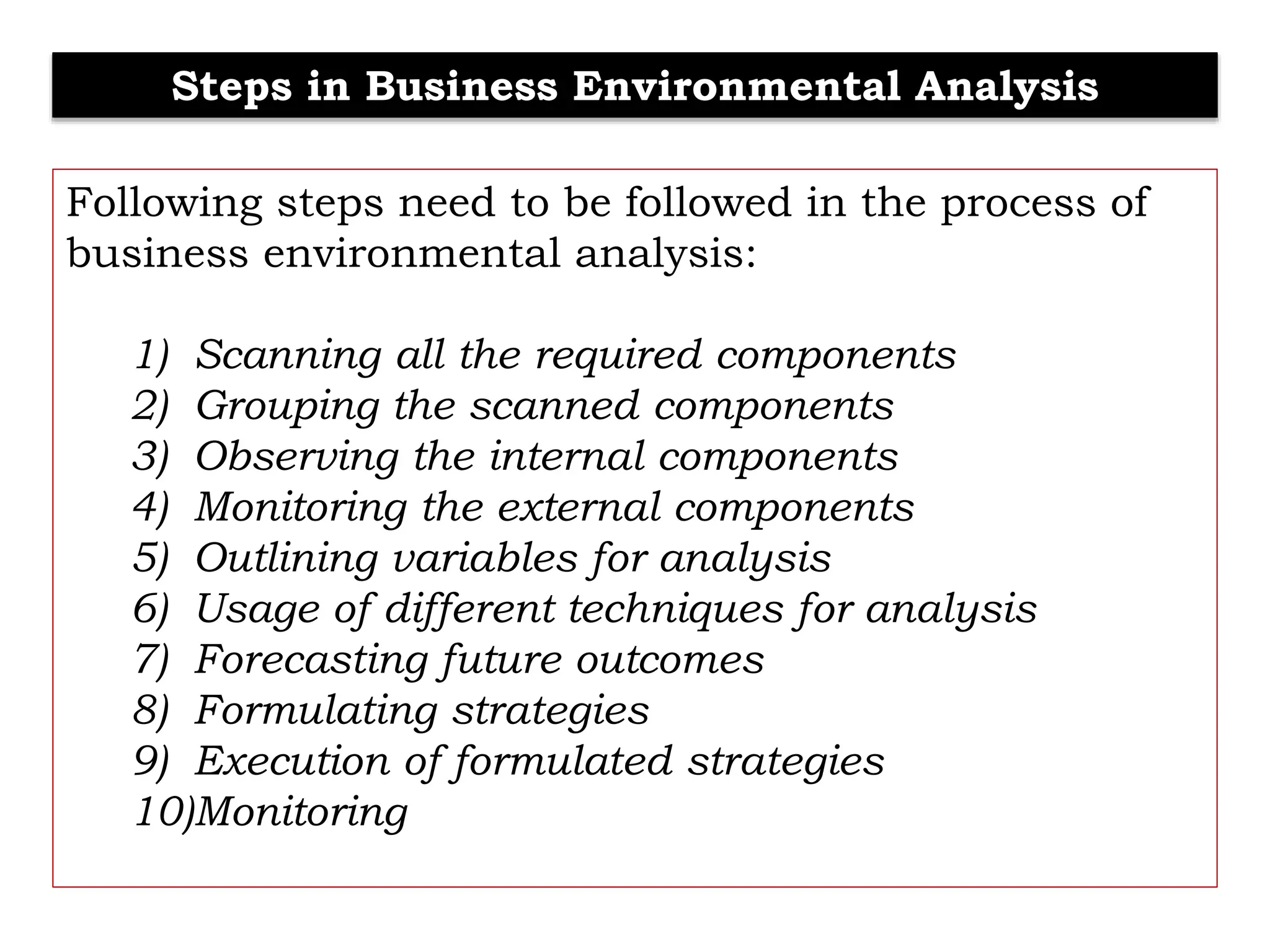
Steps in Business Environmental Analysis
Following steps need to be followed in the process of
business environmental analysis:
1) Scanning all the required components
2) Grouping the scanned components
3) Observing the internal components
4) Monitoring the external components
5) Outlining variables for analysis
6) Usage of different techniques for analysis
7) Forecasting future outcomes
8) Formulating strategies
9) Execution of formulated strategies
10)Monitoring
Techniques of Environmental Scanning

Environmental Screening functions and working

  • 1.
    Environmental Screening Environmental screeningis a process in which an organisation makes assessment or analysis of all the components of the environment and screens their impact on its functioning, stability, growth and profits.
  • 2.
    Importance of effectiveenvironmental screening It gives the clear picture of what kind of environment the organisation is working in. Also, the organisation becomes aware of the features of different components of environment. Organisation gets the idea of opportunities and threats possible in the environment. Organisation is able to define the scope of its business, like how much the organisation can grow and to what extent it can raise its targets and profits. Organisation becomes aware of the existing and possible competitors.
  • 3.
    Continuous monitoring ofenvironment makes an organisation aware of the upcoming dangers and updates for future challenges. This makes an organisation aware of its customers’ choices, so that the organisation could further improve the quality of its products or services.
  • 4.
    Business Environmental Analysis Componentsof business environment analysis: 1) Scanning 2) Monitoring 3) Forecasting 4) Assessing
  • 5.
    Scanning The term ‘scanning’means analysing all parts or components of anything in order to develop some features of that thing. Being the first component of the environmental analysis process, this analyses the environmental factors of an organisation. The purpose of scanning is as: Scanning helps in identifying the possibilities of environmental changes which may affect the working of an organisation. Understanding the present changes in the environment.
  • 6.
    Monitoring ‘Monitoring’ means keepinga constant eye or check on something. Thus, in environmental analysis, monitoring keeps a check on environmental changes from time to time.
  • 7.
    Forecasting Forecasting is acomplex task which requires brainstorming with which future predictions are being made. The scope of forecasting is more specific and clearer than monitoring and scanning. The results of monitoring and scanning are accurate as study of something present is done. But results of forecasting are contingent in future.
  • 8.
    Assessing Assessment will provideanswer to the following questions: What strategy needs to be made for the smooth functioning of the organisation? What changes might an organisation want to bring in your current strategy? What alternatives does an organisation have in case of negative changes in environment? How will an organisation face the coming changes?
  • 9.
    Requisite for aneffective environmental screening steps: For an effective environmental screening, an organisation must follow the following steps: 1) Defining the type of business 2) Defining the scope of project 3) Defining the type of environment 4) Preparing a report 5) Monitoring
  • 10.
    Steps in BusinessEnvironmental Analysis Following steps need to be followed in the process of business environmental analysis: 1) Scanning all the required components 2) Grouping the scanned components 3) Observing the internal components 4) Monitoring the external components 5) Outlining variables for analysis 6) Usage of different techniques for analysis 7) Forecasting future outcomes 8) Formulating strategies 9) Execution of formulated strategies 10)Monitoring
  • 11.