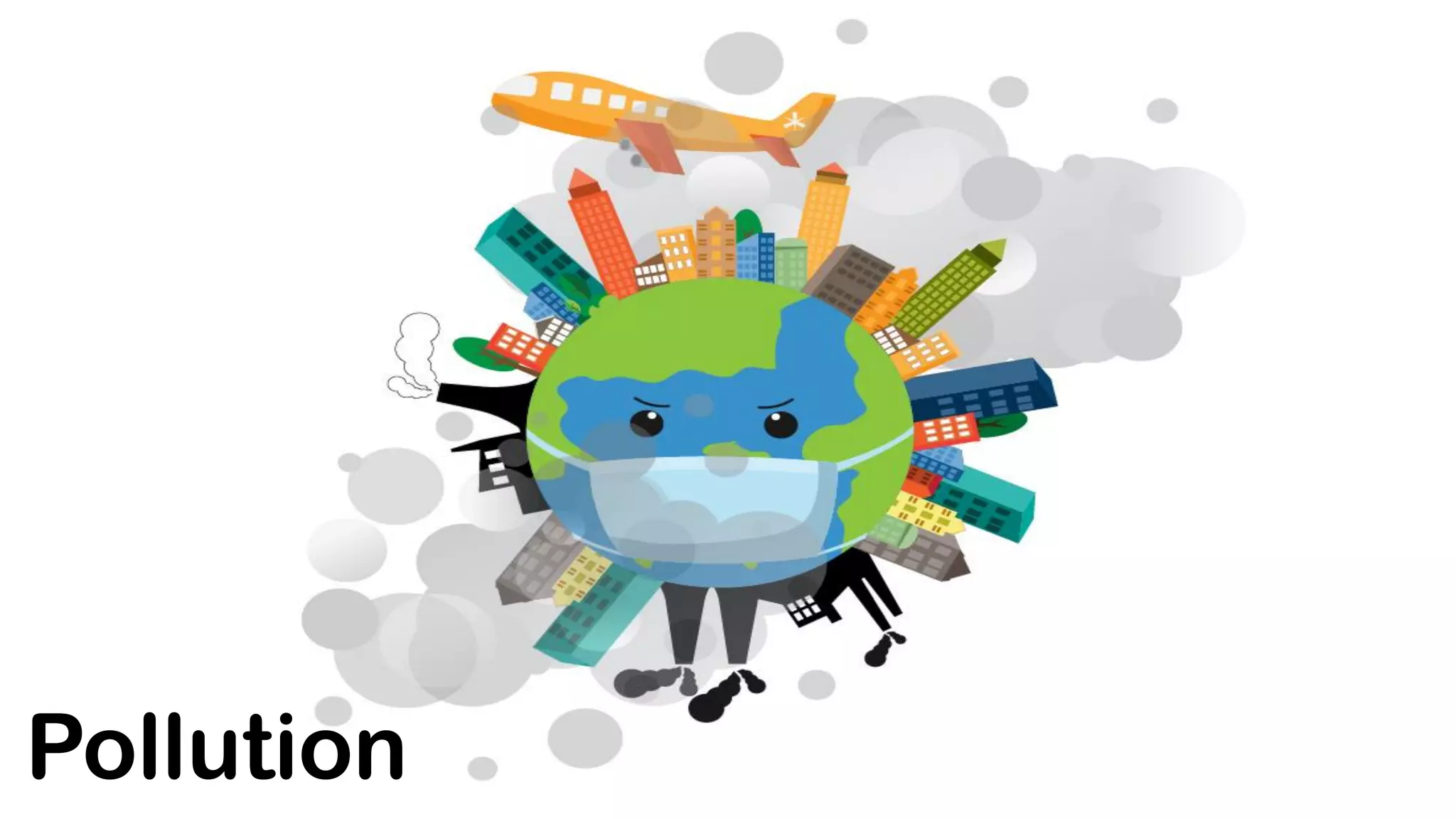
Pollution
What is Pollution?
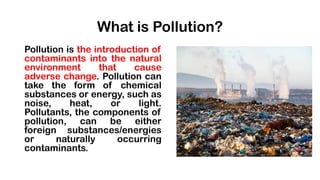
Pollution is the introduction of
contaminants into the natural
environment that cause
adverse change. Pollution can
take the form of chemical
substances or energy, such as
noise, heat, or light.
Pollutants, the components of
pollution, can be either
foreign substances/energies
or naturally occurring
contaminants.
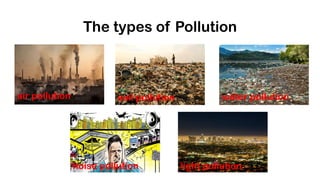
The types of Pollution
air pollution water pollutionsoil pollution
light pollutionnoise pollution
Air Pollution
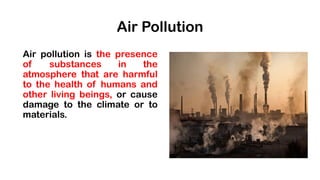
Air pollution is the presence
of substances in the
atmosphere that are harmful
to the health of humans and
other living beings, or cause
damage to the climate or to
materials.
Soil Pollution
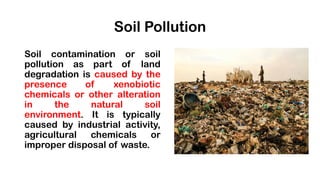
Soil contamination or soil
pollution as part of land
degradation is caused by the
presence of xenobiotic
chemicals or other alteration
in the natural soil
environment. It is typically
caused by industrial activity,
agricultural chemicals or
improper disposal of waste.
Water Pollution
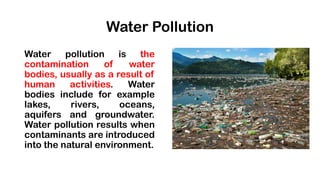
Water pollution is the
contamination of water
bodies, usually as a result of
human activities. Water
bodies include for example
lakes, rivers, oceans,
aquifers and groundwater.
Water pollution results when
contaminants are introduced
into the natural environment.
Noise Pollution
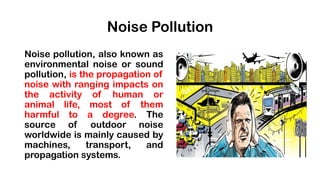
Noise pollution, also known as
environmental noise or sound
pollution, is the propagation of
noise with ranging impacts on
the activity of human or
animal life, most of them
harmful to a degree. The
source of outdoor noise
worldwide is mainly caused by
machines, transport, and
propagation systems.
Light Pollution
Light pollution is the
presence of anthropogenic
and artificial light in the night
environment. It is
exacerbated by excessive,
misdirected or obtrusive use
of light, but even carefully
used light fundamentally
alters natural conditions.
Causes of the 5 Types of Pollution
AIR POLLUTION
• The burning of fossil fuels for
transportation and electricity
• The fumes from car exhausts
contain dangerous gases and
particulates including
hydrocarbons, nitrogen oxides,
and carbon monoxide
• Ammonia is the primary air
pollutant that comes from
agricultural activities. Ammonia
enters the air as a gas from
concentrated livestock waste and
fields that are over fertilized
WATER POLLUTION
• Nutrient pollution is caused by
wastewater, sewage, and fertilizers
• Pesticides and herbicides applied to
crops and residential areas
concentrate in the soil and are
carried to the groundwater by
rainwater and runoff
• Industrial waste is one of the main
causes of water pollution, by
creating primary and secondary
pollutants including sulphur, lead
and mercury, nitrates and
phosphates, and oil spills
Causes of the 5 Types of Pollution
Land & Soil Pollution
• Polluted through leaking underground septic
tanks, sewage systems, the leaching of
harmful substances from landfill, and direct
discharge of waste water by industrial
plants into rivers and oceans
• Rain and flooding can bring pollutants from
other already polluted lands to soil at other
locations
• Over-farming and over-grazing by
agricultural activities causes the soil to lose
its nutrient value and structure causing soil
degradation
• Landfills can leach harmful substances into
the soil and water ways and create very bad
smells, and breeding grounds for rodents
that transmit diseases
Noise & Light Pollution
• Noise is considered an
environmental pollutant caused by
household sources, social events,
commercial and industrial activities,
and transportation
• Light pollution is caused by the
prolonged and excessive use of
artificial lights at night that can
cause health problems in humans
and disrupt natural cycles, including
wildlife activities. Sources of light
pollution include electronic
billboards, night sports grounds,
street and car lights, city parks,
public places, airports, and
residential areas
Effects of the 5 Types of Pollution
Air Pollution
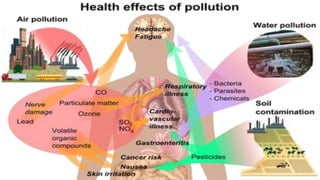
• High levels of air pollution can cause an increased risk of
heart attack, wheezing, coughing, and breathing
problems, and irritation of the eyes, nose, and throat. Air
pollution can also cause worsening of existing heart
problems, asthma, and other lung complications
• Like humans, animals can suffer from a number of health
problems due to air pollution, including birth defects,
reproductive failure, and diseases
• Acid rain contains high levels of nitric and sulfuric acids
that are created by oxides and sulfur oxides released into
the air by the burning of fossil fuels. Acid rain damages
trees and acidifies soils and water bodies, making the
water too acidic for fish and other aquatic life
• The release of man-made compounds including
hydrochlorofluorocarbons, chlorofluorocarbons, and
halons formerly used as coolants, foaming agents,
pesticides, solvents, aerosol propellants, and fire-
extinguishers are depleting the ozone. The ozone layer in
the stratosphere forms a protective layer that reflects
harmful ultraviolet rays back into space that would
otherwise destroy animal and plant life
Water Pollution
• The effects of water pollution depend on which
chemicals are being dumped where. Bodies of water that
are near urbanized areas tend to be heavily polluted by
dumbing of garbage and chemicals, both legally and
illegally, by industrial plants, health centers, and
individuals
• Nutrient pollution can cause toxic algal blooms in
drinking water sources that create toxins that kill fish and
other aquatic animals. Direct exposure to this toxic alga
causes serious health problems in humans including
neurological effects, respiratory problems, stomach and
liver illness, and rashes
• A consequential problem is created when disinfectants
used to treat drinking water reach water polluted with
toxic algae, they react creating dioxins. Dioxins are
extremely harmful chemical compounds that have been
linked with reproductive and development problems, and
even cancer
Effects of the 5 Types of Pollution
Land & Soil Pollution
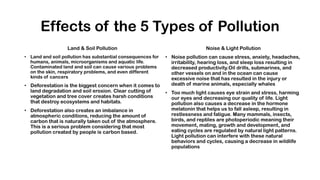
• Land and soil pollution has substantial consequences for
humans, animals, microorganisms and aquatic life.
Contaminated land and soil can cause various problems
on the skin, respiratory problems, and even different
kinds of cancers
• Deforestation is the biggest concern when it comes to
land degradation and soil erosion. Clear cutting of
vegetation and tree cover creates harsh conditions
that destroy ecosystems and habitats.
• Deforestation also creates an imbalance in
atmospheric conditions, reducing the amount of
carbon that is naturally taken out of the atmosphere.
This is a serious problem considering that most
pollution created by people is carbon based.
Noise & Light Pollution
• Noise pollution can cause stress, anxiety, headaches,
irritability, hearing loss, and sleep loss resulting in
decreased productivity.Oil drills, submarines, and
other vessels on and in the ocean can cause
excessive noise that has resulted in the injury or
death of marine animals, especially whales
• Too much light causes eye strain and stress, harming
our eyes and decreasing our quality of life. Light
pollution also causes a decrease in the hormone
melatonin that helps us to fall asleep, resulting in
restlessness and fatigue. Many mammals, insects,
birds, and reptiles are photoperiodic meaning their
movement, mating, growth and development, and
eating cycles are regulated by natural light patterns.
Light pollution can interfere with these natural
behaviors and cycles, causing a decrease in wildlife
populations
10 ways to PREVENT the Pollution
1. MAKE SUSTAINABLE TRANSPORTATION CHOICES
2. USE THE CARPOOL
3. GET YOUR CAR REGULARLY MAINTAINED AND DRIVE SAFELY
4. CHOOSE AN ELECTRIC OR HYBRID CAR
5. MAKE SUSTAINABLE FOOD CHOICES
6. MAKE SUSTAINABLE ENERGY CHOICES
7. TRY CHANGING YOUR ENERGY SOURCES
8. REDUCE, REUSE, AND RECYCLE
9. USE ENVIRONMENTALLY FRIENDLY CHEMICALS
10. GET INVOLVED AND EDUCATE OTHERS
THANK YOU!Presented by: Joseph B. Rivera
11 – St. Nicholas de Tolentino
I.C.T

ICT - Pollution

  • 1.
  • 2.
    What is Pollution? Pollutionis the introduction of contaminants into the natural environment that cause adverse change. Pollution can take the form of chemical substances or energy, such as noise, heat, or light. Pollutants, the components of pollution, can be either foreign substances/energies or naturally occurring contaminants.
  • 3.
    The types ofPollution air pollution water pollutionsoil pollution light pollutionnoise pollution
  • 4.
    Air Pollution Air pollutionis the presence of substances in the atmosphere that are harmful to the health of humans and other living beings, or cause damage to the climate or to materials.
  • 5.
    Soil Pollution Soil contaminationor soil pollution as part of land degradation is caused by the presence of xenobiotic chemicals or other alteration in the natural soil environment. It is typically caused by industrial activity, agricultural chemicals or improper disposal of waste.
  • 6.
    Water Pollution Water pollutionis the contamination of water bodies, usually as a result of human activities. Water bodies include for example lakes, rivers, oceans, aquifers and groundwater. Water pollution results when contaminants are introduced into the natural environment.
  • 7.
    Noise Pollution Noise pollution,also known as environmental noise or sound pollution, is the propagation of noise with ranging impacts on the activity of human or animal life, most of them harmful to a degree. The source of outdoor noise worldwide is mainly caused by machines, transport, and propagation systems.
  • 8.
    Light Pollution Light pollutionis the presence of anthropogenic and artificial light in the night environment. It is exacerbated by excessive, misdirected or obtrusive use of light, but even carefully used light fundamentally alters natural conditions.
  • 9.
    Causes of the5 Types of Pollution AIR POLLUTION • The burning of fossil fuels for transportation and electricity • The fumes from car exhausts contain dangerous gases and particulates including hydrocarbons, nitrogen oxides, and carbon monoxide • Ammonia is the primary air pollutant that comes from agricultural activities. Ammonia enters the air as a gas from concentrated livestock waste and fields that are over fertilized WATER POLLUTION • Nutrient pollution is caused by wastewater, sewage, and fertilizers • Pesticides and herbicides applied to crops and residential areas concentrate in the soil and are carried to the groundwater by rainwater and runoff • Industrial waste is one of the main causes of water pollution, by creating primary and secondary pollutants including sulphur, lead and mercury, nitrates and phosphates, and oil spills
  • 10.
    Causes of the5 Types of Pollution Land & Soil Pollution • Polluted through leaking underground septic tanks, sewage systems, the leaching of harmful substances from landfill, and direct discharge of waste water by industrial plants into rivers and oceans • Rain and flooding can bring pollutants from other already polluted lands to soil at other locations • Over-farming and over-grazing by agricultural activities causes the soil to lose its nutrient value and structure causing soil degradation • Landfills can leach harmful substances into the soil and water ways and create very bad smells, and breeding grounds for rodents that transmit diseases Noise & Light Pollution • Noise is considered an environmental pollutant caused by household sources, social events, commercial and industrial activities, and transportation • Light pollution is caused by the prolonged and excessive use of artificial lights at night that can cause health problems in humans and disrupt natural cycles, including wildlife activities. Sources of light pollution include electronic billboards, night sports grounds, street and car lights, city parks, public places, airports, and residential areas
  • 11.
    Effects of the5 Types of Pollution Air Pollution • High levels of air pollution can cause an increased risk of heart attack, wheezing, coughing, and breathing problems, and irritation of the eyes, nose, and throat. Air pollution can also cause worsening of existing heart problems, asthma, and other lung complications • Like humans, animals can suffer from a number of health problems due to air pollution, including birth defects, reproductive failure, and diseases • Acid rain contains high levels of nitric and sulfuric acids that are created by oxides and sulfur oxides released into the air by the burning of fossil fuels. Acid rain damages trees and acidifies soils and water bodies, making the water too acidic for fish and other aquatic life • The release of man-made compounds including hydrochlorofluorocarbons, chlorofluorocarbons, and halons formerly used as coolants, foaming agents, pesticides, solvents, aerosol propellants, and fire- extinguishers are depleting the ozone. The ozone layer in the stratosphere forms a protective layer that reflects harmful ultraviolet rays back into space that would otherwise destroy animal and plant life Water Pollution • The effects of water pollution depend on which chemicals are being dumped where. Bodies of water that are near urbanized areas tend to be heavily polluted by dumbing of garbage and chemicals, both legally and illegally, by industrial plants, health centers, and individuals • Nutrient pollution can cause toxic algal blooms in drinking water sources that create toxins that kill fish and other aquatic animals. Direct exposure to this toxic alga causes serious health problems in humans including neurological effects, respiratory problems, stomach and liver illness, and rashes • A consequential problem is created when disinfectants used to treat drinking water reach water polluted with toxic algae, they react creating dioxins. Dioxins are extremely harmful chemical compounds that have been linked with reproductive and development problems, and even cancer
  • 12.
    Effects of the5 Types of Pollution Land & Soil Pollution • Land and soil pollution has substantial consequences for humans, animals, microorganisms and aquatic life. Contaminated land and soil can cause various problems on the skin, respiratory problems, and even different kinds of cancers • Deforestation is the biggest concern when it comes to land degradation and soil erosion. Clear cutting of vegetation and tree cover creates harsh conditions that destroy ecosystems and habitats. • Deforestation also creates an imbalance in atmospheric conditions, reducing the amount of carbon that is naturally taken out of the atmosphere. This is a serious problem considering that most pollution created by people is carbon based. Noise & Light Pollution • Noise pollution can cause stress, anxiety, headaches, irritability, hearing loss, and sleep loss resulting in decreased productivity.Oil drills, submarines, and other vessels on and in the ocean can cause excessive noise that has resulted in the injury or death of marine animals, especially whales • Too much light causes eye strain and stress, harming our eyes and decreasing our quality of life. Light pollution also causes a decrease in the hormone melatonin that helps us to fall asleep, resulting in restlessness and fatigue. Many mammals, insects, birds, and reptiles are photoperiodic meaning their movement, mating, growth and development, and eating cycles are regulated by natural light patterns. Light pollution can interfere with these natural behaviors and cycles, causing a decrease in wildlife populations
  • 14.
    10 ways toPREVENT the Pollution 1. MAKE SUSTAINABLE TRANSPORTATION CHOICES 2. USE THE CARPOOL 3. GET YOUR CAR REGULARLY MAINTAINED AND DRIVE SAFELY 4. CHOOSE AN ELECTRIC OR HYBRID CAR 5. MAKE SUSTAINABLE FOOD CHOICES 6. MAKE SUSTAINABLE ENERGY CHOICES 7. TRY CHANGING YOUR ENERGY SOURCES 8. REDUCE, REUSE, AND RECYCLE 9. USE ENVIRONMENTALLY FRIENDLY CHEMICALS 10. GET INVOLVED AND EDUCATE OTHERS
  • 15.
    THANK YOU!Presented by:Joseph B. Rivera 11 – St. Nicholas de Tolentino I.C.T