Environmental pollution is one of the most serious problems facing humanity and other
life forms on our planet today. Environmental pollution is defined as “the contamination
of the physical and biological components of the earth/atmosphere system to such an
extent that normal environmental processes are adversely affected.” Pollutants can be
naturally occurring substances or energies, but they are considered contaminants when in
excess of natural levels. Any use of natural resources at a rate higher than nature’s
capacity to restore itself can result in pollution of air, water, and land.
Environment Pollution
The 7 Different Types of Pollution
A. Water Pollution.
B. Air Pollution.
C. Soil Pollution.
D. Radioactive Pollution.
E. Noise Pollution.
F. Light Pollution
Water Pollution :Involves any contaminated water, whether from
chemical, particulate, or bacterial matter that degrades the water's
quality and purity. Water pollution can occur in oceans, rivers, lakes,
and underground reservoirs, and as different water sources flow
together through the water cycle the pollution can spread.
Causes of water pollution include:
increased sediment from soil erosion
improper waste disposal and littering
leaching of soil pollution into water supplies
organic material decay in water supplies
the effects of water pollution include decreasing the quantity of
drinkable water available, lowering water supplies for crop irrigation,
and impacting fish and wildlife populations that require water of a
certain purity for survival.
Water Pollution
Air is usually comprised of 78% nitrogen, 21% oxygen, 0.9% oxide gases and
0.1% inert gases. When the air becomes contaminated with other elements
such as poisonous gases or particles, it can cause serious problems to human
health. The most common causes of air pollution include partially combusted
exhaust gases, poisonous gases which are a by-product of industry including
sulphur dioxide and carbon monoxide, and carcinogenic gases released
through the burning of plastic, rubber and wood. Particle contamination can
also occur when a substance such as friable asbestos fibres are disturbed and
released into the air. Air pollution works either by poisoning living organisms
which breathe it in, or by disturbing the atmosphere and mixing with their air
and clouds to cause acid rain. In the case of particle contamination, particles
such as asbestos fibres become airborne and are inhaled, irritating the
respiratory system and causing health conditions.
Air Pollution
Soil can be stripped of it’s nutrients (and therefore fertility) by a
number of chemical agents and when this occurs, it is known as
soil pollution. Common causes of soil pollution include
pesticides, insecticides, agricultural chemicals, industrial waste,
and radioactive waste. Plants depend on the nutrients in the
soil in order to grow, but many of these chemical compounds
absorb the nitrogenous compounds present in the soil which
the plants depend on. Aside from making an area barren, soil
pollution is a common cause of erosion, as plants and other
living organisms play an important role in keeping the soil held
together. When they die off, the soil splits and begins to erode.
The heavy metals which get into the soil via chemical pollution
also have a devastating effect on the ecosystem as they alter
the metabolism of microorganisms and arthropods living in the
soil. These heavy metals become more concentrated as they
move up the food chain, often wiping out predator or consumer
species at the apex.
Soil Pollution
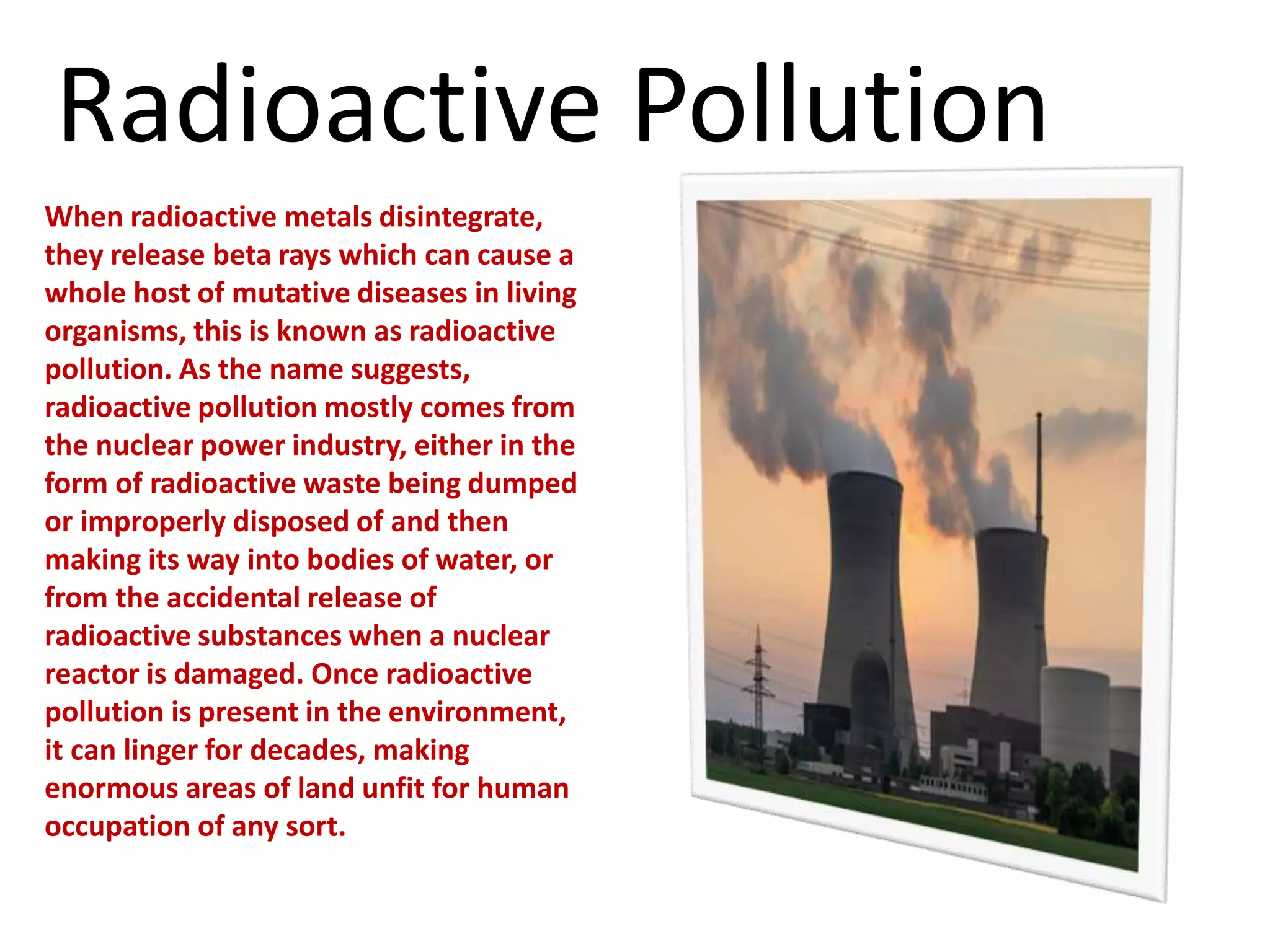
When radioactive metals disintegrate,
they release beta rays which can cause a
whole host of mutative diseases in living
organisms, this is known as radioactive
pollution. As the name suggests,
radioactive pollution mostly comes from
the nuclear power industry, either in the
form of radioactive waste being dumped
or improperly disposed of and then
making its way into bodies of water, or
from the accidental release of
radioactive substances when a nuclear
reactor is damaged. Once radioactive
pollution is present in the environment,
it can linger for decades, making
enormous areas of land unfit for human
occupation of any sort.
Radioactive Pollution
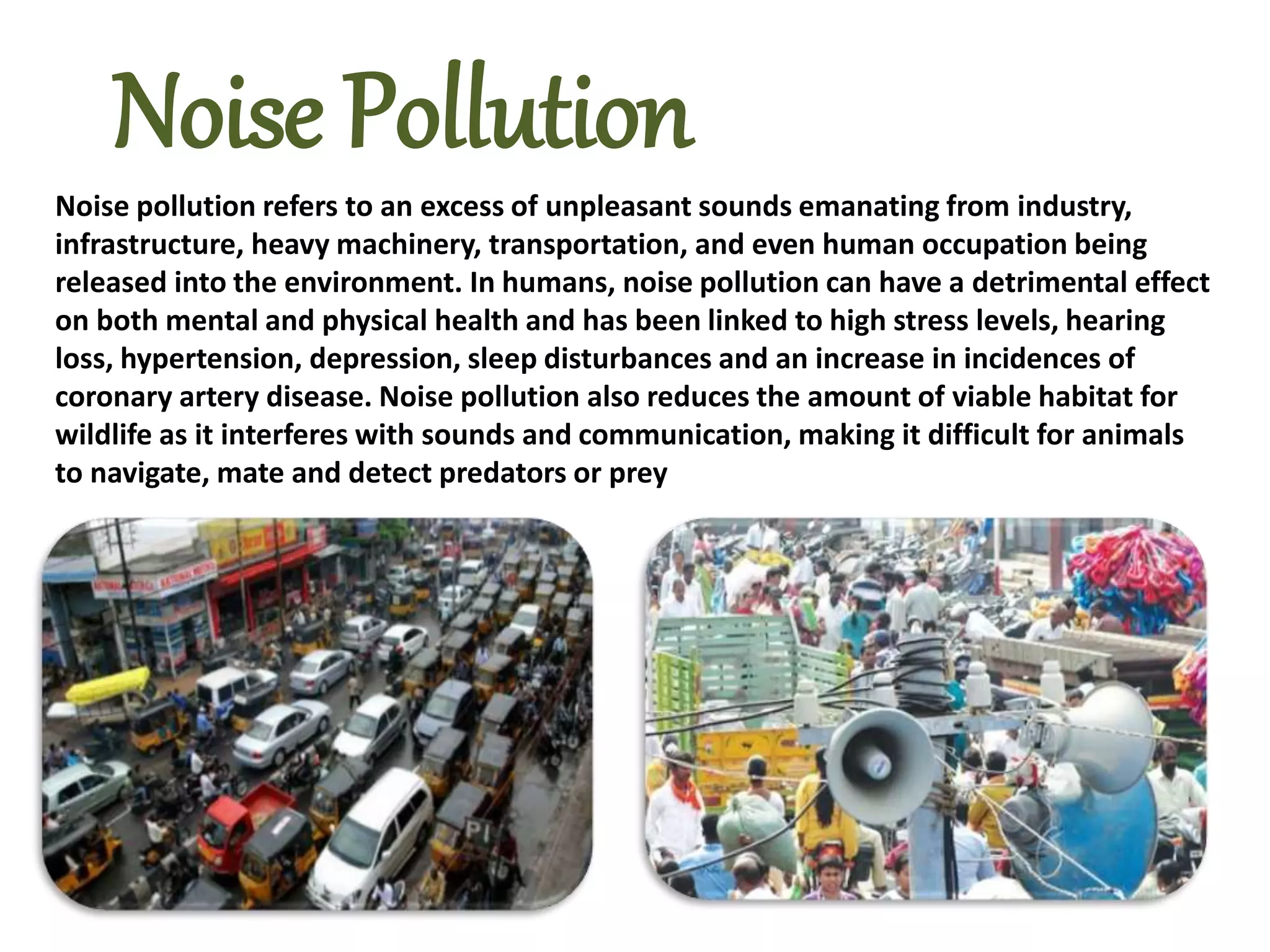
Noise pollution refers to an excess of unpleasant sounds emanating from industry,
infrastructure, heavy machinery, transportation, and even human occupation being
released into the environment. In humans, noise pollution can have a detrimental effect
on both mental and physical health and has been linked to high stress levels, hearing
loss, hypertension, depression, sleep disturbances and an increase in incidences of
coronary artery disease. Noise pollution also reduces the amount of viable habitat for
wildlife as it interferes with sounds and communication, making it difficult for animals
to navigate, mate and detect predators or prey
Noise Pollution
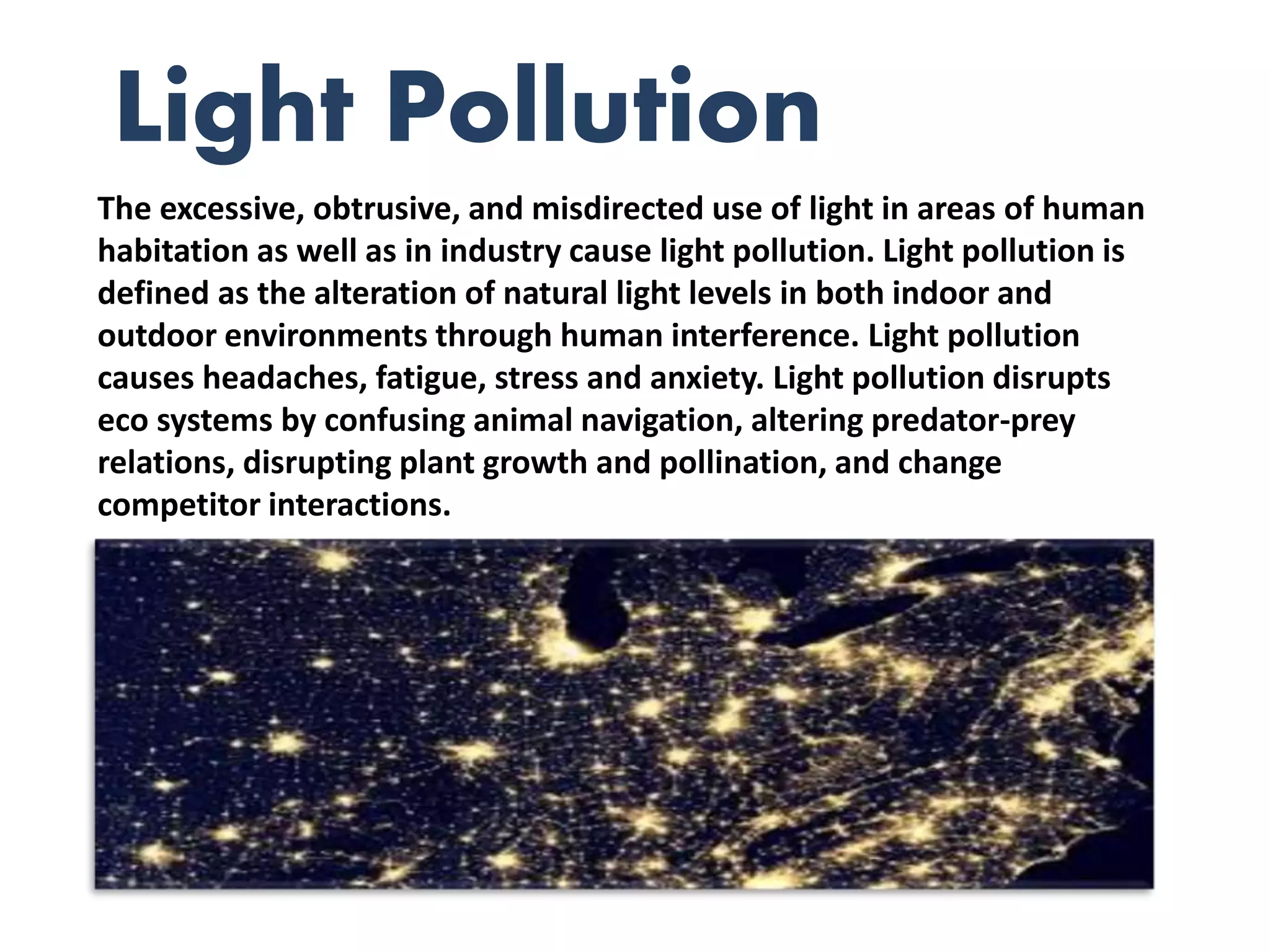
The excessive, obtrusive, and misdirected use of light in areas of human
habitation as well as in industry cause light pollution. Light pollution is
defined as the alteration of natural light levels in both indoor and
outdoor environments through human interference. Light pollution
causes headaches, fatigue, stress and anxiety. Light pollution disrupts
eco systems by confusing animal navigation, altering predator-prey
relations, disrupting plant growth and pollination, and change
competitor interactions.
Light Pollution

Pollution

  • 1.
    Environmental pollution isone of the most serious problems facing humanity and other life forms on our planet today. Environmental pollution is defined as “the contamination of the physical and biological components of the earth/atmosphere system to such an extent that normal environmental processes are adversely affected.” Pollutants can be naturally occurring substances or energies, but they are considered contaminants when in excess of natural levels. Any use of natural resources at a rate higher than nature’s capacity to restore itself can result in pollution of air, water, and land. Environment Pollution
  • 2.
    The 7 DifferentTypes of Pollution A. Water Pollution. B. Air Pollution. C. Soil Pollution. D. Radioactive Pollution. E. Noise Pollution. F. Light Pollution
  • 3.
    Water Pollution :Involvesany contaminated water, whether from chemical, particulate, or bacterial matter that degrades the water's quality and purity. Water pollution can occur in oceans, rivers, lakes, and underground reservoirs, and as different water sources flow together through the water cycle the pollution can spread. Causes of water pollution include: increased sediment from soil erosion improper waste disposal and littering leaching of soil pollution into water supplies organic material decay in water supplies the effects of water pollution include decreasing the quantity of drinkable water available, lowering water supplies for crop irrigation, and impacting fish and wildlife populations that require water of a certain purity for survival. Water Pollution
  • 4.
    Air is usuallycomprised of 78% nitrogen, 21% oxygen, 0.9% oxide gases and 0.1% inert gases. When the air becomes contaminated with other elements such as poisonous gases or particles, it can cause serious problems to human health. The most common causes of air pollution include partially combusted exhaust gases, poisonous gases which are a by-product of industry including sulphur dioxide and carbon monoxide, and carcinogenic gases released through the burning of plastic, rubber and wood. Particle contamination can also occur when a substance such as friable asbestos fibres are disturbed and released into the air. Air pollution works either by poisoning living organisms which breathe it in, or by disturbing the atmosphere and mixing with their air and clouds to cause acid rain. In the case of particle contamination, particles such as asbestos fibres become airborne and are inhaled, irritating the respiratory system and causing health conditions. Air Pollution
  • 5.
    Soil can bestripped of it’s nutrients (and therefore fertility) by a number of chemical agents and when this occurs, it is known as soil pollution. Common causes of soil pollution include pesticides, insecticides, agricultural chemicals, industrial waste, and radioactive waste. Plants depend on the nutrients in the soil in order to grow, but many of these chemical compounds absorb the nitrogenous compounds present in the soil which the plants depend on. Aside from making an area barren, soil pollution is a common cause of erosion, as plants and other living organisms play an important role in keeping the soil held together. When they die off, the soil splits and begins to erode. The heavy metals which get into the soil via chemical pollution also have a devastating effect on the ecosystem as they alter the metabolism of microorganisms and arthropods living in the soil. These heavy metals become more concentrated as they move up the food chain, often wiping out predator or consumer species at the apex. Soil Pollution
  • 6.
    When radioactive metalsdisintegrate, they release beta rays which can cause a whole host of mutative diseases in living organisms, this is known as radioactive pollution. As the name suggests, radioactive pollution mostly comes from the nuclear power industry, either in the form of radioactive waste being dumped or improperly disposed of and then making its way into bodies of water, or from the accidental release of radioactive substances when a nuclear reactor is damaged. Once radioactive pollution is present in the environment, it can linger for decades, making enormous areas of land unfit for human occupation of any sort. Radioactive Pollution
  • 7.
    Noise pollution refersto an excess of unpleasant sounds emanating from industry, infrastructure, heavy machinery, transportation, and even human occupation being released into the environment. In humans, noise pollution can have a detrimental effect on both mental and physical health and has been linked to high stress levels, hearing loss, hypertension, depression, sleep disturbances and an increase in incidences of coronary artery disease. Noise pollution also reduces the amount of viable habitat for wildlife as it interferes with sounds and communication, making it difficult for animals to navigate, mate and detect predators or prey Noise Pollution
  • 8.
    The excessive, obtrusive,and misdirected use of light in areas of human habitation as well as in industry cause light pollution. Light pollution is defined as the alteration of natural light levels in both indoor and outdoor environments through human interference. Light pollution causes headaches, fatigue, stress and anxiety. Light pollution disrupts eco systems by confusing animal navigation, altering predator-prey relations, disrupting plant growth and pollination, and change competitor interactions. Light Pollution