‫م‬ْ‫ح‬َّ‫الر‬ ِ‫هللا‬ ِ‫م‬ْ‫س‬ِ‫ب‬ِ‫م‬ْ‫ي‬ ِ‫ح‬َّ‫الر‬ ِ‫ن‬
Presented to: Ma’am Maria Kokab
Presented by: Noureen Anwar
BS.Ed(VII)
ECOLOGY
POLLUTION
pollution
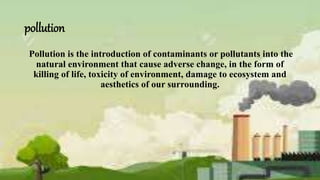
Pollution is the introduction of contaminants or pollutants into the
natural environment that cause adverse change, in the form of
killing of life, toxicity of environment, damage to ecosystem and
aesthetics of our surrounding.
pollutants
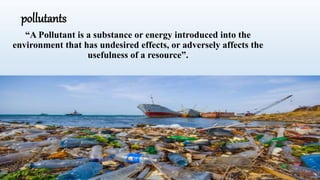
“A Pollutant is a substance or energy introduced into the
environment that has undesired effects, or adversely affects the
usefulness of a resource”.
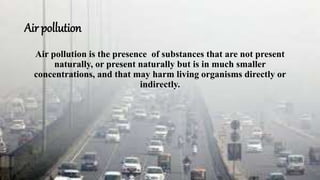
Air pollution
Air pollution is the presence of substances that are not present
naturally, or present naturally but is in much smaller
concentrations, and that may harm living organisms directly or
indirectly.
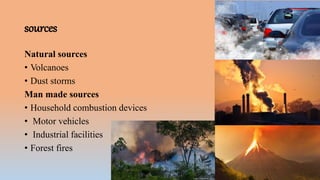
sources
Natural sources
• Volcanoes
• Dust storms
Man made sources
• Household combustion devices
• Motor vehicles
• Industrial facilities
• Forest fires
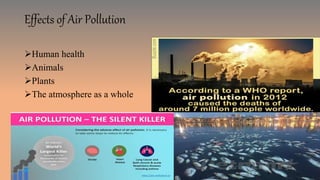
Effects of Air Pollution
Human health
Animals
Plants
The atmosphere as a whole
preventions
• Maintaining a healthy distance between the industrial and residential areas.
• The wastes must be removed and recycled in the industrial plants and
refineries
• The automobiles must be designed with emission control system.
• Using public transportation helps to prevent the air pollution
• Using alternative energy sources like solar energy, hydroelectric energy, and
wind energy
• The coal fuel should be replaced with gas fuel to control the air
pollution.
• Plants like pine and ribes need to be planted to metabolize the
nitrogen oxides and other pollutants.
• The sulphur must be removed after burning.
• The gasoline must have anti knocking agents.
• The mining area should be planted with trees.
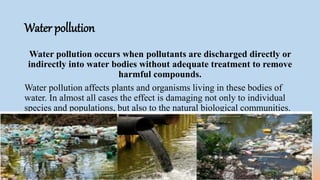
Water pollution
Water pollution occurs when pollutants are discharged directly or
indirectly into water bodies without adequate treatment to remove
harmful compounds.
Water pollution affects plants and organisms living in these bodies of
water. In almost all cases the effect is damaging not only to individual
species and populations, but also to the natural biological communities.
Types of water pollution
Classified by the medium in which they occur, such as:
Surface water pollution, ground water pollution, soil water Pollution etc.
Classified by the habitat in which they occur, such as:
River pollution, lake pollution, estuarine pollution, coastal water
pollution, open ocean pollution etc.
Classified by the contamination, such as:
Nutrient pollution, bacterial pollution, viral pollution, metallic pollution,
petrochemical pollution, pesticide pollution, thermal pollution,
radioactive pollution, etc.
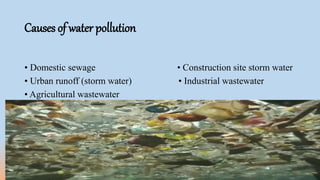
Causes of water pollution
• Domestic sewage • Construction site storm water
• Urban runoff (storm water) • Industrial wastewater
• Agricultural wastewater
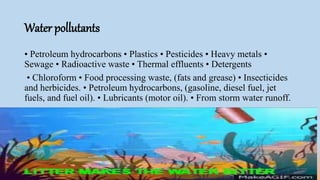
Water pollutants
• Petroleum hydrocarbons • Plastics • Pesticides • Heavy metals •
Sewage • Radioactive waste • Thermal effluents • Detergents
• Chloroform • Food processing waste, (fats and grease) • Insecticides
and herbicides. • Petroleum hydrocarbons, (gasoline, diesel fuel, jet
fuels, and fuel oil). • Lubricants (motor oil). • From storm water runoff.
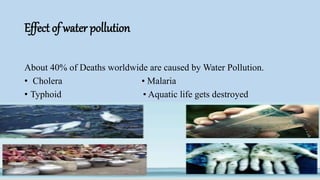
Effect of water pollution
About 40% of Deaths worldwide are caused by Water Pollution.
• Cholera • Malaria
• Typhoid • Aquatic life gets destroyed
prevention
• Conserve water by turning off the tap.
• Mind what you throw down your sink or toilet.
• Don’t throw paints and oils in water channels.
• Use environment friendly household products, such as washing
powder, household cleaning agents etc.
• Take great care not to overuse pesticides and fertilizers.
• Don’t throw litter into rivers, lakes or oceans. Help clean up any litter
you see on beaches or in rivers and lakes, make sure it is safe to collect
the litter and put it in a nearby dustbin.
treatment
• Suspended, solid particles and inorganic material can be removed by
the use of filters.
• Use of biological filters and processes can naturally degrade the
organic waste material.
• After above two steps chemical additives are supplied to get rid of any
left-over impurities.
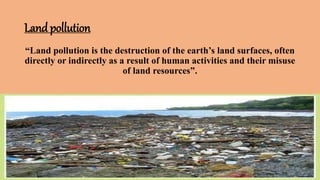
Land pollution
“Land pollution is the destruction of the earth’s land surfaces, often
directly or indirectly as a result of human activities and their misuse
of land resources”.
Types of land pollution
There are different types of land pollution.
Solid Waste
 Pesticides and Fertilizer
 Chemicals
 Deforestation
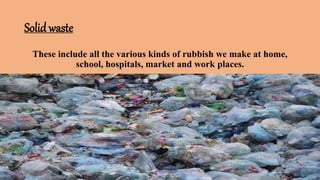
Solid waste
These include all the various kinds of rubbish we make at home,
school, hospitals, market and work places.
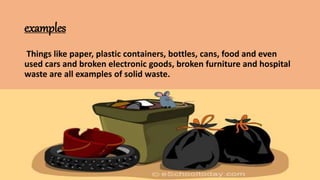
examples
Things like paper, plastic containers, bottles, cans, food and even
used cars and broken electronic goods, broken furniture and hospital
waste are all examples of solid waste.
Types of solid waste
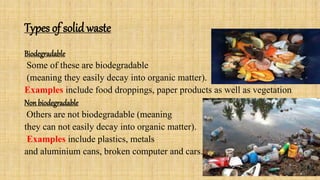
Biodegradable
Some of these are biodegradable
(meaning they easily decay into organic matter).
Examples include food droppings, paper products as well as vegetation
Non biodegradable
Others are not biodegradable (meaning
they can not easily decay into organic matter).
Examples include plastics, metals
and aluminium cans, broken computer and cars.
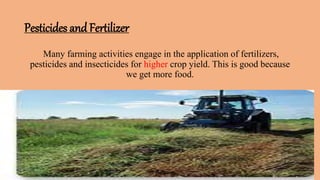
Pesticides and Fertilizer
Many farming activities engage in the application of fertilizers,
pesticides and insecticides for higher crop yield. This is good because
we get more food.
Chemicals
Chemical and nuclear power plants produce waste materials that
have to be stored somewhere. Fertilizer, insecticides, pesticides,
pharmaceuticals manufacturers also produce lots of solid and liquid
waste.
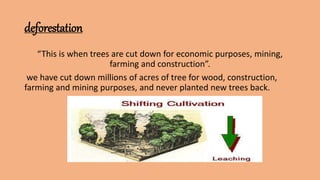
deforestation
“This is when trees are cut down for economic purposes, mining,
farming and construction”.
we have cut down millions of acres of tree for wood, construction,
farming and mining purposes, and never planted new trees back.
Effects of land pollution
Soil pollution
 Change in climate patterns
Cause Air pollution
 Environmental Impact
Effect on human health
Distraction for Tourist
Effect on wildlife
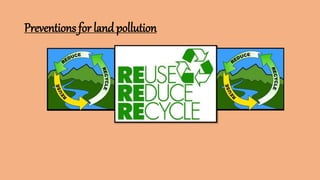
Preventions for land pollution
• Limit the use of fertilizers and pesticides
• Awareness about biological control methods and their
implementation
• The grazing must be controlled and forest management should be
done properly
• The afforestation and reforestation must take place
• Proper preventive methods like shields should be used in areas of
wind erosion and wind breaks
• How to control soil pollution?
• Treating Wastes of industries.
• Treating nuclear waste.
• Proper disposing of plastics and other garbage materials.
• Noise pollution is displeasing or
excessive noise that may disrupt the
activity or balance of human or animal
life.
• Noise means disgust or discomfort
hearing from environment.
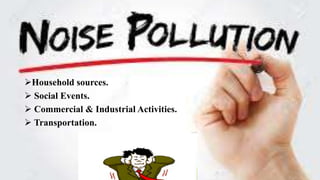
Household sources.
 Social Events.
 Commercial & Industrial Activities.
 Transportation.
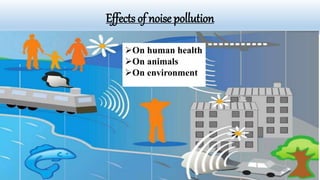
Effects of noise pollution
On human health
On animals
On environment
Prevention of Noise Pollution
Do not use car horns unnecessarily
 Proper maintenance should be carried out for better performance
of Motors, machines and vehicles.
Turn off the engine of your car or motorbike when you are not using
it.
Don 't blast music on the radio or computer or speakers.
Train your dog not to bark so much.
Pollution ppt
Pollution ppt

Pollution ppt

  • 1.
  • 2.
    Presented to: Ma’amMaria Kokab Presented by: Noureen Anwar BS.Ed(VII) ECOLOGY POLLUTION
  • 3.
    pollution Pollution is theintroduction of contaminants or pollutants into the natural environment that cause adverse change, in the form of killing of life, toxicity of environment, damage to ecosystem and aesthetics of our surrounding.
  • 4.
    pollutants “A Pollutant isa substance or energy introduced into the environment that has undesired effects, or adversely affects the usefulness of a resource”.
  • 6.
    Air pollution Air pollutionis the presence of substances that are not present naturally, or present naturally but is in much smaller concentrations, and that may harm living organisms directly or indirectly.
  • 7.
    sources Natural sources • Volcanoes •Dust storms Man made sources • Household combustion devices • Motor vehicles • Industrial facilities • Forest fires
  • 8.
    Effects of AirPollution Human health Animals Plants The atmosphere as a whole
  • 9.
    preventions • Maintaining ahealthy distance between the industrial and residential areas. • The wastes must be removed and recycled in the industrial plants and refineries • The automobiles must be designed with emission control system. • Using public transportation helps to prevent the air pollution • Using alternative energy sources like solar energy, hydroelectric energy, and wind energy
  • 10.
    • The coalfuel should be replaced with gas fuel to control the air pollution. • Plants like pine and ribes need to be planted to metabolize the nitrogen oxides and other pollutants. • The sulphur must be removed after burning. • The gasoline must have anti knocking agents. • The mining area should be planted with trees.
  • 11.
    Water pollution Water pollutionoccurs when pollutants are discharged directly or indirectly into water bodies without adequate treatment to remove harmful compounds. Water pollution affects plants and organisms living in these bodies of water. In almost all cases the effect is damaging not only to individual species and populations, but also to the natural biological communities.
  • 12.
    Types of waterpollution Classified by the medium in which they occur, such as: Surface water pollution, ground water pollution, soil water Pollution etc. Classified by the habitat in which they occur, such as: River pollution, lake pollution, estuarine pollution, coastal water pollution, open ocean pollution etc. Classified by the contamination, such as: Nutrient pollution, bacterial pollution, viral pollution, metallic pollution, petrochemical pollution, pesticide pollution, thermal pollution, radioactive pollution, etc.
  • 13.
    Causes of waterpollution • Domestic sewage • Construction site storm water • Urban runoff (storm water) • Industrial wastewater • Agricultural wastewater
  • 14.
    Water pollutants • Petroleumhydrocarbons • Plastics • Pesticides • Heavy metals • Sewage • Radioactive waste • Thermal effluents • Detergents • Chloroform • Food processing waste, (fats and grease) • Insecticides and herbicides. • Petroleum hydrocarbons, (gasoline, diesel fuel, jet fuels, and fuel oil). • Lubricants (motor oil). • From storm water runoff.
  • 15.
    Effect of waterpollution About 40% of Deaths worldwide are caused by Water Pollution. • Cholera • Malaria • Typhoid • Aquatic life gets destroyed
  • 16.
    prevention • Conserve waterby turning off the tap. • Mind what you throw down your sink or toilet. • Don’t throw paints and oils in water channels. • Use environment friendly household products, such as washing powder, household cleaning agents etc. • Take great care not to overuse pesticides and fertilizers. • Don’t throw litter into rivers, lakes or oceans. Help clean up any litter you see on beaches or in rivers and lakes, make sure it is safe to collect the litter and put it in a nearby dustbin.
  • 17.
    treatment • Suspended, solidparticles and inorganic material can be removed by the use of filters. • Use of biological filters and processes can naturally degrade the organic waste material. • After above two steps chemical additives are supplied to get rid of any left-over impurities.
  • 18.
    Land pollution “Land pollutionis the destruction of the earth’s land surfaces, often directly or indirectly as a result of human activities and their misuse of land resources”.
  • 19.
    Types of landpollution There are different types of land pollution. Solid Waste  Pesticides and Fertilizer  Chemicals  Deforestation
  • 20.
    Solid waste These includeall the various kinds of rubbish we make at home, school, hospitals, market and work places.
  • 21.
    examples Things like paper,plastic containers, bottles, cans, food and even used cars and broken electronic goods, broken furniture and hospital waste are all examples of solid waste.
  • 22.
    Types of solidwaste Biodegradable Some of these are biodegradable (meaning they easily decay into organic matter). Examples include food droppings, paper products as well as vegetation Non biodegradable Others are not biodegradable (meaning they can not easily decay into organic matter). Examples include plastics, metals and aluminium cans, broken computer and cars.
  • 23.
    Pesticides and Fertilizer Manyfarming activities engage in the application of fertilizers, pesticides and insecticides for higher crop yield. This is good because we get more food.
  • 24.
    Chemicals Chemical and nuclearpower plants produce waste materials that have to be stored somewhere. Fertilizer, insecticides, pesticides, pharmaceuticals manufacturers also produce lots of solid and liquid waste.
  • 25.
    deforestation “This is whentrees are cut down for economic purposes, mining, farming and construction”. we have cut down millions of acres of tree for wood, construction, farming and mining purposes, and never planted new trees back.
  • 26.
    Effects of landpollution Soil pollution  Change in climate patterns Cause Air pollution  Environmental Impact Effect on human health Distraction for Tourist Effect on wildlife
  • 27.
  • 28.
    • Limit theuse of fertilizers and pesticides • Awareness about biological control methods and their implementation • The grazing must be controlled and forest management should be done properly • The afforestation and reforestation must take place • Proper preventive methods like shields should be used in areas of wind erosion and wind breaks
  • 29.
    • How tocontrol soil pollution? • Treating Wastes of industries. • Treating nuclear waste. • Proper disposing of plastics and other garbage materials.
  • 30.
    • Noise pollutionis displeasing or excessive noise that may disrupt the activity or balance of human or animal life. • Noise means disgust or discomfort hearing from environment.
  • 31.
    Household sources.  SocialEvents.  Commercial & Industrial Activities.  Transportation.
  • 32.
    Effects of noisepollution On human health On animals On environment
  • 33.
    Prevention of NoisePollution Do not use car horns unnecessarily  Proper maintenance should be carried out for better performance of Motors, machines and vehicles. Turn off the engine of your car or motorbike when you are not using it. Don 't blast music on the radio or computer or speakers. Train your dog not to bark so much.