Acknowledgement
• www.google.com
• www.yahoo.com
• www.wikipedia.org
• www.askme.com
• Magazines
• Books
• Newspapers
Water
pollution
Air pollution
Soil
pollution
Introduction To Environment
• The natural environment encompasses
all living and non-living things occurring
naturally on Earth or some region
thereof. It is an environment that
encompasses the interaction of all living
species. Climate, weather, and natural
resources that affect human survival and
economic activity.
• Environment is living things and what is
around them.It includes physical, chemical and
other natural forces. Living things do not
simply exist in their environment. They
constantly interact with it. Organisms change
in response to conditions in their environment.
In the environment there are interactions
between plants, animals, soil, water,
temperature, light, and other living and non-
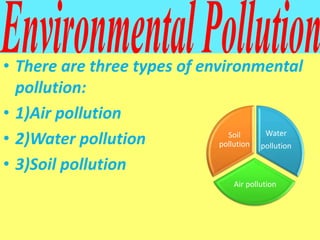
• There are three types of environmental
pollution:
• 1)Air pollution
• 2)Water pollution
• 3)Soil pollution
Water
pollution
Air pollution
Soil
pollution
AIR POLLUTION
Air pollution is the introduction
of particulates, biological
molecules, or other harmful
materials into Earth's
atmosphere, causing diseases,
death to humans, damage to
other living organisms such as
animals and food crops, or
the natural or built
environment. Air pollution may
come from anthropogenic or
natural sources.
WATER POLLUTION
Water pollution is
the contamination
of water bodies
(e.g. lakes, rivers, oce
ans, aquifers and gro
undwater). This form
of environmental
degradation occurs
when pollutants are
directly or indirectly
discharged into water
bodies without
adequate
treatment to remove
harmful compounds.
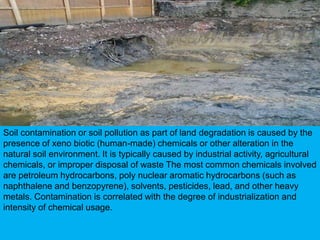
Soil contamination or soil pollution as part of land degradation is caused by the
presence of xeno biotic (human-made) chemicals or other alteration in the
natural soil environment. It is typically caused by industrial activity, agricultural
chemicals, or improper disposal of waste The most common chemicals involved
are petroleum hydrocarbons, poly nuclear aromatic hydrocarbons (such as
naphthalene and benzopyrene), solvents, pesticides, lead, and other heavy
metals. Contamination is correlated with the degree of industrialization and
intensity of chemical usage.
• MakingSustainableDevelopment
• TransportationChoices
• MakingSustainableFoodChoices
• MakingSustainableEnergyChoices
• Recycling, Reusing,andReducingYourWaste
Keeping
Briquette plant
• A briquette (or briquet) is a
compressed block of coal
dust or
other combustible biomass mat
erial such as charcoal,
sawdust, wood chips, peat, or
paper used for fuel and
Environment

Environment

  • 2.
    Acknowledgement • www.google.com • www.yahoo.com •www.wikipedia.org • www.askme.com • Magazines • Books • Newspapers
  • 3.
  • 4.
    Introduction To Environment •The natural environment encompasses all living and non-living things occurring naturally on Earth or some region thereof. It is an environment that encompasses the interaction of all living species. Climate, weather, and natural resources that affect human survival and economic activity.
  • 5.
    • Environment isliving things and what is around them.It includes physical, chemical and other natural forces. Living things do not simply exist in their environment. They constantly interact with it. Organisms change in response to conditions in their environment. In the environment there are interactions between plants, animals, soil, water, temperature, light, and other living and non-
  • 6.
    • There arethree types of environmental pollution: • 1)Air pollution • 2)Water pollution • 3)Soil pollution Water pollution Air pollution Soil pollution
  • 7.
    AIR POLLUTION Air pollutionis the introduction of particulates, biological molecules, or other harmful materials into Earth's atmosphere, causing diseases, death to humans, damage to other living organisms such as animals and food crops, or the natural or built environment. Air pollution may come from anthropogenic or natural sources.
  • 8.
    WATER POLLUTION Water pollutionis the contamination of water bodies (e.g. lakes, rivers, oce ans, aquifers and gro undwater). This form of environmental degradation occurs when pollutants are directly or indirectly discharged into water bodies without adequate treatment to remove harmful compounds.
  • 9.
    Soil contamination orsoil pollution as part of land degradation is caused by the presence of xeno biotic (human-made) chemicals or other alteration in the natural soil environment. It is typically caused by industrial activity, agricultural chemicals, or improper disposal of waste The most common chemicals involved are petroleum hydrocarbons, poly nuclear aromatic hydrocarbons (such as naphthalene and benzopyrene), solvents, pesticides, lead, and other heavy metals. Contamination is correlated with the degree of industrialization and intensity of chemical usage.
  • 10.
    • MakingSustainableDevelopment • TransportationChoices •MakingSustainableFoodChoices • MakingSustainableEnergyChoices • Recycling, Reusing,andReducingYourWaste Keeping
  • 11.
    Briquette plant • Abriquette (or briquet) is a compressed block of coal dust or other combustible biomass mat erial such as charcoal, sawdust, wood chips, peat, or paper used for fuel and