1-2
The Nature and Importance
of Entrepreneurship
McGraw-Hill/Irwin
Entrepreneurship, 7/e Copyright © 2008 The McGraw-Hill Companies, Inc. All rights reserved.
Chapter 1
1-3
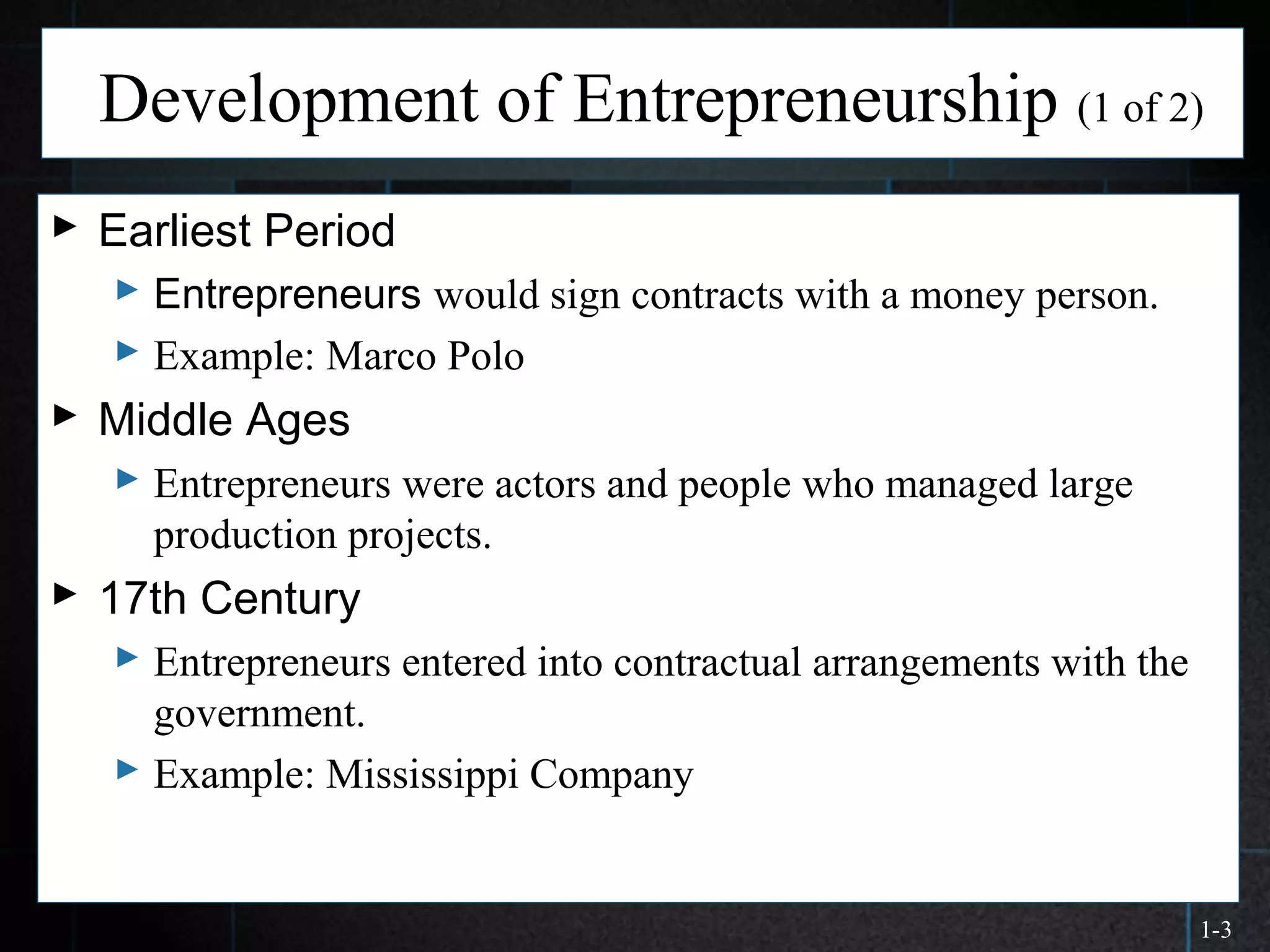
Development of Entrepreneurship (1 of 2)
 Earliest Period
 Entrepreneurs would sign contracts with a money person.
 Example: Marco Polo
 Middle Ages
 Entrepreneurs were actors and people who managed large
production projects.
 17th Century
 Entrepreneurs entered into contractual arrangements with the
government.
 Example: Mississippi Company
1-4
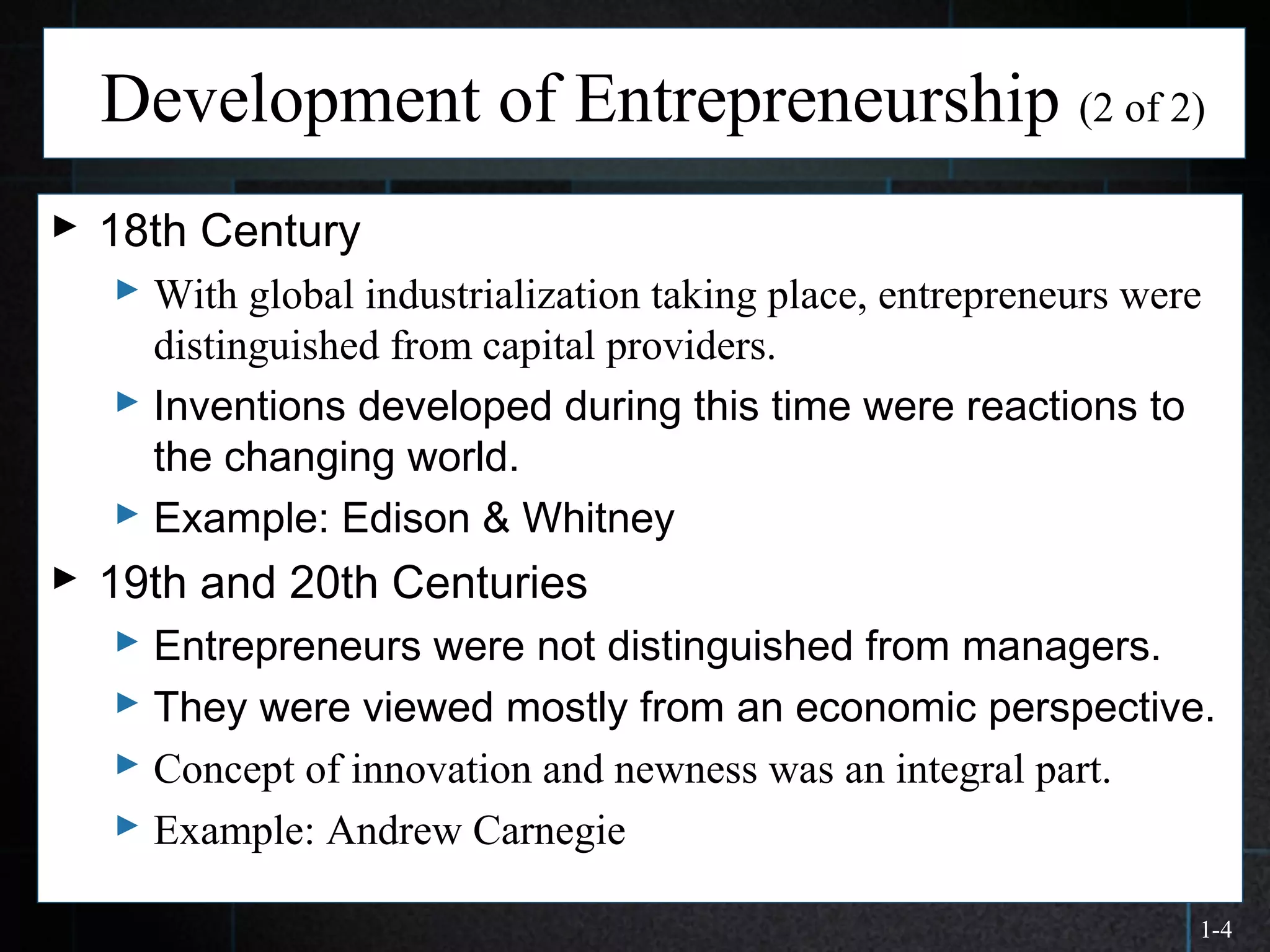
Development of Entrepreneurship (2 of 2)
 18th Century
 With global industrialization taking place, entrepreneurs were
distinguished from capital providers.
 Inventions developed during this time were reactions to
the changing world.
 Example: Edison & Whitney
 19th and 20th Centuries
 Entrepreneurs were not distinguished from managers.
 They were viewed mostly from an economic perspective.
 Concept of innovation and newness was an integral part.
 Example: Andrew Carnegie
1-5
Definition of Entrepreneurs Today
 Entrepreneurship is the process of creating something new
and assuming the risks and rewards.
 Four aspects of being an entrepreneur today:
 Involves creation process.
 Requires devotion of time and effort.
 Involves rewards of being an entrepreneur.
 Requires assumption of necessary risks.
1-6
Entrepreneurs Versus Inventors
 Inventor: Creates something for the first time; highly
driven and motivated by his or her own work and
personal ideas.
 Differentiating characteristics of an inventor:
 Education.
 Level of experience.
 Problem-solving skills.
 Level of self-confidence.
 Willingness to take risks.
 Ability to tolerate ambiguity and uncertainty.
 View of monetary benefits in measuring success.
1-7
The Entrepreneurial Process
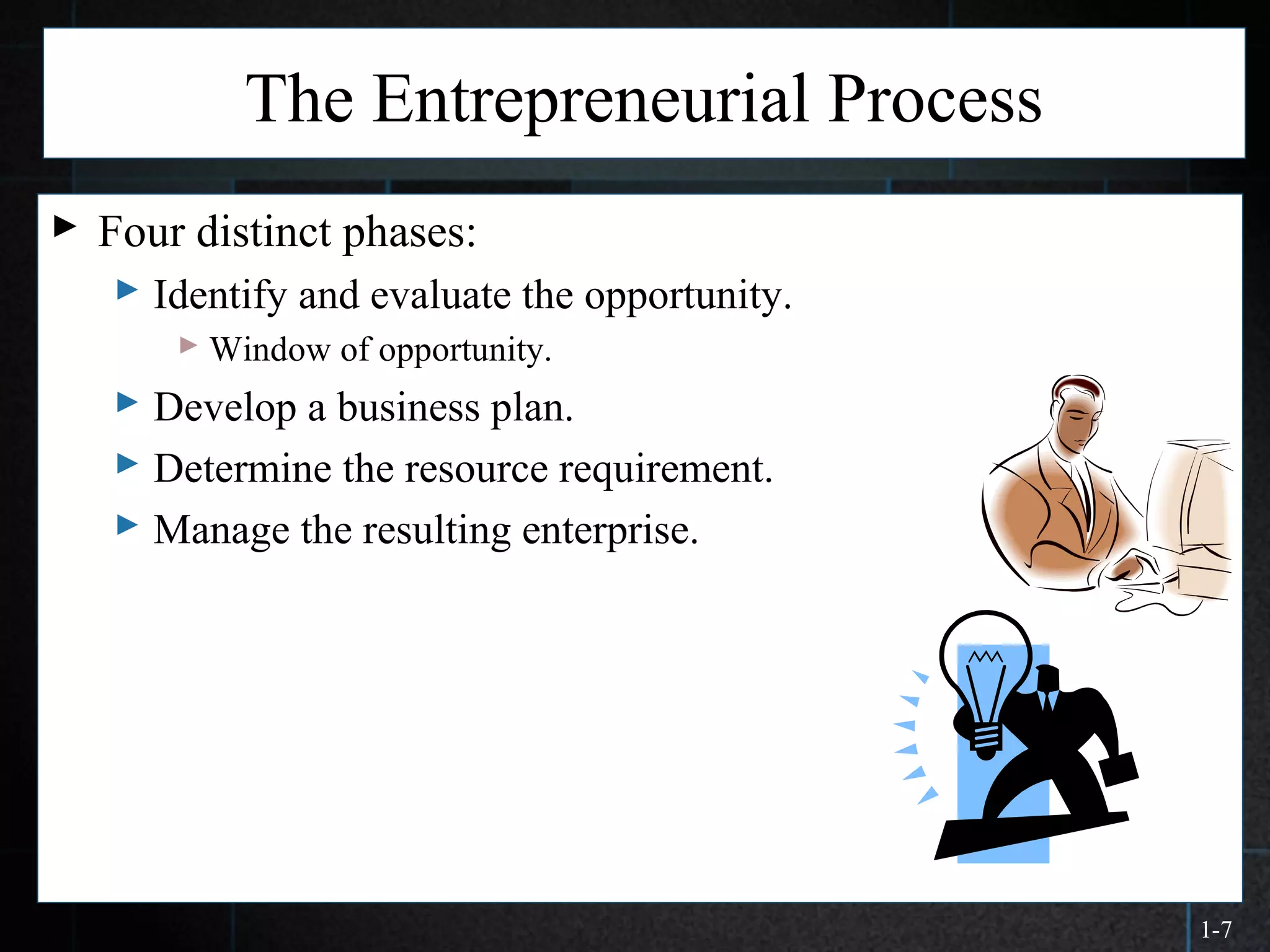
 Four distinct phases:
 Identify and evaluate the opportunity.
 Window of opportunity.
 Develop a business plan.
 Determine the resource requirement.
 Manage the resulting enterprise.
1-8
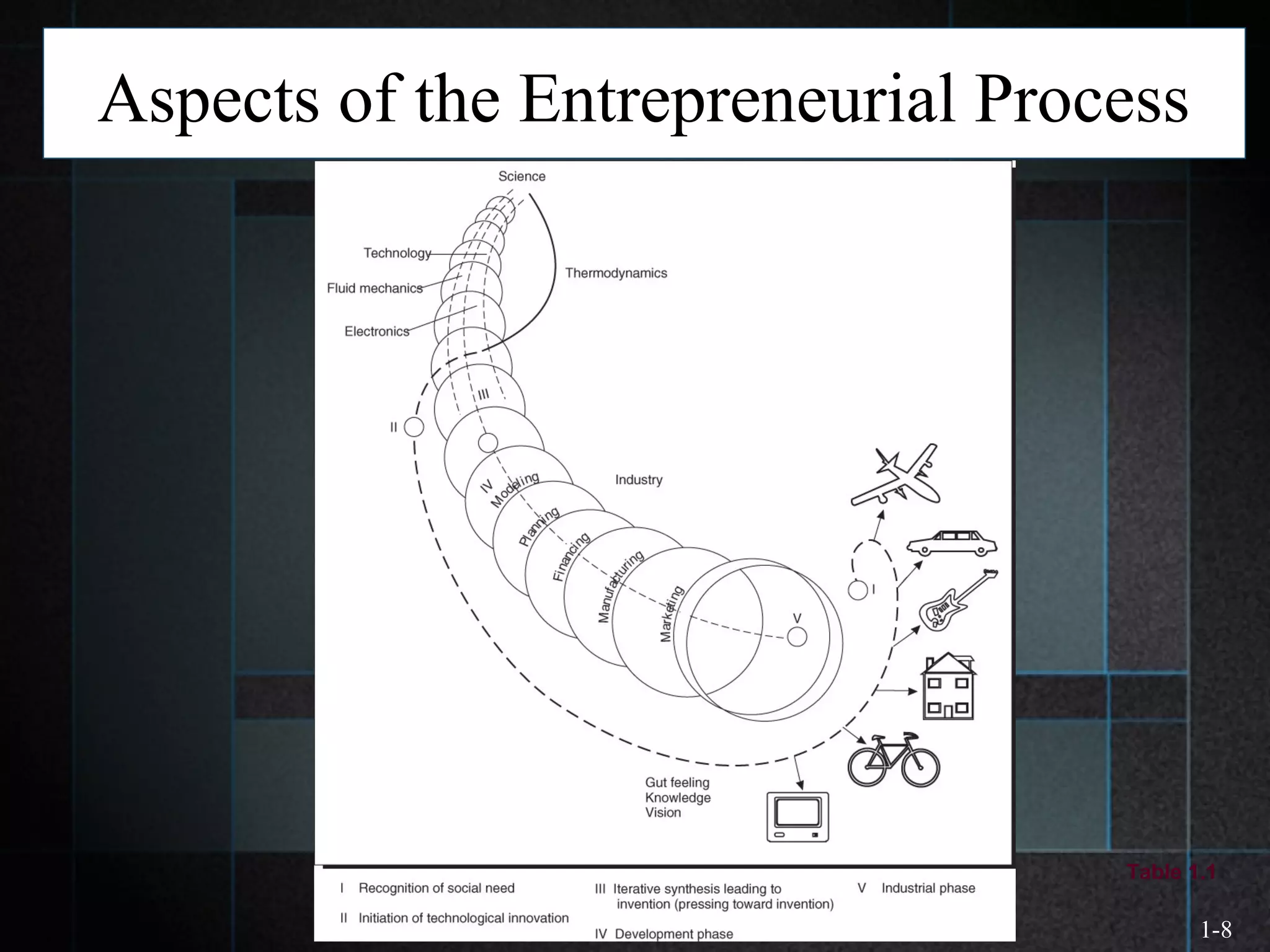
Aspects of the Entrepreneurial Process
Table 1.1
<<Insert Table 1.1>>
1-9
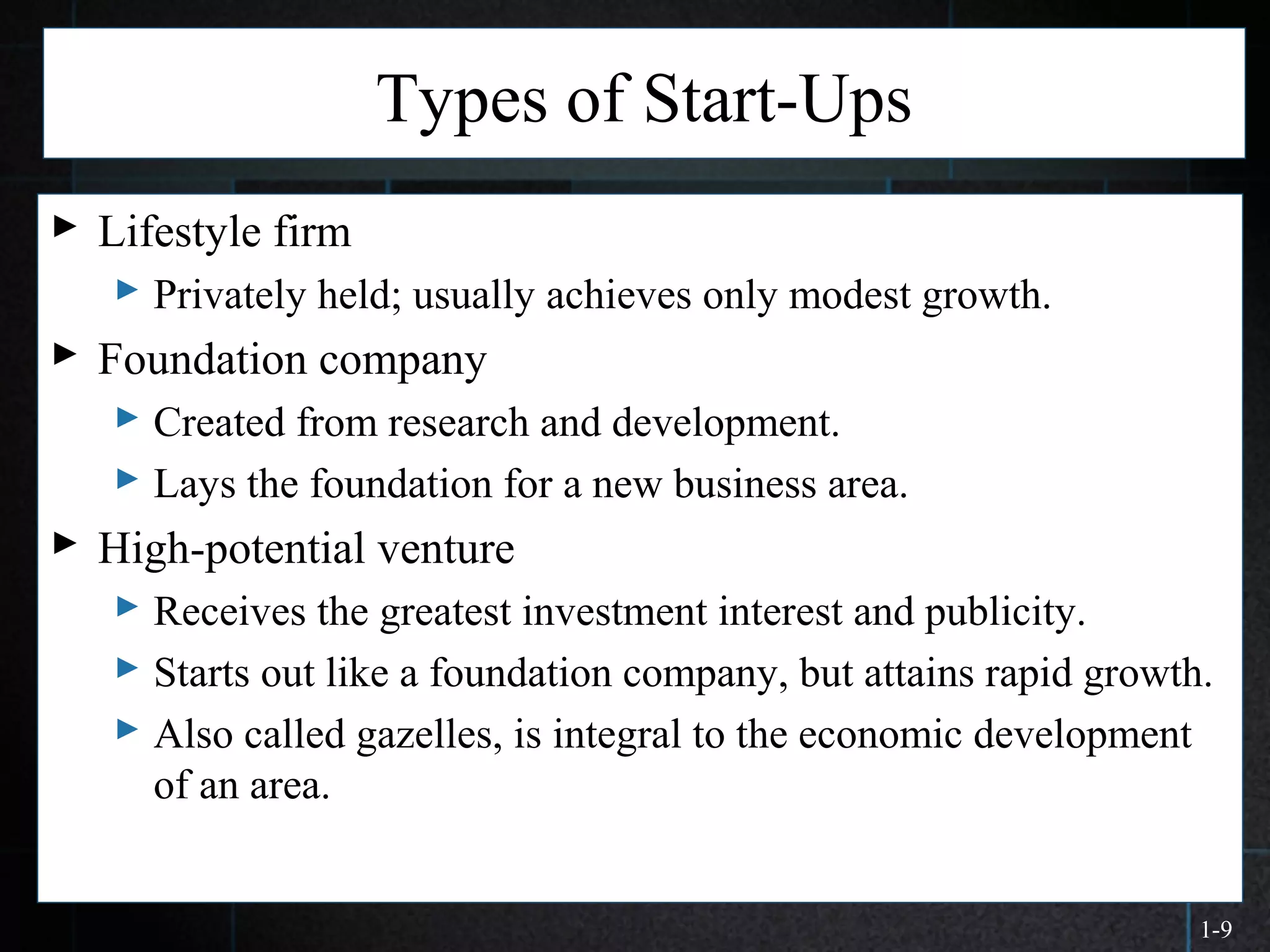
Types of Start-Ups
 Lifestyle firm
 Privately held; usually achieves only modest growth.
 Foundation company
 Created from research and development.
 Lays the foundation for a new business area.
 High-potential venture
 Receives the greatest investment interest and publicity.
 Starts out like a foundation company, but attains rapid growth.
 Also called gazelles, is integral to the economic development
of an area.
1-10
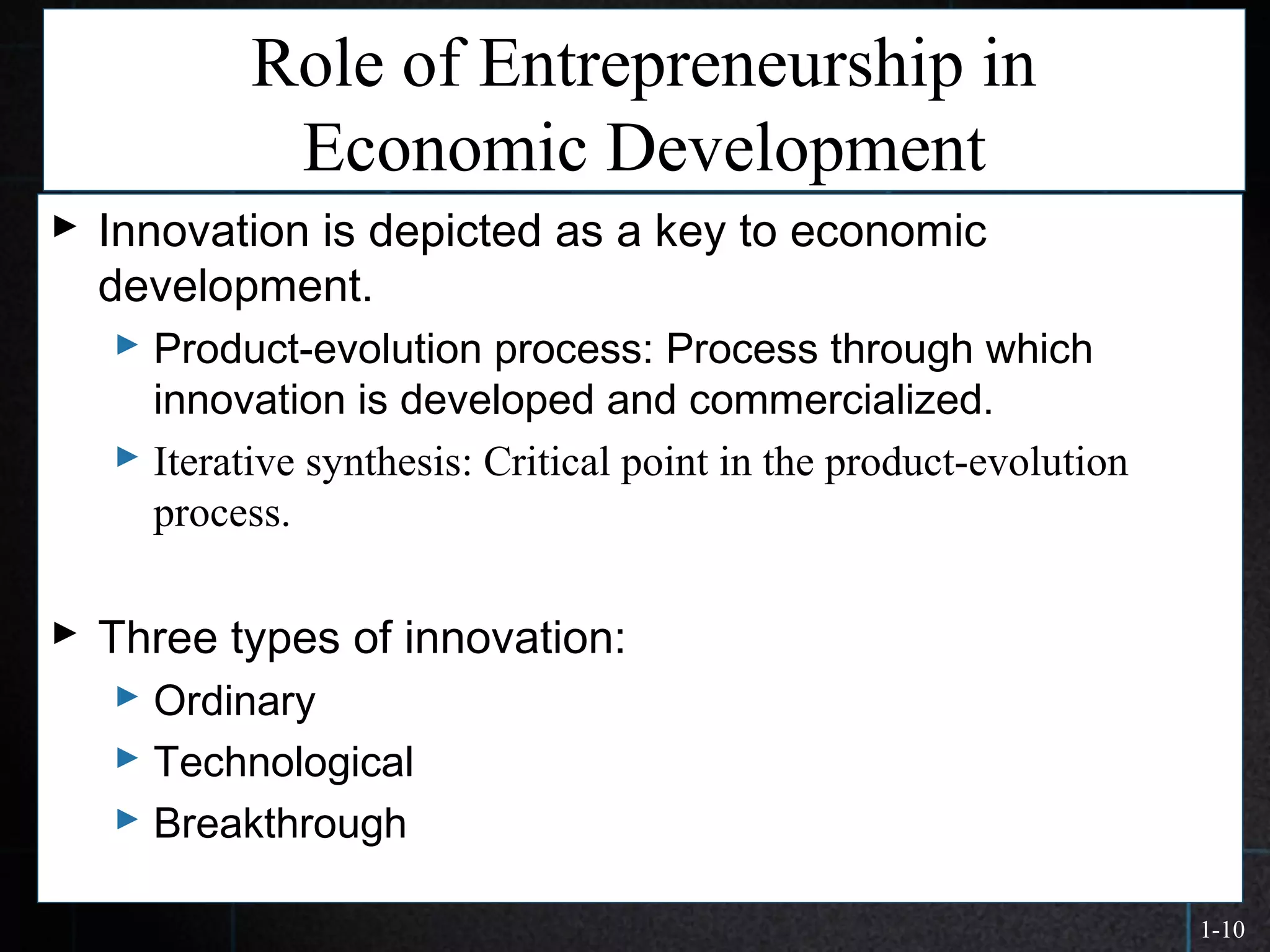
Role of Entrepreneurship in
Economic Development
 Innovation is depicted as a key to economic
development.
 Product-evolution process: Process through which
innovation is developed and commercialized.
 Iterative synthesis: Critical point in the product-evolution
process.
 Three types of innovation:
 Ordinary
 Technological
 Breakthrough
1-11
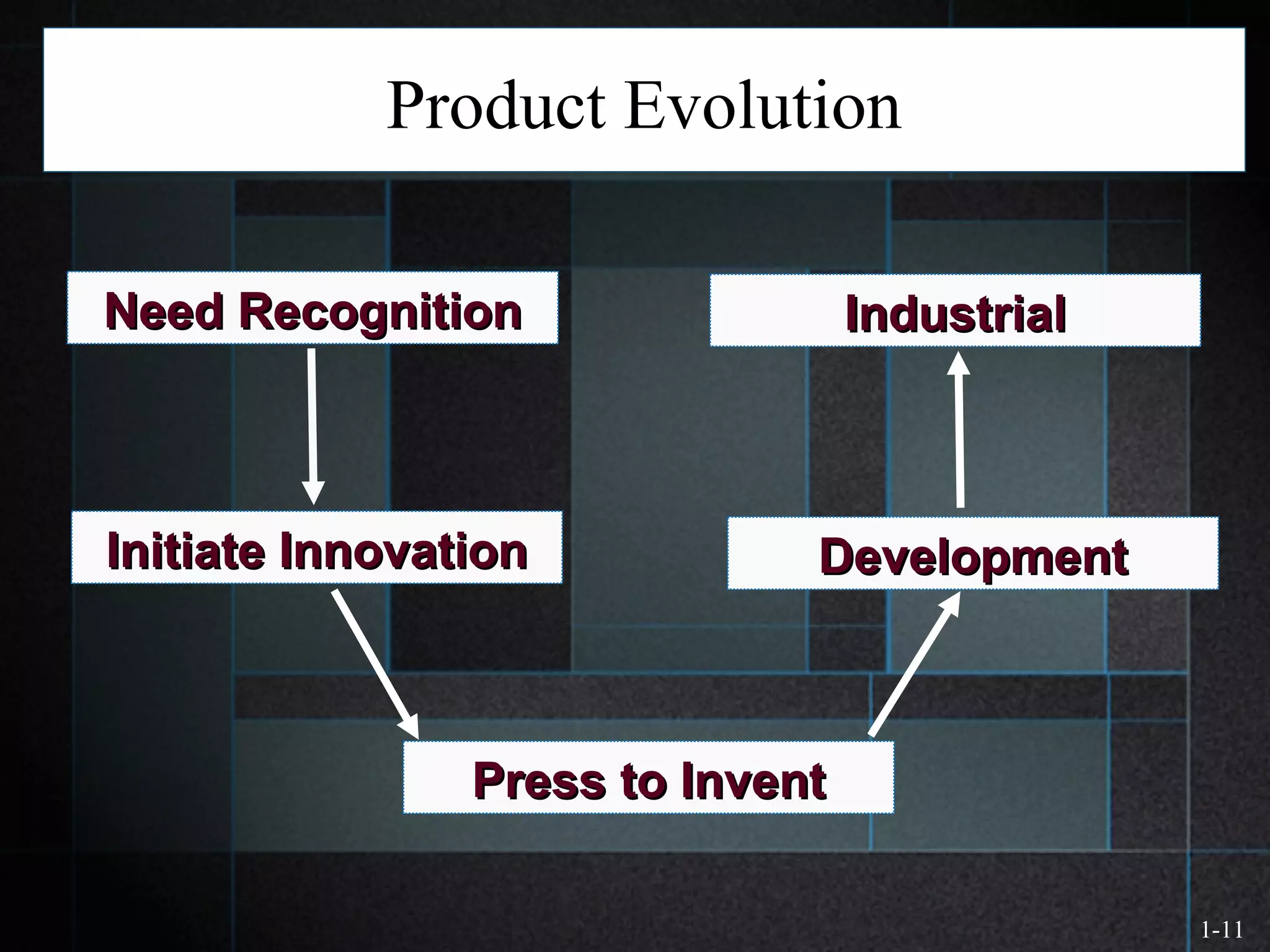
Product Evolution
Need RecognitionNeed Recognition
Initiate InnovationInitiate Innovation DevelopmentDevelopment
IndustrialIndustrial
Press to InventPress to Invent
1-12
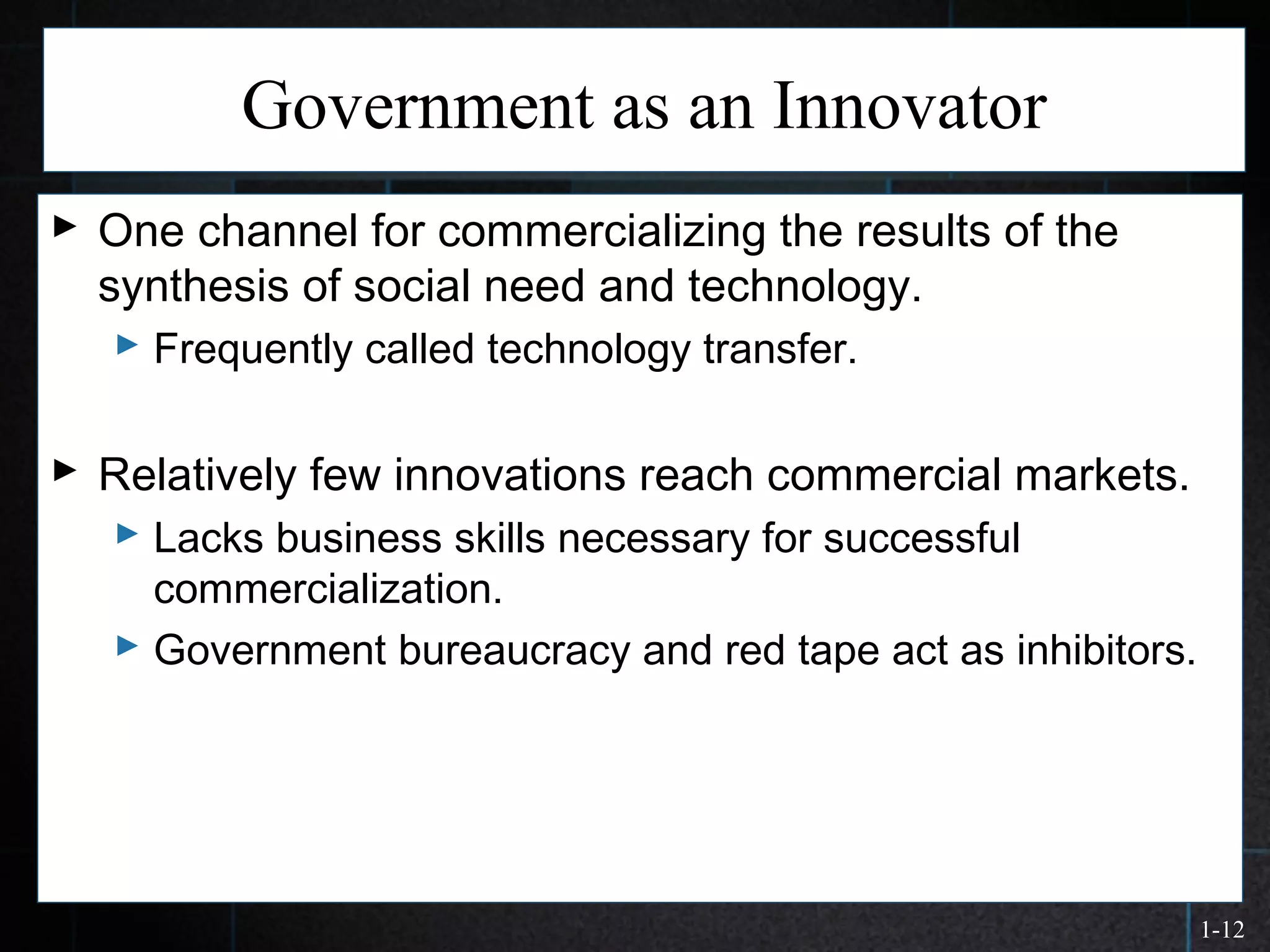
Government as an Innovator
 One channel for commercializing the results of the
synthesis of social need and technology.
 Frequently called technology transfer.
 Relatively few innovations reach commercial markets.
 Lacks business skills necessary for successful
commercialization.
 Government bureaucracy and red tape act as inhibitors.
1-13
Corporate Entrepreneurship
 Strengths of an existing business:
 Financial resources.
 Business skills.
 Marketing and distribution systems.
 Factors that inhibit successful commercialization:
 Bureaucratic structure.
 Emphasis on short-term profits.
 A highly structured organization.
 In the current era of hypercompetition, strategic
business units (SBUs) are emerging.
1-14
Independent Entrepreneurship
 Factors that inhibit commercialization:
 Managerial skills.
 Marketing capabilities.
 Financial resources.
 Unrealistic inventions.
 Lack of awareness on interfacing with necessary entities
(banks, suppliers, customers, venture capitalists,
distributors, and advertising agencies).
1-15
Ethics and Social Responsibility
 Entrepreneurs usually develop an internal ethical code.

 Personal value systems tend to be influenced by:
 Peer pressure.
 General social norms in the community.
 Pressures from their competitors.
1-16
Future
 Entrepreneurship has gained mileage through a number of
ways:
 Entrepreneurial education.
 Increase in academic research.
 Societal support (media coverage).
 Corporate entrepreneurship.
1-17
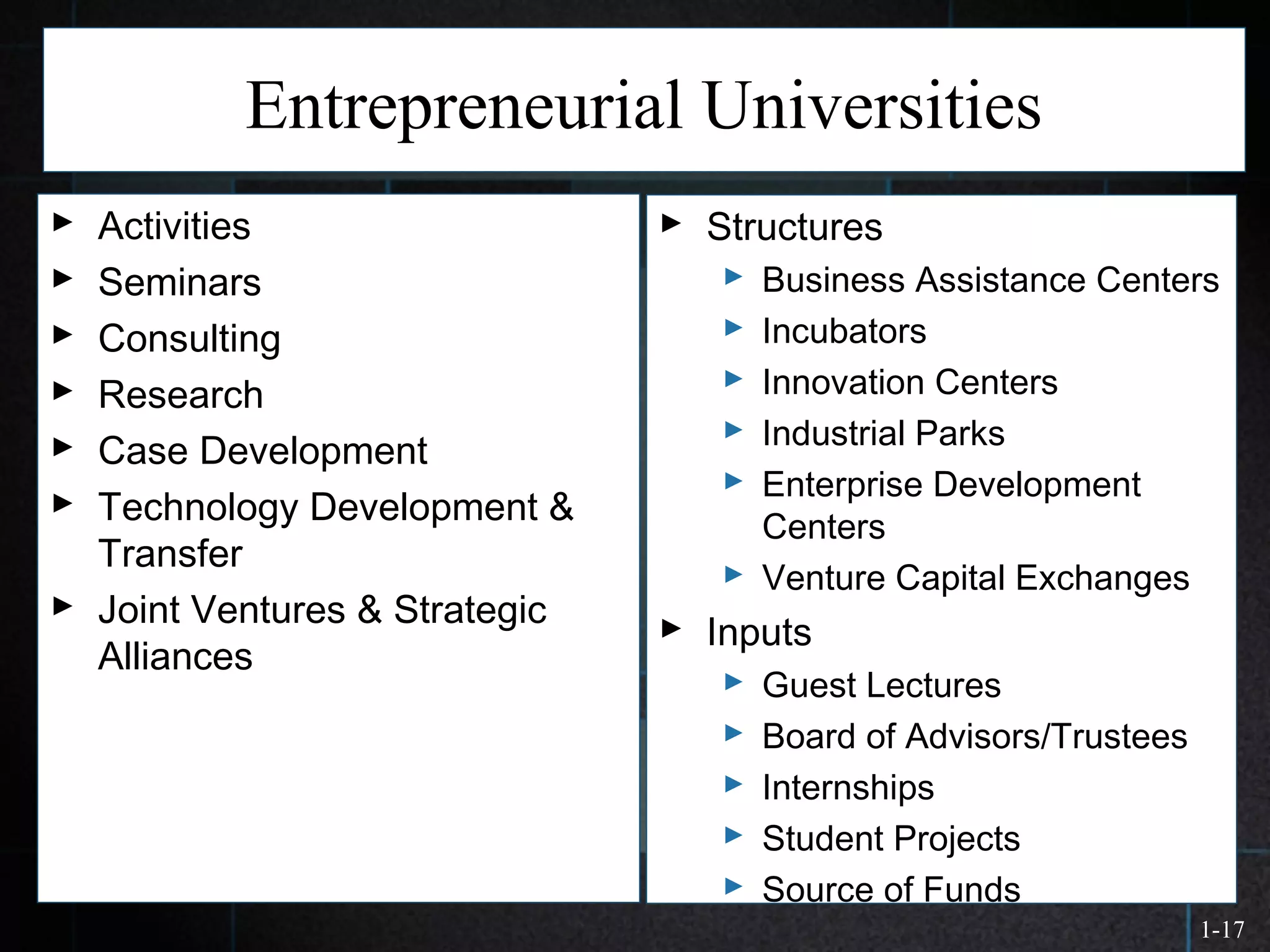
Entrepreneurial Universities
 Activities
 Seminars
 Consulting
 Research
 Case Development
 Technology Development &
Transfer
 Joint Ventures & Strategic
Alliances
 Structures
 Business Assistance Centers
 Incubators
 Innovation Centers
 Industrial Parks
 Enterprise Development
Centers
 Venture Capital Exchanges
 Inputs
 Guest Lectures
 Board of Advisors/Trustees
 Internships
 Student Projects
 Source of Funds

Entrepreneurship Chap 1

  • 2.
    1-2 The Nature andImportance of Entrepreneurship McGraw-Hill/Irwin Entrepreneurship, 7/e Copyright © 2008 The McGraw-Hill Companies, Inc. All rights reserved. Chapter 1
  • 3.
    1-3 Development of Entrepreneurship(1 of 2)  Earliest Period  Entrepreneurs would sign contracts with a money person.  Example: Marco Polo  Middle Ages  Entrepreneurs were actors and people who managed large production projects.  17th Century  Entrepreneurs entered into contractual arrangements with the government.  Example: Mississippi Company
  • 4.
    1-4 Development of Entrepreneurship(2 of 2)  18th Century  With global industrialization taking place, entrepreneurs were distinguished from capital providers.  Inventions developed during this time were reactions to the changing world.  Example: Edison & Whitney  19th and 20th Centuries  Entrepreneurs were not distinguished from managers.  They were viewed mostly from an economic perspective.  Concept of innovation and newness was an integral part.  Example: Andrew Carnegie
  • 5.
    1-5 Definition of EntrepreneursToday  Entrepreneurship is the process of creating something new and assuming the risks and rewards.  Four aspects of being an entrepreneur today:  Involves creation process.  Requires devotion of time and effort.  Involves rewards of being an entrepreneur.  Requires assumption of necessary risks.
  • 6.
    1-6 Entrepreneurs Versus Inventors Inventor: Creates something for the first time; highly driven and motivated by his or her own work and personal ideas.  Differentiating characteristics of an inventor:  Education.  Level of experience.  Problem-solving skills.  Level of self-confidence.  Willingness to take risks.  Ability to tolerate ambiguity and uncertainty.  View of monetary benefits in measuring success.
  • 7.
    1-7 The Entrepreneurial Process Four distinct phases:  Identify and evaluate the opportunity.  Window of opportunity.  Develop a business plan.  Determine the resource requirement.  Manage the resulting enterprise.
  • 8.
    1-8 Aspects of theEntrepreneurial Process Table 1.1 <<Insert Table 1.1>>
  • 9.
    1-9 Types of Start-Ups Lifestyle firm  Privately held; usually achieves only modest growth.  Foundation company  Created from research and development.  Lays the foundation for a new business area.  High-potential venture  Receives the greatest investment interest and publicity.  Starts out like a foundation company, but attains rapid growth.  Also called gazelles, is integral to the economic development of an area.
  • 10.
    1-10 Role of Entrepreneurshipin Economic Development  Innovation is depicted as a key to economic development.  Product-evolution process: Process through which innovation is developed and commercialized.  Iterative synthesis: Critical point in the product-evolution process.  Three types of innovation:  Ordinary  Technological  Breakthrough
  • 11.
    1-11 Product Evolution Need RecognitionNeedRecognition Initiate InnovationInitiate Innovation DevelopmentDevelopment IndustrialIndustrial Press to InventPress to Invent
  • 12.
    1-12 Government as anInnovator  One channel for commercializing the results of the synthesis of social need and technology.  Frequently called technology transfer.  Relatively few innovations reach commercial markets.  Lacks business skills necessary for successful commercialization.  Government bureaucracy and red tape act as inhibitors.
  • 13.
    1-13 Corporate Entrepreneurship  Strengthsof an existing business:  Financial resources.  Business skills.  Marketing and distribution systems.  Factors that inhibit successful commercialization:  Bureaucratic structure.  Emphasis on short-term profits.  A highly structured organization.  In the current era of hypercompetition, strategic business units (SBUs) are emerging.
  • 14.
    1-14 Independent Entrepreneurship  Factorsthat inhibit commercialization:  Managerial skills.  Marketing capabilities.  Financial resources.  Unrealistic inventions.  Lack of awareness on interfacing with necessary entities (banks, suppliers, customers, venture capitalists, distributors, and advertising agencies).
  • 15.
    1-15 Ethics and SocialResponsibility  Entrepreneurs usually develop an internal ethical code.   Personal value systems tend to be influenced by:  Peer pressure.  General social norms in the community.  Pressures from their competitors.
  • 16.
    1-16 Future  Entrepreneurship hasgained mileage through a number of ways:  Entrepreneurial education.  Increase in academic research.  Societal support (media coverage).  Corporate entrepreneurship.
  • 17.
    1-17 Entrepreneurial Universities  Activities Seminars  Consulting  Research  Case Development  Technology Development & Transfer  Joint Ventures & Strategic Alliances  Structures  Business Assistance Centers  Incubators  Innovation Centers  Industrial Parks  Enterprise Development Centers  Venture Capital Exchanges  Inputs  Guest Lectures  Board of Advisors/Trustees  Internships  Student Projects  Source of Funds