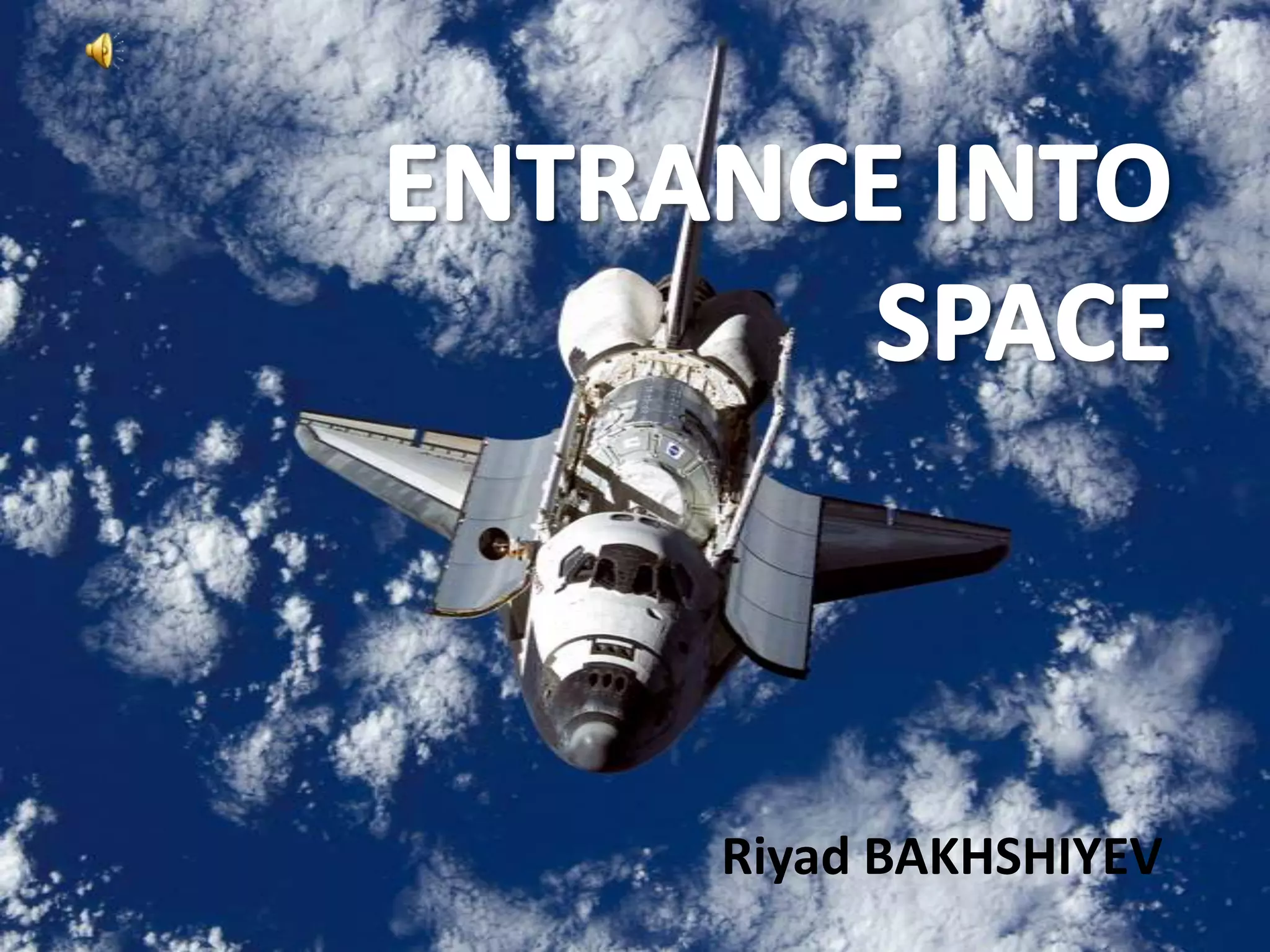
Riyad BAKHSHIYEV
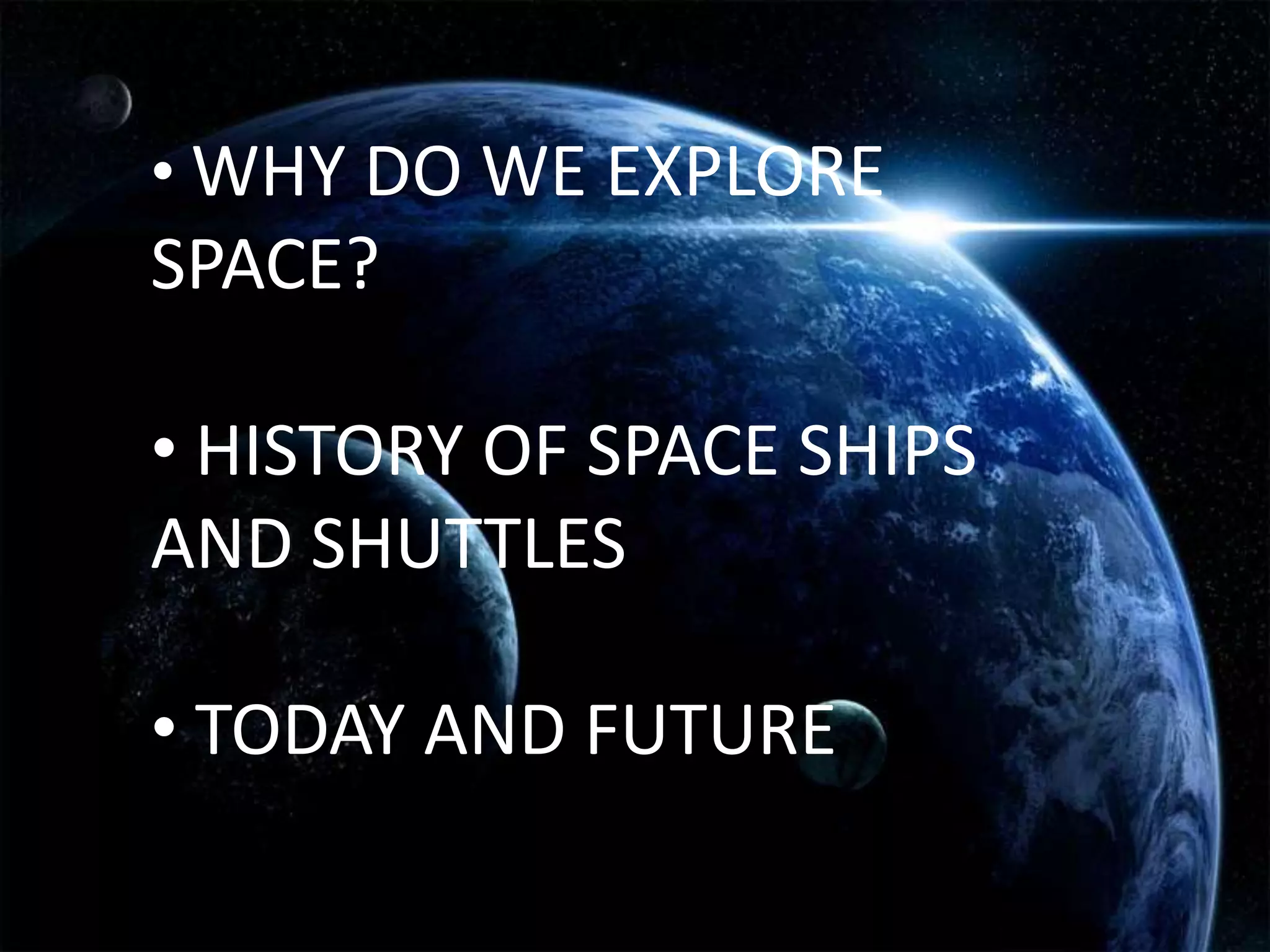
• WHY DO WE EXPLORE
SPACE?

• HISTORY OF SPACE SHIPS
AND SHUTTLES

• TODAY AND FUTURE
Why Do We Explore Space?
• Because it’s there
• Quest for knowledge
• Learn about what is around us – dangers,
benefits, natural resources
   - Reap benefits of what’s around
   - Reap benefits of preparing for /
   undertaking exploration itself –
   technology and techniques
   - Survival
• Quest for understanding - learn about
ourselves and our place in the universe
HISTORY OF
SPACE SHIPS
   AND
 SHUTTLES
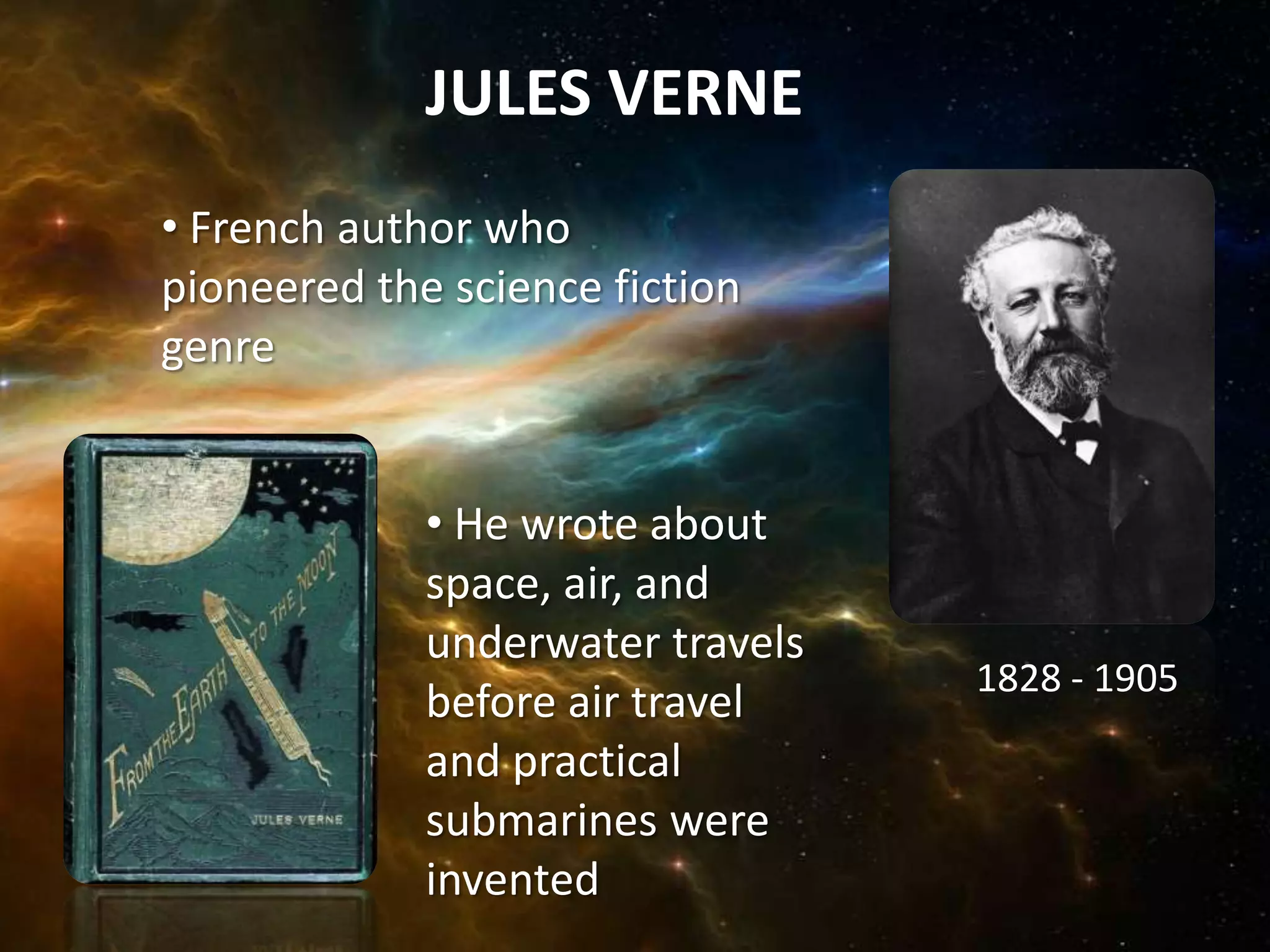
JULES VERNE
• French author who
pioneered the science fiction
genre


             • He wrote about
             space, air, and
             underwater travels
                                  1828 - 1905
             before air travel
             and practical
             submarines were
             invented
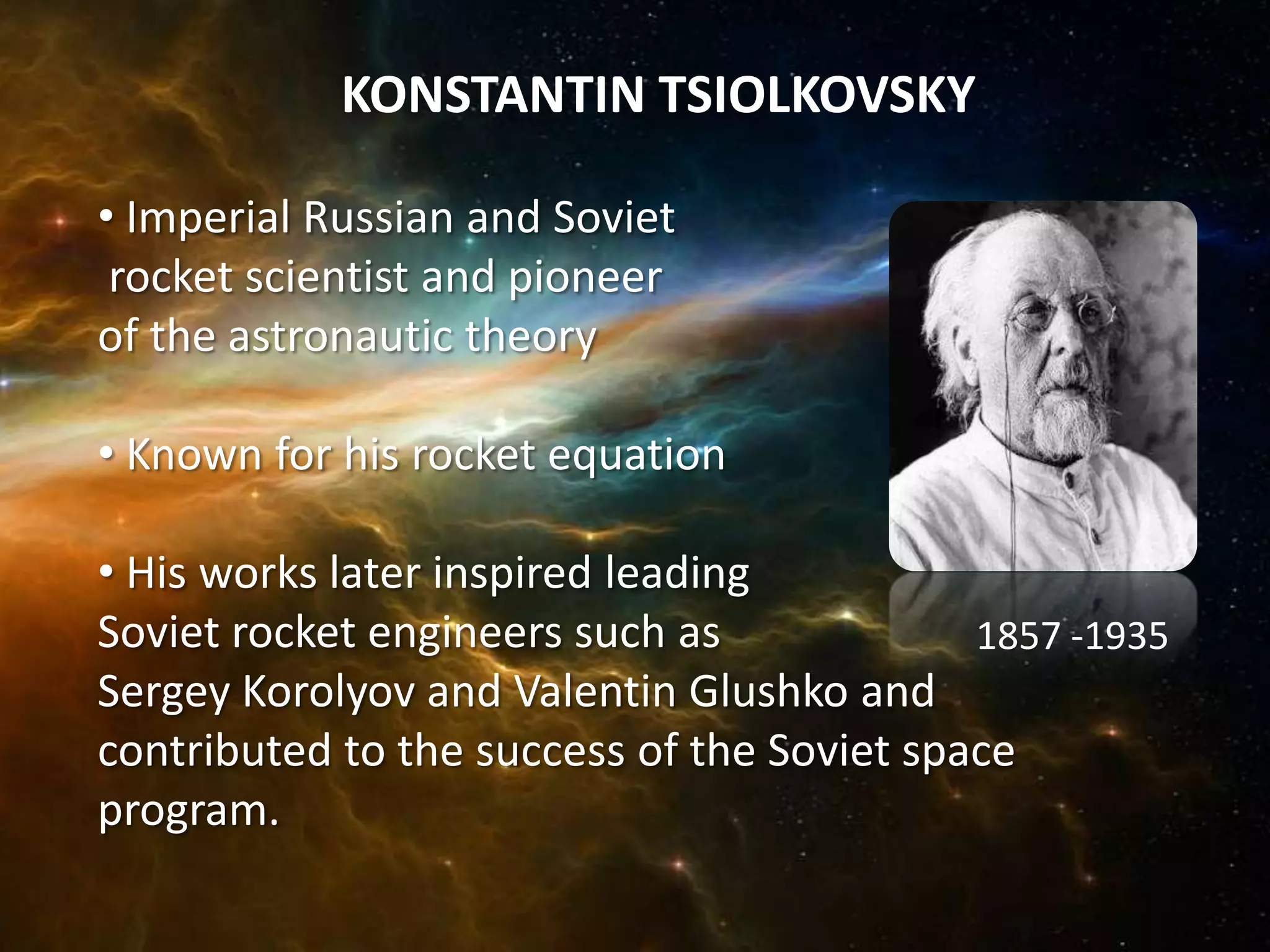
KONSTANTIN TSIOLKOVSKY

• Imperial Russian and Soviet
 rocket scientist and pioneer
of the astronautic theory

• Known for his rocket equation

• His works later inspired leading
Soviet rocket engineers such as             1857 -1935
Sergey Korolyov and Valentin Glushko and
contributed to the success of the Soviet space
program.
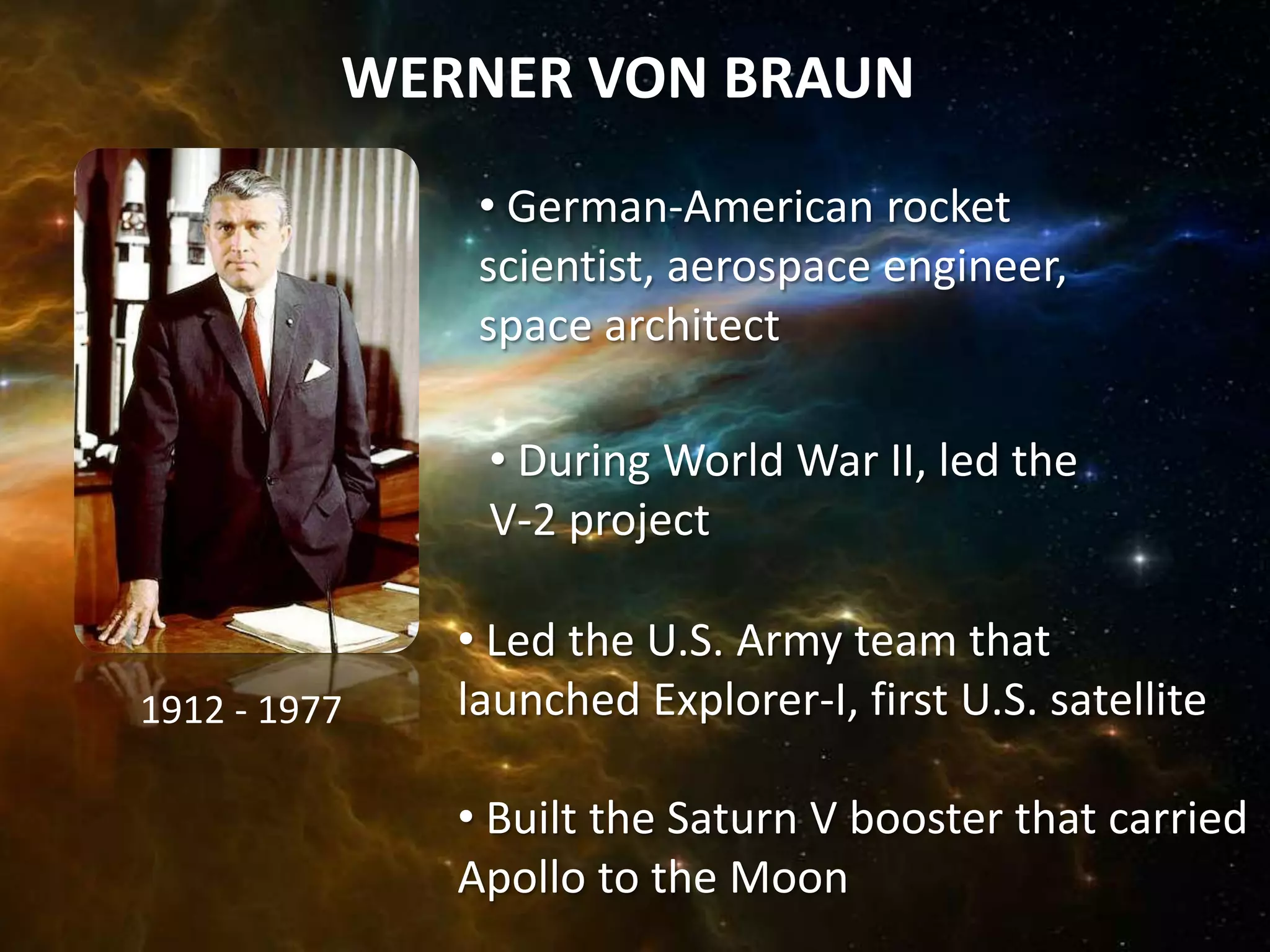
WERNER VON BRAUN
               • German-American rocket
               scientist, aerospace engineer,
               space architect

               • During World War II, led the
               V-2 project

              • Led the U.S. Army team that
1912 - 1977   launched Explorer-I, first U.S. satellite

              • Built the Saturn V booster that carried
              Apollo to the Moon
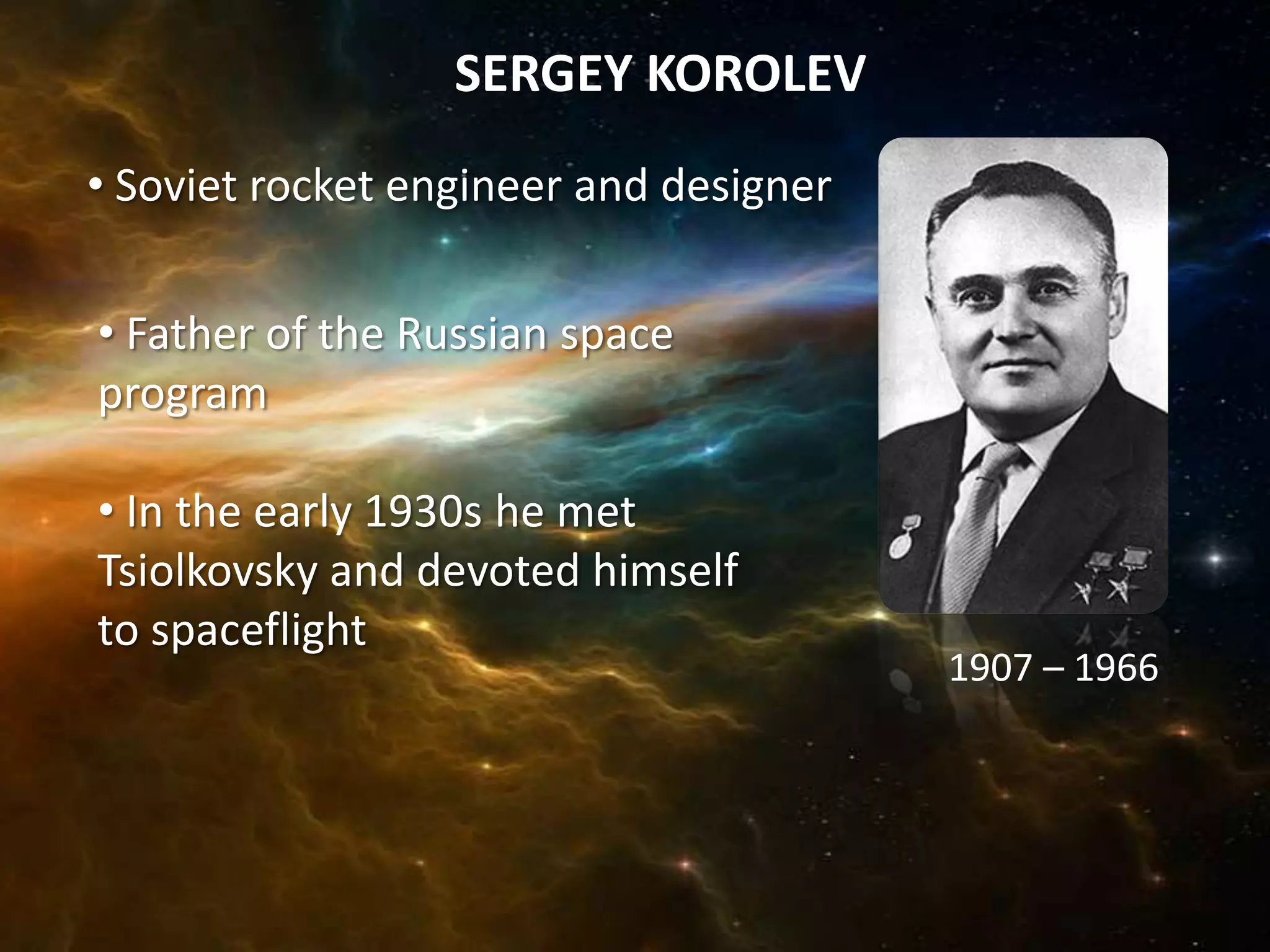
SERGEY KOROLEV
• Soviet rocket engineer and designer


• Father of the Russian space
program

• In the early 1930s he met
Tsiolkovsky and devoted himself
to spaceflight
                                        1907 – 1966
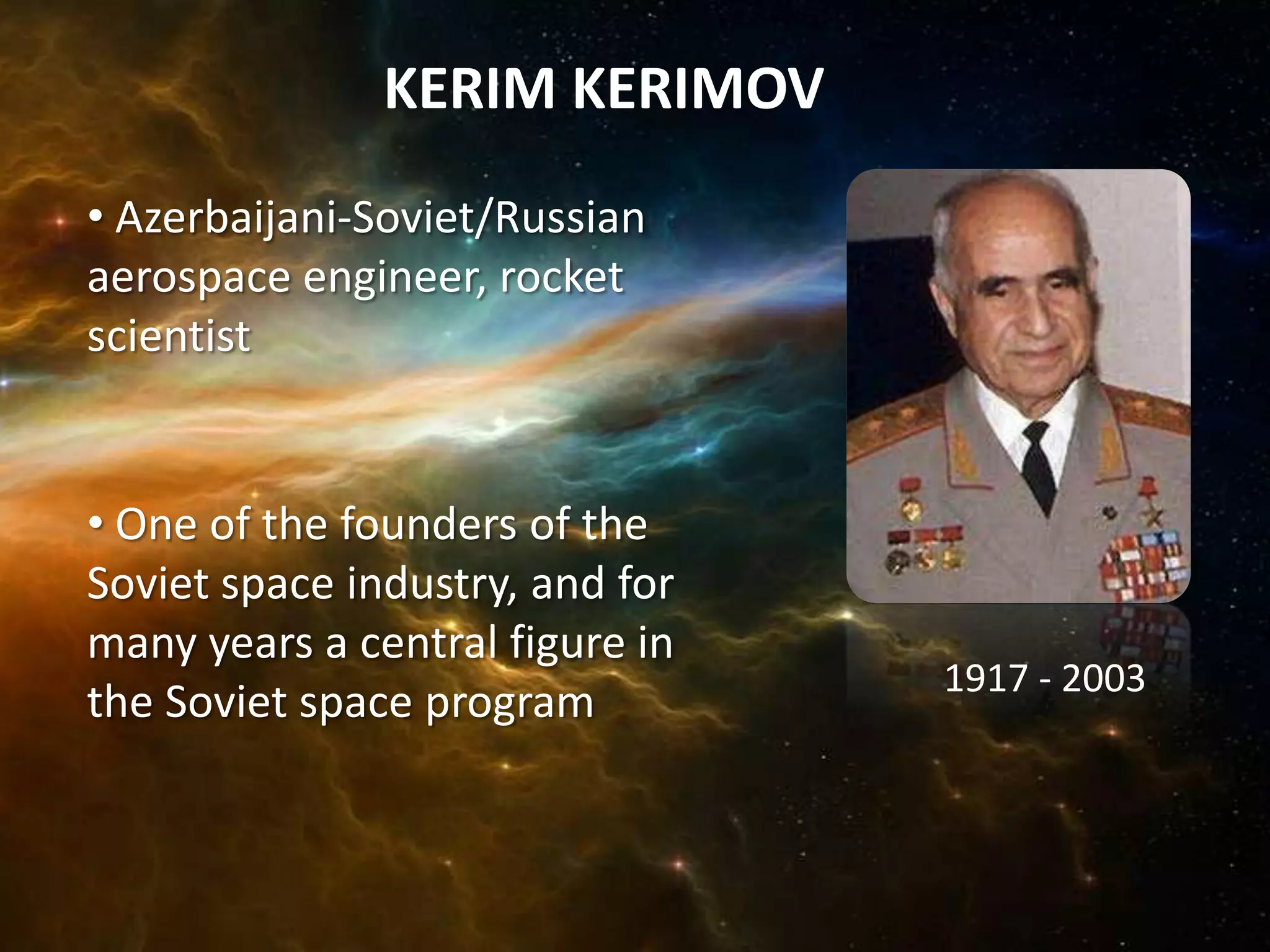
KERIM KERIMOV
• Azerbaijani-Soviet/Russian
aerospace engineer, rocket
scientist


• One of the founders of the
Soviet space industry, and for
many years a central figure in
                                 1917 - 2003
the Soviet space program
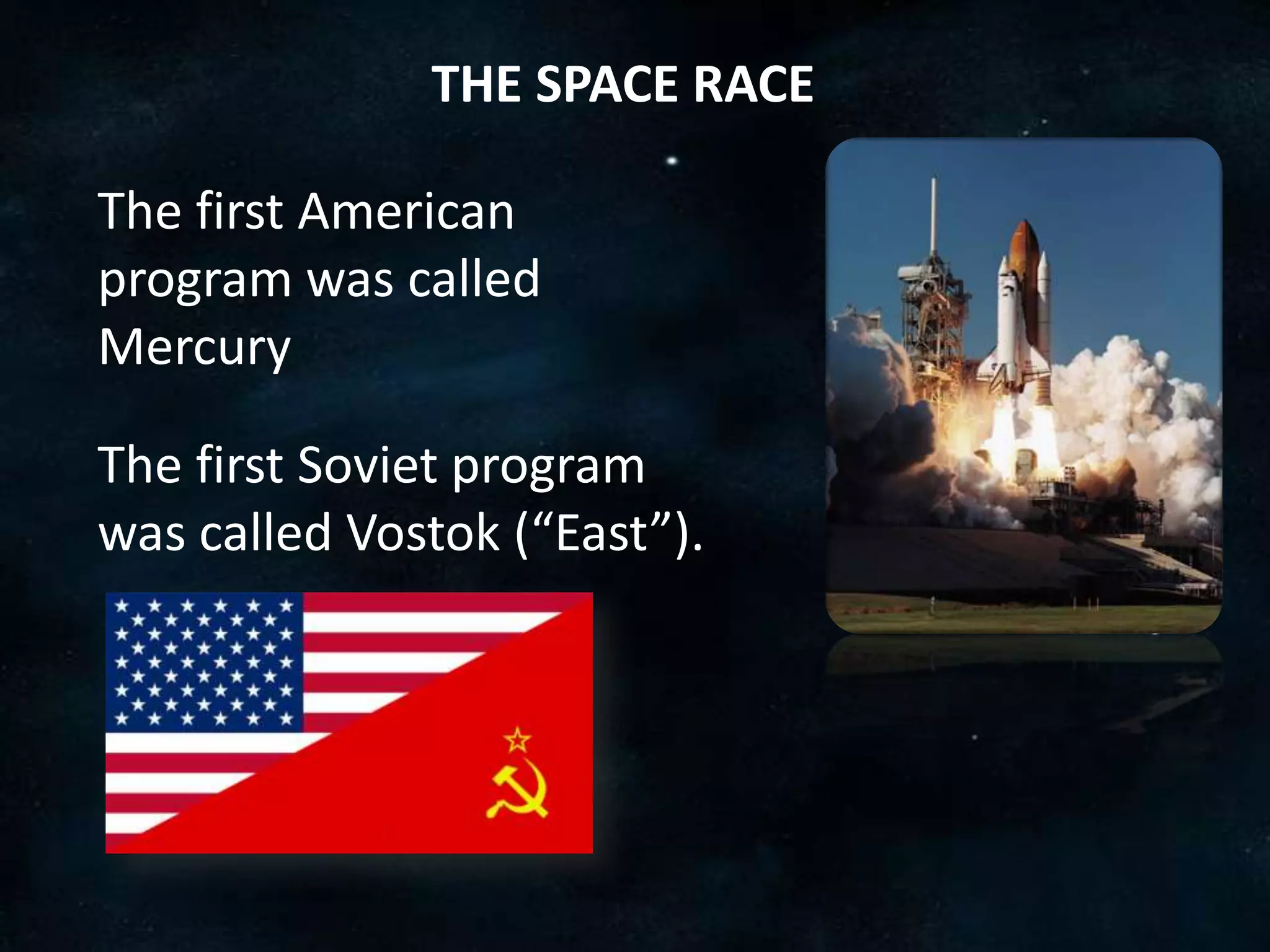
THE SPACE RACE

The first American
program was called
Mercury

The first Soviet program
was called Vostok (“East”).
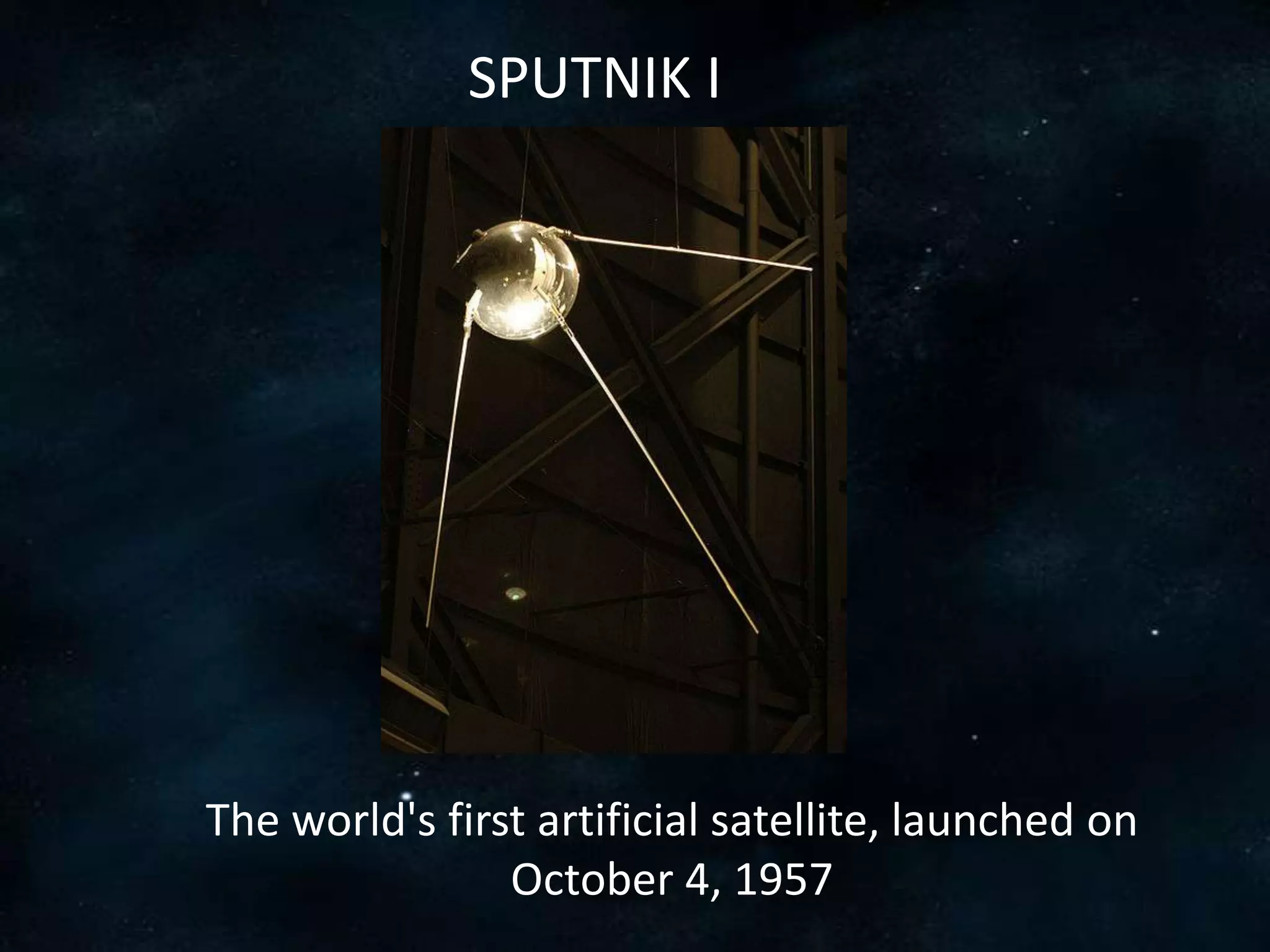
SPUTNIK I


The world's first artificial satellite, launched on
                October 4, 1957
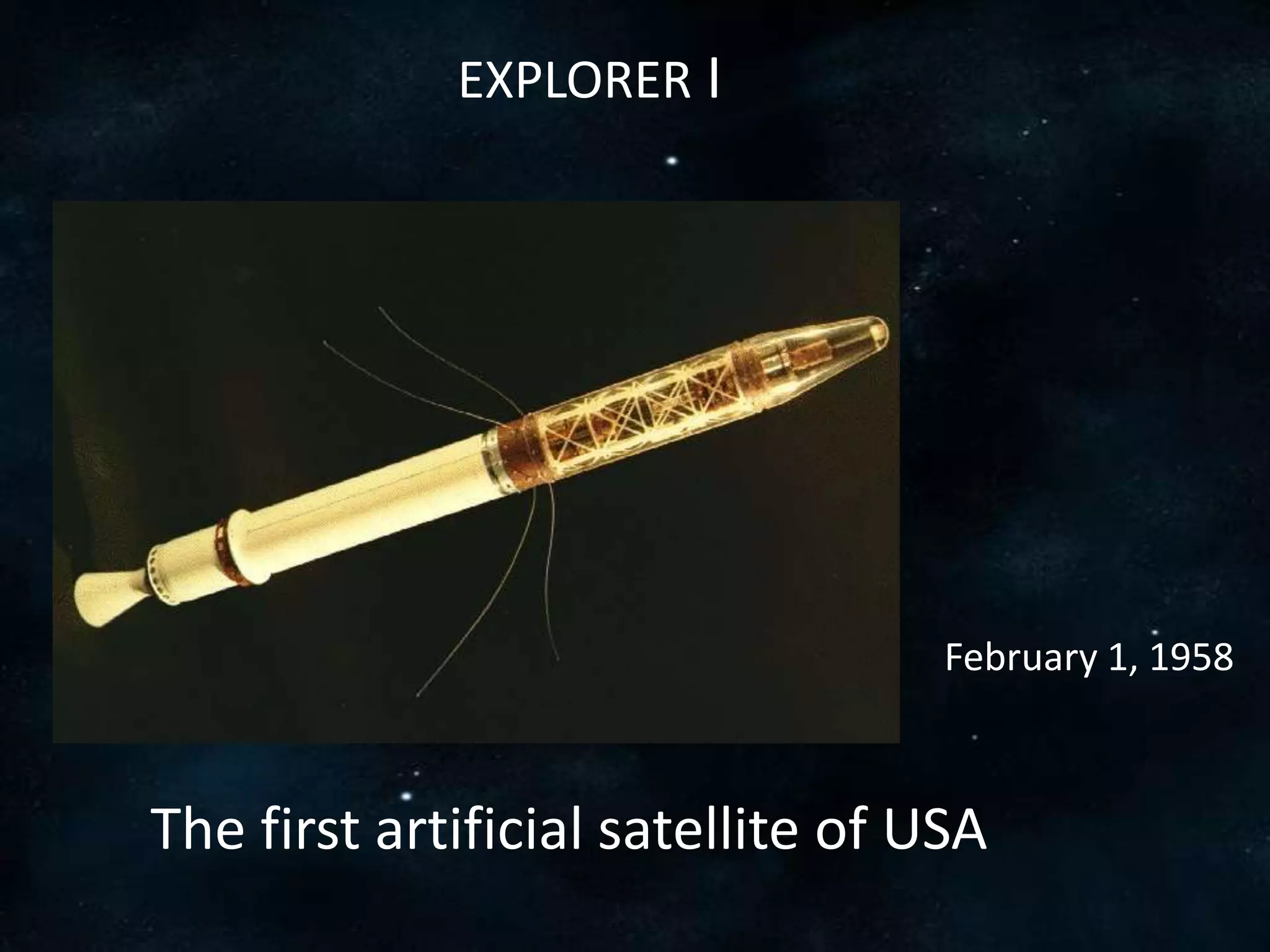
EXPLORER I


                                   February 1, 1958


The first artificial satellite of USA
NASA


On July 29, 1958 The National Aeronautics
and Space Administration (NASA) was
established in USA
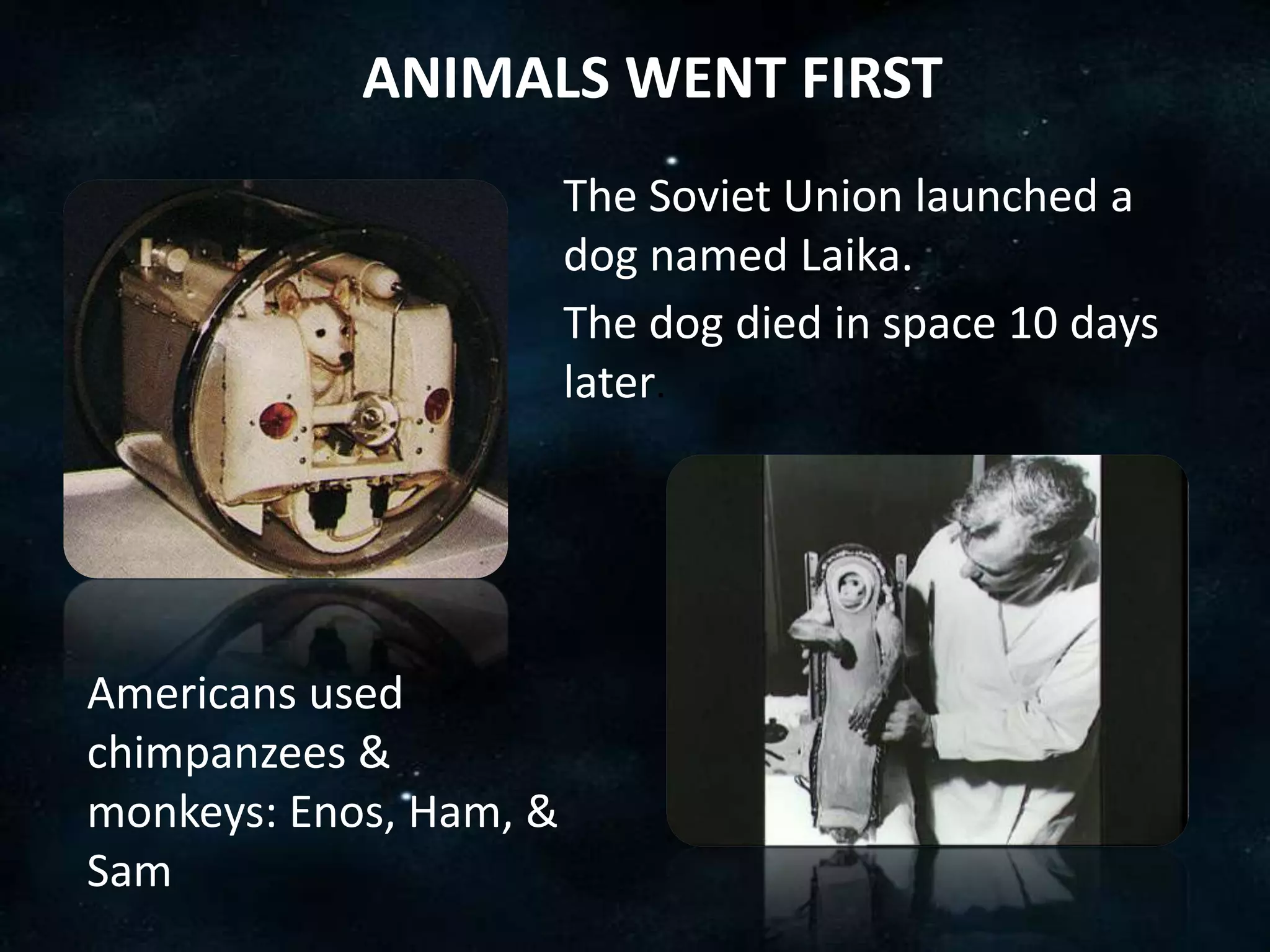
ANIMALS WENT FIRST
                        The Soviet Union launched a
                        dog named Laika.
                        The dog died in space 10 days
                        later.


Americans used
chimpanzees &
monkeys: Enos, Ham, &
Sam
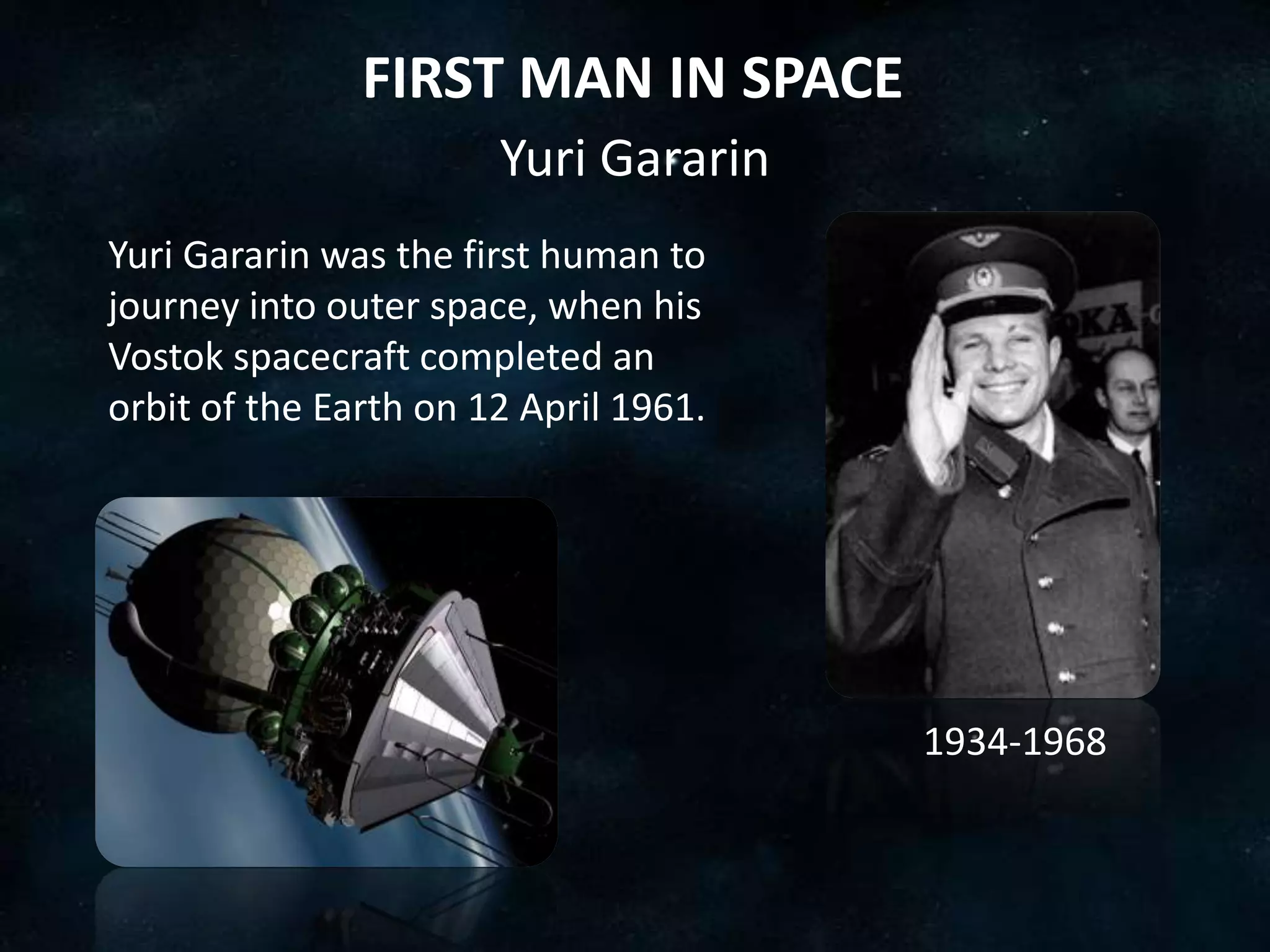
FIRST MAN IN SPACE
                       Yuri Gararin
Yuri Gararin was the first human to
journey into outer space, when his
Vostok spacecraft completed an
orbit of the Earth on 12 April 1961.


                                       1934-1968
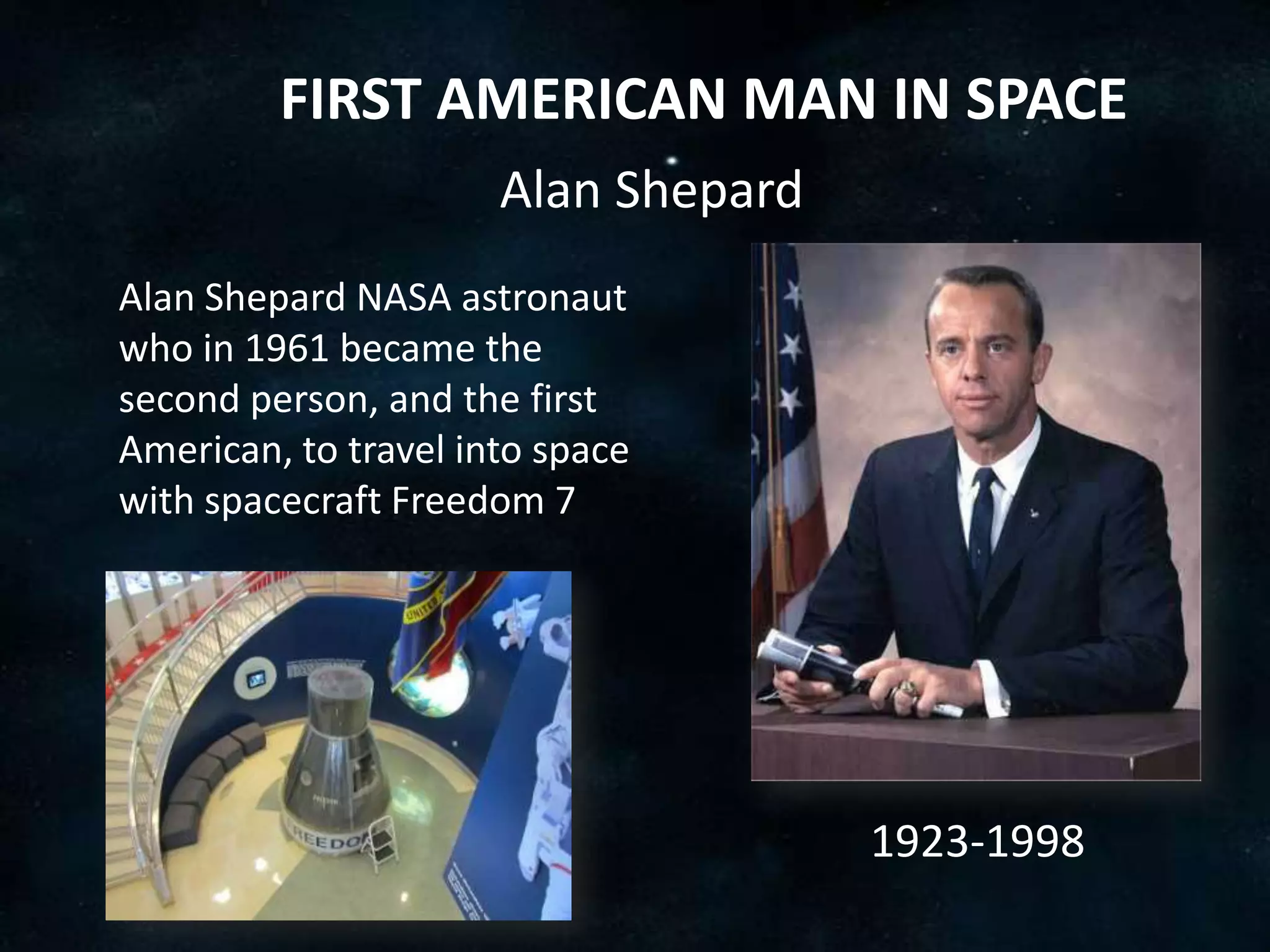
FIRST AMERICAN MAN IN SPACE
                      Alan Shepard
Alan Shepard NASA astronaut
who in 1961 became the
second person, and the first
American, to travel into space
with spacecraft Freedom 7


                                     1923-1998
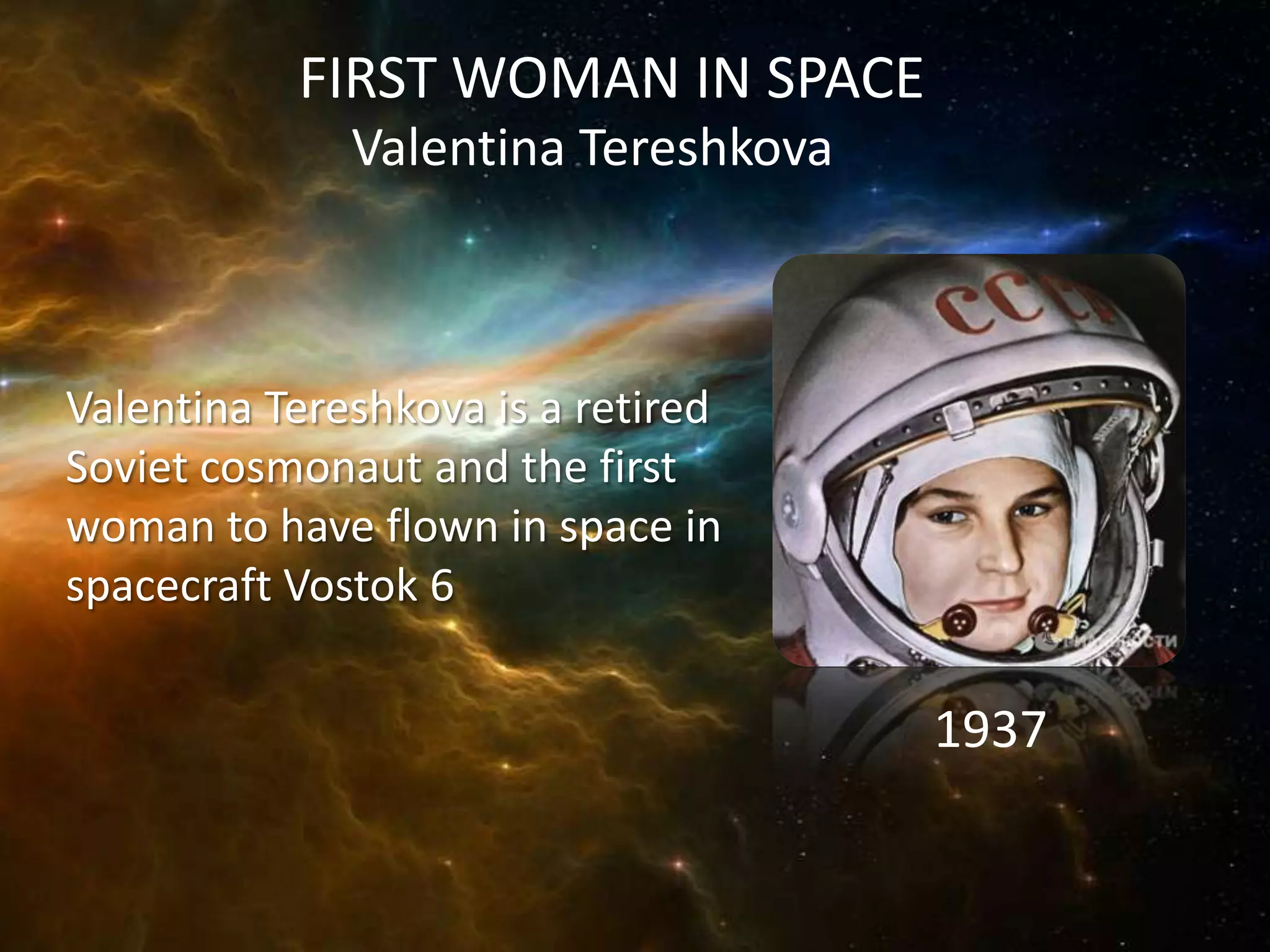
FIRST WOMAN IN SPACE
              Valentina Tereshkova


Valentina Tereshkova is a retired
Soviet cosmonaut and the first
woman to have flown in space in
spacecraft Vostok 6

                                     1937
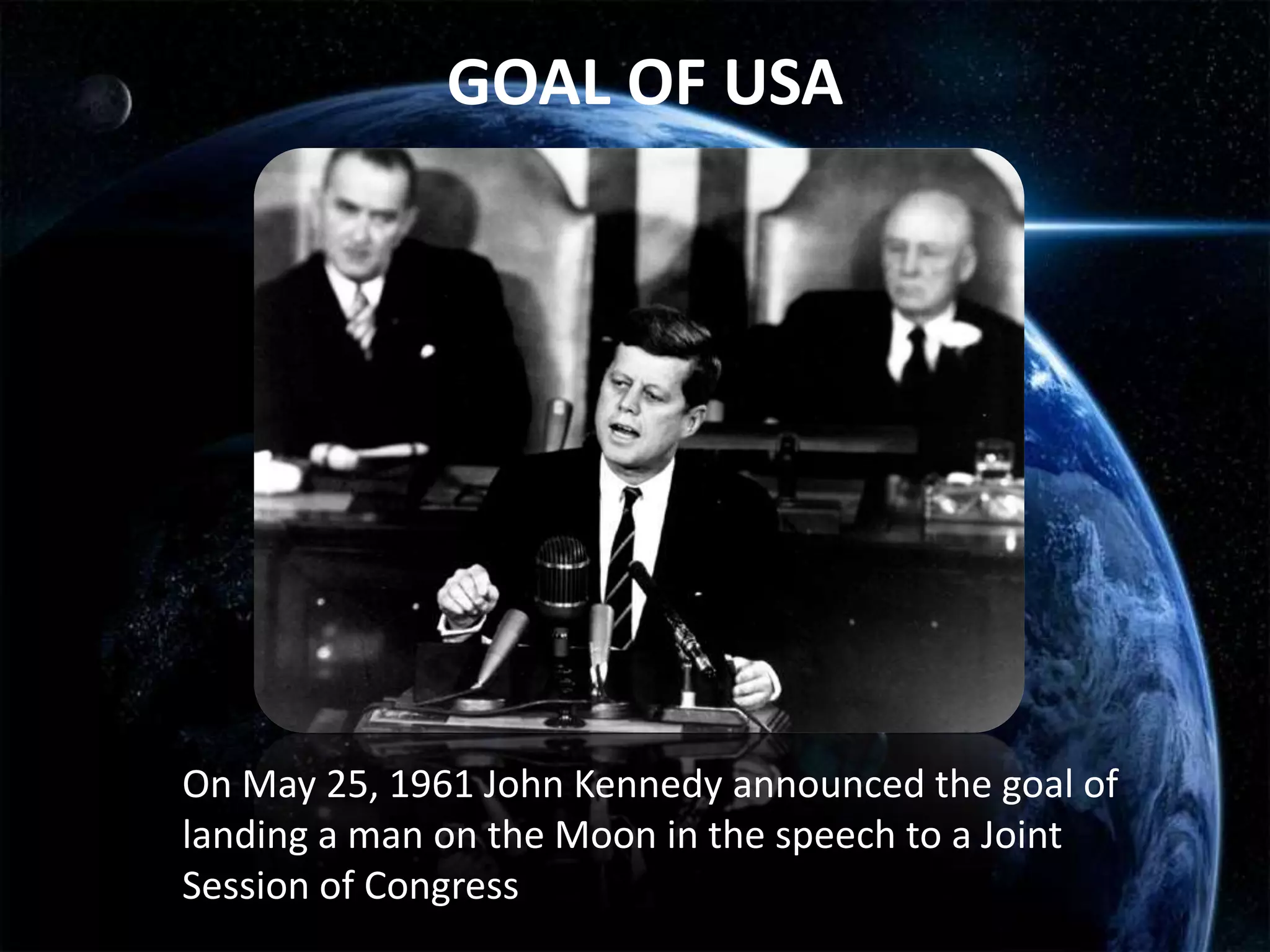
GOAL OF USA


On May 25, 1961 John Kennedy announced the goal of
landing a man on the Moon in the speech to a Joint
Session of Congress
APOLLO MISSIONS
The Apollo missions were a series
of space missions flown by NASA
between 1961 and 1975. They
culminated with a series of
manned Moon landings between
1969 and 1972.

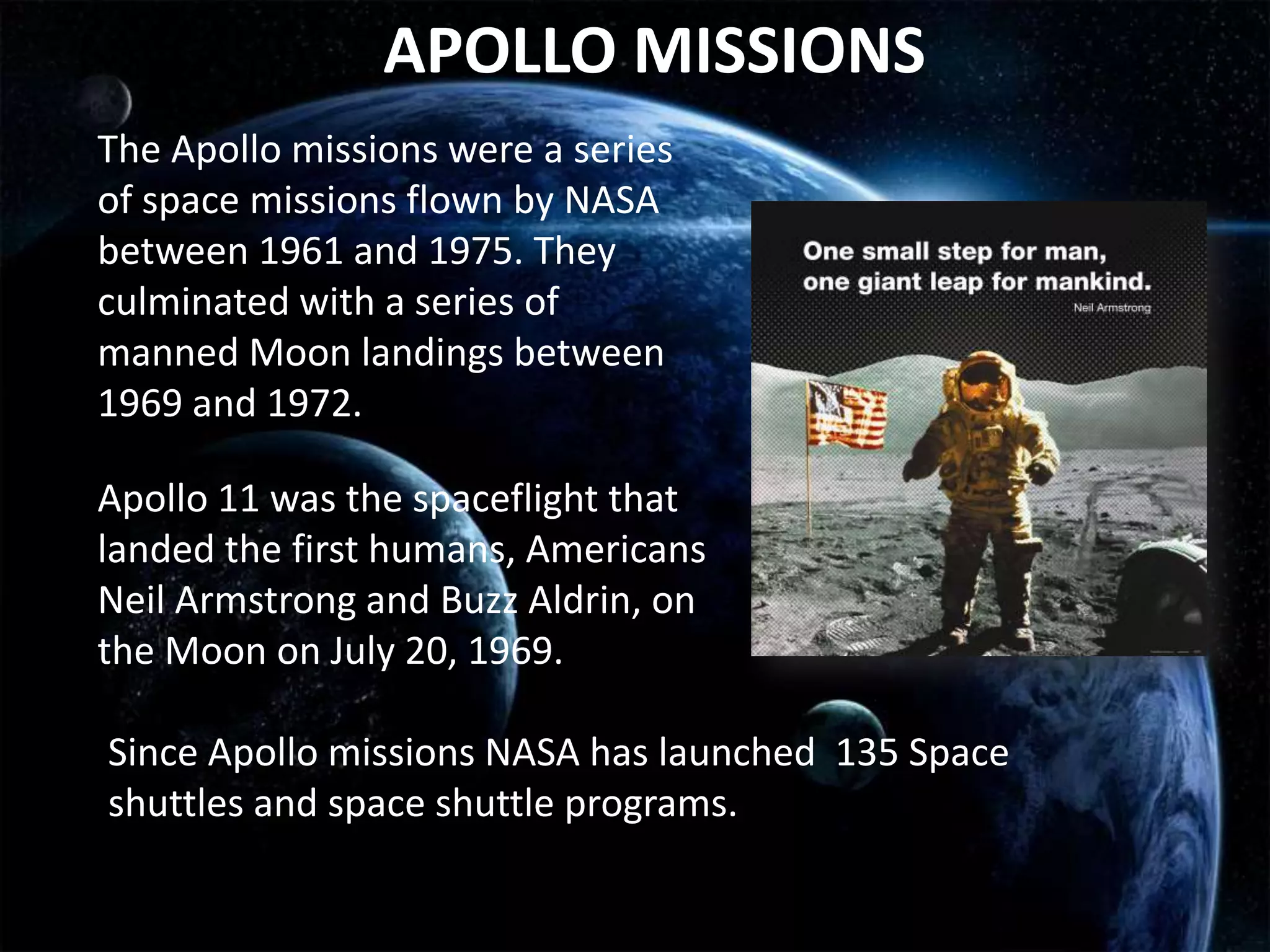
Apollo 11 was the spaceflight that
landed the first humans, Americans
Neil Armstrong and Buzz Aldrin, on
the Moon on July 20, 1969.

Since Apollo missions NASA has launched 135 Space
shuttles and space shuttle programs.
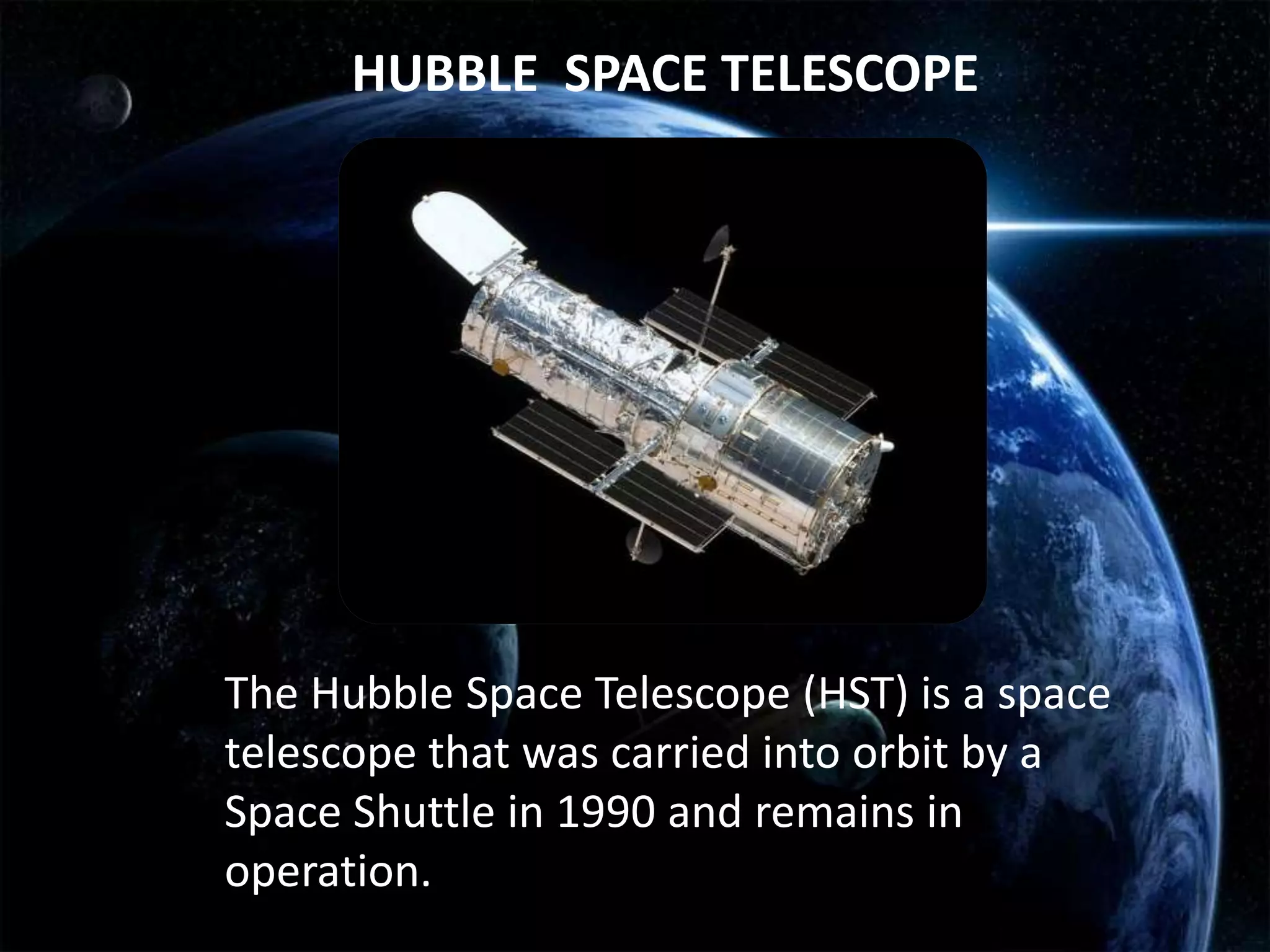
HUBBLE SPACE TELESCOPE


The Hubble Space Telescope (HST) is a space
telescope that was carried into orbit by a
Space Shuttle in 1990 and remains in
operation.
TODAY AND FUTURE
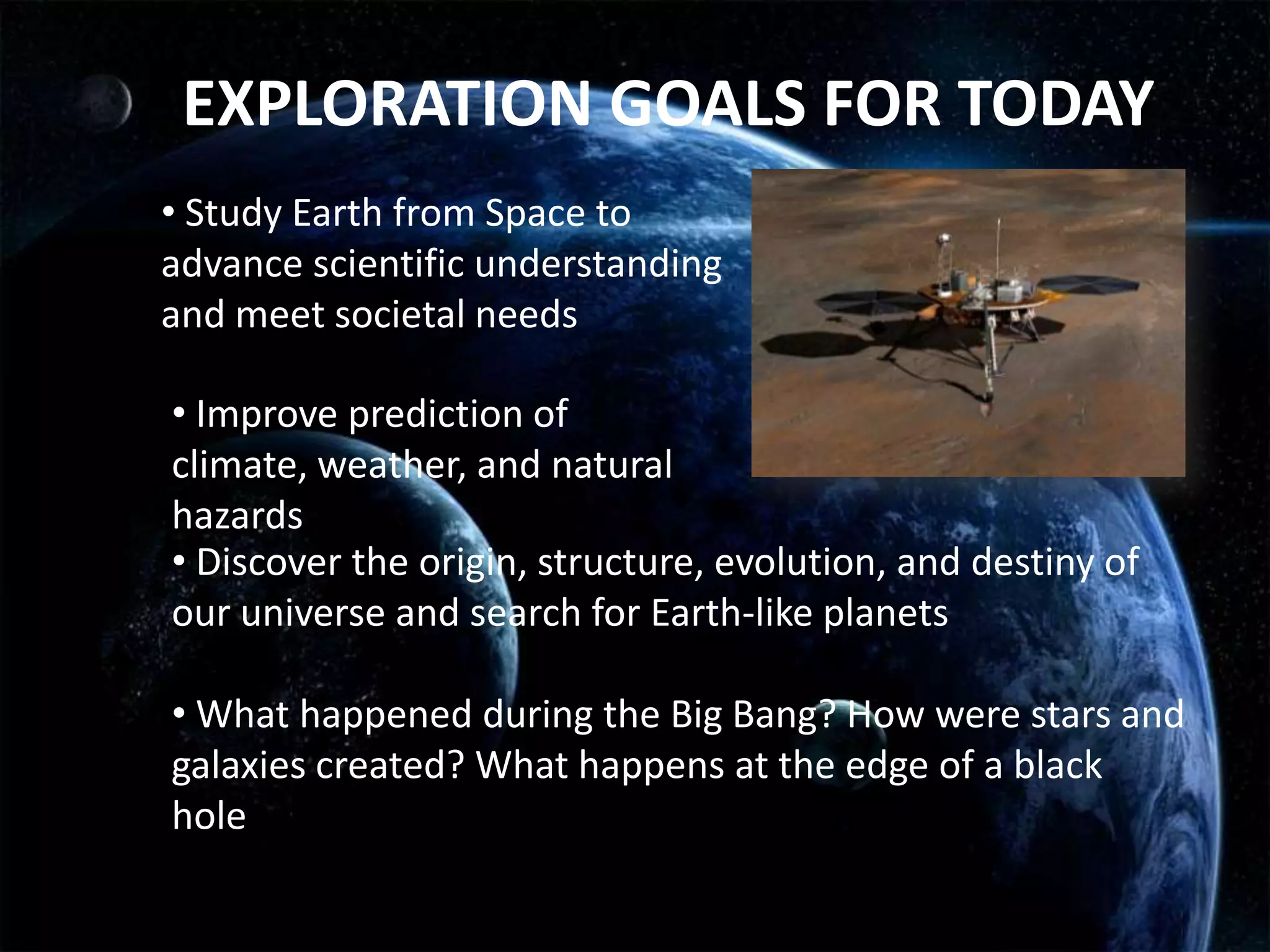
EXPLORATION GOALS FOR TODAY
• Study Earth from Space to
advance scientific understanding
and meet societal needs

• Improve prediction of
climate, weather, and natural
hazards
• Discover the origin, structure, evolution, and destiny of
our universe and search for Earth-like planets

• What happened during the Big Bang? How were stars and
galaxies created? What happens at the edge of a black
hole?
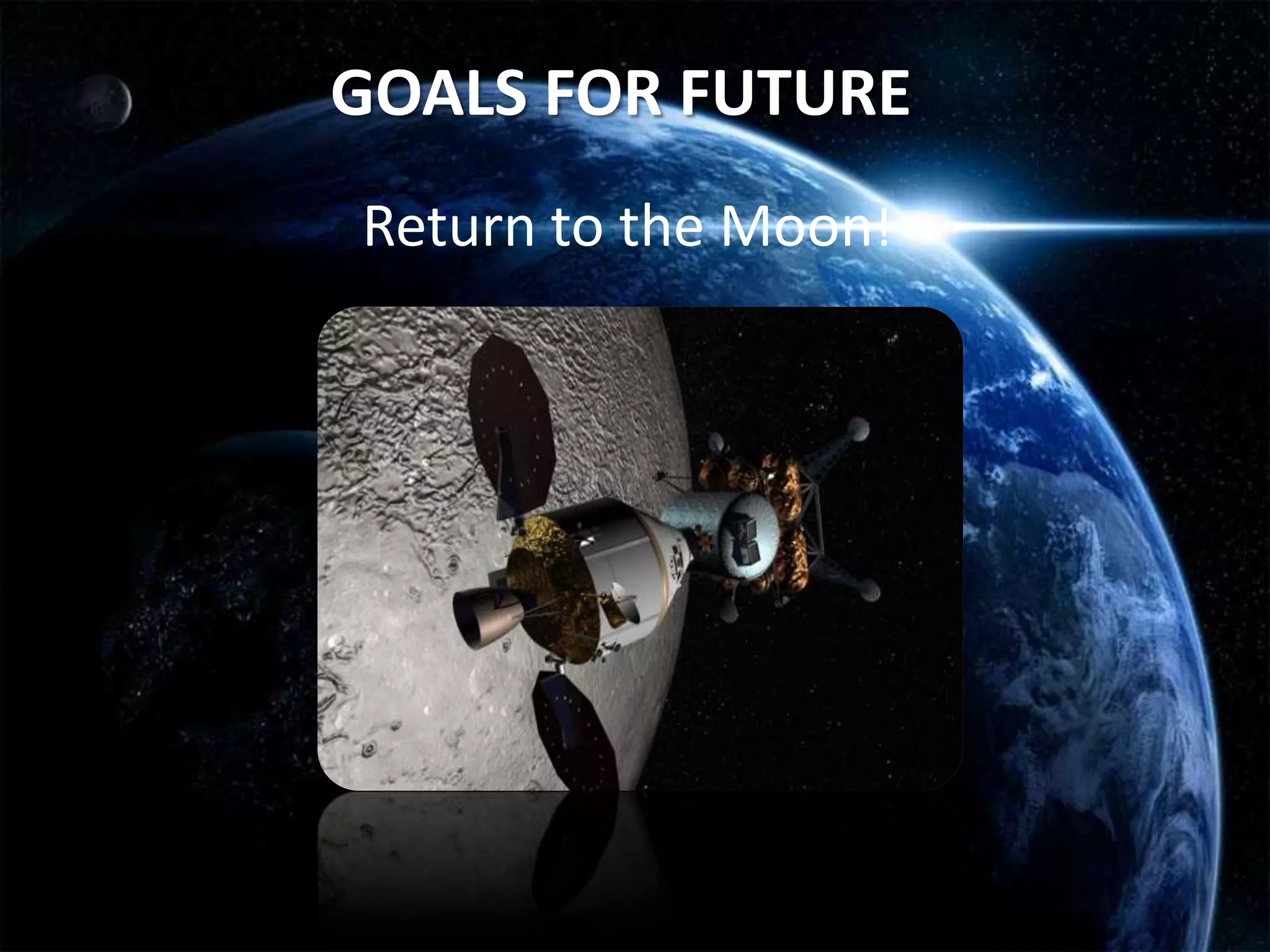
GOALS FOR FUTURE
Return to the Moon!
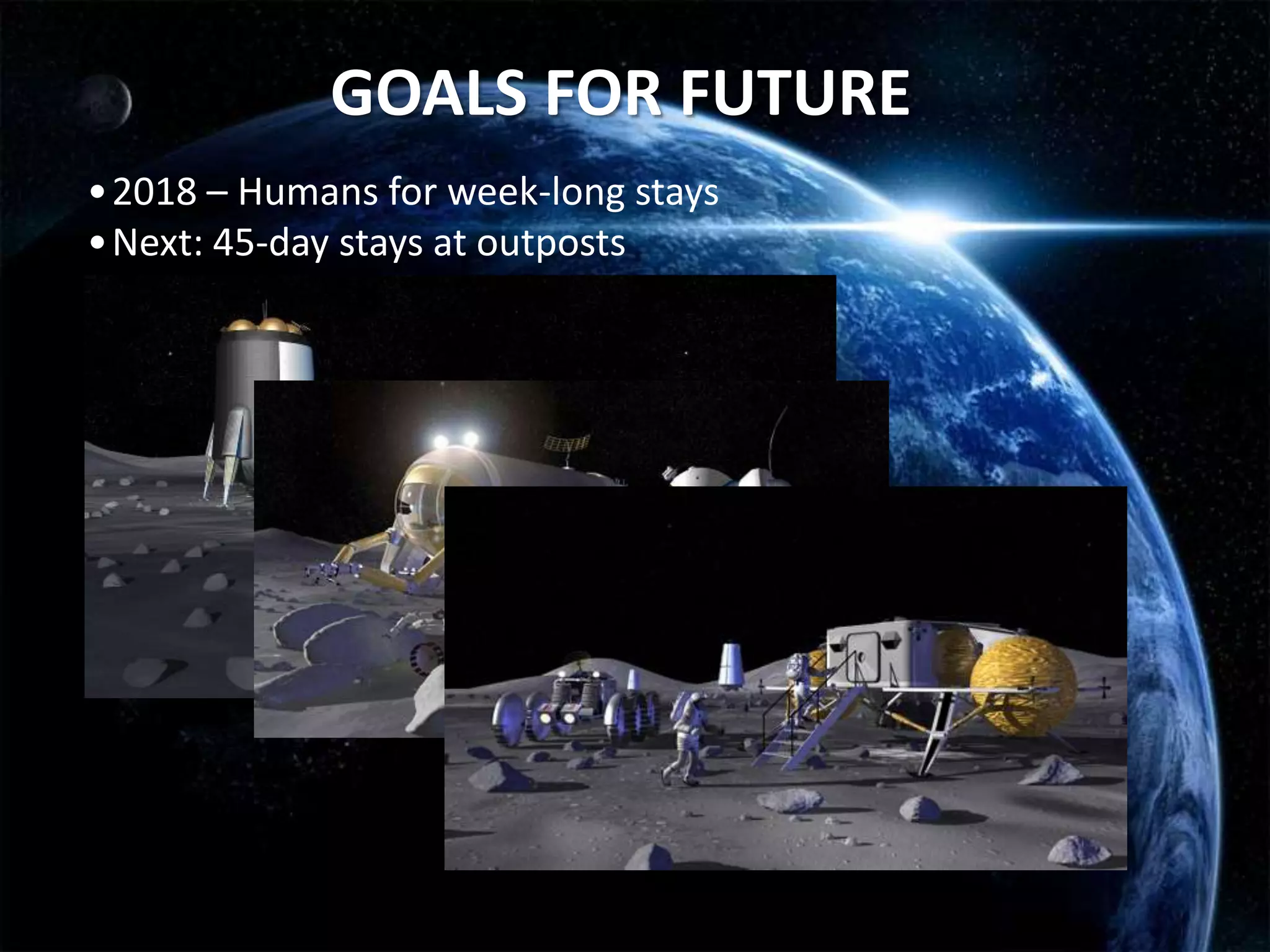
GOALS FOR FUTURE
•2018 – Humans for week-long stays
•Next: 45-day stays at outposts
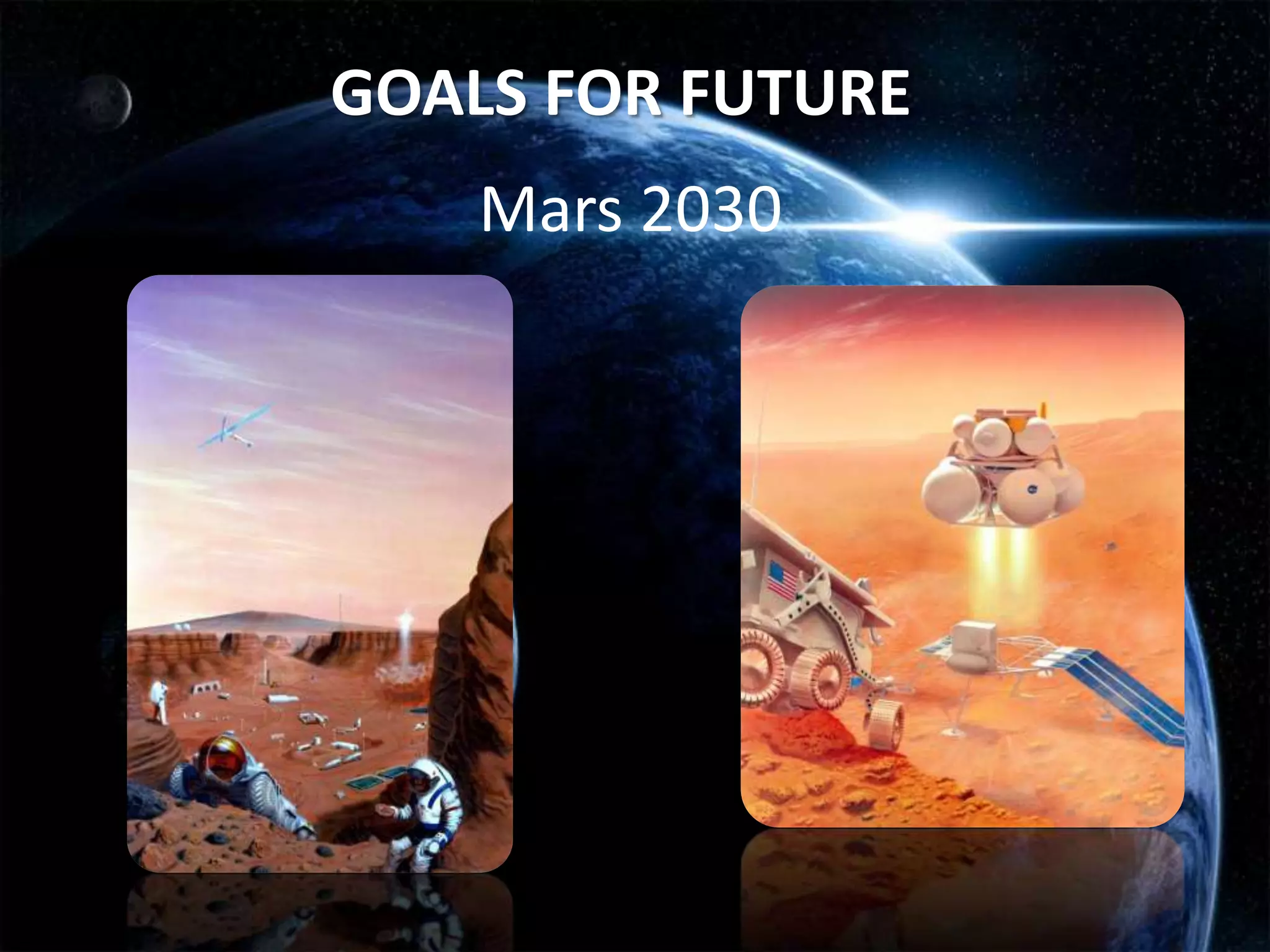
GOALS FOR FUTURE
    Mars 2030
THANKS FOR PAYING
   ATTENTION

Entrance into space

  • 1.
  • 2.
    • WHY DOWE EXPLORE SPACE? • HISTORY OF SPACE SHIPS AND SHUTTLES • TODAY AND FUTURE
  • 3.
    Why Do WeExplore Space? • Because it’s there • Quest for knowledge • Learn about what is around us – dangers, benefits, natural resources - Reap benefits of what’s around - Reap benefits of preparing for / undertaking exploration itself – technology and techniques - Survival • Quest for understanding - learn about ourselves and our place in the universe
  • 4.
  • 5.
    JULES VERNE • Frenchauthor who pioneered the science fiction genre • He wrote about space, air, and underwater travels 1828 - 1905 before air travel and practical submarines were invented
  • 6.
    KONSTANTIN TSIOLKOVSKY • ImperialRussian and Soviet rocket scientist and pioneer of the astronautic theory • Known for his rocket equation • His works later inspired leading Soviet rocket engineers such as 1857 -1935 Sergey Korolyov and Valentin Glushko and contributed to the success of the Soviet space program.
  • 7.
    WERNER VON BRAUN • German-American rocket scientist, aerospace engineer, space architect • During World War II, led the V-2 project • Led the U.S. Army team that 1912 - 1977 launched Explorer-I, first U.S. satellite • Built the Saturn V booster that carried Apollo to the Moon
  • 8.
    SERGEY KOROLEV • Sovietrocket engineer and designer • Father of the Russian space program • In the early 1930s he met Tsiolkovsky and devoted himself to spaceflight 1907 – 1966
  • 9.
    KERIM KERIMOV • Azerbaijani-Soviet/Russian aerospaceengineer, rocket scientist • One of the founders of the Soviet space industry, and for many years a central figure in 1917 - 2003 the Soviet space program
  • 10.
    THE SPACE RACE Thefirst American program was called Mercury The first Soviet program was called Vostok (“East”).
  • 11.
    SPUTNIK I The world'sfirst artificial satellite, launched on October 4, 1957
  • 12.
    EXPLORER I February 1, 1958 The first artificial satellite of USA
  • 13.
    NASA On July 29,1958 The National Aeronautics and Space Administration (NASA) was established in USA
  • 14.
    ANIMALS WENT FIRST The Soviet Union launched a dog named Laika. The dog died in space 10 days later. Americans used chimpanzees & monkeys: Enos, Ham, & Sam
  • 15.
    FIRST MAN INSPACE Yuri Gararin Yuri Gararin was the first human to journey into outer space, when his Vostok spacecraft completed an orbit of the Earth on 12 April 1961. 1934-1968
  • 16.
    FIRST AMERICAN MANIN SPACE Alan Shepard Alan Shepard NASA astronaut who in 1961 became the second person, and the first American, to travel into space with spacecraft Freedom 7 1923-1998
  • 17.
    FIRST WOMAN INSPACE Valentina Tereshkova Valentina Tereshkova is a retired Soviet cosmonaut and the first woman to have flown in space in spacecraft Vostok 6 1937
  • 18.
    GOAL OF USA OnMay 25, 1961 John Kennedy announced the goal of landing a man on the Moon in the speech to a Joint Session of Congress
  • 19.
    APOLLO MISSIONS The Apollomissions were a series of space missions flown by NASA between 1961 and 1975. They culminated with a series of manned Moon landings between 1969 and 1972. Apollo 11 was the spaceflight that landed the first humans, Americans Neil Armstrong and Buzz Aldrin, on the Moon on July 20, 1969. Since Apollo missions NASA has launched 135 Space shuttles and space shuttle programs.
  • 21.
    HUBBLE SPACE TELESCOPE TheHubble Space Telescope (HST) is a space telescope that was carried into orbit by a Space Shuttle in 1990 and remains in operation.
  • 23.
  • 24.
    EXPLORATION GOALS FORTODAY • Study Earth from Space to advance scientific understanding and meet societal needs • Improve prediction of climate, weather, and natural hazards • Discover the origin, structure, evolution, and destiny of our universe and search for Earth-like planets • What happened during the Big Bang? How were stars and galaxies created? What happens at the edge of a black hole?
  • 25.
  • 26.
    GOALS FOR FUTURE •2018– Humans for week-long stays •Next: 45-day stays at outposts
  • 27.
  • 28.