RUNNING DOCKER IN PRODUCTION?
A PREMIUM PRIVATE REGISTRY IS A MUST
FEATURED SPEAKERS
CHRIS RILEY, DEVOPS ANALYST
Coder turned DevOps Analyst at Fixate
O’Reilly Author, Content Contributor
Nexus Product Manager
JEFFRY HESSE, PRODUCT OWNER
@HoardingInfo @worduuuuuuuup
@sonatype
3
Is Docker Ready for the Enterprise?
@sonatype
4
Public Container Registries
• Don’t build it yourself
• Leverage the community
• Open source – We love
open source!
@sonatype
5
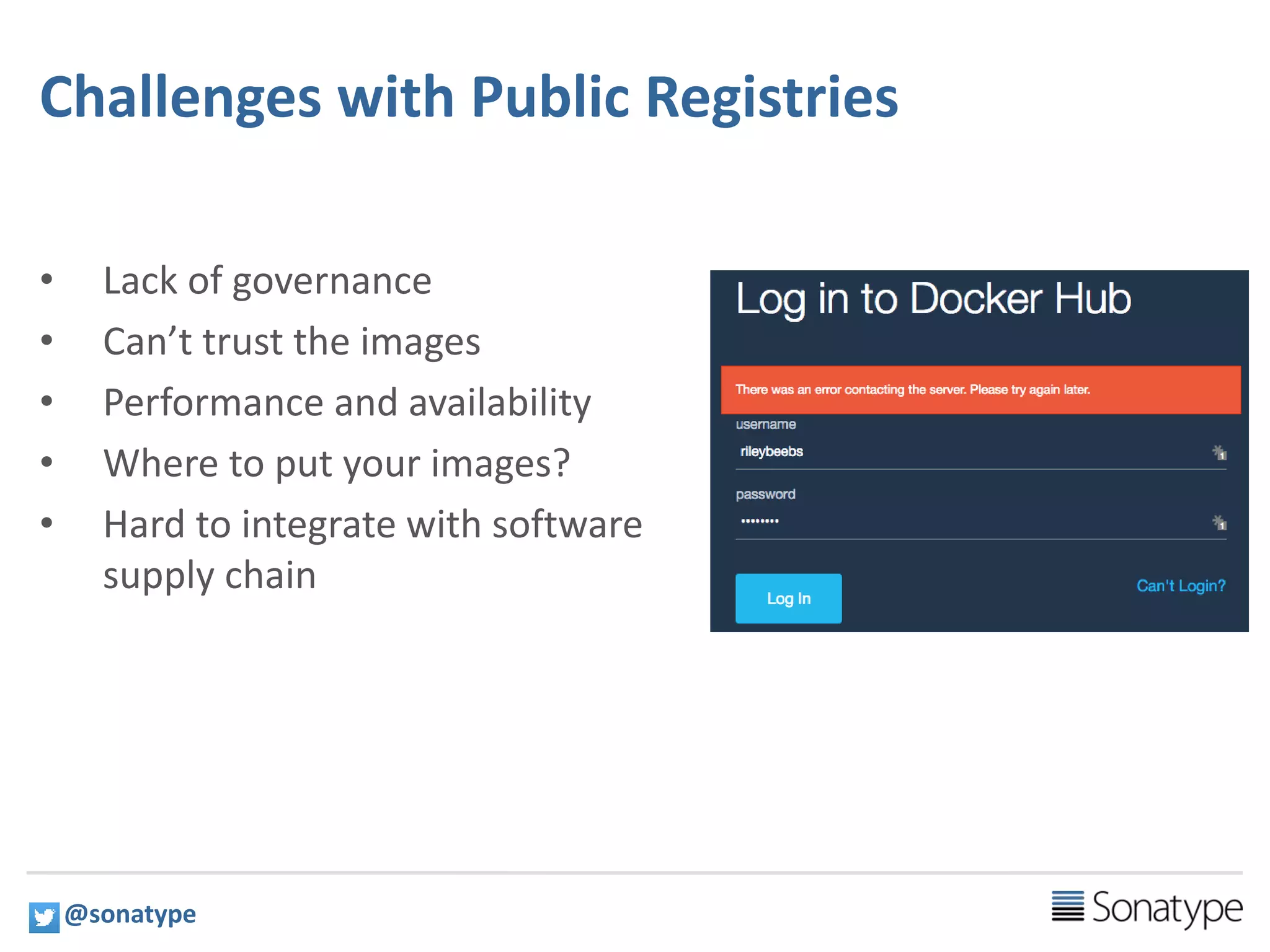
Challenges with Public Registries
• Lack of governance
• Can’t trust the images
• Performance and availability
• Where to put your images?
• Hard to integrate with software
supply chain
@sonatype
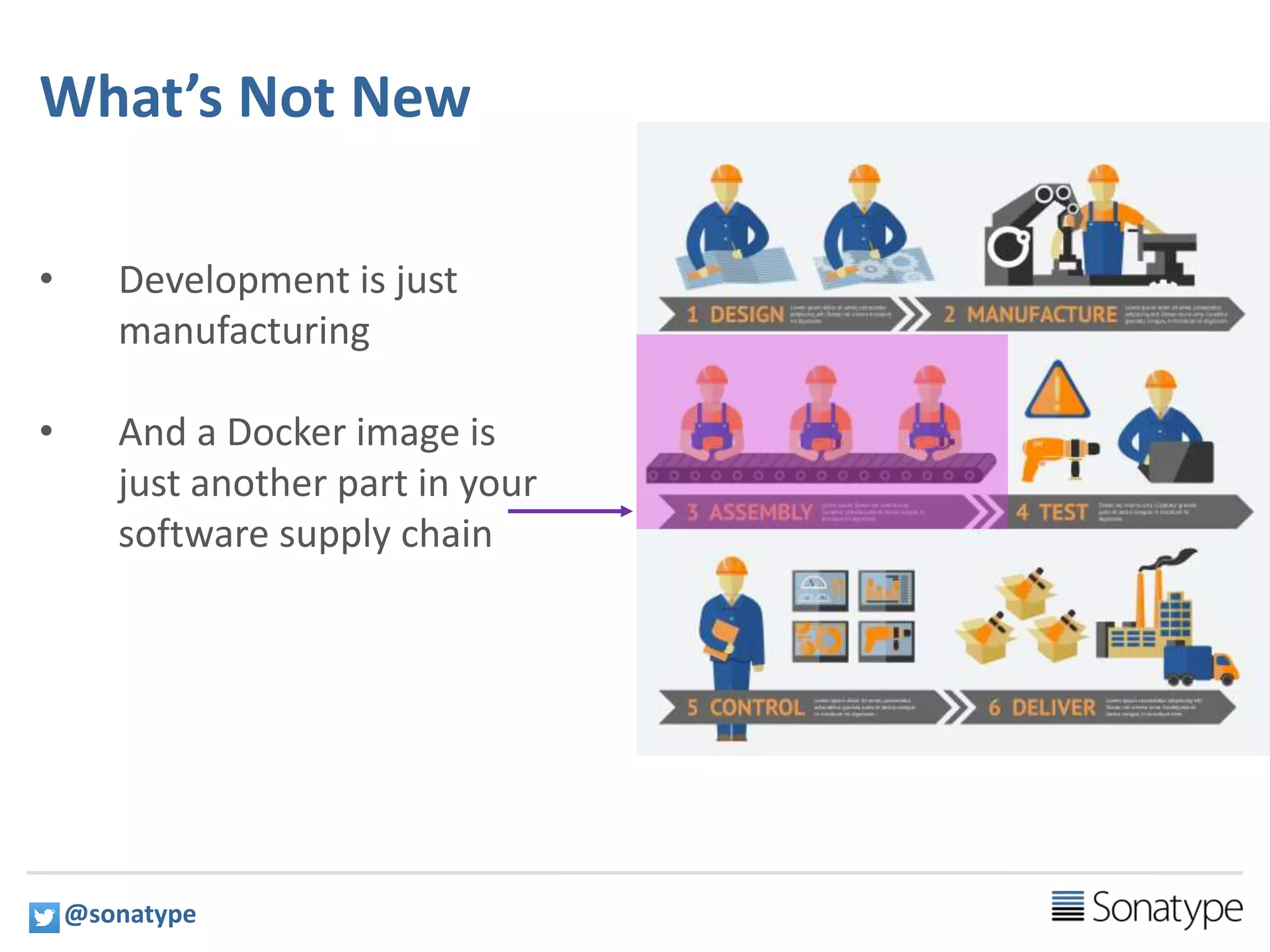
What’s Not New
• Development is just
manufacturing
• And a Docker image is
just another part in your
software supply chain
@sonatype
7
The Enterprise Needs a Private
Registry/Repository
@sonatype
8
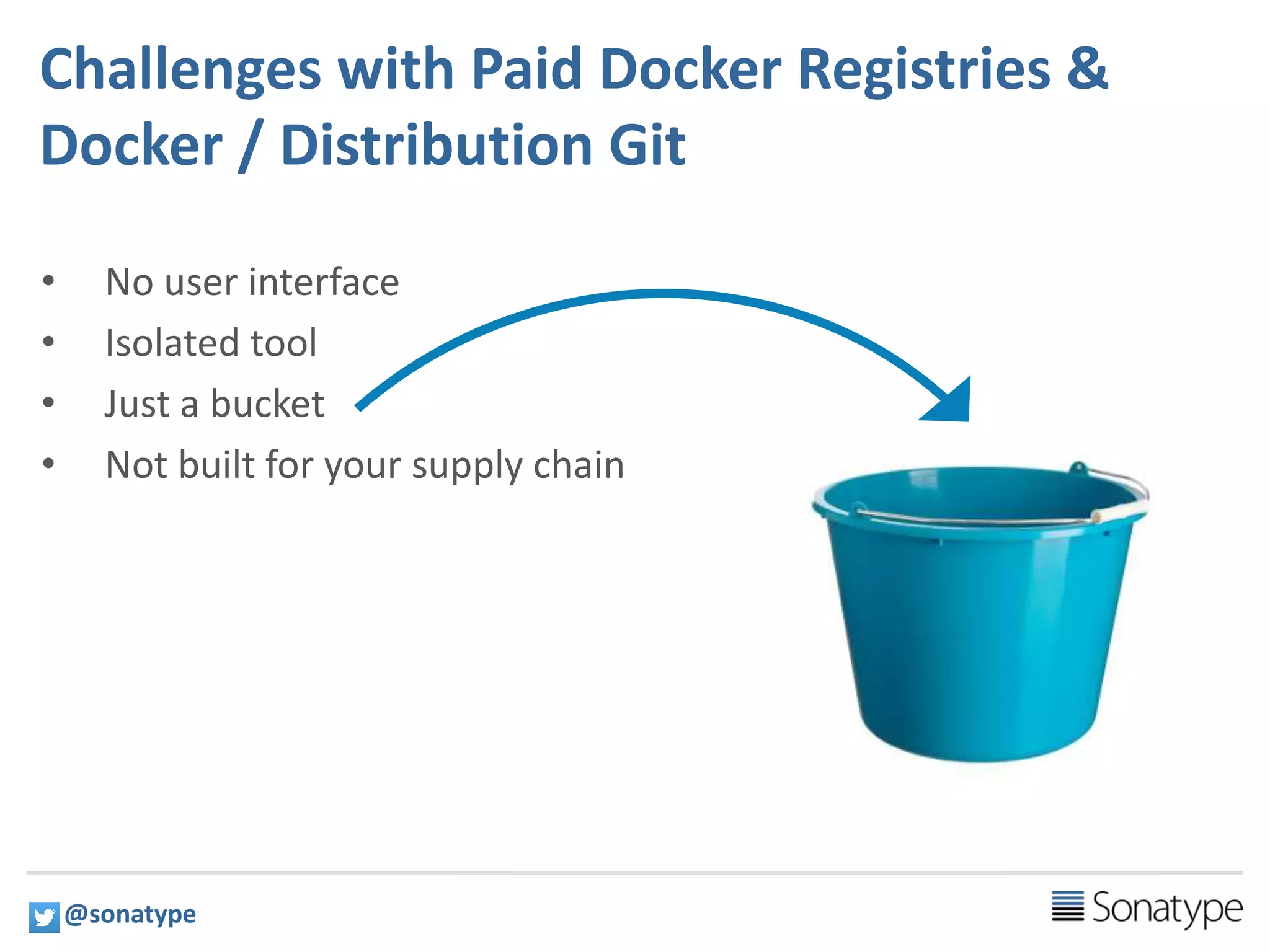
Challenges with Paid Docker Registries &
Docker / Distribution Git
• No user interface
• Isolated tool
• Just a bucket
• Not built for your supply chain
@sonatype
9
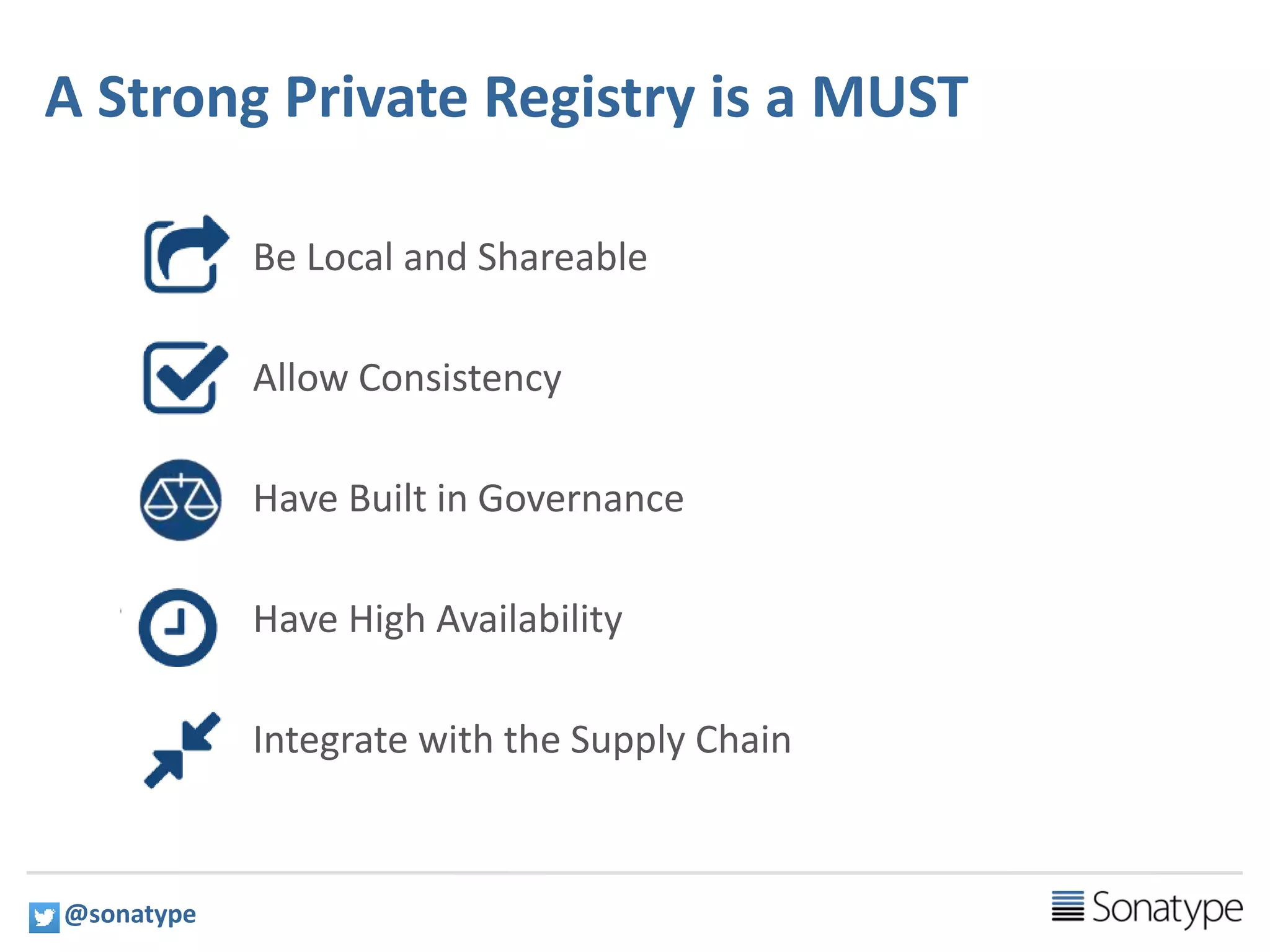
A Strong Private Registry is a MUST
Be Local and Shareable
Allow Consistency
Have Built in Governance
Have High Availability
Integrate with the Supply Chain
@sonatype
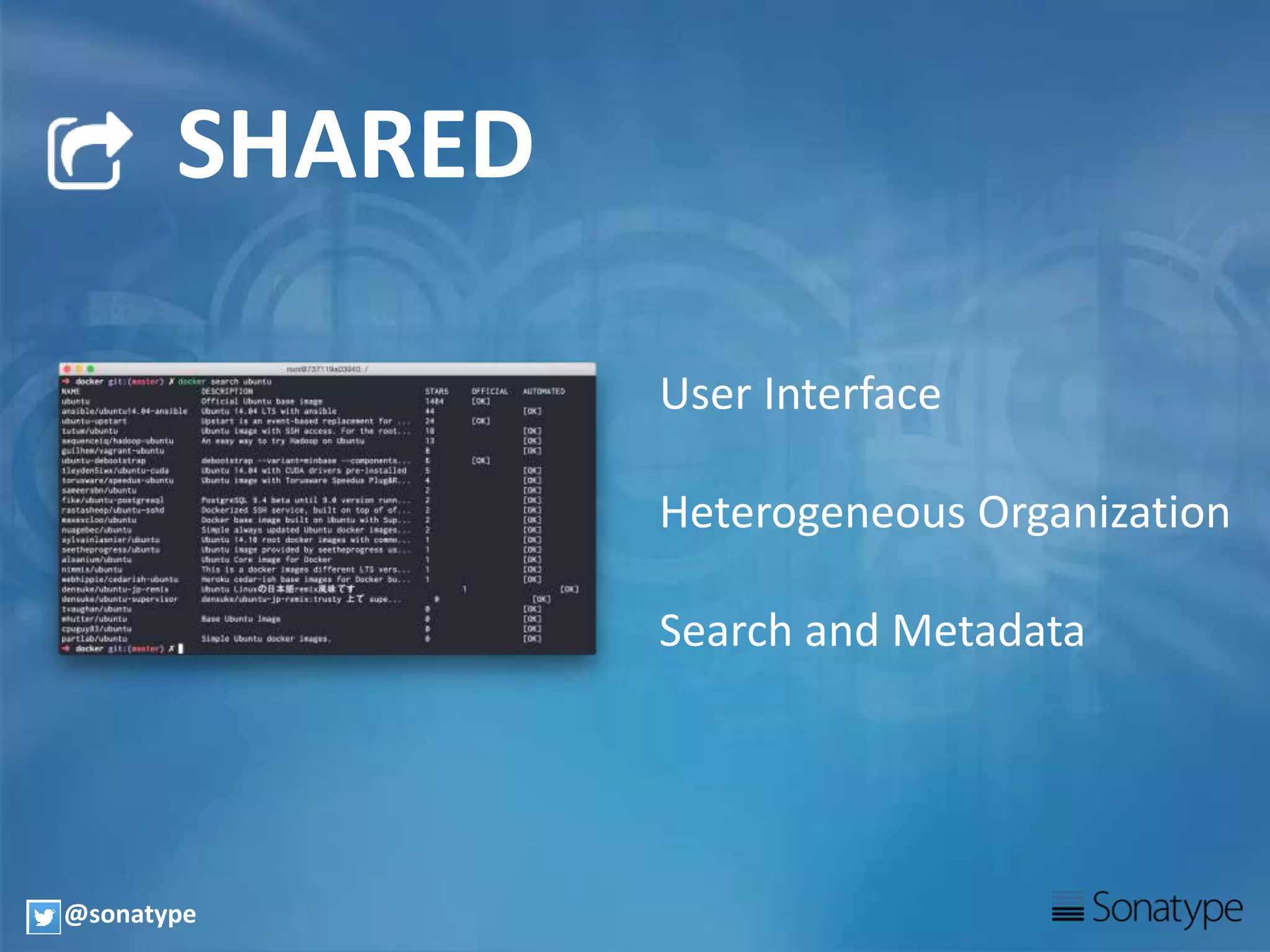
SHARED
User Interface
Heterogeneous Organization
Search and Metadata
@sonatype
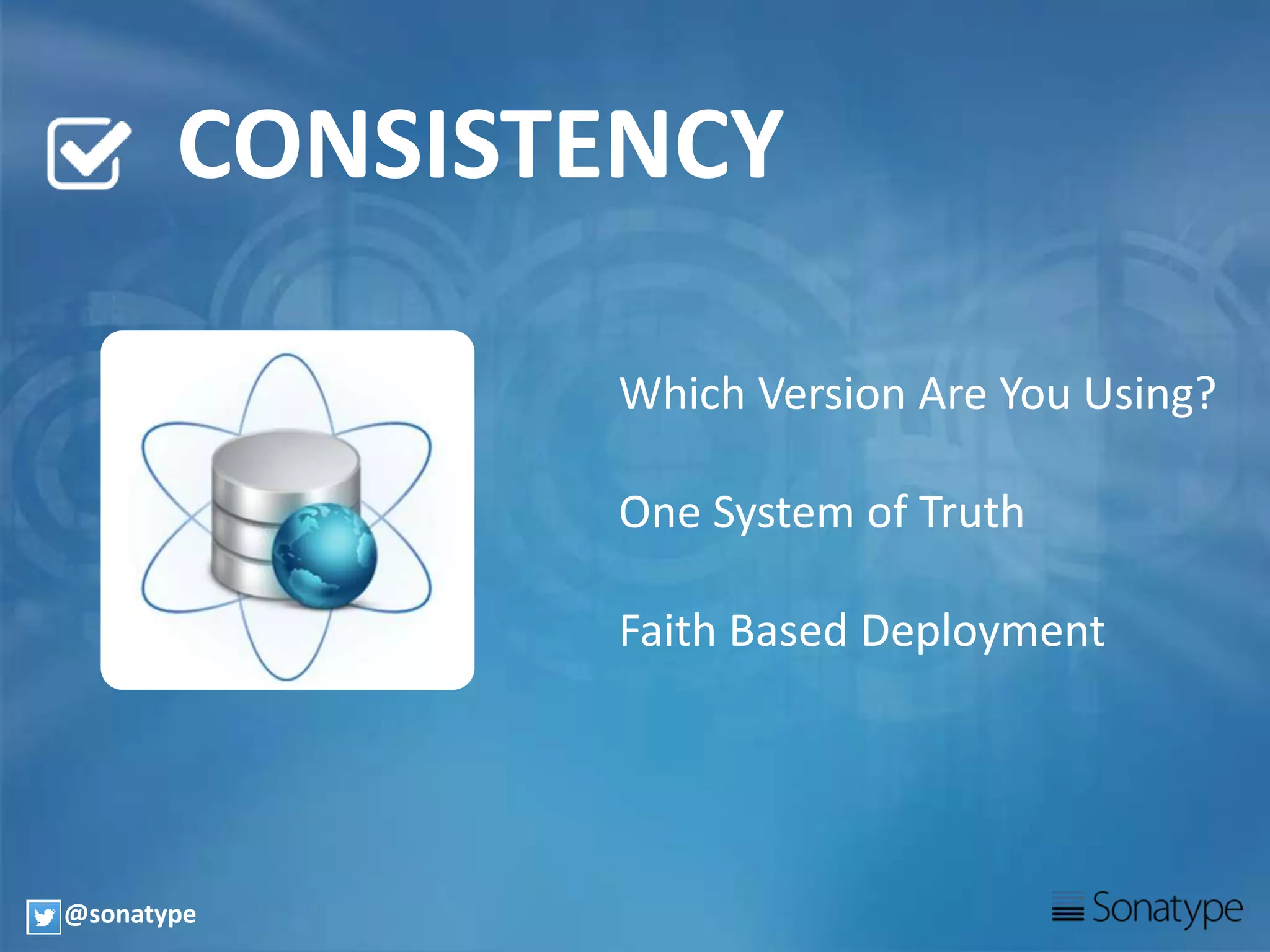
CONSISTENCY
Which Version Are You Using?
One System of Truth
Faith Based Deployment
@sonatype
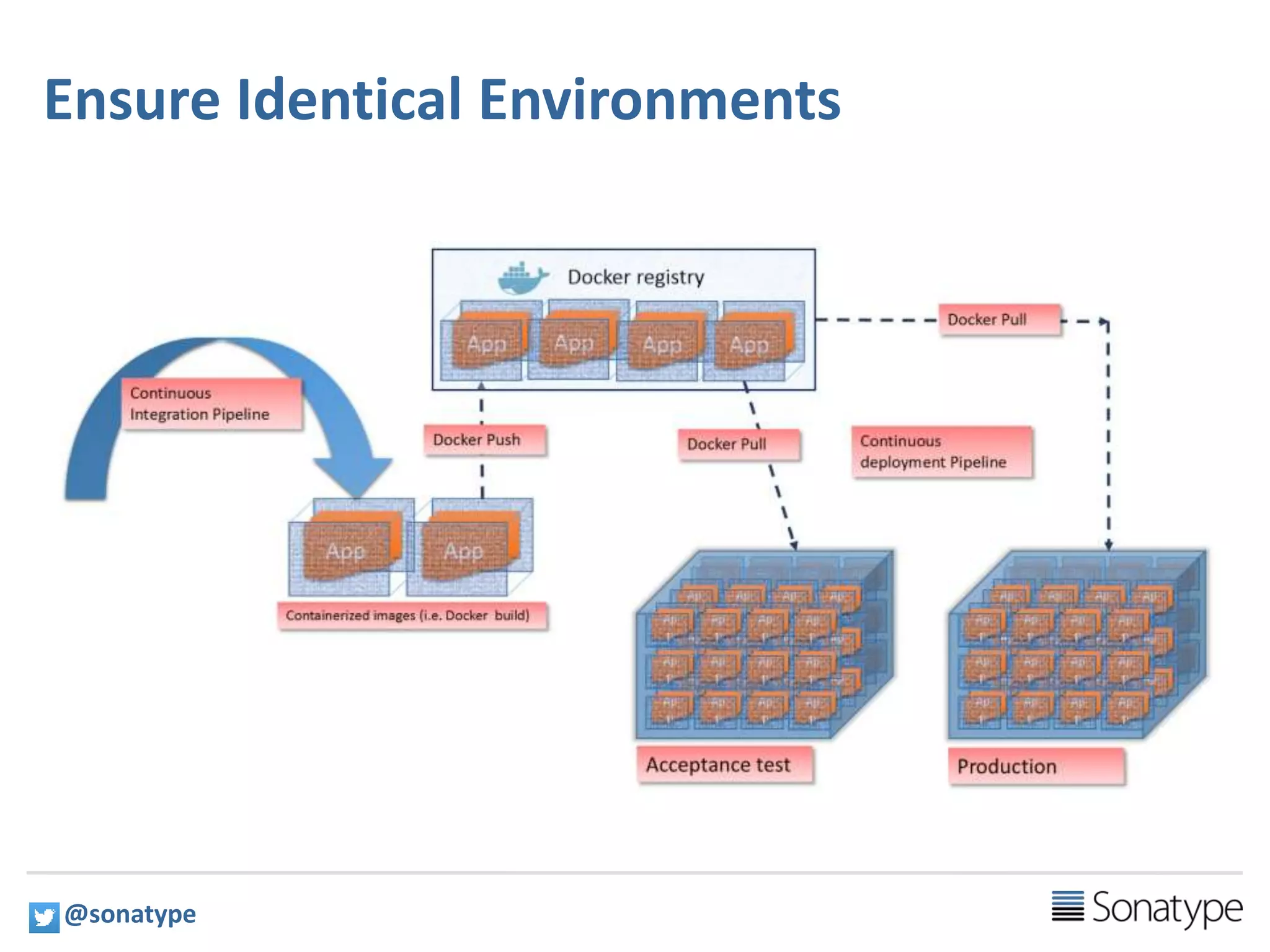
Ensure Identical Environments
12 @sonatype
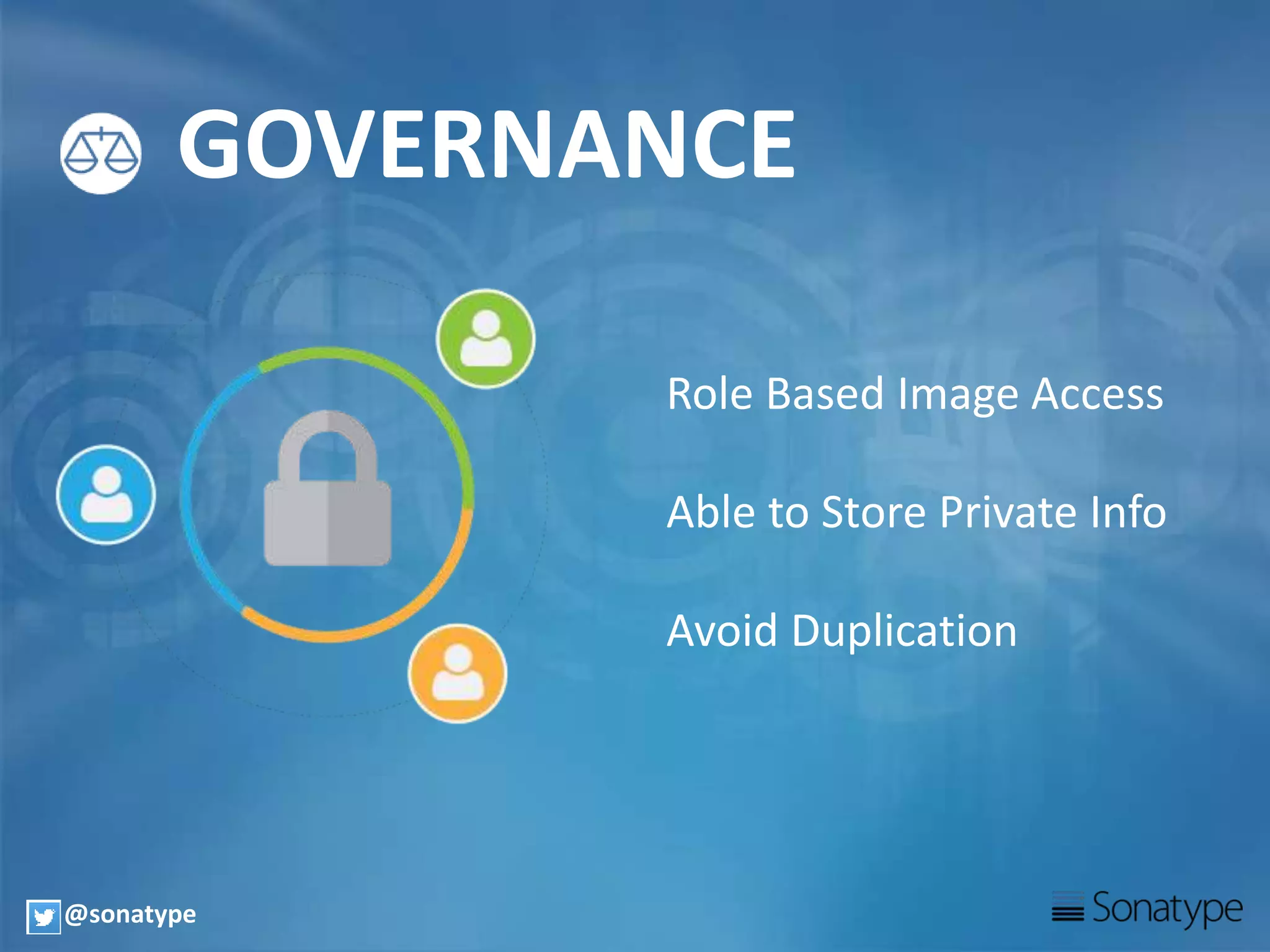
GOVERNANCE
Role Based Image Access
Able to Store Private Info
Avoid Duplication
@sonatype
PERFORMANCE
Average 3 Min Pull Adds Up
More Builds Period
Why Pull Everything?
@sonatype
INTEGRATION
Directory Services
Orchestration
Release Automation
Other Registries
@sonatype
Source
Repository
Design
Build
Component
Performance
System
Performance
Manual Test
Environment
Deployment App
Staging
Environment
Deployment App
Production
Environment
Deployment App
Local Dev.
Environment
@sonatype
DOES NEXUS CHECK
THE BOX?
@sonatype
18
Demo: What are we Going to Show?
@sonatype
• Nexus 3 Docker Private
Registry Capabilities
• Docker Push / Pull, Browse
and Search
• Proxy of Docker Hub
• Nexus Groups
• Nexus Security via Roles
• Hosting binaries too
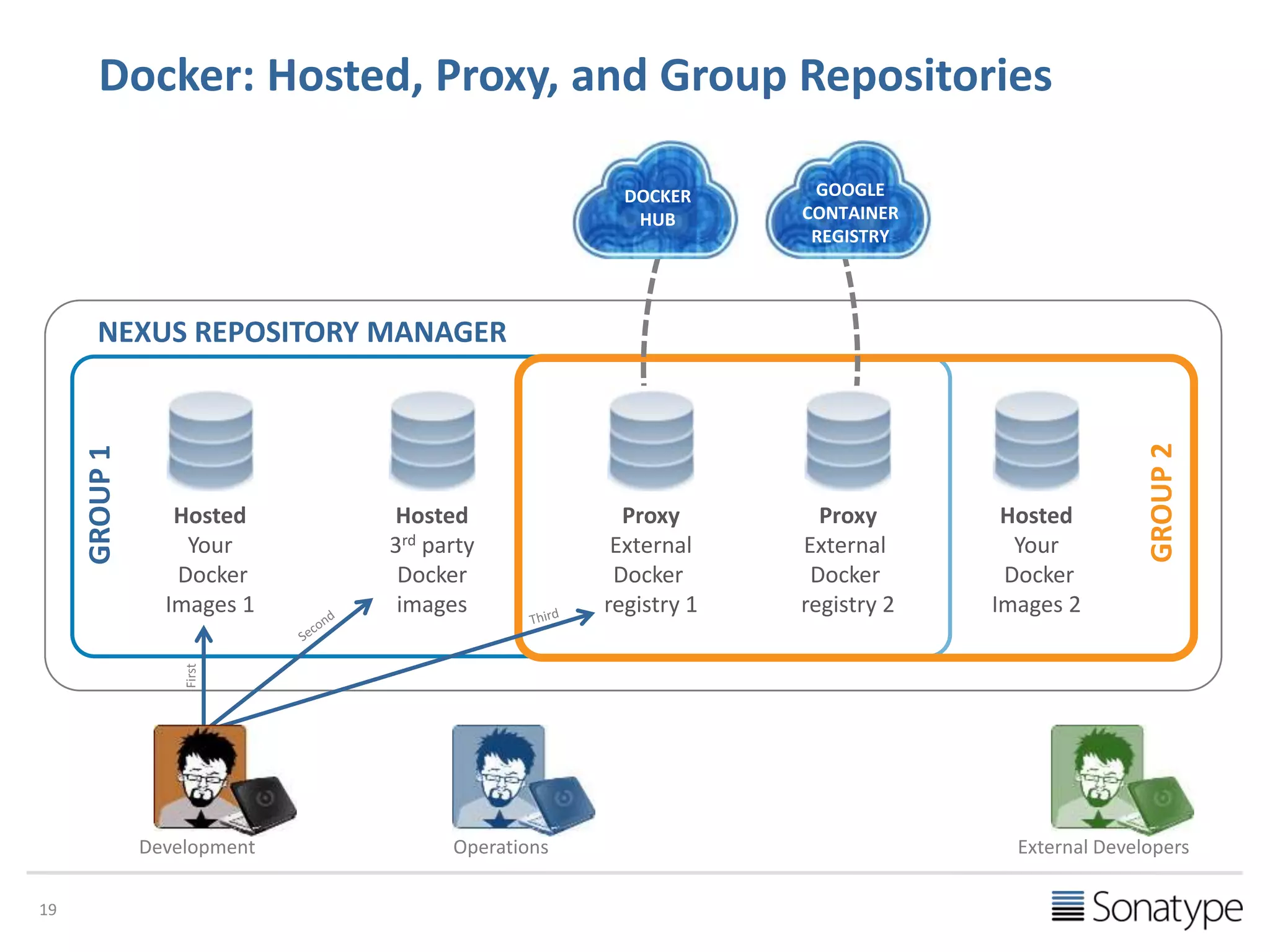
Docker: Hosted, Proxy, and Group Repositories
19
Hosted
Your
Docker
Images 1
Hosted
3rd party
Docker
images
Proxy
External
Docker
registry 1
Hosted
Your
Docker
Images 2
GROUP1
GROUP2
Proxy
External
Docker
registry 2
GOOGLE
CONTAINER
REGISTRY
DOCKER
HUB
NEXUS REPOSITORY MANAGER
Development Operations External Developers
First
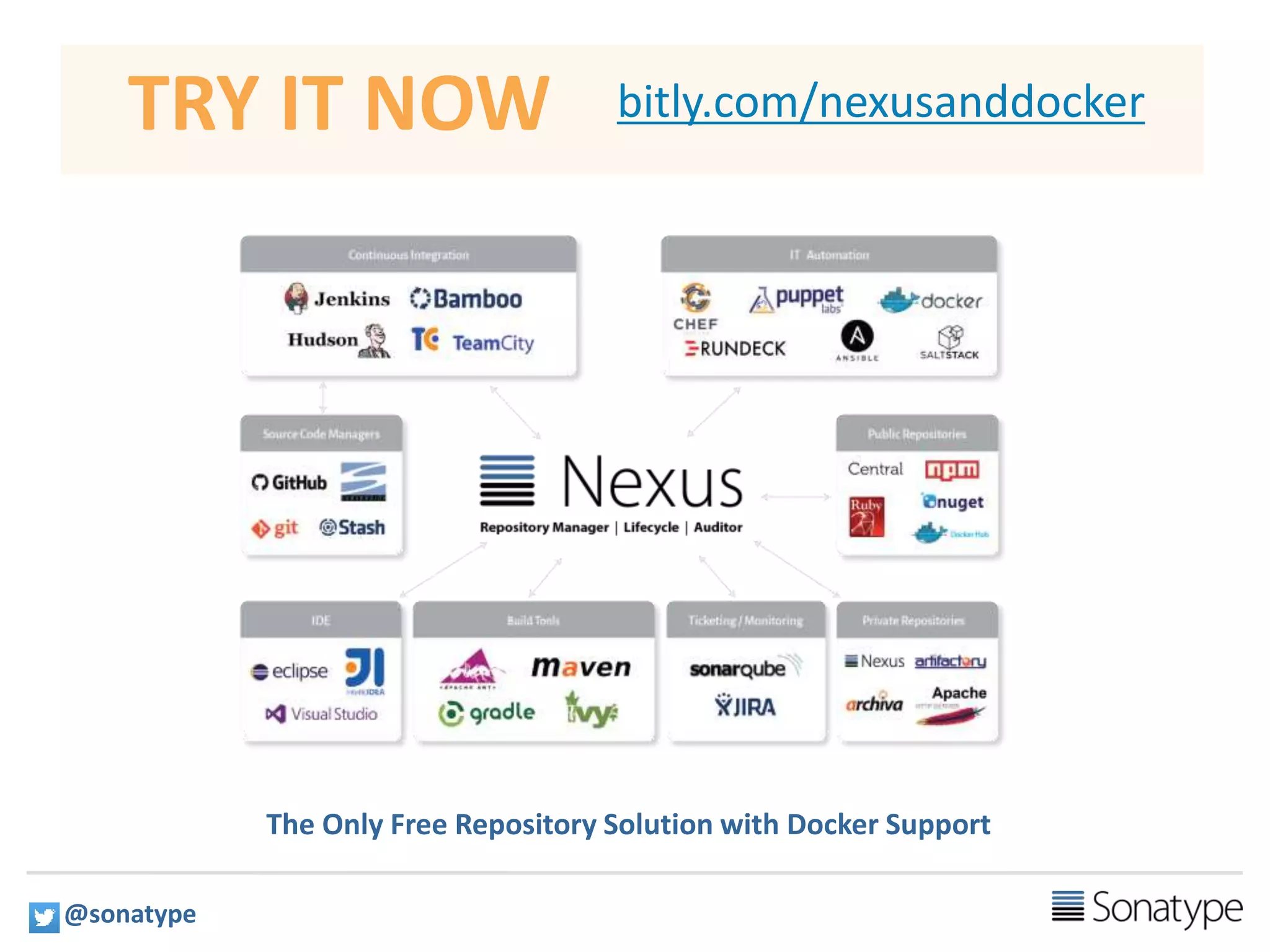
TRY IT NOW bitly.com/nexusanddocker
The Only Free Repository Solution with Docker Support
@sonatype
RUNNING DOCKER IN PRODUCTION?
A PREMIUM PRIVATE REPOSITORY IS A MUST

Enterprise Docker Requires a Private Registry

Editor's Notes

  • #17 This ability to package and distribute containers from your development laptop, onto my laptop, or onto different test, staging or production environments, on-premises and in the cloud, and have them run identically is Docker's functional breakthrough. This eliminates, or makes it easier to diagnose, potential environment conflicts that are a major source of friction between development and operations in a software delivery organization. However, operating Dockerized applications in their own production environment will challenge many enterprises because it requires additional and more sophisticated system management, security and administration expertise than existing (VM and bare-metal) approaches. Governance Challenges: Stating that Docker is an enabler (and possibly even a forcing function) for adopting DevOps practices is easier said than done. An important question of trust arises between Dev teams and production operations. Questions that define the traditional working relationship between Dev and Ops are always asked, such as: Do I trust your software package has no bugs? Do I trust you have used secure coding practices? Can I trust you have profiled this application so that it uses resources efficiently? Can I trust your choice of base container image? How do you know that image is what it claims to be? Can I trust that you have not baked secrets, such as production passwords or private SSH keys, into layers of this container you want me to run? Conversely, the developer creating the container is also taking on responsibility for keeping the containers updated with OS, language runtime and middleware patches (consider the action required for updating images for the Heartbleed or Ghost vulnerabilities). In the most extreme case, Docker's ease of use (democratization) for containers enables developers to circumvent traditional production governance. Trusting Docker images: Gartner discovered 840 Redis images on Docker Hub. Which one should you choose? Searching for MySQL images returns 23 pages of results. How can you know the provenance of those images beyond the bare information you get in the Docker Hub user profile? This is the function of the "Official" tag on a Docker repository in Docker Hub. What does Official really mean? This is an image that Docker Inc. has verified comes from the "owner" of a particular software package, or OS distro. The "Official" Redis Docker images come from the upstream maintainers. Two possible mitigations for this issue exist. One is never accepting an untrusted third- party binary Docker image and always building from a Dockerfile, Chef recipe or Ansible playbook. The other is ensuring you use images from Official repositories that are optimized for particular software. Issues around identity, authorization, trust and image provenance are on Docker's road map, based on public key cryptography, as described at DockerCon Europe in December 2014. This ability to package and distribute containers from your development laptop, onto my laptop, or onto different test, staging or production environments, on-premises and in the cloud, and have them run identically is Docker's functional breakthrough. This eliminates, or makes it easier to diagnose, potential environment conflicts that are a major source of friction between development and operations in a software delivery organization. However, operating Dockerized applications in their own production environment will challenge many enterprises because it requires additional and more sophisticated system management, security and administration expertise than existing (VM and bare-metal) approaches. Governance Challenges: Stating that Docker is an enabler (and possibly even a forcing function) for adopting DevOps practices is easier said than done. An important question of trust arises between Dev teams and production operations. Questions that define the traditional working relationship between Dev and Ops are always asked, such as: Do I trust your software package has no bugs? Do I trust you have used secure coding practices? Can I trust you have profiled this application so that it uses resources efficiently? Can I trust your choice of base container image? How do you know that image is what it claims to be? Can I trust that you have not baked secrets, such as production passwords or private SSH keys, into layers of this container you want me to run? Conversely, the developer creating the container is also taking on responsibility for keeping the containers updated with OS, language runtime and middleware patches (consider the action required for updating images for the Heartbleed or Ghost vulnerabilities). In the most extreme case, Docker's ease of use (democratization) for containers enables developers to circumvent traditional production governance. Trusting Docker images: Gartner discovered 840 Redis images on Docker Hub. Which one should you choose? Searching for MySQL images returns 23 pages of results. How can you know the provenance of those images beyond the bare information you get in the Docker Hub user profile? This is the function of the "Official" tag on a Docker repository in Docker Hub. What does Official really mean? This is an image that Docker Inc. has verified comes from the "owner" of a particular software package, or OS distro. The "Official" Redis Docker images come from the upstream maintainers. Two possible mitigations for this issue exist. One is never accepting an untrusted third- party binary Docker image and always building from a Dockerfile, Chef recipe or Ansible playbook. The other is ensuring you use images from Official repositories that are optimized for particular software. Issues around identity, authorization, trust and image provenance are on Docker's road map, based on public key cryptography, as described at DockerCon Europe in December 2014.