
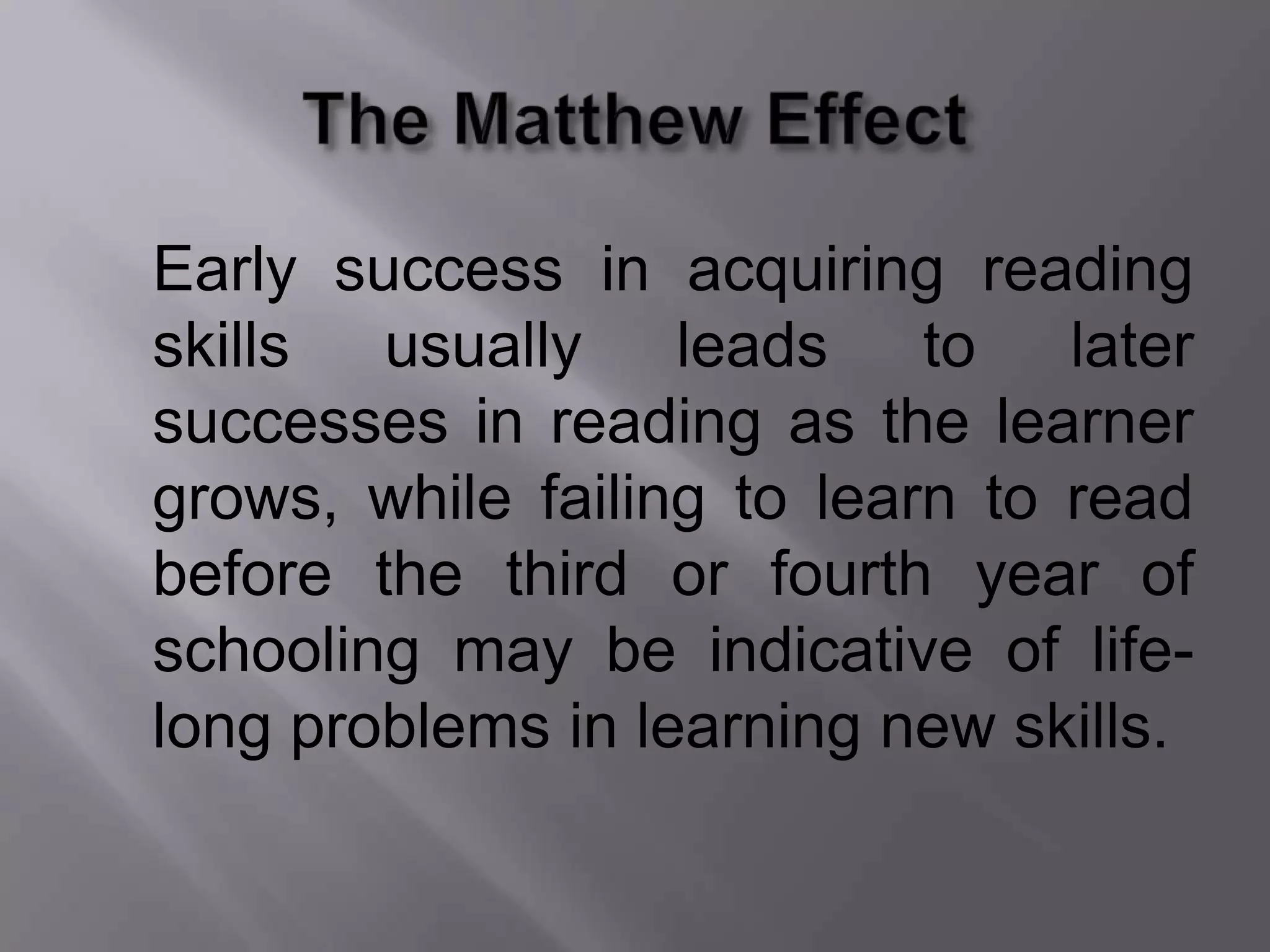

Early success in acquiring reading
skills usually leads to later
successes in reading as the learner
grows, while failing to learn to read
before the third or fourth year of
schooling may be indicative of life-
long problems in learning new skills.
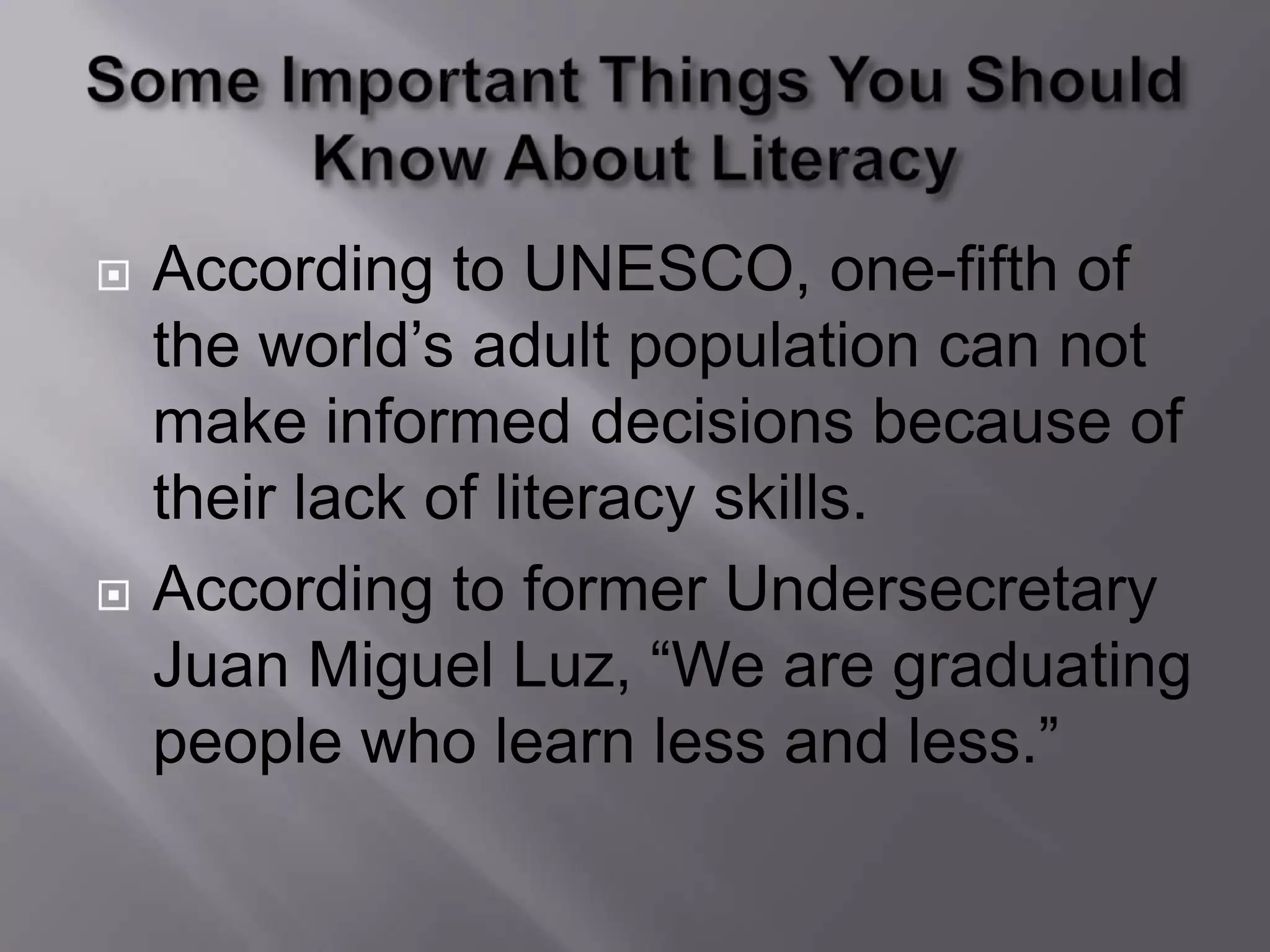
   According to UNESCO, one-fifth of
    the world’s adult population can not
    make informed decisions because of
    their lack of literacy skills.
   According to former Undersecretary
    Juan Miguel Luz, “We are graduating
    people who learn less and less.”
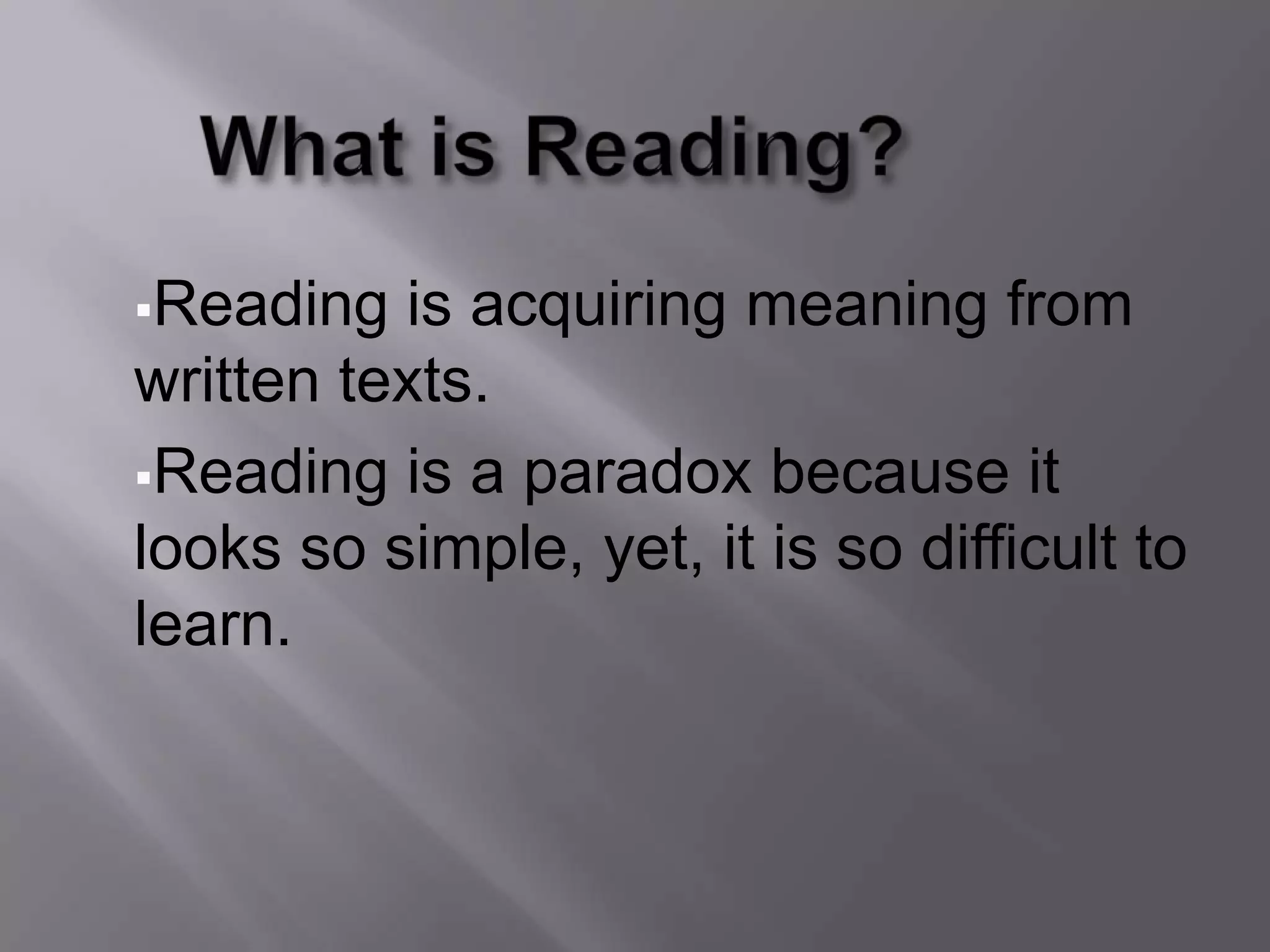
Reading  is acquiring meaning from
written texts.
Reading is a paradox because it
looks so simple, yet, it is so difficult to
learn.
“Reading and literacy skills are some of the
most important skills a child with learning
disabilities and other reading difficulties can
master during the early years of schooling,
because reading skills are the basis for
subsequent mastery of almost every subject
area.” -William N. Bender and Elizabeth J.
Larkin
•   Reading is not natural (Moats, 1999).
•   Reading is a cultural invention (Pinker, 2004).
•   Failure in one’s ability to read results in
    unpleasant experiences for children with reading
    difficulties and it hinders academic achievement
    (Stanovich,1994).
•   Exposure to print is a good predictor of general
    knowledge skills (Stanovich and Cunningham,
    1998)
• Instruction should be based on explicit
  and systematic phonics (National
  Reading Panel, 2000)
• Young readers need phonological
  instruction in early literacy instruction
• Teaching of reading should be based
  on evidence-based practices.
•   Reading is complex to learn and
    complicated to teach.
•   A positive attitude in teaching reading
    is simply not enough.
•   In teaching reading, you have to know
    all the steps and, most importantly,
    recognize the missteps (Carnine and
    colleagues, 2010).
• Systematic entails that lessons are
  carefully sequenced and planned
• Explicit means that a teacher is telling
  the children what he or she is trying to
  teach.
• At present, publishers use the term
  systematic and explicit phonics the
  wrong way.
•   Systematic instruction has 2 important
    terms: scope and sequence.
•   Scope includes the content of the
    phonics instruction.
•   Sequence defines an order of teaching
    letter-sound correspondences.
•   Lessons are carefully planned and
    sequenced.
•   Systematic is across a period of time.
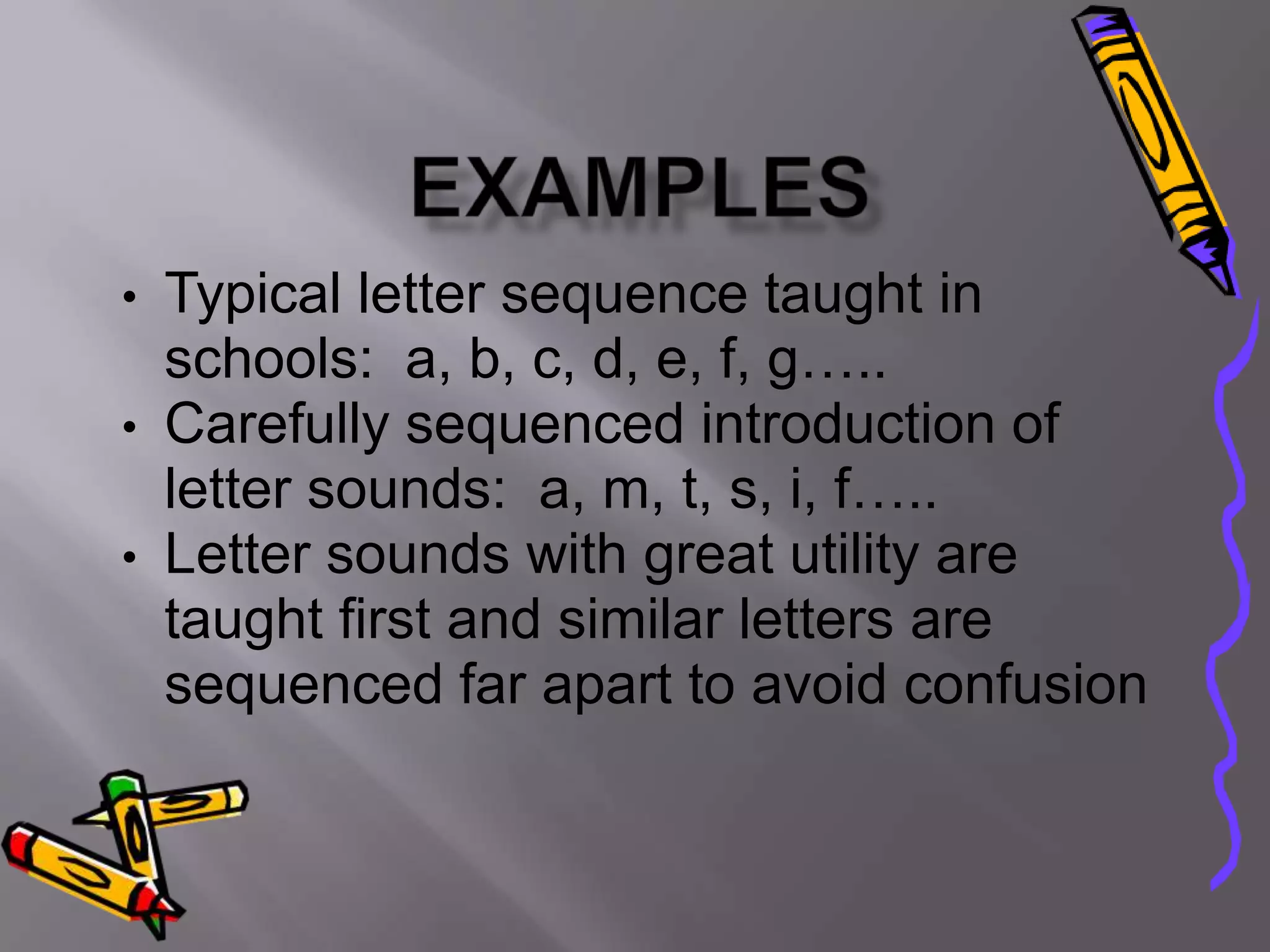
• Typical letter sequence taught in
  schools: a, b, c, d, e, f, g…..
• Carefully sequenced introduction of
  letter sounds: a, m, t, s, i, f…..
• Letter sounds with great utility are
  taught first and similar letters are
  sequenced far apart to avoid confusion
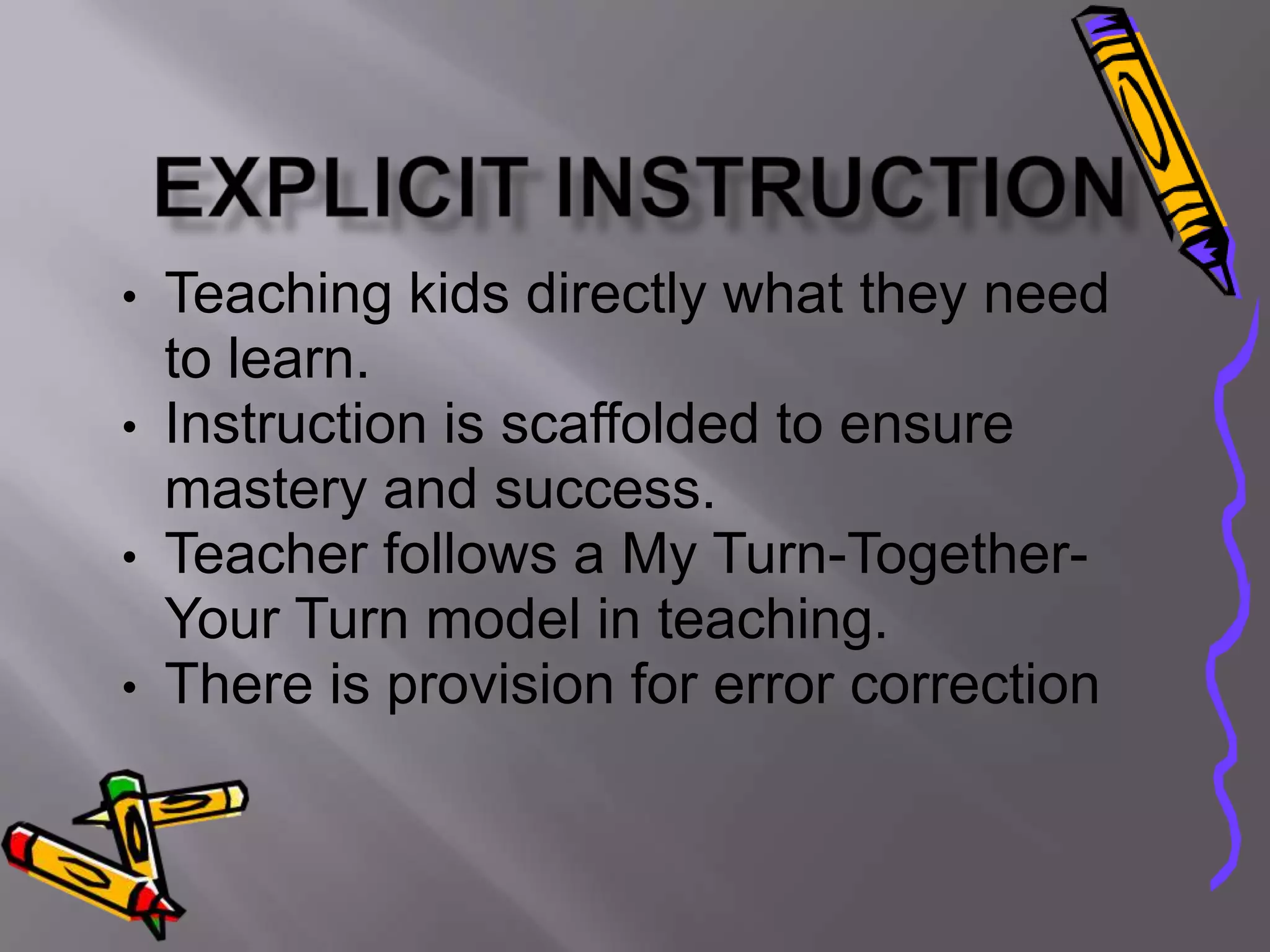
• Teaching kids directly what they need
  to learn.
• Instruction is scaffolded to ensure
  mastery and success.
• Teacher follows a My Turn-Together-
  Your Turn model in teaching.
• There is provision for error correction
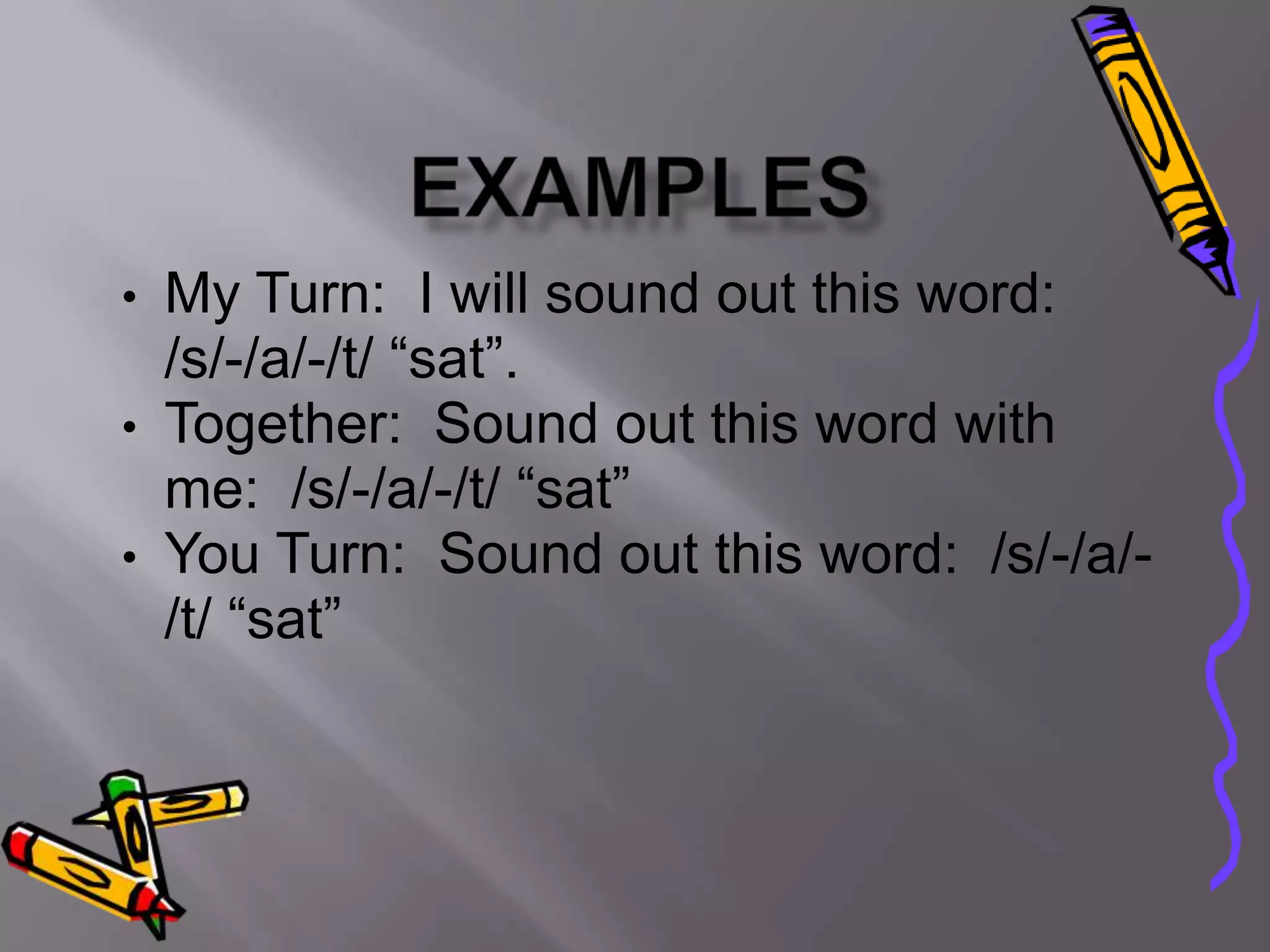
• My Turn: I will sound out this word:
  /s/-/a/-/t/ “sat”.
• Together: Sound out this word with
  me: /s/-/a/-/t/ “sat”
• You Turn: Sound out this word: /s/-/a/-
  /t/ “sat”
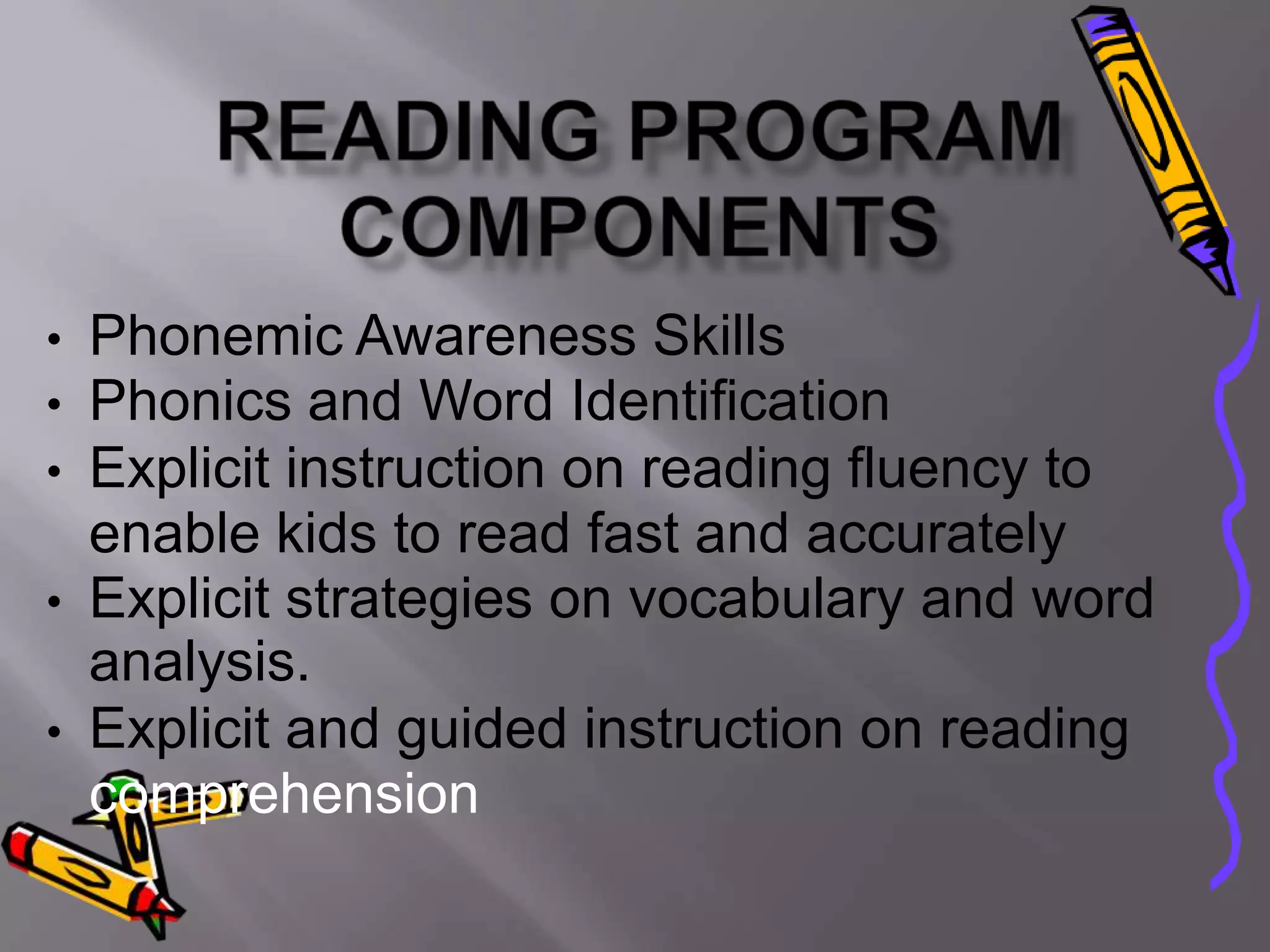
• Phonemic Awareness Skills
• Phonics and Word Identification
• Explicit instruction on reading fluency to
  enable kids to read fast and accurately
• Explicit strategies on vocabulary and word
  analysis.
• Explicit and guided instruction on reading
  comprehension
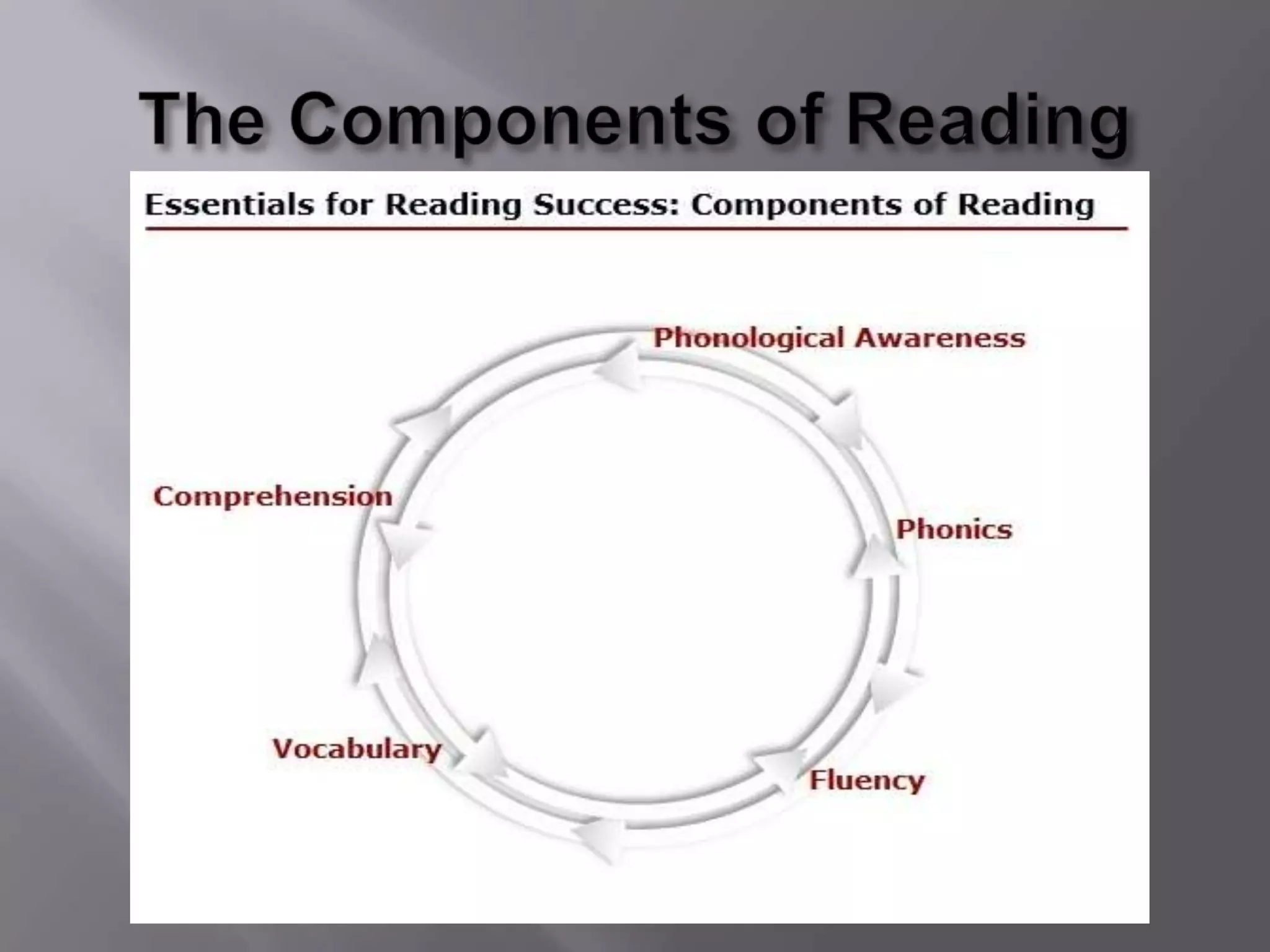
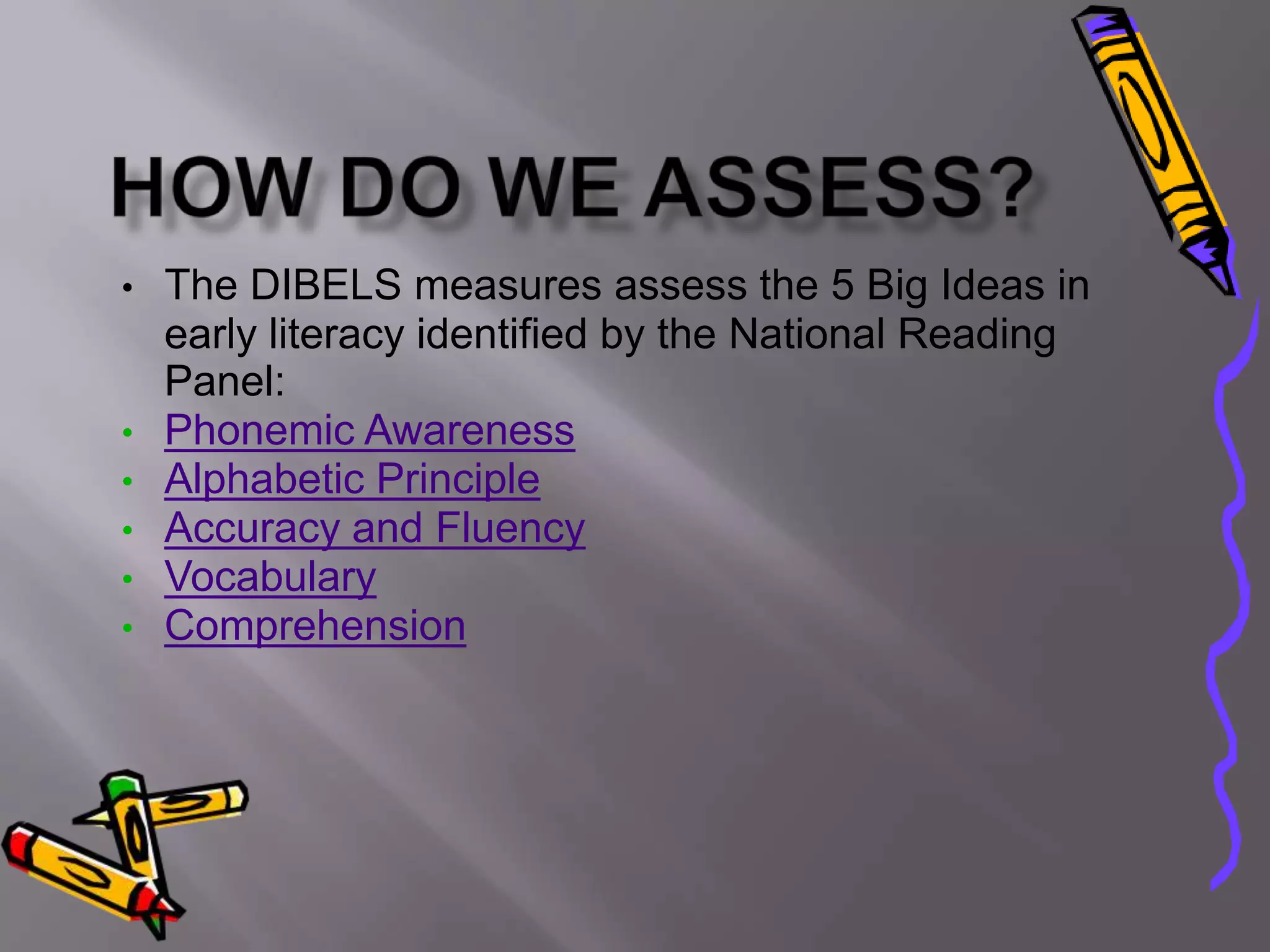
•   The DIBELS measures assess the 5 Big Ideas in
    early literacy identified by the National Reading
    Panel:
•   Phonemic Awareness
•   Alphabetic Principle
•   Accuracy and Fluency
•   Vocabulary
•   Comprehension
•   Phonemic awareness is the ability to hear,
    identify, blend, segment and manipulate
    individual sounds in spoken words.
•   Phonemic awareness instruction helps all
    children improve their reading, including
    normally developing readers, children at risk
    for reading difficulties, disabled readers,
    preschool readers and elementary readers
    (National Reading Panel, 2000)
•   Focus only on blending and segmenting.
• Systematic and explicit phonics
  instruction is most effective for children
  with learning disabilities when
  combined with synthetic phonics
  (National Reading Panel, 2000)
• Systematic synthetic phonics improve
  spelling abilities of children
• Children learn meanings of words
  indirectly by engaging in
  conversations, listening to adults
  and reading on their own.
• Direct instruction is useful alongside
  natural word learning.
• Guided, repeated oral-reading
  procedures that improve reading fluency
  have a positive impact on word
  recognition and comprehension
• Fluency can be improved by having
  students read and reread at a certain
  number of times or until a certain level
  of accuracy and speed are reached
  (National Reading Panel, 2000)
• Fluency instruction leads to gains in
  comprehension. (RRSG, 2002)
• Text comprehension can be
  improved by instruction that helps
  readers use specific
  comprehension strategies (National
  Reading Panel, 2000)
Enhance Ability Reading

Enhance Ability Reading

  • 3.
    Early success inacquiring reading skills usually leads to later successes in reading as the learner grows, while failing to learn to read before the third or fourth year of schooling may be indicative of life- long problems in learning new skills.
  • 4.
    According to UNESCO, one-fifth of the world’s adult population can not make informed decisions because of their lack of literacy skills.  According to former Undersecretary Juan Miguel Luz, “We are graduating people who learn less and less.”
  • 5.
    Reading isacquiring meaning from written texts. Reading is a paradox because it looks so simple, yet, it is so difficult to learn.
  • 6.
    “Reading and literacyskills are some of the most important skills a child with learning disabilities and other reading difficulties can master during the early years of schooling, because reading skills are the basis for subsequent mastery of almost every subject area.” -William N. Bender and Elizabeth J. Larkin
  • 7.
    Reading is not natural (Moats, 1999). • Reading is a cultural invention (Pinker, 2004). • Failure in one’s ability to read results in unpleasant experiences for children with reading difficulties and it hinders academic achievement (Stanovich,1994). • Exposure to print is a good predictor of general knowledge skills (Stanovich and Cunningham, 1998)
  • 8.
    • Instruction shouldbe based on explicit and systematic phonics (National Reading Panel, 2000) • Young readers need phonological instruction in early literacy instruction • Teaching of reading should be based on evidence-based practices.
  • 10.
    Reading is complex to learn and complicated to teach. • A positive attitude in teaching reading is simply not enough. • In teaching reading, you have to know all the steps and, most importantly, recognize the missteps (Carnine and colleagues, 2010).
  • 11.
    • Systematic entailsthat lessons are carefully sequenced and planned • Explicit means that a teacher is telling the children what he or she is trying to teach. • At present, publishers use the term systematic and explicit phonics the wrong way.
  • 12.
    Systematic instruction has 2 important terms: scope and sequence. • Scope includes the content of the phonics instruction. • Sequence defines an order of teaching letter-sound correspondences. • Lessons are carefully planned and sequenced. • Systematic is across a period of time.
  • 13.
    • Typical lettersequence taught in schools: a, b, c, d, e, f, g….. • Carefully sequenced introduction of letter sounds: a, m, t, s, i, f….. • Letter sounds with great utility are taught first and similar letters are sequenced far apart to avoid confusion
  • 14.
    • Teaching kidsdirectly what they need to learn. • Instruction is scaffolded to ensure mastery and success. • Teacher follows a My Turn-Together- Your Turn model in teaching. • There is provision for error correction
  • 15.
    • My Turn:I will sound out this word: /s/-/a/-/t/ “sat”. • Together: Sound out this word with me: /s/-/a/-/t/ “sat” • You Turn: Sound out this word: /s/-/a/- /t/ “sat”
  • 16.
    • Phonemic AwarenessSkills • Phonics and Word Identification • Explicit instruction on reading fluency to enable kids to read fast and accurately • Explicit strategies on vocabulary and word analysis. • Explicit and guided instruction on reading comprehension
  • 17.
    The DIBELS measures assess the 5 Big Ideas in early literacy identified by the National Reading Panel: • Phonemic Awareness • Alphabetic Principle • Accuracy and Fluency • Vocabulary • Comprehension
  • 18.
    Phonemic awareness is the ability to hear, identify, blend, segment and manipulate individual sounds in spoken words. • Phonemic awareness instruction helps all children improve their reading, including normally developing readers, children at risk for reading difficulties, disabled readers, preschool readers and elementary readers (National Reading Panel, 2000) • Focus only on blending and segmenting.
  • 19.
    • Systematic andexplicit phonics instruction is most effective for children with learning disabilities when combined with synthetic phonics (National Reading Panel, 2000) • Systematic synthetic phonics improve spelling abilities of children
  • 20.
    • Children learnmeanings of words indirectly by engaging in conversations, listening to adults and reading on their own. • Direct instruction is useful alongside natural word learning.
  • 21.
    • Guided, repeatedoral-reading procedures that improve reading fluency have a positive impact on word recognition and comprehension • Fluency can be improved by having students read and reread at a certain number of times or until a certain level of accuracy and speed are reached (National Reading Panel, 2000)
  • 22.
    • Fluency instructionleads to gains in comprehension. (RRSG, 2002) • Text comprehension can be improved by instruction that helps readers use specific comprehension strategies (National Reading Panel, 2000)