ONLINE ENGLISH LANGUAGE
LEARNING TOOLS
Presented to: Dr. Nazmi Almasri
Presented by: Mohammad Antar
Outline
What is online learning?
A list of online learning tools.
What are the online learning tools
available for English second
language learner?
Online learning:
e-learning
Line breaks: e-learning
NOUN
[MASS NOUN]Learning
conducted via electronic
media, typically on the
Internet: successful e-
learning depends on the
self-motivation of
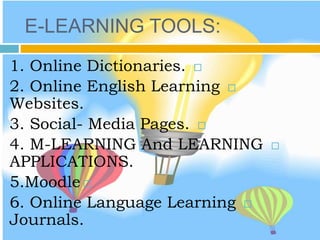
E-LEARNING TOOLS:
1. Online Dictionaries.
2. Online English Learning
Websites.
3. Social- Media Pages.
4. M-LEARNING And LEARNING
APPLICATIONS.
5.Moodle
6. Online Language Learning
Journals.
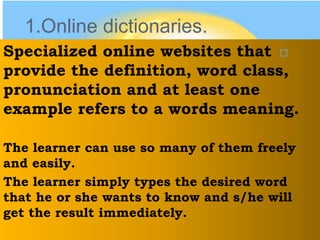
1.Online dictionaries.
Specialized online websites that
provide the definition, word class,
pronunciation and at least one
example refers to a words meaning.
The learner can use so many of them freely
and easily.
The learner simply types the desired word
that he or she wants to know and s/he will
get the result immediately.
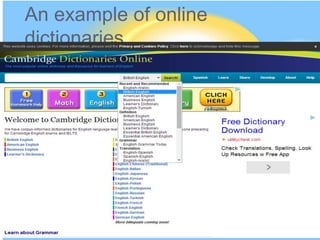
An example of online
dictionaries
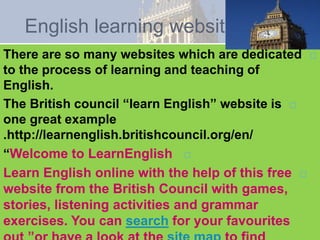
English learning websites :
There are so many websites which are dedicated
to the process of learning and teaching of
English.
The British council “learn English” website is
one great example
.http://learnenglish.britishcouncil.org/en/
“Welcome to LearnEnglish
Learn English online with the help of this free
website from the British Council with games,
stories, listening activities and grammar
exercises. You can search for your favourites
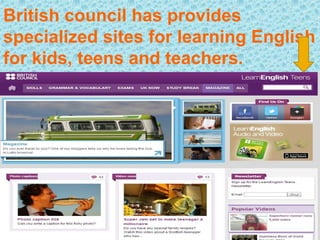
British council has provides
specialized sites for learning English
for kids, teens and teachers.
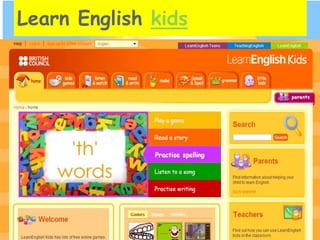
Learn English kids
Social media pages
*Most of us has a facebook, twitter, Google Plus
account.

* so many websites of learning English have
their own pages on Facebook for instance.
*They post a great deal of beneficial learning
materials and links.
Example of a website page on
Facebook
Toefl : test Of English As A Foreign
Language
M-Learning
*It refers to mobile learning.

*Smart phones have spread out so
quickly, so they have so many uses in
learning English.
A Smartphone can use the internet
through the wireless net which makes it
so easy to log in.

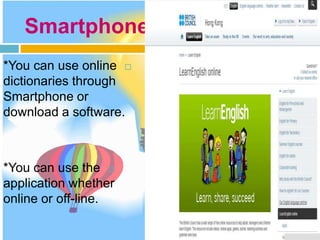
Smartphone
*You can use online
dictionaries through
Smartphone or
download a software.
*You can use the
application whether
online or off-line.
Moodle
A program that lets the students
take their quizzes and exams
online with limitation of time.
So many universities consider this
program and make use of it.
Online journals
*Specialized websites in learning and
teaching research papers.
*Some journals are paid and some are free.

*They are important because they keep the
learner updated with all new in learning and
teaching.

Cambridge journals for computer
assisted language learning.
Summary
- e-learning of a language is electronic based
learning.

-Online learning is based on internet
connection and useful websites.
-As language learners we can benefit from the
tools in so many ways.
-We can improve our language by dedicating
time and effort and hardwork.
English language learning online tools

English language learning online tools

  • 1.
    ONLINE ENGLISH LANGUAGE LEARNINGTOOLS Presented to: Dr. Nazmi Almasri Presented by: Mohammad Antar
  • 2.
    Outline What is onlinelearning? A list of online learning tools. What are the online learning tools available for English second language learner?
  • 3.
    Online learning: e-learning Line breaks:e-learning NOUN [MASS NOUN]Learning conducted via electronic media, typically on the Internet: successful e- learning depends on the self-motivation of
  • 4.
    E-LEARNING TOOLS: 1. OnlineDictionaries. 2. Online English Learning Websites. 3. Social- Media Pages. 4. M-LEARNING And LEARNING APPLICATIONS. 5.Moodle 6. Online Language Learning Journals.
  • 5.
    1.Online dictionaries. Specialized onlinewebsites that provide the definition, word class, pronunciation and at least one example refers to a words meaning. The learner can use so many of them freely and easily. The learner simply types the desired word that he or she wants to know and s/he will get the result immediately.
  • 6.
    An example ofonline dictionaries
  • 7.
    English learning websites: There are so many websites which are dedicated to the process of learning and teaching of English. The British council “learn English” website is one great example .http://learnenglish.britishcouncil.org/en/ “Welcome to LearnEnglish Learn English online with the help of this free website from the British Council with games, stories, listening activities and grammar exercises. You can search for your favourites
  • 9.
    British council hasprovides specialized sites for learning English for kids, teens and teachers.
  • 10.
  • 11.
    Social media pages *Mostof us has a facebook, twitter, Google Plus account.  * so many websites of learning English have their own pages on Facebook for instance. *They post a great deal of beneficial learning materials and links.
  • 12.
    Example of awebsite page on Facebook
  • 13.
    Toefl : testOf English As A Foreign Language
  • 15.
    M-Learning *It refers tomobile learning.  *Smart phones have spread out so quickly, so they have so many uses in learning English. A Smartphone can use the internet through the wireless net which makes it so easy to log in. 
  • 16.
    Smartphone *You can useonline dictionaries through Smartphone or download a software. *You can use the application whether online or off-line.
  • 17.
    Moodle A program thatlets the students take their quizzes and exams online with limitation of time. So many universities consider this program and make use of it.
  • 18.
    Online journals *Specialized websitesin learning and teaching research papers. *Some journals are paid and some are free.  *They are important because they keep the learner updated with all new in learning and teaching. 
  • 19.
    Cambridge journals forcomputer assisted language learning.
  • 20.
    Summary - e-learning ofa language is electronic based learning.  -Online learning is based on internet connection and useful websites. -As language learners we can benefit from the tools in so many ways. -We can improve our language by dedicating time and effort and hardwork.