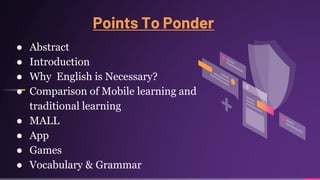
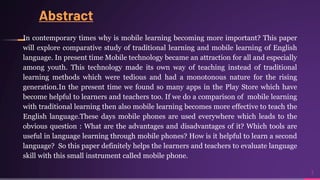
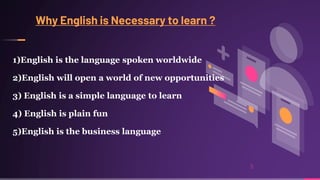
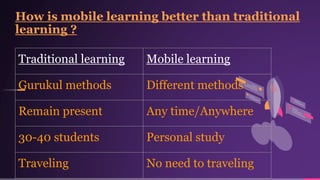
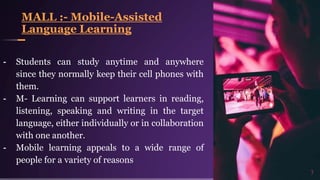
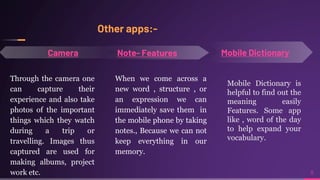
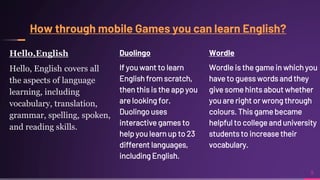
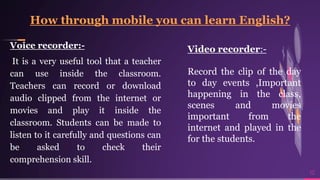
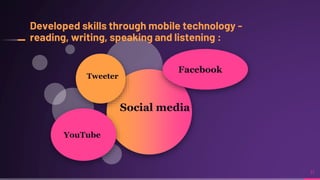
This document compares traditional and mobile learning of the English language. It finds that mobile learning has several advantages over traditional learning: it allows students to study anytime and anywhere, supports learning English skills individually or collaboratively, and appeals to many learners. Several mobile apps are discussed that help with vocabulary, grammar, translation, listening, and pronunciation. Examples include dictionaries, flashcard apps, language games, and social media. The document concludes that mobile learning generates more interest and makes the learning process easier and more flexible than traditional classroom methods.





![Getting Started with Apache Spark: Big Data Made Simple [Free Meetup]](https://cdn.slidesharecdn.com/ss_thumbnails/apachesparkgettingstarted-260203175547-8361bcc3-thumbnail.jpg?width=640&height=640&fit=bounds)


