English Conditionals
There are a number of structures in
English that are called the
conditionals which are used to talk
about possible or imaginary situations.
A "Condition" is a "situation or
circumstance".
• There are four basic conditionals that we
  use in English.
• Zero Conditional
• First Conditional
• Second Conditional
• Third Conditional
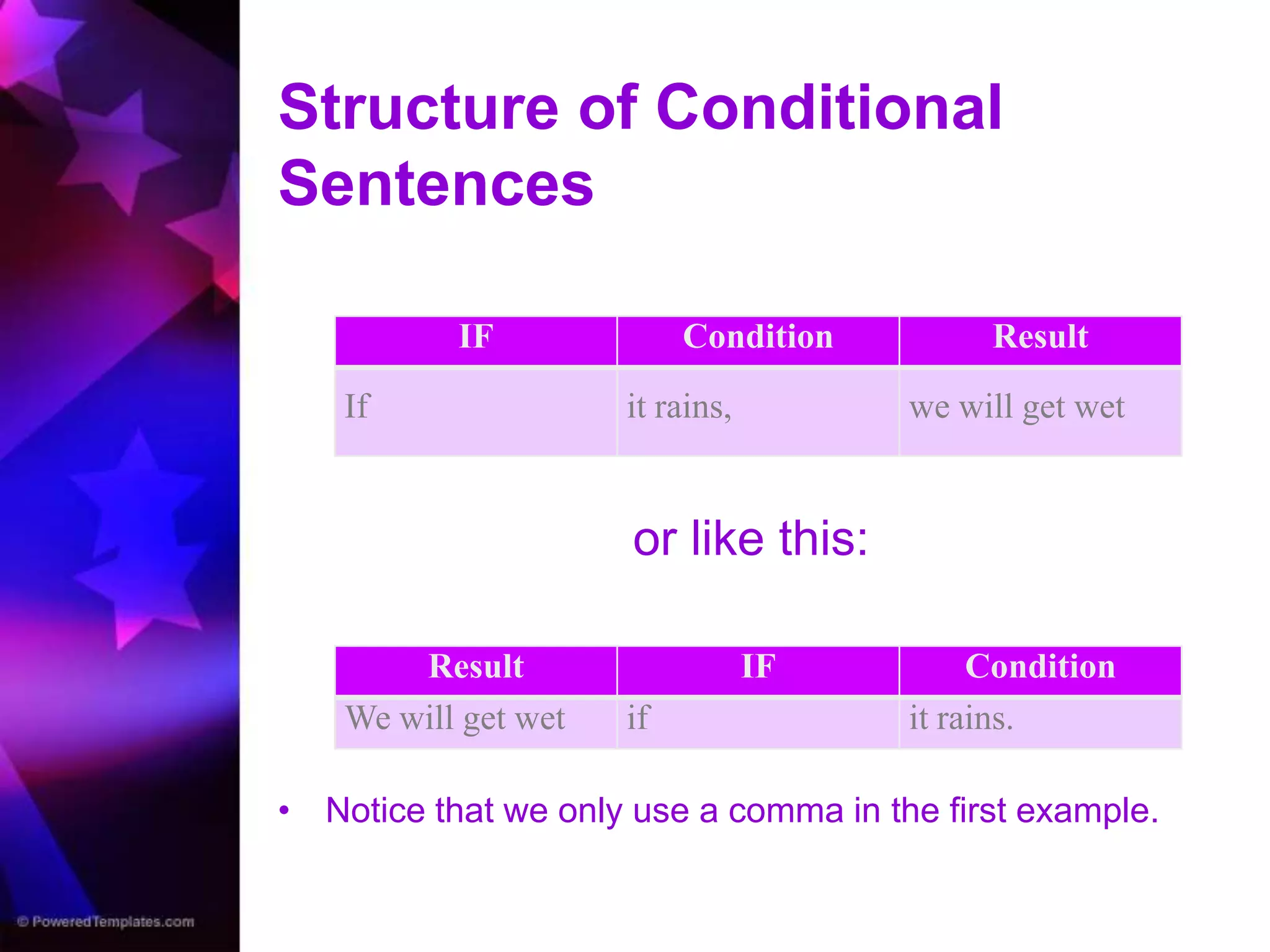
Structure of Conditional
Sentences

           IF              Condition        Result
    If                it rains,        we will get wet


                      or like this:

        Result                    IF        Condition
    We will get wet   if               it rains.

• Notice that we only use a comma in the first example.
Conditionals: Time and Probability
Table Probability Conditional Example Time
                                      If you heat
       Certain      zero              water to 100
                    conditional       degrees celsius, any time
                                      it boils

       Likely       first conditional If it rains, I will future
                                      stay in.
                    second            If I won the
       Unlikely     conditional       lottery, I would future
                                      retire.

                    second            If I had the
       Impossible   conditional       money, I would present
                                      lend it to you

                                      If I had seen
       Impossible   third             him, I would
                    conditional       have given him past
                                      the message.
Zero Conditional: Certainty
• The Zero conditional is used for things that
  are always true as long as the condition is
  met.
              IF       Condition              Result           Situation

                   present simple      present simple
                   you heat water to
         If        100 degrees         it boils.           fact- universal
                   celsius,
                   present simple      present simple

         If        I drink coffee,     I get a headache.   fact- personal


• In these examples, the result will always
  occur if the condition is met, so the time is
  not important.
First Conditional: A real
   possibility in the future
• A First Conditional sentence is one connecting
  two future actions, where one must take place
  before the second is possible. Take a student
  who wants to go to university but hasn't got the
  results of their exams yet. They cannot go to
  university until they have received their results.
  In the case of a good student who is expected to
  get good grades, then there is a good possibility
  of achieving the marks required to get to
  university, so the following sentence could be
  used:
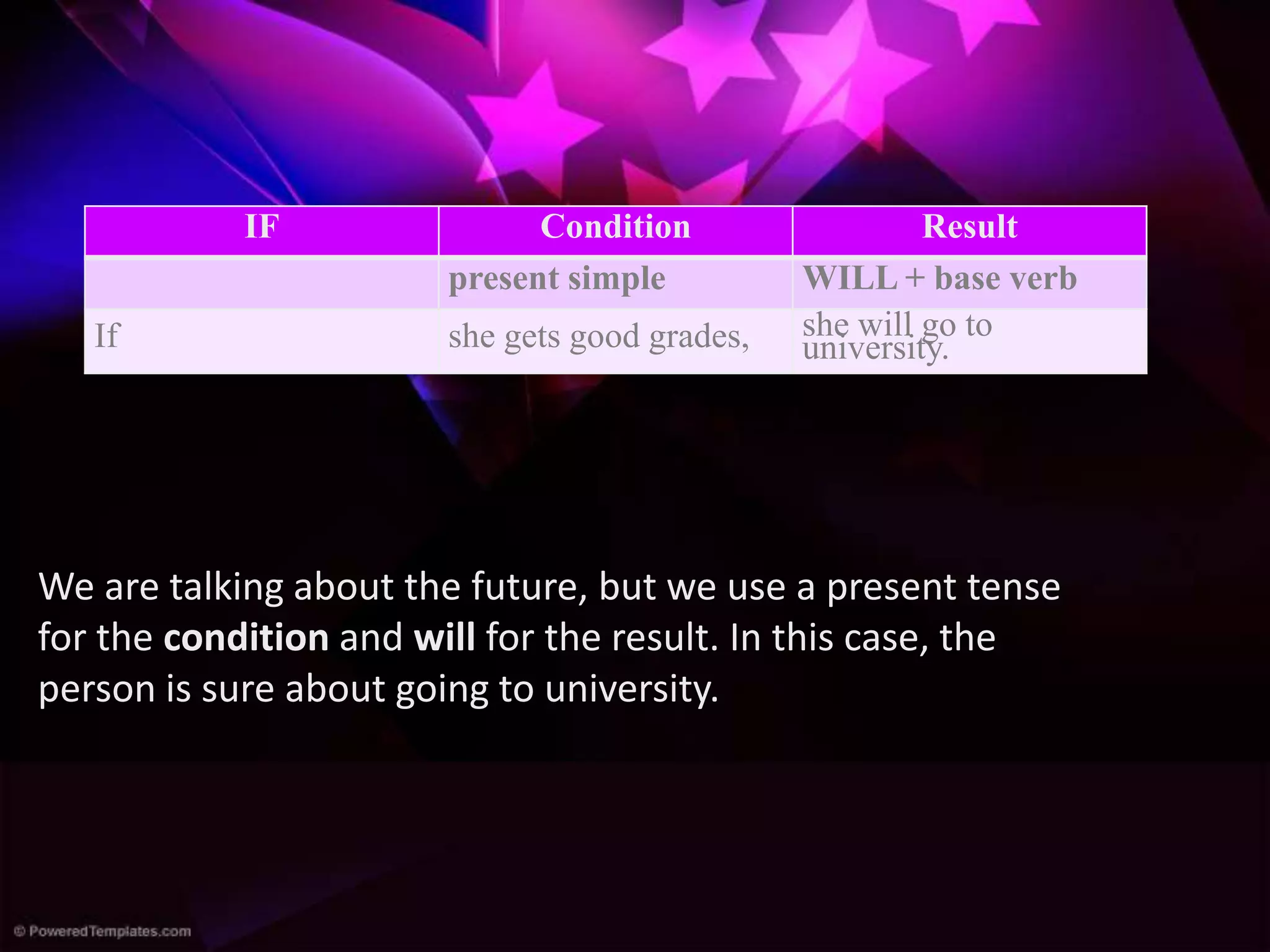
IF                Condition                  Result
                        present simple          WILL + base verb
   If                   she gets good grades,   she will go to
                                                university.


We are talking about the future, but we use a present tense
for the condition and will for the result. In this case, the
person is sure about going to university.
We can use other modal verbs in the result
               part of the sentence:
        IF        Condition         Result             Possibility
               she gets good   she will go to     If the condition is
If             grades,         university.        met, then she
                                                  definitely will go
               he gets good    he may go to       He is not sure
If             grades,         university.        about going to
                                                  university.
                                                  The speaker is
If             she gets good   she should go to   expressing his or
               grades,         university.        her opinion,
                                                  giving advice.
If             he gets good    he can go to       This means that
               grades,         university.        it is possible.
               she gets good   she could go to    This means that
If             grades,         university.        it is possible, but
                                                  not that likely.
               he gets good    he might go to     This means that
If             grades,         university.        it is possible, but
                                                  not that likely.
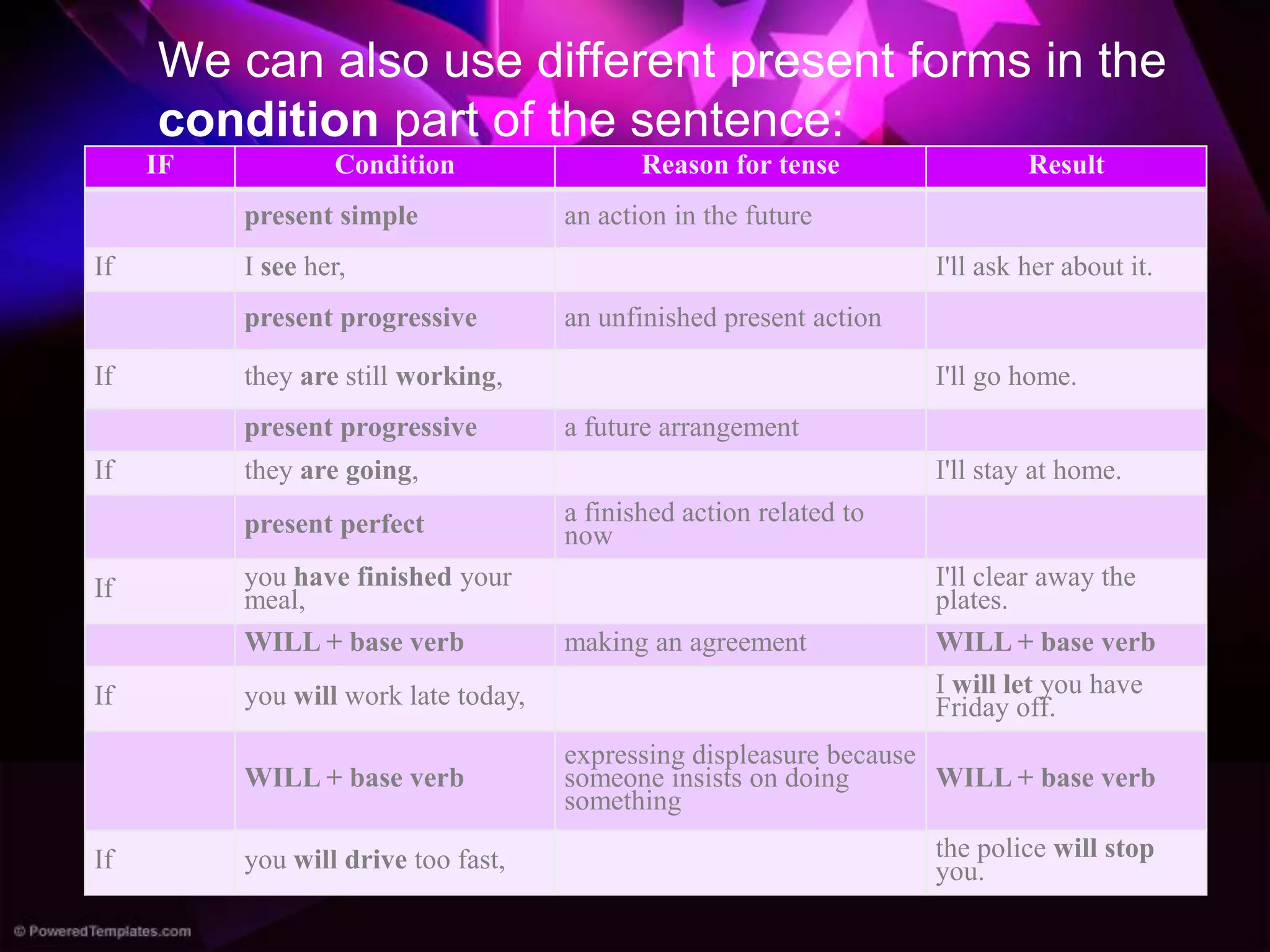
We can also use different present forms in the
     condition part of the sentence:
     IF           Condition                  Reason for tense                 Result
          present simple              an action in the future
If        I see her,                                                 I'll ask her about it.
          present progressive         an unfinished present action

If        they are still working,                                    I'll go home.
          present progressive         a future arrangement
If        they are going,                                            I'll stay at home.
          present perfect             a finished action related to
                                      now
If        you have finished your                                     I'll clear away the
          meal,                                                      plates.
          WILL + base verb            making an agreement            WILL + base verb
If        you will work late today,                                  I will let you have
                                                                     Friday off.
                                      expressing displeasure because
          WILL + base verb            someone insists on doing       WILL + base verb
                                      something

If        you will drive too fast,                                   the police will stop
                                                                     you.
Second Conditional: Imaginary
Present or Unlikely Future


 • The Second Conditional can be used used
   to talk about imaginary present situations,
   where we are imagining something different
   from what is really the case. We can also
   use it to talk about things in the future that
   are unlikely to happen, as the condition is
   unlikely to be met. We use the past tense in
   the condition part and would for the result.
IF    Condition       Time      Result        Possibility
          past simple   present   WOULD +        impossible
                                  base verb
                                                 I don't have
          I had the               I would        the time, so
If        time,                   learn Italian. I'm not going
                                                 to learn
                                                 Italian.
          past simple   future    WOULD + unlikely
                                  base verb
                                                 There's a
                                  I would        very small
          I won the               travel         chance of
If        lottery                 around the     winning the
                                  world.         lottery, so the
                                                 trip is
                                                 unlikely
We can use other modal verbs in the
past tense in the result part of the
sentence:
     IF       Condition           Result           Certainty
          past simple        WOULD + base
                             verb
                                               Although unlikely
                                               to happen, the
If        I had the time,    I would learn     speaker is sure
                             Italian.          that they would do
                                               it given the
                                               opportunity.
                                               Although unlikely
If        I had more time,   I might learn     to happen, it is
                             Spanish.          only a possibility
                                               anyway.
                                               Although unlikely
                                               to happen, the
                             I should learn    speaker is saying
If        I had more time,   some more about   that it would be a
                             IT.               good idea, but is
                                               not committed to
                                               it.
                                               Although unlikely
If        I had more time    I could learn     to happen, it is
                             Hindi.            only a possibility
                                               anyway.
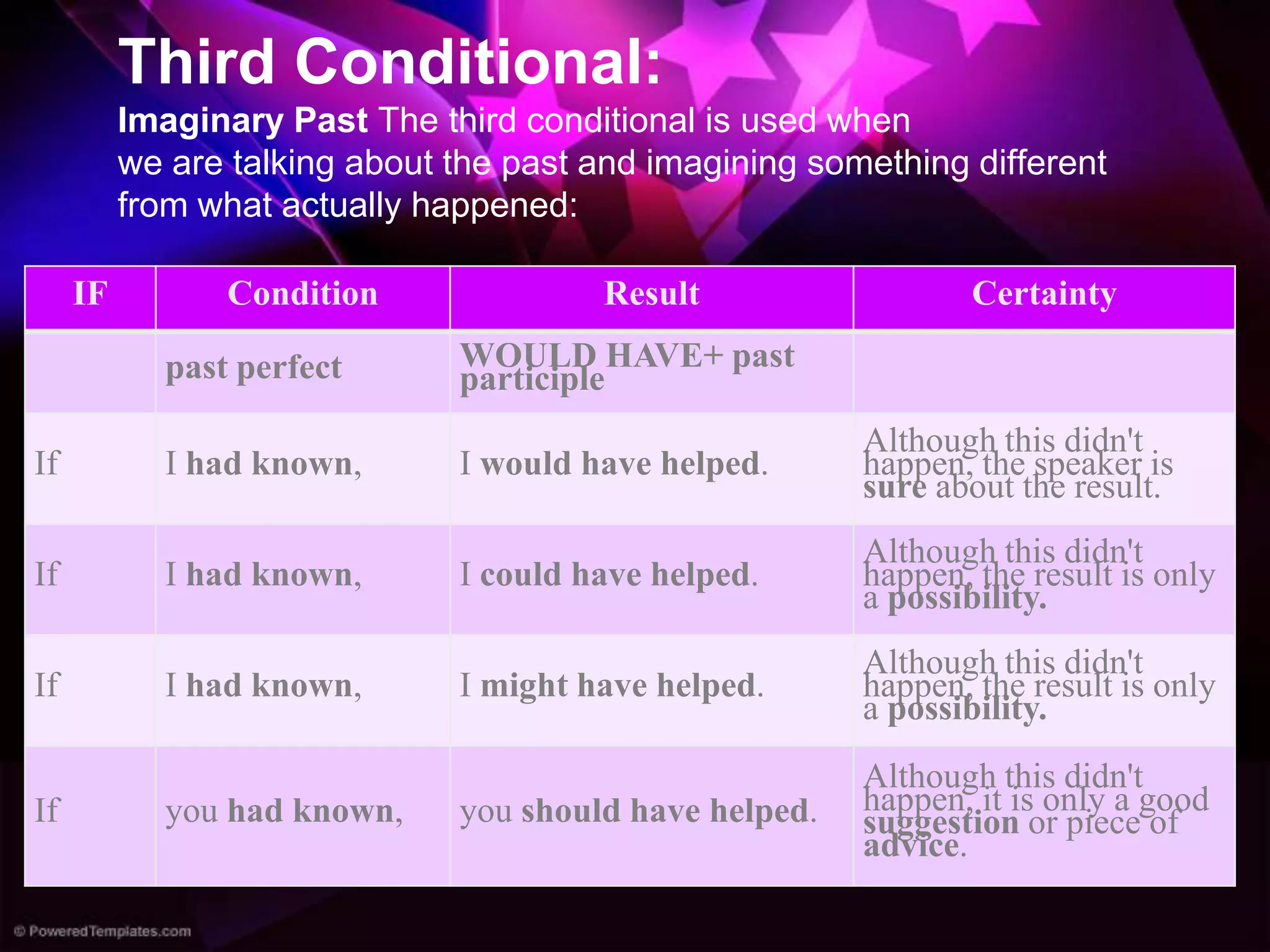
Third Conditional:
          Imaginary Past The third conditional is used when
          we are talking about the past and imagining something different
          from what actually happened:

     IF          Condition              Result                   Certainty

             past perfect      WOULD HAVE+ past
                               participle
                                                         Although this didn't
If           I had known,      I would have helped.      happen, the speaker is
                                                         sure about the result.
                                                         Although this didn't
If           I had known,      I could have helped.      happen, the result is only
                                                         a possibility.
                                                         Although this didn't
If           I had known,      I might have helped.      happen, the result is only
                                                         a possibility.
                                                         Although this didn't
If           you had known,    you should have helped.   happen, it is only a good
                                                         suggestion or piece of
                                                         advice.

English conditionals

  • 1.
    English Conditionals There area number of structures in English that are called the conditionals which are used to talk about possible or imaginary situations. A "Condition" is a "situation or circumstance".
  • 2.
    • There arefour basic conditionals that we use in English. • Zero Conditional • First Conditional • Second Conditional • Third Conditional
  • 3.
    Structure of Conditional Sentences IF Condition Result If it rains, we will get wet or like this: Result IF Condition We will get wet if it rains. • Notice that we only use a comma in the first example.
  • 4.
    Conditionals: Time andProbability Table Probability Conditional Example Time If you heat Certain zero water to 100 conditional degrees celsius, any time it boils Likely first conditional If it rains, I will future stay in. second If I won the Unlikely conditional lottery, I would future retire. second If I had the Impossible conditional money, I would present lend it to you If I had seen Impossible third him, I would conditional have given him past the message.
  • 5.
    Zero Conditional: Certainty •The Zero conditional is used for things that are always true as long as the condition is met. IF Condition Result Situation present simple present simple you heat water to If 100 degrees it boils. fact- universal celsius, present simple present simple If I drink coffee, I get a headache. fact- personal • In these examples, the result will always occur if the condition is met, so the time is not important.
  • 6.
    First Conditional: Areal possibility in the future • A First Conditional sentence is one connecting two future actions, where one must take place before the second is possible. Take a student who wants to go to university but hasn't got the results of their exams yet. They cannot go to university until they have received their results. In the case of a good student who is expected to get good grades, then there is a good possibility of achieving the marks required to get to university, so the following sentence could be used:
  • 7.
    IF Condition Result present simple WILL + base verb If she gets good grades, she will go to university. We are talking about the future, but we use a present tense for the condition and will for the result. In this case, the person is sure about going to university.
  • 8.
    We can useother modal verbs in the result part of the sentence: IF Condition Result Possibility she gets good she will go to If the condition is If grades, university. met, then she definitely will go he gets good he may go to He is not sure If grades, university. about going to university. The speaker is If she gets good she should go to expressing his or grades, university. her opinion, giving advice. If he gets good he can go to This means that grades, university. it is possible. she gets good she could go to This means that If grades, university. it is possible, but not that likely. he gets good he might go to This means that If grades, university. it is possible, but not that likely.
  • 9.
    We can alsouse different present forms in the condition part of the sentence: IF Condition Reason for tense Result present simple an action in the future If I see her, I'll ask her about it. present progressive an unfinished present action If they are still working, I'll go home. present progressive a future arrangement If they are going, I'll stay at home. present perfect a finished action related to now If you have finished your I'll clear away the meal, plates. WILL + base verb making an agreement WILL + base verb If you will work late today, I will let you have Friday off. expressing displeasure because WILL + base verb someone insists on doing WILL + base verb something If you will drive too fast, the police will stop you.
  • 10.
    Second Conditional: Imaginary Presentor Unlikely Future • The Second Conditional can be used used to talk about imaginary present situations, where we are imagining something different from what is really the case. We can also use it to talk about things in the future that are unlikely to happen, as the condition is unlikely to be met. We use the past tense in the condition part and would for the result.
  • 11.
    IF Condition Time Result Possibility past simple present WOULD + impossible base verb I don't have I had the I would the time, so If time, learn Italian. I'm not going to learn Italian. past simple future WOULD + unlikely base verb There's a I would very small I won the travel chance of If lottery around the winning the world. lottery, so the trip is unlikely
  • 12.
    We can useother modal verbs in the past tense in the result part of the sentence: IF Condition Result Certainty past simple WOULD + base verb Although unlikely to happen, the If I had the time, I would learn speaker is sure Italian. that they would do it given the opportunity. Although unlikely If I had more time, I might learn to happen, it is Spanish. only a possibility anyway. Although unlikely to happen, the I should learn speaker is saying If I had more time, some more about that it would be a IT. good idea, but is not committed to it. Although unlikely If I had more time I could learn to happen, it is Hindi. only a possibility anyway.
  • 13.
    Third Conditional: Imaginary Past The third conditional is used when we are talking about the past and imagining something different from what actually happened: IF Condition Result Certainty past perfect WOULD HAVE+ past participle Although this didn't If I had known, I would have helped. happen, the speaker is sure about the result. Although this didn't If I had known, I could have helped. happen, the result is only a possibility. Although this didn't If I had known, I might have helped. happen, the result is only a possibility. Although this didn't If you had known, you should have helped. happen, it is only a good suggestion or piece of advice.