Universidad Central del Ecuador
Facultad de Filosofía, Letras y Ciencias de la
                 Educación
           School of Languages


            First Conditional

                                  David Cortez
First Conditional: real
          possibility
O We are talking about the future. We are
  thinking about a particular condition or
  situation in the future, and the result of
  this condition. There is a real possibility that
  this condition will happen. What will you do?


O For example, it is morning. You are at home.
  You plan to play soccer this afternoon. But
  there are some clouds in the sky. Imagine that
  it rains. What will you do?
Notice that we are thinking about a
                 future condition
IF         Condition                    Result

         present simple           WILL + base verb

If           it rains             I will stay at home.

O We use the present simple tense to talk about the
     possible future condition.
• We use WILL + base verb to talk about the
  possible future result.
Here are some more examples do you
       remember the two basic structures?

     [IF condition result] and   [result IF condition]

IF            Condition                       Result
         PRESENT SIMPLE              WILL + BASE VERB
If    I see Mary                  I will tell her.
If    Tara is free tomorrow       he will invite her.
      they do not pass their
If                           their teacher will be sad.
      exam
If    it rains tomorrow           will you stay at home?
If    it rains tomorrow           what will you do?
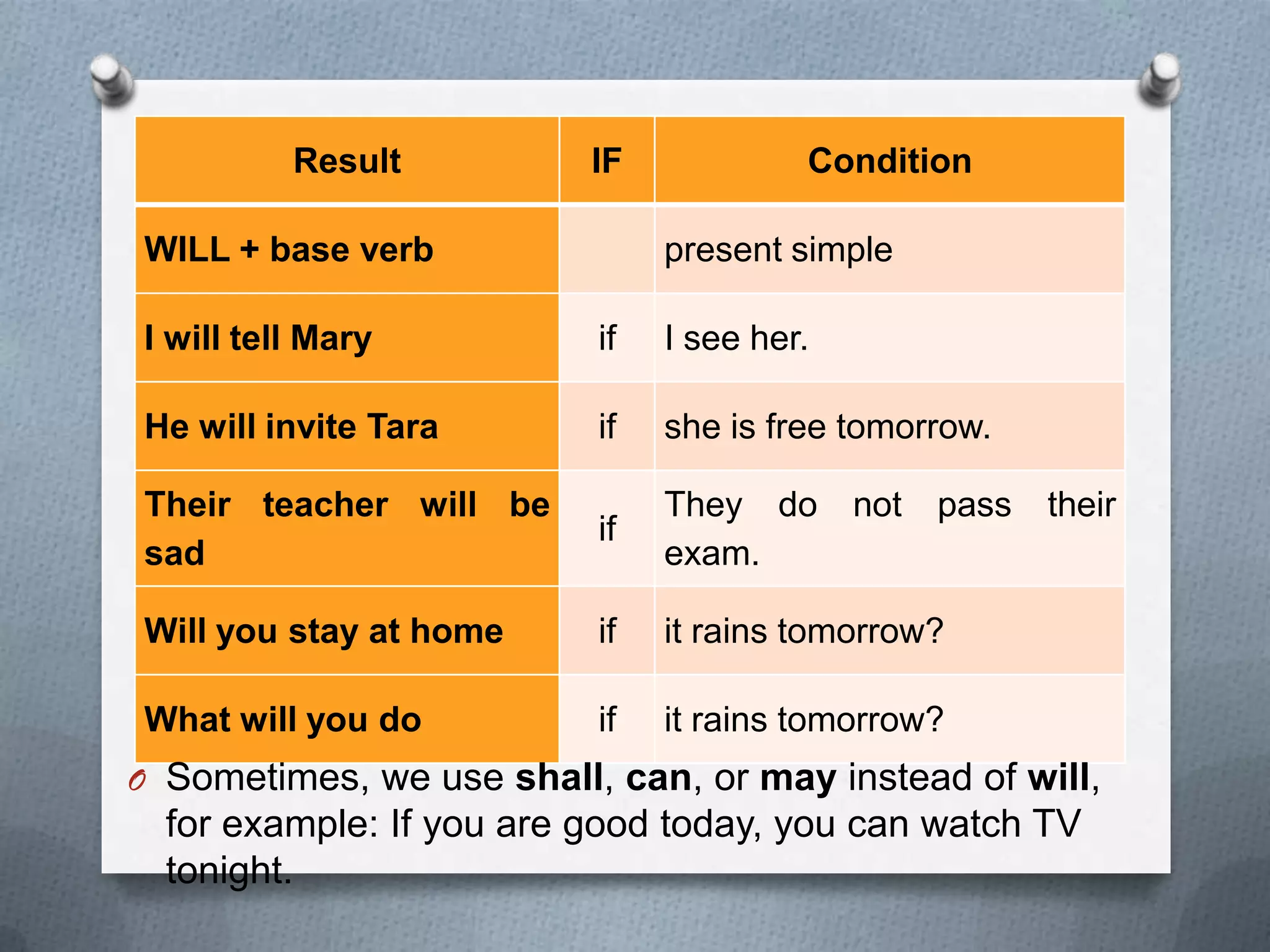
Result          IF            Condition

WILL + base verb               present simple

I will tell Mary          if   I see her.

He will invite Tara       if   she is free tomorrow.

Their teacher will be          They do      not   pass   their
                          if
sad                            exam.

Will you stay at home     if   it rains tomorrow?

What will you do          if   it rains tomorrow?
O Sometimes, we use shall, can, or may instead of will,
  for example: If you are good today, you can watch TV
  tonight.

First conditional

  • 1.
    Universidad Central delEcuador Facultad de Filosofía, Letras y Ciencias de la Educación School of Languages First Conditional David Cortez
  • 2.
    First Conditional: real possibility O We are talking about the future. We are thinking about a particular condition or situation in the future, and the result of this condition. There is a real possibility that this condition will happen. What will you do? O For example, it is morning. You are at home. You plan to play soccer this afternoon. But there are some clouds in the sky. Imagine that it rains. What will you do?
  • 4.
    Notice that weare thinking about a future condition IF Condition Result present simple WILL + base verb If it rains I will stay at home. O We use the present simple tense to talk about the possible future condition. • We use WILL + base verb to talk about the possible future result.
  • 5.
    Here are somemore examples do you remember the two basic structures? [IF condition result] and [result IF condition] IF Condition Result PRESENT SIMPLE WILL + BASE VERB If I see Mary I will tell her. If Tara is free tomorrow he will invite her. they do not pass their If their teacher will be sad. exam If it rains tomorrow will you stay at home? If it rains tomorrow what will you do?
  • 6.
    Result IF Condition WILL + base verb present simple I will tell Mary if I see her. He will invite Tara if she is free tomorrow. Their teacher will be They do not pass their if sad exam. Will you stay at home if it rains tomorrow? What will you do if it rains tomorrow? O Sometimes, we use shall, can, or may instead of will, for example: If you are good today, you can watch TV tonight.