Aylin Şahin
                              03/2013
Marmara University Engineering Faculty


                                         1
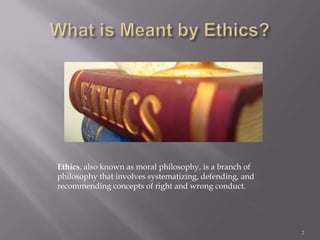
Ethics, also known as moral philosophy, is a branch of
philosophy that involves systematizing, defending, and
recommending concepts of right and wrong conduct.


                                                         2
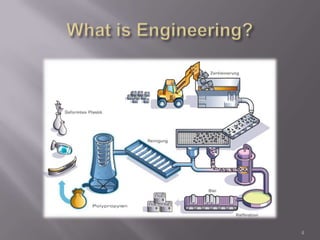
   The creative application of scientific principles
    to design or develop
    structures, machines, apparatus, or
    manufacturing processes, or works utilizing
    them singly or in combination; or to construct
    or operate the same with full cognizance of
    their design; or to forecast their behavior under
    specific operating conditions; all as respects an
    intended function, economics of operation or
    safety to life and property

                                                        3
4
5
6
http://youtu.be/t19kvUiHvAE


                              7
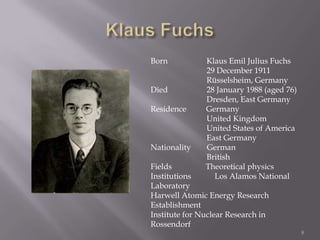
Born           Klaus Emil Julius Fuchs
               29 December 1911
               Rüsselsheim, Germany
Died           28 January 1988 (aged 76)
               Dresden, East Germany
Residence      Germany
               United Kingdom
               United States of America
               East Germany
Nationality    German
               British
Fields         Theoretical physics
Institutions     Los Alamos National
Laboratory
Harwell Atomic Energy Research
Establishment
Institute for Nuclear Research in
Rossendorf
                                           8
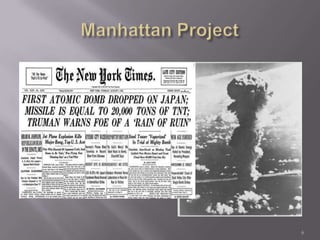
   Is it ethical to start up a weapon improvement
    project to stop Germany’s rise?
   Thousands of people worked in the Manhattan
    Project without knowing the real goal of the
    project. Ethic?
   With spying of Mr. Fuchs time changed. Ethic?

Decisions made by engineers usually have serious
consequences to people -- often to multitudes of people.
Ethics and ethical reasoning guide decision-making.

                                                           9
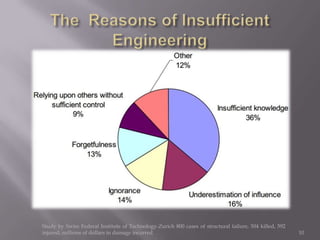
Study by Swiss Federal Institute of Technology-Zurich 800 cases of structural failure, 504 killed, 592
injured, millions of dollars in damage incurred.                                                         10
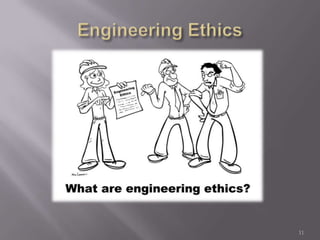
11
   Study of human morality
   Determining values in human conduct
   Deciding the “right thing to do” - based upon a
    set of norms
   In Engineering:
       dealing with colleagues
       dealing with clients
       dealing with employees
       dealing with “users’
       dealing with public
                                                      12
   Safety
   Acceptable risk
   Compliance
   Confidentiality
   Environmental health
   Data integrity
   Conflict of interest
   Honesty/Dishonesty
   Societal impact
   Fairness
   Accounting for uncertainty, etc.

                                       13
 Ethics   is part of engineering for two main
     reasons.

a)    Engineers need to be socially responsible when
      building products and processes for society.

b)    Social responsibility requires professional
      responsibility.


                                                    14
1. Who are the “stakeholders?”
2. What are the KEY statements (clues) in the
   problem?
3. What are the legal considerations?
4. What are the possible actions to be taken?
   (generate options)
5. Is there a clearly “right” action to be taken?
   (evaluate options)


                     Dr. C. Dianne Martin           15
ETHICAL BEHAVIOR                           UNETHICAL BEHAVIOR

•   Quality products                       •   Shoddy products
•   Conservation of resources              •   Waste, fraud, greed
•   Pride in work                          •   Abuse of expertise
•   Public safety                          •   Guilt, fear
•   Timeliness                             •   Lack of safety
•   GOOD BUSINESS                          •   Cutting corners
                                                 • poor design
                                                 • rushed testing
                                           • DISASTERS!


                                Dr. C. Dianne Martin                 16
17
http://www.nspe.org/Ethics/CodeofEthics/index.html

Current Codes of Ethics

   National Society of Professional Engineers: Code of ethics for engineers.
   The Engineering Code of Ethics: Principles and canons of engineer code of ethics.
   Software Engineering Code of Ethics: A brief copy of software engineering code of
    ethics.
   Online Ethics Center: Ethical standard and guidelines for engineering.
   Code of Ethics: Code of ethics for chemical engineers.
   Civil Engineering: Code of ethics for civil engineering.
   Naval Engineers: Code of ethics for Naval engineers by the American Society of Naval
    Engineers.
   Mechanical Engineers: Code of ethics geared towards all engineers. The American
    Society of Mechanical Engineers provides interpretation of the codes for mechanical
    engineers.
   Electrical Engineers: Code of ethics applicable to engineers of all disciplines.
   Chemical Engineers: Code of ethics for chemical engineers.
   Professional Engineers: Code for registered professional engineers.

                            Shttp://engineeringmastersonline.ohio.
                             edu/articles-and-resources/ultimate-
                                 guide-to-engineering-ethics/                              18
The Engineering Code of Ethics has three
    components:

   The Fundamental Canons: which articulate the basic
    components of ethical engineering.

   The Rules of Practice: which clarify and specify in
    detail the fundamental canons of ethics in
    engineering.

   Professional Obligations: which elaborate the
    obligations that engineers have.

                                                          19
Engineers in the fulfillment of their
professional duties shall:


       Hold paramount the
  safety, health, and welfare of the
                public.


                                        20
   Engineers in the fulfillment of their
    professional duties shall:


Perform services only in areas of their
             competence.


                                            21
   Engineers in the fulfillment of their
    professional duties shall:


    Issue public statements only in an
       objective and truthful manner.


                                            22
   Engineers in the fulfillment of their
    professional duties shall:


    Act for each employer or client as
         faithful agents or trustees.


                                            23
   Engineers in the fulfillment of their
    professional duties shall:


            Avoid deceptive acts.


                                            24
   Engineers in the fulfillment of their
    professional duties shall:


           Conduct themselves
    honorably, responsibly, ethically, an
      d lawfully, so as to enhance the
    honor, reputation, and usefulness of
              the profession.

                                            25
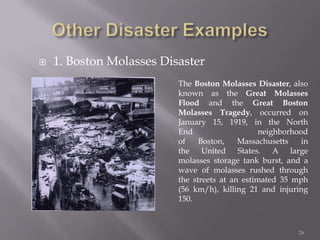
   1. Boston Molasses Disaster
                          The Boston Molasses Disaster, also
                          known as the Great Molasses
                          Flood and the Great Boston
                          Molasses Tragedy, occurred on
                          January 15, 1919, in the North
                          End                    neighborhood
                          of    Boston,    Massachusetts    in
                          the United States. A large
                          molasses storage tank burst, and a
                          wave of molasses rushed through
                          the streets at an estimated 35 mph
                          (56 km/h), killing 21 and injuring
                          150.


                                                           26
    http://www.youtube.com/watch?v=COZ-
                    GKfwQX8

               KEY DATES
               1974 - Morton-Thiokol awarded contract to build
               solid rocket boosters.
               1976 - NASA accepts Morton-Thiokol's booster
               design.
               1977 - Morton-Thiokol discovers joint rotation
               problem. November 1981 - O-ring erosion
               discovered after second shuttle flight.
               January 24, 1985 - shuttle flight that exhibited the
               worst O-ring blow-by.
               July 1985 - Thiokol orders new steel billets for
               new field joint design.
               August 19, 1985 - NASA LevelI management
               briefed on booster problem.
               January 27, 1986 - night teleconference to
               discuss effects of cold temperature on booster
               performance.
               January 28, 1986 - Challenger explodes 72
               seconds after liftoff.

Engineering Ethics Case Study: The
   Challenger Disaster Mark P.
       Rossow, P.E., Ph.D.                                        27
1. Ethical issue: Did NASA take extra risks because of
pressure to maintain Congressional funding?
2. Ethical issue: Did Thiokol take extra risks because of
fear of losing its contract with NASA?
3. Ethical issue: Was the Principle of Informed Consent
violated?
4. Ethical issue: What role did whistle blowing have in
the Challenger story?
5. Ethical issue: Who had the right to Thiokol
documents relating to the Challenger disaster?
6. Ethical issue: Why are some engineering disasters
considered ethical issues and others are not?
                  Engineering Ethics Case Study: The
                     Challenger Disaster Mark P.
                         Rossow, P.E., Ph.D.                28
   http://en.wikipedia.org/wiki/Ethics
   http://www.yourdictionary.com/library/reference/defin
    e-ethics.html
   Engineers' Council for Professional Development.
    (1947). Canons of ethics for engineers
   http://iweb.tms.org/Communities/FTAttachments/materi
    al_disasters_Nik_Chawla.pdf
   http://en.wikipedia.org/wiki/Boston_Molasses_Disaster
   http://engineeringmastersonline.ohio.edu/articles-and-
    resources/ultimate-guide-to-engineering-ethics/
   Engineering Ethics Case Study: The Challenger Disaster
    Mark P. Rossow, P.E., Ph.D.


                                                             29

Engineering ethics aylin sahin2

  • 1.
    Aylin Şahin 03/2013 Marmara University Engineering Faculty 1
  • 2.
    Ethics, also knownas moral philosophy, is a branch of philosophy that involves systematizing, defending, and recommending concepts of right and wrong conduct. 2
  • 3.
    The creative application of scientific principles to design or develop structures, machines, apparatus, or manufacturing processes, or works utilizing them singly or in combination; or to construct or operate the same with full cognizance of their design; or to forecast their behavior under specific operating conditions; all as respects an intended function, economics of operation or safety to life and property 3
  • 4.
  • 5.
  • 6.
  • 7.
  • 8.
    Born Klaus Emil Julius Fuchs 29 December 1911 Rüsselsheim, Germany Died 28 January 1988 (aged 76) Dresden, East Germany Residence Germany United Kingdom United States of America East Germany Nationality German British Fields Theoretical physics Institutions Los Alamos National Laboratory Harwell Atomic Energy Research Establishment Institute for Nuclear Research in Rossendorf 8
  • 9.
    Is it ethical to start up a weapon improvement project to stop Germany’s rise?  Thousands of people worked in the Manhattan Project without knowing the real goal of the project. Ethic?  With spying of Mr. Fuchs time changed. Ethic? Decisions made by engineers usually have serious consequences to people -- often to multitudes of people. Ethics and ethical reasoning guide decision-making. 9
  • 10.
    Study by SwissFederal Institute of Technology-Zurich 800 cases of structural failure, 504 killed, 592 injured, millions of dollars in damage incurred. 10
  • 11.
  • 12.
    Study of human morality  Determining values in human conduct  Deciding the “right thing to do” - based upon a set of norms  In Engineering:  dealing with colleagues  dealing with clients  dealing with employees  dealing with “users’  dealing with public 12
  • 13.
    Safety  Acceptable risk  Compliance  Confidentiality  Environmental health  Data integrity  Conflict of interest  Honesty/Dishonesty  Societal impact  Fairness  Accounting for uncertainty, etc. 13
  • 14.
     Ethics is part of engineering for two main reasons. a) Engineers need to be socially responsible when building products and processes for society. b) Social responsibility requires professional responsibility. 14
  • 15.
    1. Who arethe “stakeholders?” 2. What are the KEY statements (clues) in the problem? 3. What are the legal considerations? 4. What are the possible actions to be taken? (generate options) 5. Is there a clearly “right” action to be taken? (evaluate options) Dr. C. Dianne Martin 15
  • 16.
    ETHICAL BEHAVIOR UNETHICAL BEHAVIOR • Quality products • Shoddy products • Conservation of resources • Waste, fraud, greed • Pride in work • Abuse of expertise • Public safety • Guilt, fear • Timeliness • Lack of safety • GOOD BUSINESS • Cutting corners • poor design • rushed testing • DISASTERS! Dr. C. Dianne Martin 16
  • 17.
  • 18.
    http://www.nspe.org/Ethics/CodeofEthics/index.html Current Codes ofEthics  National Society of Professional Engineers: Code of ethics for engineers.  The Engineering Code of Ethics: Principles and canons of engineer code of ethics.  Software Engineering Code of Ethics: A brief copy of software engineering code of ethics.  Online Ethics Center: Ethical standard and guidelines for engineering.  Code of Ethics: Code of ethics for chemical engineers.  Civil Engineering: Code of ethics for civil engineering.  Naval Engineers: Code of ethics for Naval engineers by the American Society of Naval Engineers.  Mechanical Engineers: Code of ethics geared towards all engineers. The American Society of Mechanical Engineers provides interpretation of the codes for mechanical engineers.  Electrical Engineers: Code of ethics applicable to engineers of all disciplines.  Chemical Engineers: Code of ethics for chemical engineers.  Professional Engineers: Code for registered professional engineers. Shttp://engineeringmastersonline.ohio. edu/articles-and-resources/ultimate- guide-to-engineering-ethics/ 18
  • 19.
    The Engineering Codeof Ethics has three components:  The Fundamental Canons: which articulate the basic components of ethical engineering.  The Rules of Practice: which clarify and specify in detail the fundamental canons of ethics in engineering.  Professional Obligations: which elaborate the obligations that engineers have. 19
  • 20.
    Engineers in thefulfillment of their professional duties shall: Hold paramount the safety, health, and welfare of the public. 20
  • 21.
    Engineers in the fulfillment of their professional duties shall: Perform services only in areas of their competence. 21
  • 22.
    Engineers in the fulfillment of their professional duties shall: Issue public statements only in an objective and truthful manner. 22
  • 23.
    Engineers in the fulfillment of their professional duties shall: Act for each employer or client as faithful agents or trustees. 23
  • 24.
    Engineers in the fulfillment of their professional duties shall: Avoid deceptive acts. 24
  • 25.
    Engineers in the fulfillment of their professional duties shall: Conduct themselves honorably, responsibly, ethically, an d lawfully, so as to enhance the honor, reputation, and usefulness of the profession. 25
  • 26.
    1. Boston Molasses Disaster The Boston Molasses Disaster, also known as the Great Molasses Flood and the Great Boston Molasses Tragedy, occurred on January 15, 1919, in the North End neighborhood of Boston, Massachusetts in the United States. A large molasses storage tank burst, and a wave of molasses rushed through the streets at an estimated 35 mph (56 km/h), killing 21 and injuring 150. 26
  • 27.
    http://www.youtube.com/watch?v=COZ- GKfwQX8 KEY DATES 1974 - Morton-Thiokol awarded contract to build solid rocket boosters. 1976 - NASA accepts Morton-Thiokol's booster design. 1977 - Morton-Thiokol discovers joint rotation problem. November 1981 - O-ring erosion discovered after second shuttle flight. January 24, 1985 - shuttle flight that exhibited the worst O-ring blow-by. July 1985 - Thiokol orders new steel billets for new field joint design. August 19, 1985 - NASA LevelI management briefed on booster problem. January 27, 1986 - night teleconference to discuss effects of cold temperature on booster performance. January 28, 1986 - Challenger explodes 72 seconds after liftoff. Engineering Ethics Case Study: The Challenger Disaster Mark P. Rossow, P.E., Ph.D. 27
  • 28.
    1. Ethical issue:Did NASA take extra risks because of pressure to maintain Congressional funding? 2. Ethical issue: Did Thiokol take extra risks because of fear of losing its contract with NASA? 3. Ethical issue: Was the Principle of Informed Consent violated? 4. Ethical issue: What role did whistle blowing have in the Challenger story? 5. Ethical issue: Who had the right to Thiokol documents relating to the Challenger disaster? 6. Ethical issue: Why are some engineering disasters considered ethical issues and others are not? Engineering Ethics Case Study: The Challenger Disaster Mark P. Rossow, P.E., Ph.D. 28
  • 29.
    http://en.wikipedia.org/wiki/Ethics  http://www.yourdictionary.com/library/reference/defin e-ethics.html  Engineers' Council for Professional Development. (1947). Canons of ethics for engineers  http://iweb.tms.org/Communities/FTAttachments/materi al_disasters_Nik_Chawla.pdf  http://en.wikipedia.org/wiki/Boston_Molasses_Disaster  http://engineeringmastersonline.ohio.edu/articles-and- resources/ultimate-guide-to-engineering-ethics/  Engineering Ethics Case Study: The Challenger Disaster Mark P. Rossow, P.E., Ph.D. 29