ENERGY AND ITS SOURCES

      RENEWABLE SOURCES
RENEWABLE SOURCES


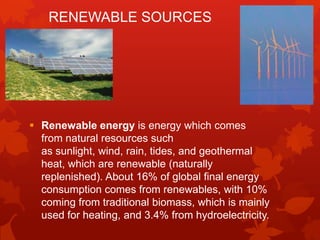
 Renewable energy is energy which comes
  from natural resources such
  as sunlight, wind, rain, tides, and geothermal
  heat, which are renewable (naturally
  replenished). About 16% of global final energy
  consumption comes from renewables, with 10%
  coming from traditional biomass, which is mainly
  used for heating, and 3.4% from hydroelectricity.
NUCLEAR POWER


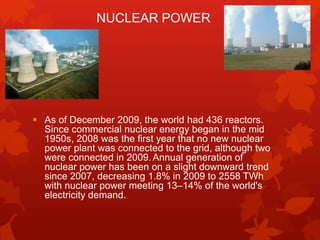
 As of December 2009, the world had 436 reactors.
  Since commercial nuclear energy began in the mid
  1950s, 2008 was the first year that no new nuclear
  power plant was connected to the grid, although two
  were connected in 2009. Annual generation of
  nuclear power has been on a slight downward trend
  since 2007, decreasing 1.8% in 2009 to 2558 TWh
  with nuclear power meeting 13–14% of the world's
  electricity demand.
HYDROPOWER


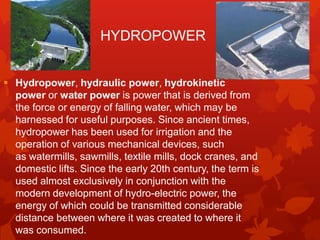
 Hydropower, hydraulic power, hydrokinetic
  power or water power is power that is derived from
  the force or energy of falling water, which may be
  harnessed for useful purposes. Since ancient times,
  hydropower has been used for irrigation and the
  operation of various mechanical devices, such
  as watermills, sawmills, textile mills, dock cranes, and
  domestic lifts. Since the early 20th century, the term is
  used almost exclusively in conjunction with the
  modern development of hydro-electric power, the
  energy of which could be transmitted considerable
  distance between where it was created to where it
  was consumed.
WIND POWER


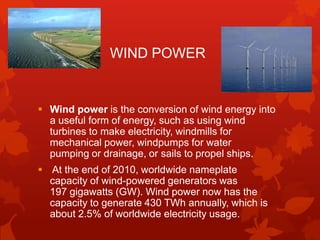
 Wind power is the conversion of wind energy into
  a useful form of energy, such as using wind
  turbines to make electricity, windmills for
  mechanical power, windpumps for water
  pumping or drainage, or sails to propel ships.
 At the end of 2010, worldwide nameplate
  capacity of wind-powered generators was
  197 gigawatts (GW). Wind power now has the
  capacity to generate 430 TWh annually, which is
  about 2.5% of worldwide electricity usage.
SOLAR POWER


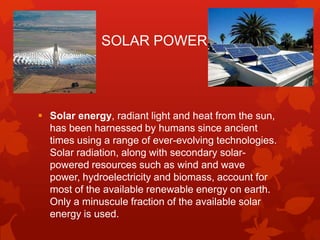
 Solar energy, radiant light and heat from the sun,
  has been harnessed by humans since ancient
  times using a range of ever-evolving technologies.
  Solar radiation, along with secondary solar-
  powered resources such as wind and wave
  power, hydroelectricity and biomass, account for
  most of the available renewable energy on earth.
  Only a minuscule fraction of the available solar
  energy is used.
GEOTHERMAL POWER


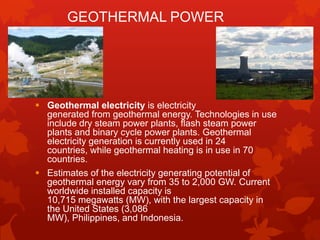
 Geothermal electricity is electricity
  generated from geothermal energy. Technologies in use
  include dry steam power plants, flash steam power
  plants and binary cycle power plants. Geothermal
  electricity generation is currently used in 24
  countries, while geothermal heating is in use in 70
  countries.
 Estimates of the electricity generating potential of
  geothermal energy vary from 35 to 2,000 GW. Current
  worldwide installed capacity is
  10,715 megawatts (MW), with the largest capacity in
  the United States (3,086
  MW), Philippines, and Indonesia.
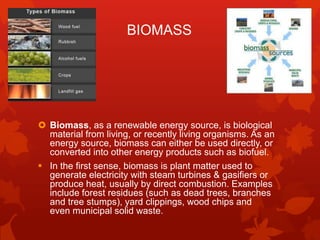
BIOMASS


 Biomass, as a renewable energy source, is biological
  material from living, or recently living organisms. As an
  energy source, biomass can either be used directly, or
  converted into other energy products such as biofuel.
 In the first sense, biomass is plant matter used to
  generate electricity with steam turbines & gasifiers or
  produce heat, usually by direct combustion. Examples
  include forest residues (such as dead trees, branches
  and tree stumps), yard clippings, wood chips and
  even municipal solid waste.
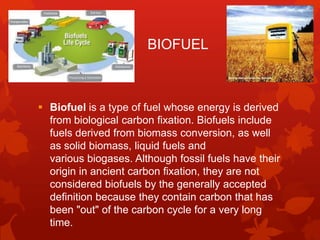
BIOFUEL


 Biofuel is a type of fuel whose energy is derived
  from biological carbon fixation. Biofuels include
  fuels derived from biomass conversion, as well
  as solid biomass, liquid fuels and
  various biogases. Although fossil fuels have their
  origin in ancient carbon fixation, they are not
  considered biofuels by the generally accepted
  definition because they contain carbon that has
  been "out" of the carbon cycle for a very long
  time.

Energy and its sources

  • 1.
    ENERGY AND ITSSOURCES RENEWABLE SOURCES
  • 2.
    RENEWABLE SOURCES  Renewableenergy is energy which comes from natural resources such as sunlight, wind, rain, tides, and geothermal heat, which are renewable (naturally replenished). About 16% of global final energy consumption comes from renewables, with 10% coming from traditional biomass, which is mainly used for heating, and 3.4% from hydroelectricity.
  • 3.
    NUCLEAR POWER  Asof December 2009, the world had 436 reactors. Since commercial nuclear energy began in the mid 1950s, 2008 was the first year that no new nuclear power plant was connected to the grid, although two were connected in 2009. Annual generation of nuclear power has been on a slight downward trend since 2007, decreasing 1.8% in 2009 to 2558 TWh with nuclear power meeting 13–14% of the world's electricity demand.
  • 4.
    HYDROPOWER  Hydropower, hydraulicpower, hydrokinetic power or water power is power that is derived from the force or energy of falling water, which may be harnessed for useful purposes. Since ancient times, hydropower has been used for irrigation and the operation of various mechanical devices, such as watermills, sawmills, textile mills, dock cranes, and domestic lifts. Since the early 20th century, the term is used almost exclusively in conjunction with the modern development of hydro-electric power, the energy of which could be transmitted considerable distance between where it was created to where it was consumed.
  • 5.
    WIND POWER  Windpower is the conversion of wind energy into a useful form of energy, such as using wind turbines to make electricity, windmills for mechanical power, windpumps for water pumping or drainage, or sails to propel ships.  At the end of 2010, worldwide nameplate capacity of wind-powered generators was 197 gigawatts (GW). Wind power now has the capacity to generate 430 TWh annually, which is about 2.5% of worldwide electricity usage.
  • 6.
    SOLAR POWER  Solarenergy, radiant light and heat from the sun, has been harnessed by humans since ancient times using a range of ever-evolving technologies. Solar radiation, along with secondary solar- powered resources such as wind and wave power, hydroelectricity and biomass, account for most of the available renewable energy on earth. Only a minuscule fraction of the available solar energy is used.
  • 7.
    GEOTHERMAL POWER  Geothermalelectricity is electricity generated from geothermal energy. Technologies in use include dry steam power plants, flash steam power plants and binary cycle power plants. Geothermal electricity generation is currently used in 24 countries, while geothermal heating is in use in 70 countries.  Estimates of the electricity generating potential of geothermal energy vary from 35 to 2,000 GW. Current worldwide installed capacity is 10,715 megawatts (MW), with the largest capacity in the United States (3,086 MW), Philippines, and Indonesia.
  • 8.
    BIOMASS  Biomass, asa renewable energy source, is biological material from living, or recently living organisms. As an energy source, biomass can either be used directly, or converted into other energy products such as biofuel.  In the first sense, biomass is plant matter used to generate electricity with steam turbines & gasifiers or produce heat, usually by direct combustion. Examples include forest residues (such as dead trees, branches and tree stumps), yard clippings, wood chips and even municipal solid waste.
  • 9.
    BIOFUEL  Biofuel isa type of fuel whose energy is derived from biological carbon fixation. Biofuels include fuels derived from biomass conversion, as well as solid biomass, liquid fuels and various biogases. Although fossil fuels have their origin in ancient carbon fixation, they are not considered biofuels by the generally accepted definition because they contain carbon that has been "out" of the carbon cycle for a very long time.