ENDOTHELIAL CELLS IN
HEALTH AND DISEASE
PRESENTER: DR.JANANI MATHIALAGAN
MODERATOR: DR.ANANDRAJ VAITHY
OBJECTIVES
• ENDOTHELIAL CELLS
• FUNCTIONS OF NORMAL ENDOTHELIAL CELLS
• ROLE IN
• CARDIOVASCULAR DISEASE
• SEPSIS
• CANCER
WHAT ARE ENDOTHELIAL CELLS
• Mesodermal derived cells
• Forms the lining the blood vessels
• Forms an interface between circulating elements and the vessel which
contains it.
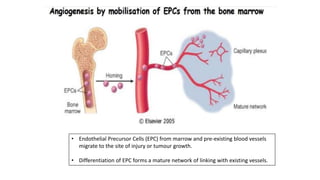
• Endothelial Precursor Cells (EPC) from marrow and pre-existing blood vessels
migrate to the site of injury or tumour growth.
• Differentiation of EPC forms a mature network of linking with existing vessels.
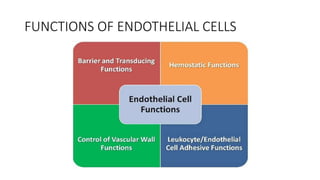
FUNCTIONS OF ENDOTHELIAL CELLS
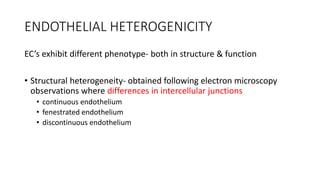
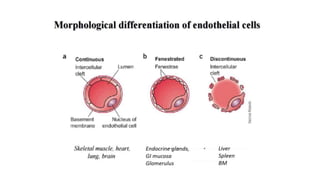
ENDOTHELIAL HETEROGENICITY
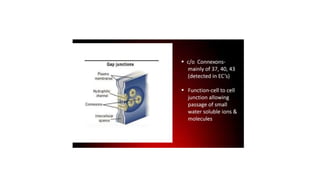
EC’s exhibit different phenotype- both in structure & function
• Structural heterogeneity- obtained following electron microscopy
observations where differences in intercellular junctions
• continuous endothelium
• fenestrated endothelium
• discontinuous endothelium
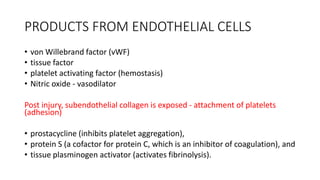
PRODUCTS FROM ENDOTHELIAL CELLS
• von Willebrand factor (vWF)
• tissue factor
• platelet activating factor (hemostasis)
• Nitric oxide - vasodilator
Post injury, subendothelial collagen is exposed - attachment of platelets
(adhesion)
• prostacycline (inhibits platelet aggregation),
• protein S (a cofactor for protein C, which is an inhibitor of coagulation), and
• tissue plasminogen activator (activates fibrinolysis).
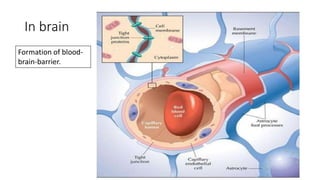
In brain
Formation of blood-
brain-barrier.
In lungs
Respiratory membrane
• selective phagocytic activity
• extract substances from blood
• Oxygen and cardon-di-oxide diffusion
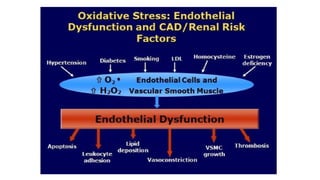
Endothelial dysfunction
• Oxidative Stress
1) Decreased NO
2) Increased Endothelin ( ET-1 binds to Endothelin A and B receptors
in pulmonary vascular bed - potent vasoconstrictor)
• It is also a physiological process.
Endothelium in smoking
• Nicotine
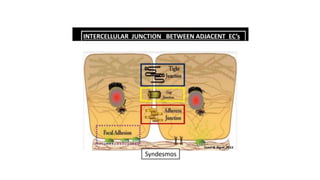
• Opens up intercellular junction
• Allow large molecules to pass through the wall
• Toxins - degenerative changes in the blood vessels & lead to vascular
disease
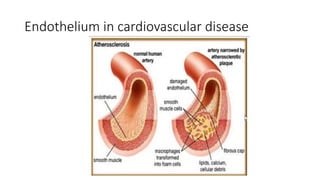
Endothelium in cardiovascular disease
Endothelium in hypertension
• Angiotensin-converting-enzyme(ACE) is an endothelial enzyme
• Converts angiotensinogen I to angiotensinogen II.
• Angiotensin II is a potent vasoconstrictor.
• Important in pathogenesis of hypertension
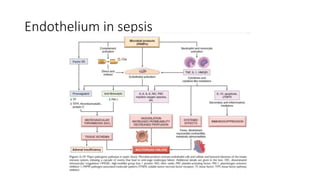
Endothelium in sepsis
Endothelium in angiogenesis
• Physiological
Endometrium
Placenta
Wound healing
Hair growth
• Pathological
Tumour angiogenesis
Endothelium in malignancy
• EC growth supports metabolic requirement of tumor beyond few mm
(growth of primary & metastatic tumor)
• Possible pathogenesis involved
stimulation of EC
degradation of ECM
proliferation of EC & migration into tumor
Formation of new capillary tubes
• Tumor vessels are tortuous, dilated, uneven diameter, excessive
branching & shunting (lacks perivascular cells)
Endothelium in malignancy
Tumour cells - Acquired drug resistance of tumor (due to high intrinsic
mutation rate) --- major cause of treatment failure
But ECs are genetically stable
• EC provides nourishment to many tumor cells; tumor growth depends
on angiogenesis
Blockade of a single GF (e.g. VEGF) may inhibit tumor induced vascular
growth
Eg: Bevacizumab
Summary
• EC’s play a vital role in health and integrity of every tissue of the body
because apart from cartilage, every cell lies within a few µm of a
capillary.
• The diffusion limit of oxygen in tissue is only ≈ 100µm and can not
cross blood vessel thicker than that.
• Fine capillaries (10-15 µm) consist merely of endothelial cells and a
very fine basal lamina, thus helps in providing oxygen, nutrients &
metabolites.
Summary
• EC adjust their number & arrangement to accommodate local
requirement
• Involved in extending & remodeling the network of blood vessels to
enable tissue growth & repair.
• Dysfunction of EC has been implicated in virtually every type
vascular disease( Atherosclerosis, HTN etc.)
References
• Pathological basis of disease : Robbins & Cotran,8th edition
• Kawthalkar – Clinical pathology
• Harrison’s internal medicine: 17th edition
• Hematology : Basic Principles & Practise,5th edition( Hoffman)
Endothelial cells
Endothelial cells
Endothelial cells
Endothelial cells
Endothelial cells

Endothelial cells

  • 1.
    ENDOTHELIAL CELLS IN HEALTHAND DISEASE PRESENTER: DR.JANANI MATHIALAGAN MODERATOR: DR.ANANDRAJ VAITHY
  • 2.
    OBJECTIVES • ENDOTHELIAL CELLS •FUNCTIONS OF NORMAL ENDOTHELIAL CELLS • ROLE IN • CARDIOVASCULAR DISEASE • SEPSIS • CANCER
  • 3.
    WHAT ARE ENDOTHELIALCELLS • Mesodermal derived cells • Forms the lining the blood vessels • Forms an interface between circulating elements and the vessel which contains it.
  • 4.
    • Endothelial PrecursorCells (EPC) from marrow and pre-existing blood vessels migrate to the site of injury or tumour growth. • Differentiation of EPC forms a mature network of linking with existing vessels.
  • 5.
  • 6.
    ENDOTHELIAL HETEROGENICITY EC’s exhibitdifferent phenotype- both in structure & function • Structural heterogeneity- obtained following electron microscopy observations where differences in intercellular junctions • continuous endothelium • fenestrated endothelium • discontinuous endothelium
  • 8.
    PRODUCTS FROM ENDOTHELIALCELLS • von Willebrand factor (vWF) • tissue factor • platelet activating factor (hemostasis) • Nitric oxide - vasodilator Post injury, subendothelial collagen is exposed - attachment of platelets (adhesion) • prostacycline (inhibits platelet aggregation), • protein S (a cofactor for protein C, which is an inhibitor of coagulation), and • tissue plasminogen activator (activates fibrinolysis).
  • 9.
    In brain Formation ofblood- brain-barrier.
  • 10.
    In lungs Respiratory membrane •selective phagocytic activity • extract substances from blood • Oxygen and cardon-di-oxide diffusion
  • 11.
    Endothelial dysfunction • OxidativeStress 1) Decreased NO 2) Increased Endothelin ( ET-1 binds to Endothelin A and B receptors in pulmonary vascular bed - potent vasoconstrictor) • It is also a physiological process.
  • 13.
    Endothelium in smoking •Nicotine • Opens up intercellular junction • Allow large molecules to pass through the wall • Toxins - degenerative changes in the blood vessels & lead to vascular disease
  • 14.
  • 15.
    Endothelium in hypertension •Angiotensin-converting-enzyme(ACE) is an endothelial enzyme • Converts angiotensinogen I to angiotensinogen II. • Angiotensin II is a potent vasoconstrictor. • Important in pathogenesis of hypertension
  • 16.
  • 17.
    Endothelium in angiogenesis •Physiological Endometrium Placenta Wound healing Hair growth • Pathological Tumour angiogenesis
  • 18.
    Endothelium in malignancy •EC growth supports metabolic requirement of tumor beyond few mm (growth of primary & metastatic tumor) • Possible pathogenesis involved stimulation of EC degradation of ECM proliferation of EC & migration into tumor Formation of new capillary tubes • Tumor vessels are tortuous, dilated, uneven diameter, excessive branching & shunting (lacks perivascular cells)
  • 19.
    Endothelium in malignancy Tumourcells - Acquired drug resistance of tumor (due to high intrinsic mutation rate) --- major cause of treatment failure But ECs are genetically stable • EC provides nourishment to many tumor cells; tumor growth depends on angiogenesis Blockade of a single GF (e.g. VEGF) may inhibit tumor induced vascular growth Eg: Bevacizumab
  • 20.
    Summary • EC’s playa vital role in health and integrity of every tissue of the body because apart from cartilage, every cell lies within a few µm of a capillary. • The diffusion limit of oxygen in tissue is only ≈ 100µm and can not cross blood vessel thicker than that. • Fine capillaries (10-15 µm) consist merely of endothelial cells and a very fine basal lamina, thus helps in providing oxygen, nutrients & metabolites.
  • 21.
    Summary • EC adjusttheir number & arrangement to accommodate local requirement • Involved in extending & remodeling the network of blood vessels to enable tissue growth & repair. • Dysfunction of EC has been implicated in virtually every type vascular disease( Atherosclerosis, HTN etc.)
  • 22.
    References • Pathological basisof disease : Robbins & Cotran,8th edition • Kawthalkar – Clinical pathology • Harrison’s internal medicine: 17th edition • Hematology : Basic Principles & Practise,5th edition( Hoffman)

Editor's Notes

  • #4 NORMAL HISTOLOGY WITH PARTS