EPITHELIAL CELLS
ENDOTHELIAL VS.
A C O M P A R A T I V E I N S I G H T I N T O C E L L U L A R
D Y N A M I C S
www.kosheeka.com
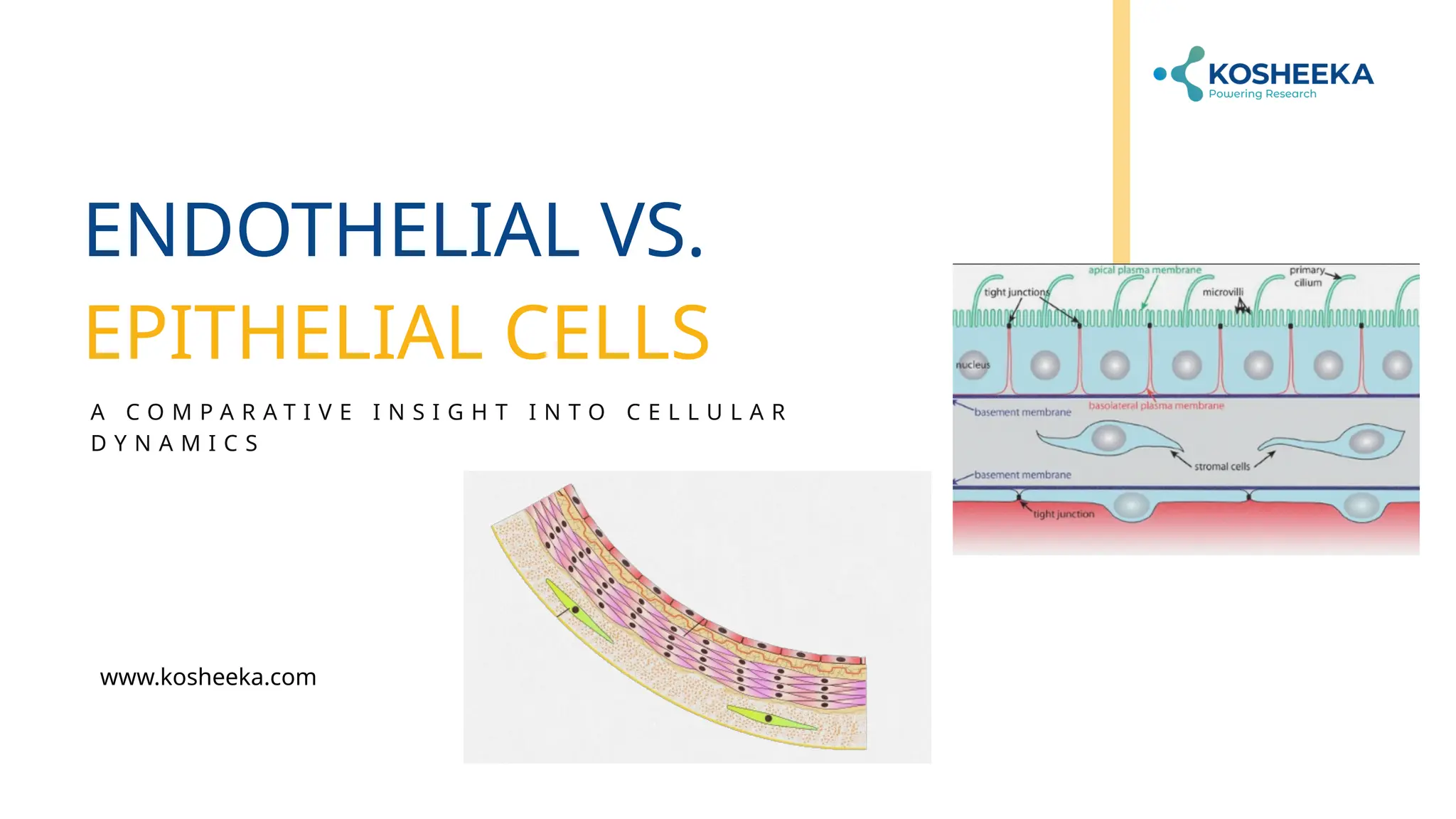
What are endothelial cells
and epithelial cells?
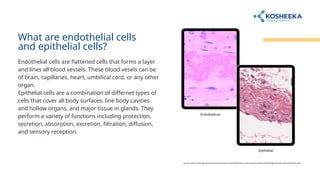
Endothelial cells are flattened cells that forms a layer
and lines all blood vessels. These blood vesels can be
of brain, capillaries, heart, umbilical cord, or any other
organ.
Epithelial cells are a combination of differnet types of
cells that cover all body surfaces, line body cavities
and hollow organs, and major tissue in glands. They
perform a variety of functions including protection,
secretion, absorption, excretion, filtration, diffusion,
and sensory reception.
Source: https://histology.medicine.umich.edu/resources/epithelial-tissue, https://www.medcell.org/histology/epithelia_lab/endothelium.php
Epithelial
Endothelium
Differences between endothelial and
epithelial cells
Both Endothelial cells and Epithelial cells originates from
epithelial cells. However, they are major differences in their
• Location
• Structure
• Function
But there is a similarity between the two as well:
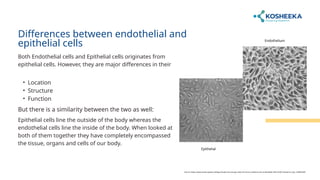
Epithelial cells line the outside of the body whereas the
endothelial cells line the inside of the body. When looked at
both of them together they have completely encompassed
the tissue, organs and cells of our body.
Source: https://www.researchgate.net/figure/Light-microscopic-view-of-human-umbilical-vein-endothelial-cells-HUVEC-plated-on_fig1_225845283
Endothelium
Epithelial
Endothelial cells Epithelial Cells
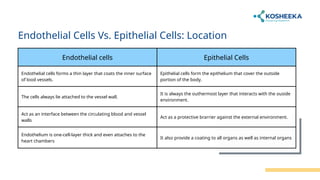
Endothelial cells forms a thin layer that coats the inner surface
of lood vessels.
Epithelial cells form the epithelium that cover the outside
portion of the body.
The cells always lie attached to the vessel wall.
It is always the outhermost layer that interacts with the ouside
environment.
Act as an interface between the circulating blood and vessel
walls
Act as a protective brarrier against the external environment.
Endothelium is one-cell-layer thick and even attaches to the
heart chambers
It also provide a coating to all organs as well as internal organs
Endothelial Cells Vs. Epithelial Cells: Location
Endothelial cells Epithelial Cells
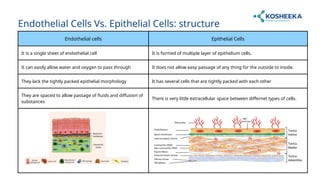
It is a single sheet of endothelial cell It is formed of multiple layer of epithelium cells.
It can easily allow water and oxygen to pass through It does not allow easy passage of any thing for the outside to inside.
They lack the tightly packed epithelial morphology It has several cells that are tightly packed with each other
They are spaced to allow passage of fluids and diffusion of
substances
There is very little extracellular space between differnet types of cells.
Endothelial Cells Vs. Epithelial Cells: structure
Endothelial cells Epithelial Cells
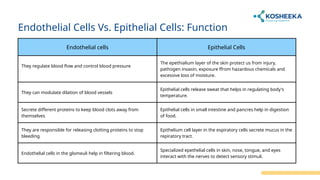
They regulate blood flow and control blood pressure
The epethialium layer of the skin protect us from injury,
pathogen invasin, exposure ffrom hazardous chemicals and
excessive loss of moisture.
They can modulate dilation of blood vessels
Epithelial cells release sweat that helps in regulating body's
temperature.
Secrete different proteins to keep blood clots away from
themselves
Epithelial cells in small intestine and pancres help in digestion
of food.
They are responsible for releasing clotting proteins to stop
bleeding.
Epithelium cell layer in the espiratory cells secrete mucus in the
repiratory tract.
Endothelial cells in the glomeuli help in filtering blood.
Specialized epethelial cells in skin, nose, tongue, and eyes
interact with the nerves to detect sensory stimuli.
Endothelial Cells Vs. Epithelial Cells: Function
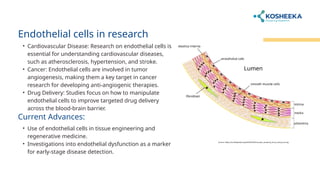
Endothelial cells in research
• Cardiovascular Disease: Research on endothelial cells is
essential for understanding cardiovascular diseases,
such as atherosclerosis, hypertension, and stroke.
• Cancer: Endothelial cells are involved in tumor
angiogenesis, making them a key target in cancer
research for developing anti-angiogenic therapies.
• Drug Delivery: Studies focus on how to manipulate
endothelial cells to improve targeted drug delivery
across the blood-brain barrier.
Current Advances:
• Use of endothelial cells in tissue engineering and
regenerative medicine.
• Investigations into endothelial dysfunction as a marker
for early-stage disease detection.
Source: https://en.wikipedia.org/wiki/File:Microscopic_anatomy_of_an_artery_en.svg
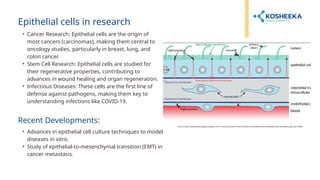
Epithelial cells in research
• Cancer Research: Epithelial cells are the origin of
most cancers (carcinomas), making them central to
oncology studies, particularly in breast, lung, and
colon cancer.
• Stem Cell Research: Epithelial cells are studied for
their regenerative properties, contributing to
advances in wound healing and organ regeneration.
• Infectious Diseases: These cells are the first line of
defense against pathogens, making them key to
understanding infections like COVID-19.
Recent Developments:
• Advances in epithelial cell culture techniques to model
diseases in vitro.
• Study of epithelial-to-mesenchymal transition (EMT) in
cancer metastasis.
Source: https://www.researchgate.net/figure/The-in-vivo-environment-and-architecture-of-epithelial-and-endothelial-cell-monolayers_fig1_261104695
Conclusion:
• Endothelial and epithelial cells are foundational to human health, and their study is critical for advancing
medical science.
• Research into these cell types has led to significant insights into diseases, such as cancer, cardiovascular
disorders, and infectious diseases.
THANK YOU
TALK TO US
+91-9654321400
www.kosheeka.com
info@kosheeka.com

Endothelial vs. Epithelial Cells: A Comparative Insight into Cellular Dynamics

  • 1.
    EPITHELIAL CELLS ENDOTHELIAL VS. AC O M P A R A T I V E I N S I G H T I N T O C E L L U L A R D Y N A M I C S www.kosheeka.com
  • 2.
    What are endothelialcells and epithelial cells? Endothelial cells are flattened cells that forms a layer and lines all blood vessels. These blood vesels can be of brain, capillaries, heart, umbilical cord, or any other organ. Epithelial cells are a combination of differnet types of cells that cover all body surfaces, line body cavities and hollow organs, and major tissue in glands. They perform a variety of functions including protection, secretion, absorption, excretion, filtration, diffusion, and sensory reception. Source: https://histology.medicine.umich.edu/resources/epithelial-tissue, https://www.medcell.org/histology/epithelia_lab/endothelium.php Epithelial Endothelium
  • 3.
    Differences between endothelialand epithelial cells Both Endothelial cells and Epithelial cells originates from epithelial cells. However, they are major differences in their • Location • Structure • Function But there is a similarity between the two as well: Epithelial cells line the outside of the body whereas the endothelial cells line the inside of the body. When looked at both of them together they have completely encompassed the tissue, organs and cells of our body. Source: https://www.researchgate.net/figure/Light-microscopic-view-of-human-umbilical-vein-endothelial-cells-HUVEC-plated-on_fig1_225845283 Endothelium Epithelial
  • 4.
    Endothelial cells EpithelialCells Endothelial cells forms a thin layer that coats the inner surface of lood vessels. Epithelial cells form the epithelium that cover the outside portion of the body. The cells always lie attached to the vessel wall. It is always the outhermost layer that interacts with the ouside environment. Act as an interface between the circulating blood and vessel walls Act as a protective brarrier against the external environment. Endothelium is one-cell-layer thick and even attaches to the heart chambers It also provide a coating to all organs as well as internal organs Endothelial Cells Vs. Epithelial Cells: Location
  • 5.
    Endothelial cells EpithelialCells It is a single sheet of endothelial cell It is formed of multiple layer of epithelium cells. It can easily allow water and oxygen to pass through It does not allow easy passage of any thing for the outside to inside. They lack the tightly packed epithelial morphology It has several cells that are tightly packed with each other They are spaced to allow passage of fluids and diffusion of substances There is very little extracellular space between differnet types of cells. Endothelial Cells Vs. Epithelial Cells: structure
  • 6.
    Endothelial cells EpithelialCells They regulate blood flow and control blood pressure The epethialium layer of the skin protect us from injury, pathogen invasin, exposure ffrom hazardous chemicals and excessive loss of moisture. They can modulate dilation of blood vessels Epithelial cells release sweat that helps in regulating body's temperature. Secrete different proteins to keep blood clots away from themselves Epithelial cells in small intestine and pancres help in digestion of food. They are responsible for releasing clotting proteins to stop bleeding. Epithelium cell layer in the espiratory cells secrete mucus in the repiratory tract. Endothelial cells in the glomeuli help in filtering blood. Specialized epethelial cells in skin, nose, tongue, and eyes interact with the nerves to detect sensory stimuli. Endothelial Cells Vs. Epithelial Cells: Function
  • 7.
    Endothelial cells inresearch • Cardiovascular Disease: Research on endothelial cells is essential for understanding cardiovascular diseases, such as atherosclerosis, hypertension, and stroke. • Cancer: Endothelial cells are involved in tumor angiogenesis, making them a key target in cancer research for developing anti-angiogenic therapies. • Drug Delivery: Studies focus on how to manipulate endothelial cells to improve targeted drug delivery across the blood-brain barrier. Current Advances: • Use of endothelial cells in tissue engineering and regenerative medicine. • Investigations into endothelial dysfunction as a marker for early-stage disease detection. Source: https://en.wikipedia.org/wiki/File:Microscopic_anatomy_of_an_artery_en.svg
  • 8.
    Epithelial cells inresearch • Cancer Research: Epithelial cells are the origin of most cancers (carcinomas), making them central to oncology studies, particularly in breast, lung, and colon cancer. • Stem Cell Research: Epithelial cells are studied for their regenerative properties, contributing to advances in wound healing and organ regeneration. • Infectious Diseases: These cells are the first line of defense against pathogens, making them key to understanding infections like COVID-19. Recent Developments: • Advances in epithelial cell culture techniques to model diseases in vitro. • Study of epithelial-to-mesenchymal transition (EMT) in cancer metastasis. Source: https://www.researchgate.net/figure/The-in-vivo-environment-and-architecture-of-epithelial-and-endothelial-cell-monolayers_fig1_261104695
  • 9.
    Conclusion: • Endothelial andepithelial cells are foundational to human health, and their study is critical for advancing medical science. • Research into these cell types has led to significant insights into diseases, such as cancer, cardiovascular disorders, and infectious diseases.
  • 10.
    THANK YOU TALK TOUS +91-9654321400 www.kosheeka.com info@kosheeka.com