





• Empowerment - to give power or authority to;
authorize, especially by legal or official means.
• Technology - machinery and equipment
developed from the application of scientific
knowledge.
Terms:
• A platform is a group of technologies that are used
as a base upon which other applications, processes
or technologies are developed.
• Dynamic Web - contains information that changes,
depending on the viewer, the time of the day, the
time zone, the viewer's native language, and other
factors.
• Static web - contains information that does not
change. It remains the same, or static, for every
viewer of the site.
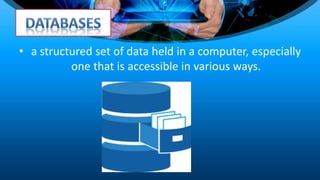
• a structured set of data held in a computer, especially
one that is accessible in various ways.
Computer Ethics
• Narrow view:
apply traditional ethical to issues regarding the use of computer
technology
• Very Broad view:
Also include: standards of professional practice, codes of
conduct, aspects of computer law, public policy, corporate
ethics
Computer Ethics Topics
Computers in the Workplace
Computer Crime
Privacy and Anonymity
Intellectual Property
Professional Responsibility
Globalization
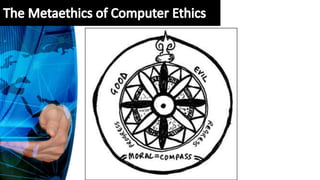
The Metaethics of Computer Ethics
Computers in the Workplace
• LOST JOBS: Economic incentives to
replace humans with computerized
devices are very high
• NEW JOBS: Computer industry already
has generated a wide variety of new
jobs
• ALTERED JOBS:
– “deskilling”
– New skilled jobs
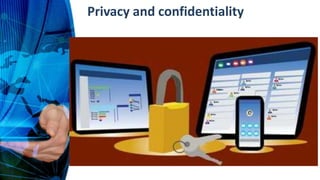
• Privacy and confidentiality
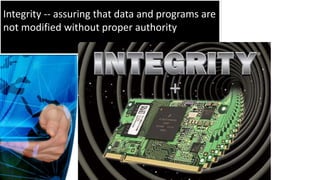
 Integrity
 Unimpaired service
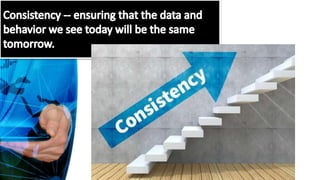
 Consistency
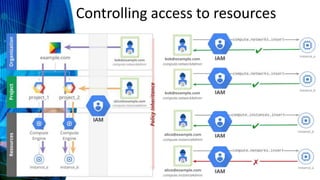
 Controlling access to resources
Privacy and confidentiality
Integrity -- assuring that data and programs are
not modified without proper authority
Unimpaired service
• not reduced or weakened in strength,
quality, etc
Controlling access to resources
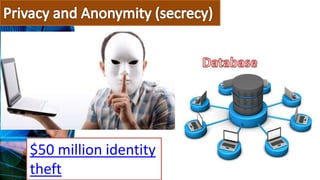
$50 million identity
theft
• Free Software Foundation - software
ownership should not be allowed at all.
• One can own the following aspects of a
program:
– source code
– object code
– algorithm
– look and feel
GLOBALIZATION
“Computer ethics” evolving into “global
information ethics”
Global Laws
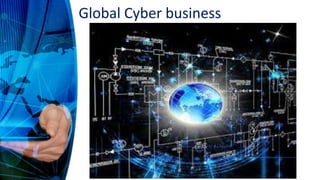
Global Cyber business
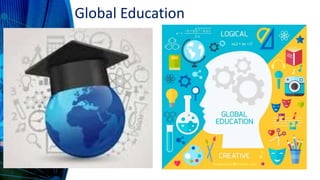
Global Education
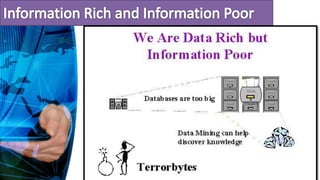
Information Rich and Information
Poor
Global Laws
Global Cyber business
Global Education
-It is simply the net;
- it is a large computer network that is made up of
thousand network worldwide.
-and World Wide Web (WWW)
World Wide Web (WWW)
• It is one of the services available on the Internet that
allows you to get information about anything and
everything ( text, image and more) from any web site
anywhere in the world to your computer
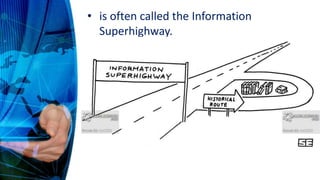
• is often called the Information
Superhighway.
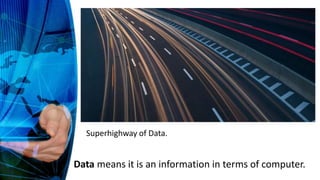
Superhighway of Data.
Data means it is an information in terms of computer.
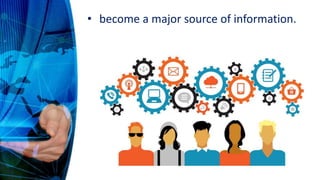
• become a major source of information.
- major means of communication and
platforms for information-based
services.
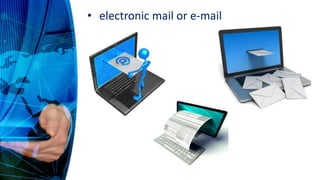
• electronic mail or e-mail
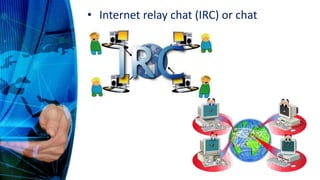
• Internet relay chat (IRC) or chat
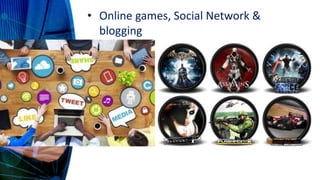
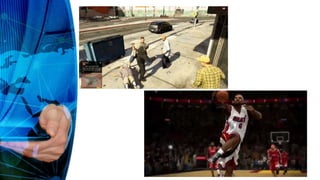
• Online games, Social Network &
blogging
• It is owned by private companies or
funded by government of some
countries.
• Philippines are linked to the US-japan
backbone in terms of using internet.
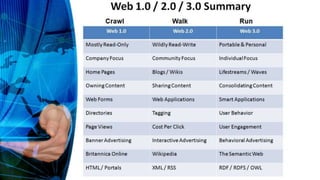
• Web 1.0
• Web 2.0
• Web 3.0
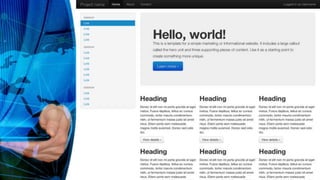
Web 1.0
•It is the “readable” phrase of the
World Wide Web with flat data.
•Limited interaction between sites
and web users.
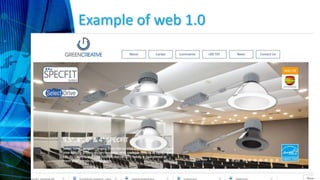
Example of web 1.0
the second stage of development of the World Wide Web,
characterized especially by the change from static web
pages to dynamic or user-generated content and the growth
of social media.
WEB 2.0
Web 2.0
• It is the “writable” phrase of the World
Wide Web with interactive data.
• Unlike Web 1.0, Web 2.0 facilitates
interaction between web users and
sites, so it allows users to interact more
freely with each other.
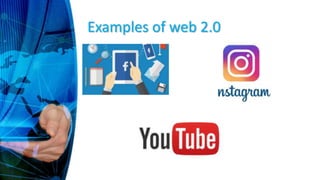
Examples of web 2.0
Web 3.0
• is defined as the creation of high-
quality content and services produced by
gifted individuals using Web 2.0
technology as an enabling platform.
• Has 3D features , can interact with
users, and other enhanced features.
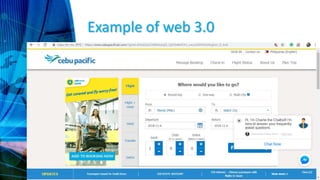
Example of web 3.0
What is Internet research?
• Practice of gathering information from
the internet that can help you
• Practice of properly using the ideas of
others without copying it.
Internet Research Strength
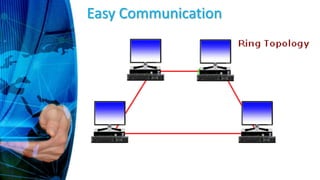
Easy Communication
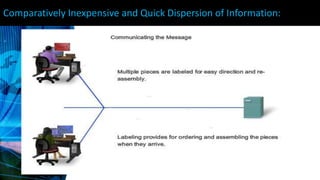
Comparatively Inexpensive and Quick Dispersion of Information:
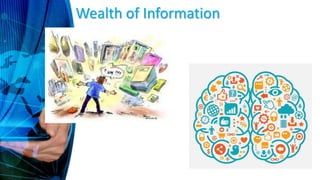
Wealth of Information
Sending E-mail Messages and Receiving
Feedbacks
Internet Research
Weakness
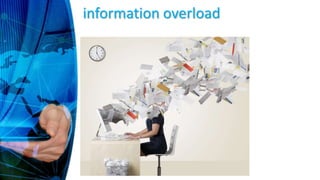
information overload
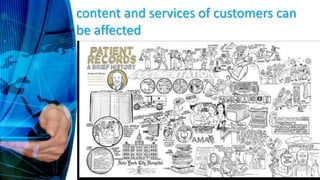
content and services of customers can
be affected
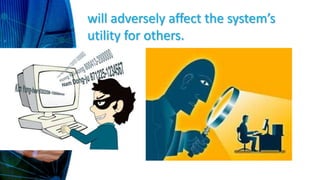
will adversely affect the system’s
utility for others.
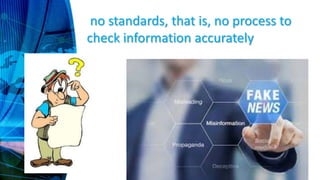
no standards, that is, no process to
check information accurately
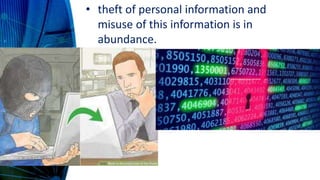
• theft of personal information and
misuse of this information is in
abundance.
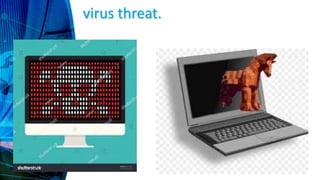
virus threat.
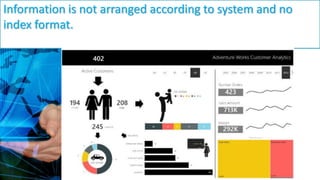
Information is not arranged according to system and no
index format.
Fees for the information
Empowerment technologies

Empowerment technologies

  • 4.
    • Empowerment -to give power or authority to; authorize, especially by legal or official means. • Technology - machinery and equipment developed from the application of scientific knowledge.
  • 5.
    Terms: • A platformis a group of technologies that are used as a base upon which other applications, processes or technologies are developed. • Dynamic Web - contains information that changes, depending on the viewer, the time of the day, the time zone, the viewer's native language, and other factors.
  • 6.
    • Static web- contains information that does not change. It remains the same, or static, for every viewer of the site.
  • 8.
    • a structuredset of data held in a computer, especially one that is accessible in various ways.
  • 10.
    Computer Ethics • Narrowview: apply traditional ethical to issues regarding the use of computer technology • Very Broad view: Also include: standards of professional practice, codes of conduct, aspects of computer law, public policy, corporate ethics
  • 11.
    Computer Ethics Topics Computersin the Workplace Computer Crime Privacy and Anonymity Intellectual Property Professional Responsibility Globalization The Metaethics of Computer Ethics
  • 12.
    Computers in theWorkplace • LOST JOBS: Economic incentives to replace humans with computerized devices are very high • NEW JOBS: Computer industry already has generated a wide variety of new jobs • ALTERED JOBS: – “deskilling” – New skilled jobs
  • 13.
    • Privacy andconfidentiality  Integrity  Unimpaired service  Consistency  Controlling access to resources
  • 14.
  • 15.
    Integrity -- assuringthat data and programs are not modified without proper authority
  • 16.
    Unimpaired service • notreduced or weakened in strength, quality, etc
  • 18.
  • 19.
  • 20.
    • Free SoftwareFoundation - software ownership should not be allowed at all. • One can own the following aspects of a program: – source code – object code – algorithm – look and feel
  • 23.
    GLOBALIZATION “Computer ethics” evolvinginto “global information ethics” Global Laws Global Cyber business Global Education Information Rich and Information Poor
  • 24.
  • 25.
  • 26.
  • 30.
    -It is simplythe net; - it is a large computer network that is made up of thousand network worldwide. -and World Wide Web (WWW)
  • 31.
    World Wide Web(WWW) • It is one of the services available on the Internet that allows you to get information about anything and everything ( text, image and more) from any web site anywhere in the world to your computer
  • 32.
    • is oftencalled the Information Superhighway.
  • 33.
    Superhighway of Data. Datameans it is an information in terms of computer.
  • 35.
    • become amajor source of information.
  • 36.
    - major meansof communication and platforms for information-based services.
  • 37.
  • 38.
    • Internet relaychat (IRC) or chat
  • 39.
    • Online games,Social Network & blogging
  • 41.
    • It isowned by private companies or funded by government of some countries. • Philippines are linked to the US-japan backbone in terms of using internet.
  • 43.
    • Web 1.0 •Web 2.0 • Web 3.0
  • 44.
    Web 1.0 •It isthe “readable” phrase of the World Wide Web with flat data. •Limited interaction between sites and web users.
  • 46.
  • 47.
    the second stageof development of the World Wide Web, characterized especially by the change from static web pages to dynamic or user-generated content and the growth of social media. WEB 2.0
  • 48.
    Web 2.0 • Itis the “writable” phrase of the World Wide Web with interactive data. • Unlike Web 1.0, Web 2.0 facilitates interaction between web users and sites, so it allows users to interact more freely with each other.
  • 49.
  • 50.
    Web 3.0 • isdefined as the creation of high- quality content and services produced by gifted individuals using Web 2.0 technology as an enabling platform. • Has 3D features , can interact with users, and other enhanced features.
  • 51.
  • 55.
    What is Internetresearch? • Practice of gathering information from the internet that can help you • Practice of properly using the ideas of others without copying it.
  • 56.
  • 57.
  • 58.
    Comparatively Inexpensive andQuick Dispersion of Information:
  • 59.
  • 60.
    Sending E-mail Messagesand Receiving Feedbacks
  • 61.
  • 62.
  • 63.
    content and servicesof customers can be affected
  • 64.
    will adversely affectthe system’s utility for others.
  • 65.
    no standards, thatis, no process to check information accurately
  • 66.
    • theft ofpersonal information and misuse of this information is in abundance.
  • 67.
  • 68.
    Information is notarranged according to system and no index format.
  • 69.
    Fees for theinformation