Sec-D

Neeraj Mantri
Imtiaz Khan
Sneha Varghese
Anant Nafde
Abhishek Uttam

13BSP0454
13BSP0508
13BSP0801
13BSP1301
13BSP1385


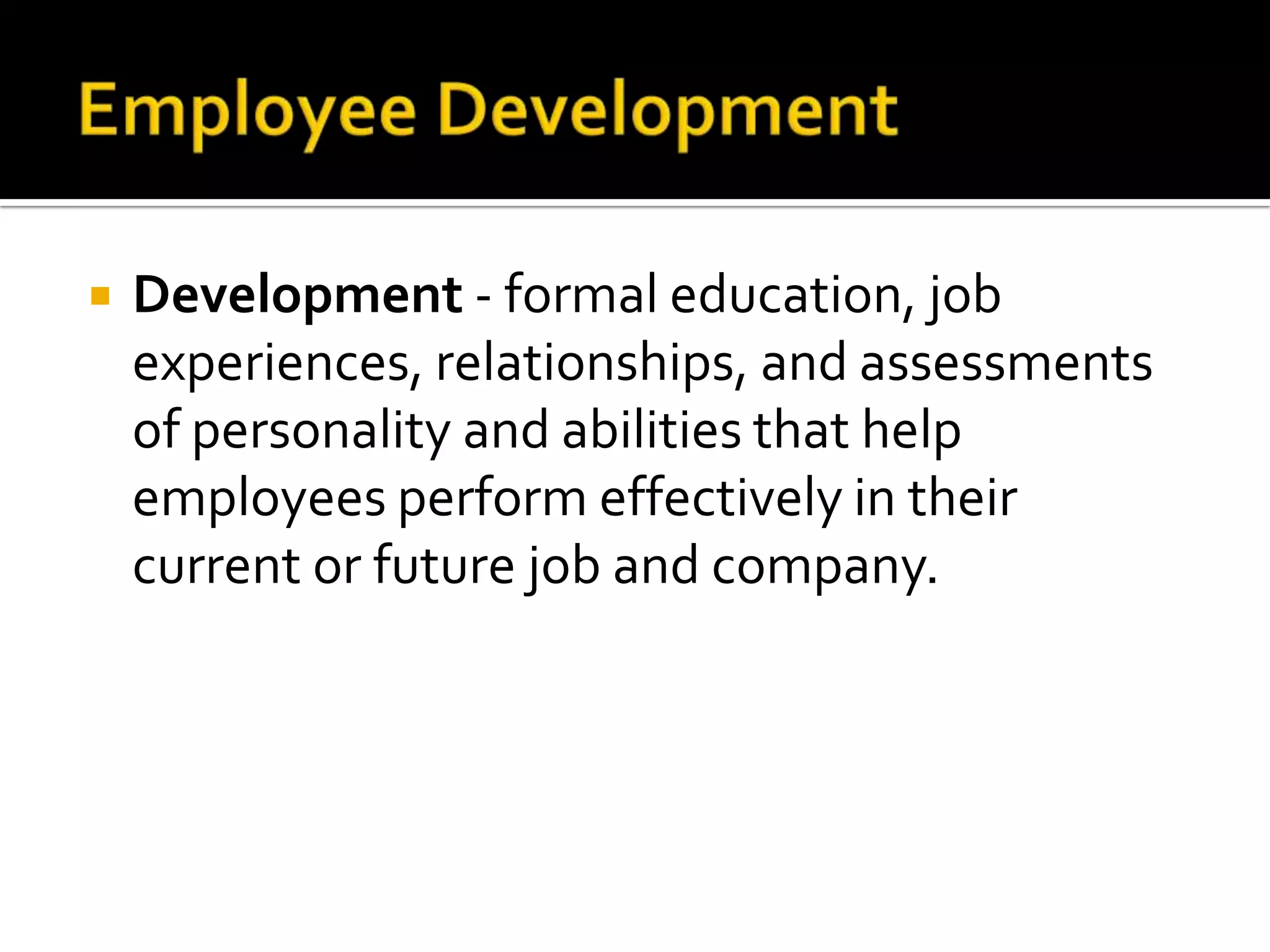
Development - formal education, job
experiences, relationships, and assessments
of personality and abilities that help
employees perform effectively in their
current or future job and company.
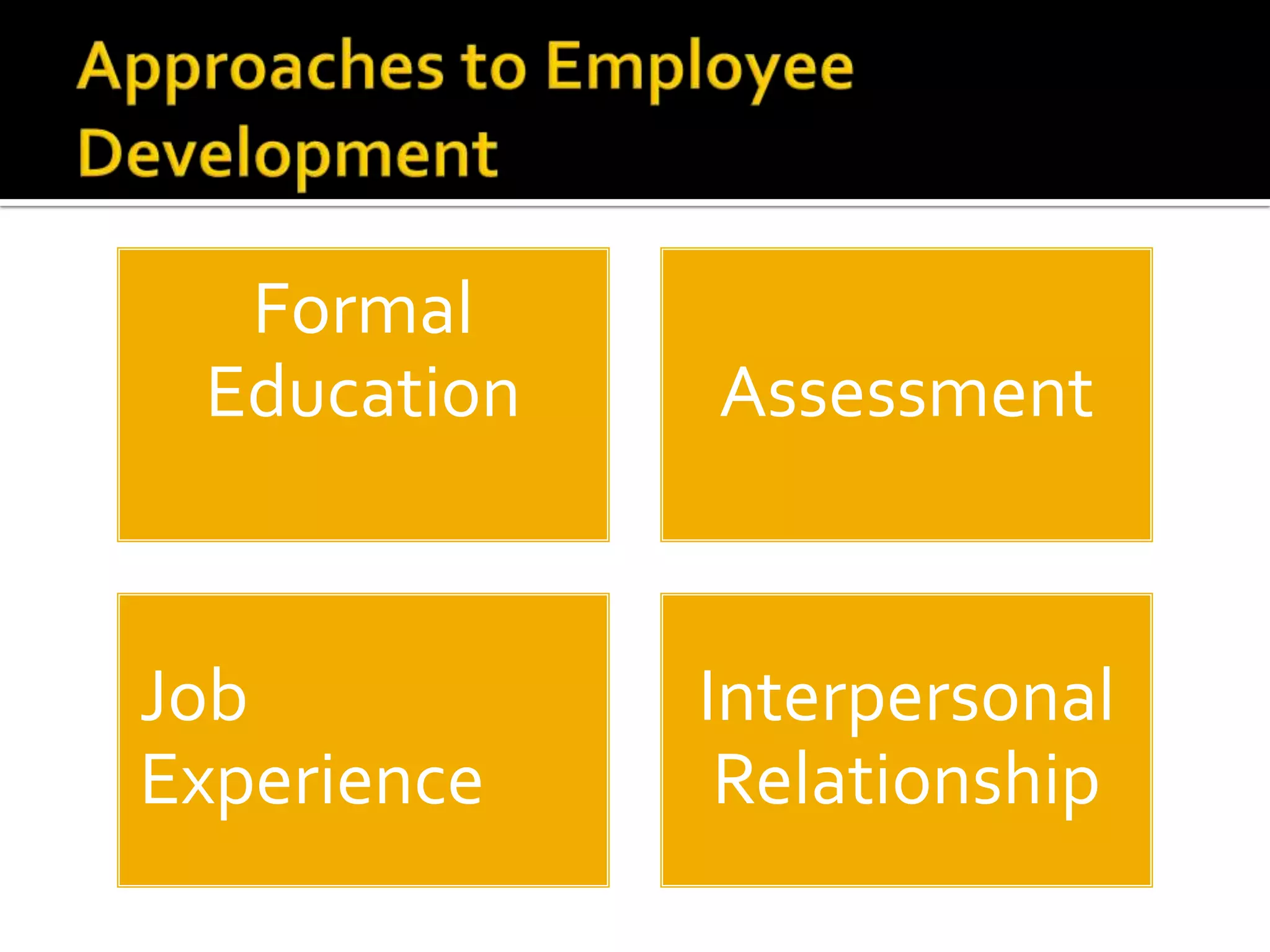
Formal
Education

Job
Experience

Assessment

Interpersonal
Relationship
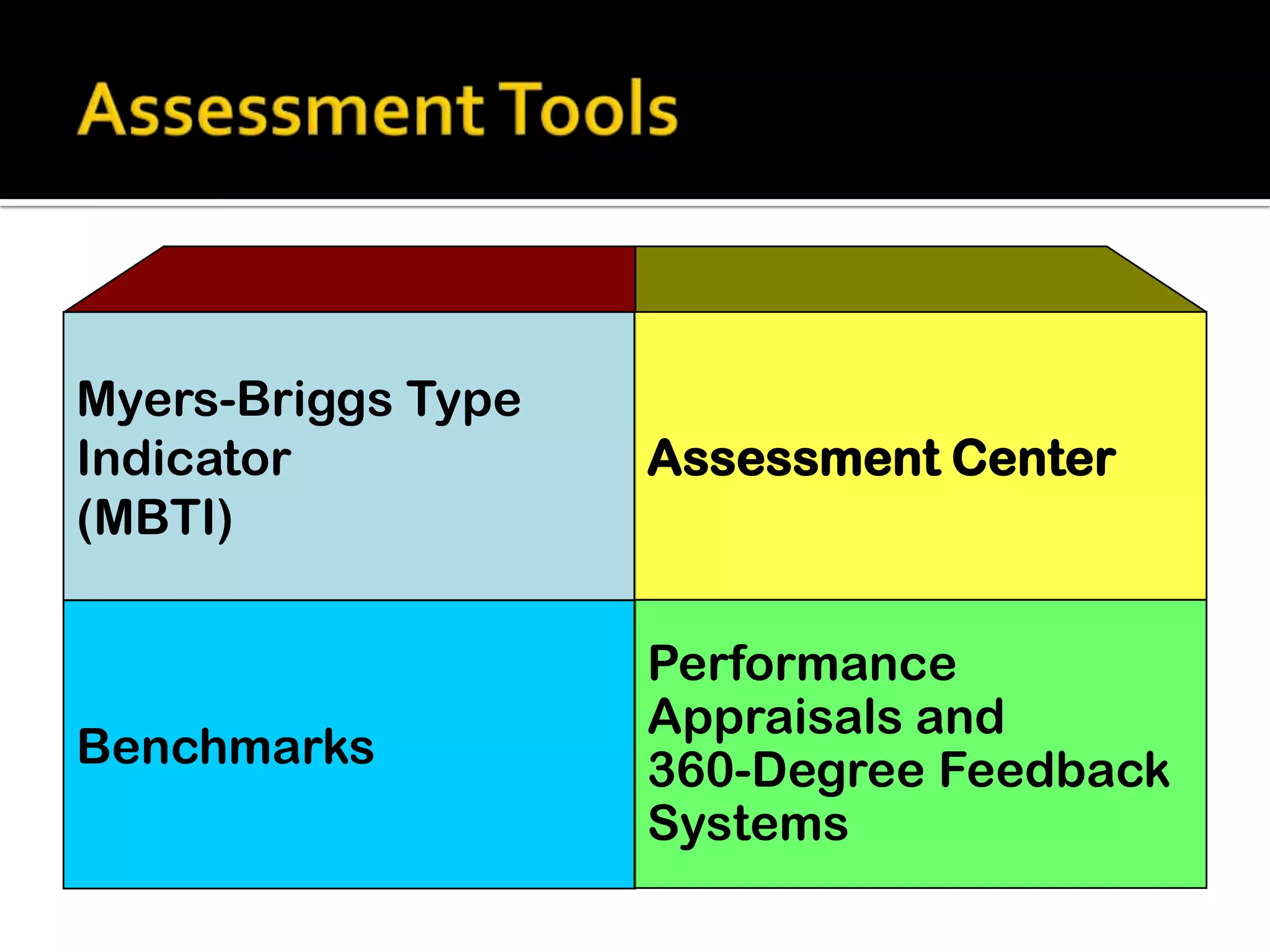
Myers-Briggs Type
Indicator
(MBTI)

Assessment Center

Benchmarks

Performance
Appraisals and
360-Degree Feedback
Systems
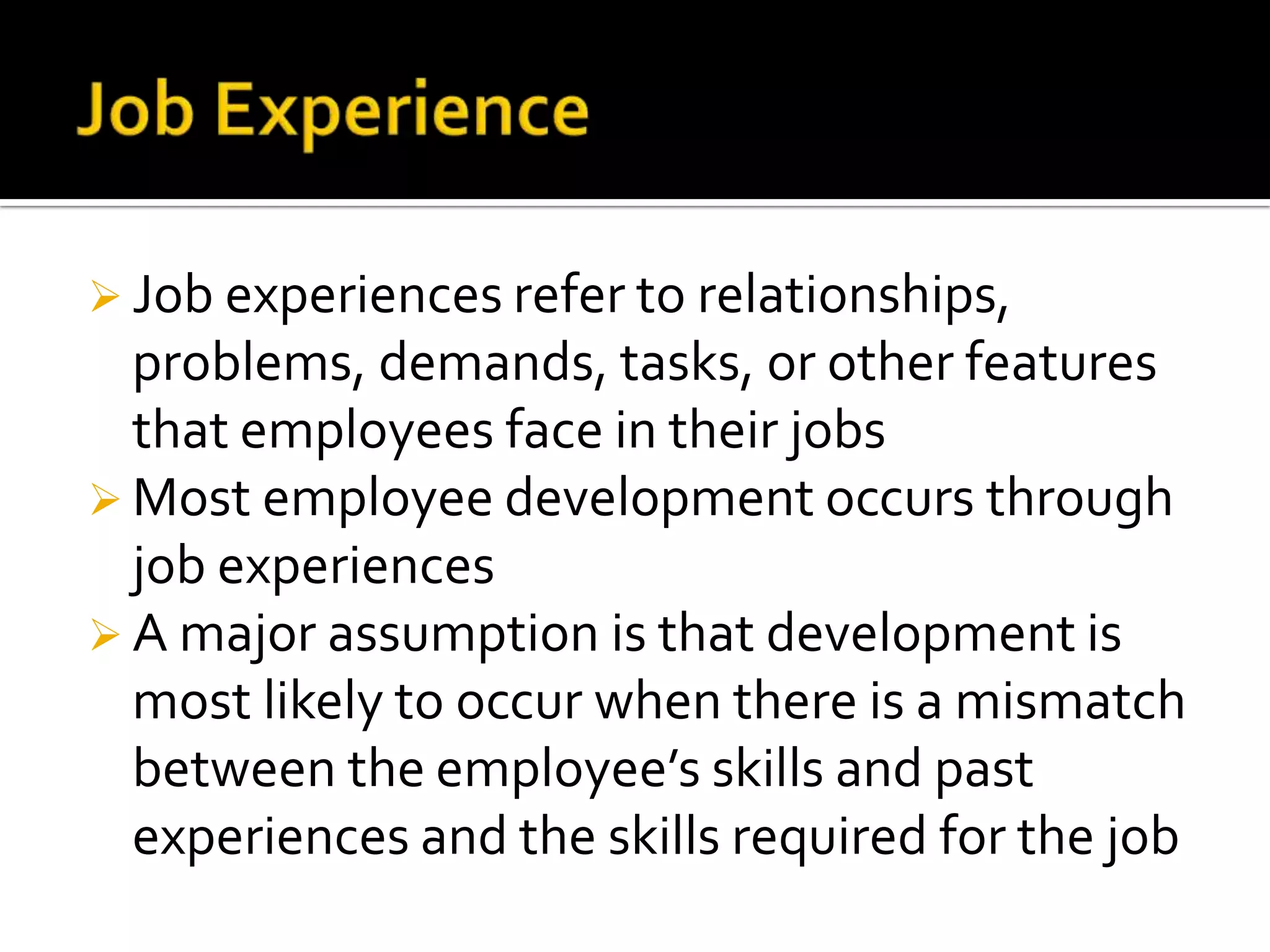
 Job experiences refer to relationships,

problems, demands, tasks, or other features
that employees face in their jobs
 Most employee development occurs through
job experiences
 A major assumption is that development is
most likely to occur when there is a mismatch
between the employee’s skills and past
experiences and the skills required for the job
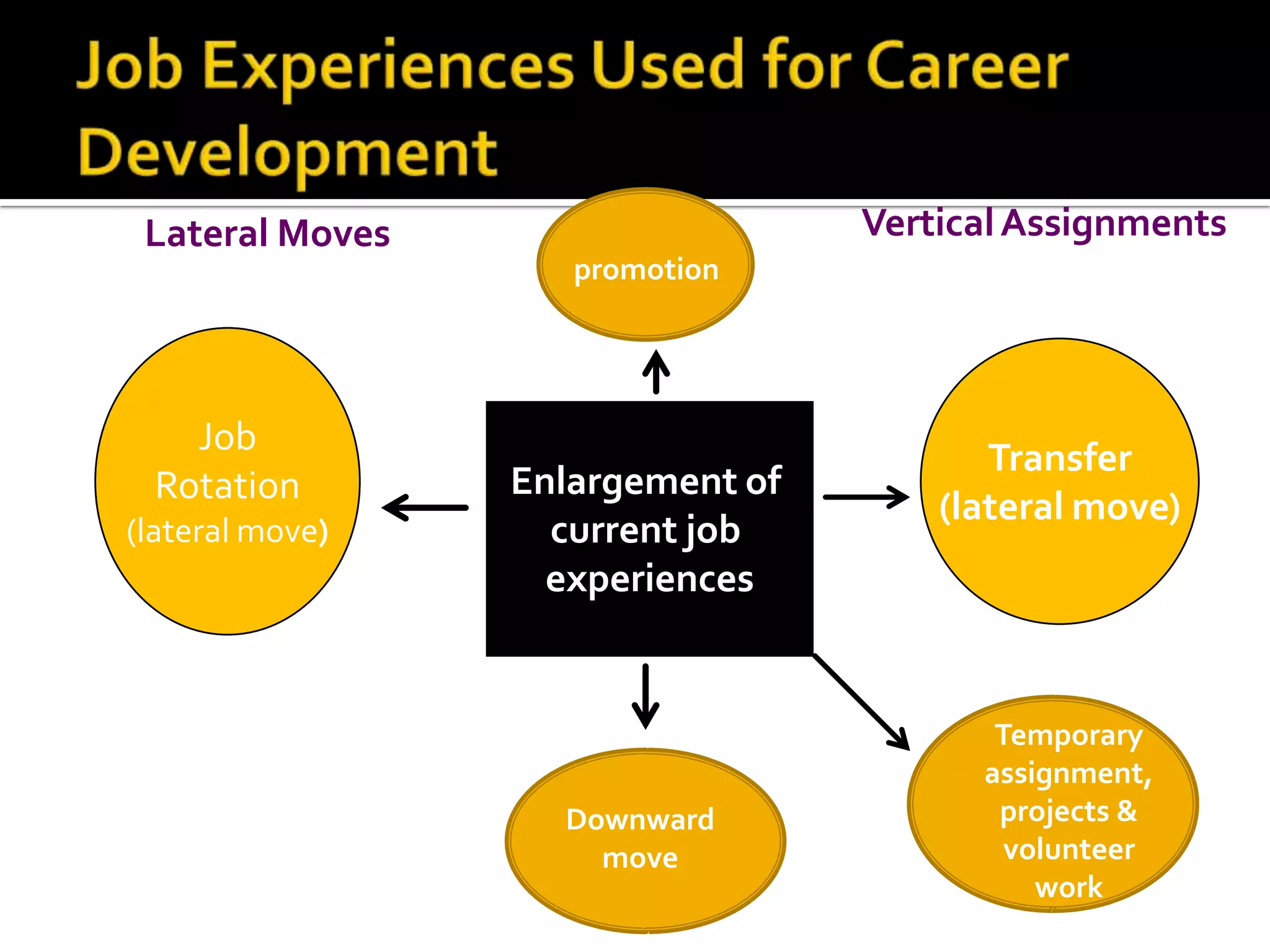
Lateral Moves

Job
Rotation
(lateral move)

Vertical Assignments
promotion

Enlargement of
current job
experiences

Downward
move

Transfer
(lateral move)

Temporary
assignment,
projects &
volunteer
work










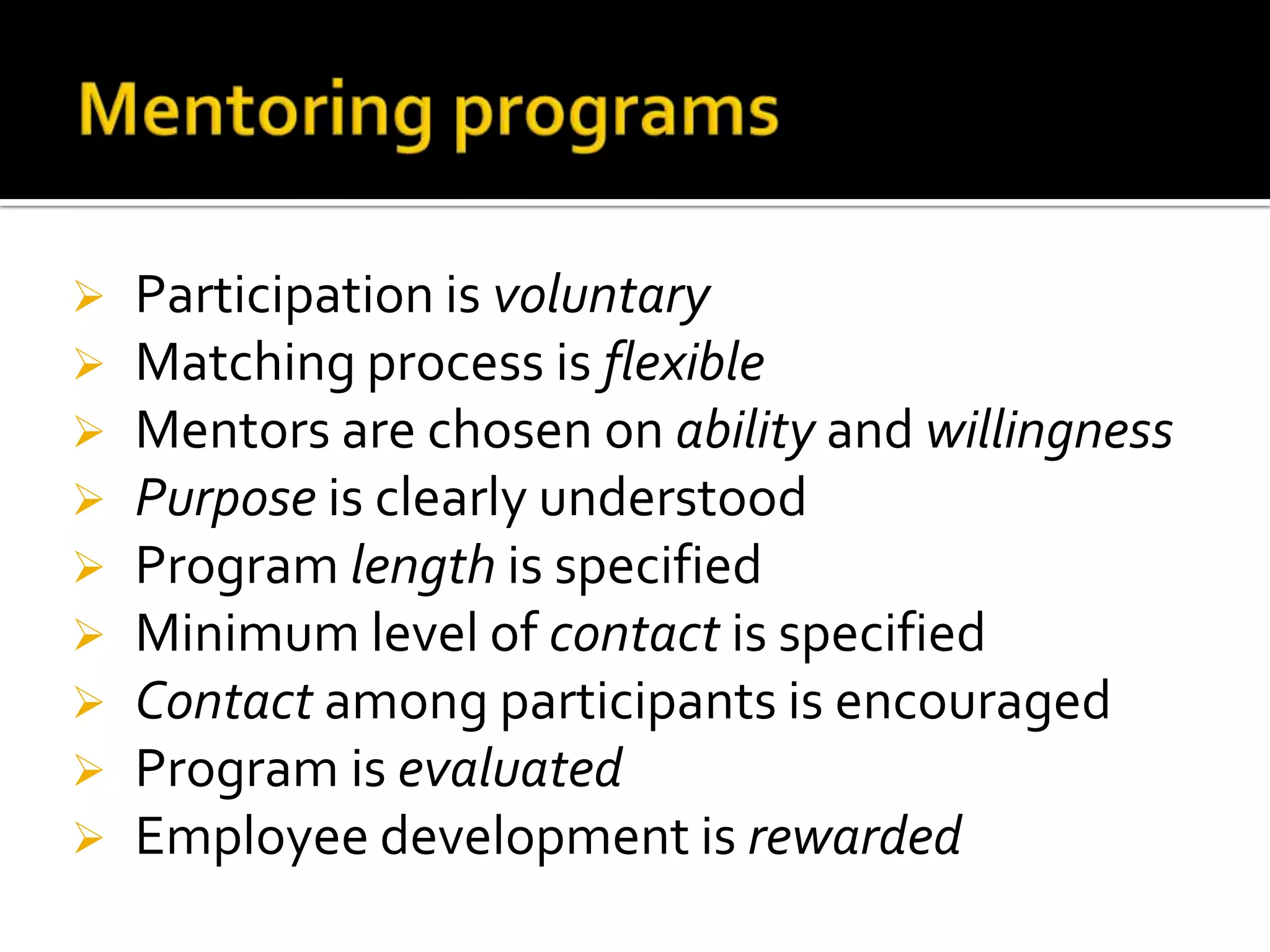
Participation is voluntary
Matching process is flexible
Mentors are chosen on ability and willingness
Purpose is clearly understood
Program length is specified
Minimum level of contact is specified
Contact among participants is encouraged
Program is evaluated
Employee development is rewarded


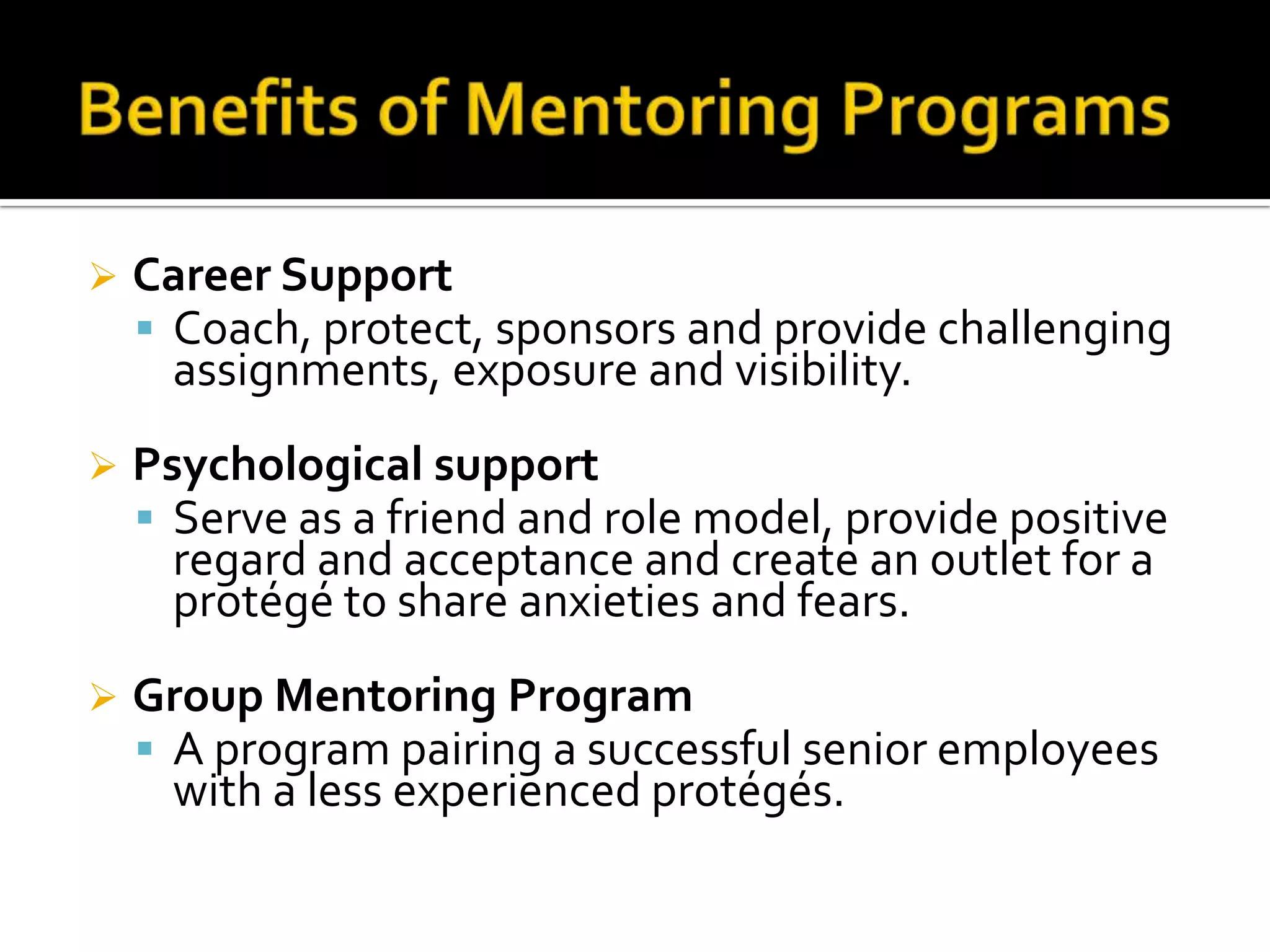
Career Support
 Coach, protect, sponsors and provide challenging
assignments, exposure and visibility.



Psychological support
 Serve as a friend and role model, provide positive
regard and acceptance and create an outlet for a
protégé to share anxieties and fears.



Group Mentoring Program
 A program pairing a successful senior employees
with a less experienced protégés.
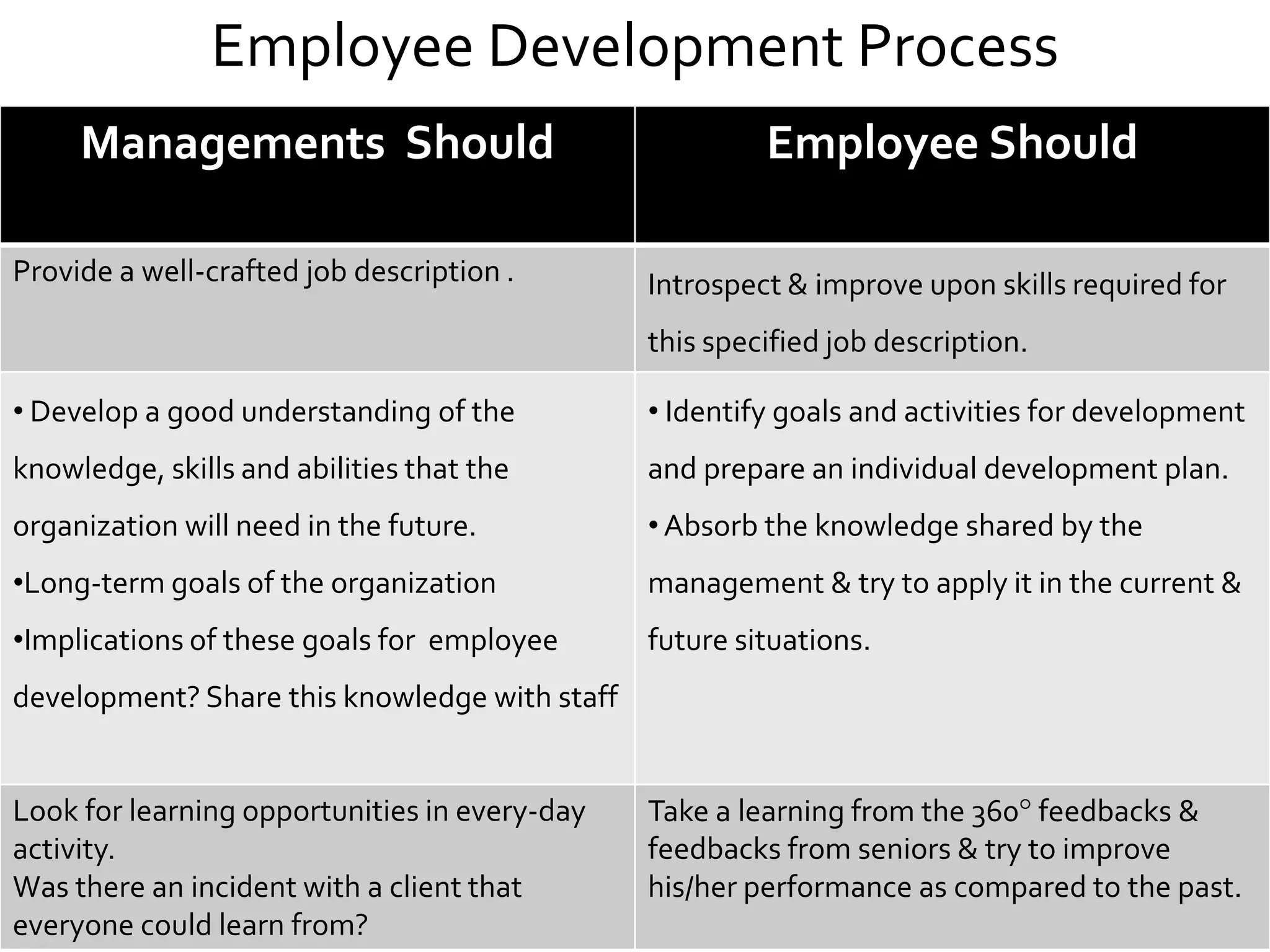
Employee Development Process
Managements Should
Provide a well-crafted job description .

Employee Should
Introspect & improve upon skills required for
this specified job description.

• Develop a good understanding of the

• Identify goals and activities for development

knowledge, skills and abilities that the

and prepare an individual development plan.

organization will need in the future.

• Absorb the knowledge shared by the

•Long-term goals of the organization

management & try to apply it in the current &

•Implications of these goals for employee

future situations.

development? Share this knowledge with staff

Look for learning opportunities in every-day
activity.
Was there an incident with a client that
everyone could learn from?

Take a learning from the 360 feedbacks &
feedbacks from seniors & try to improve
his/her performance as compared to the past.






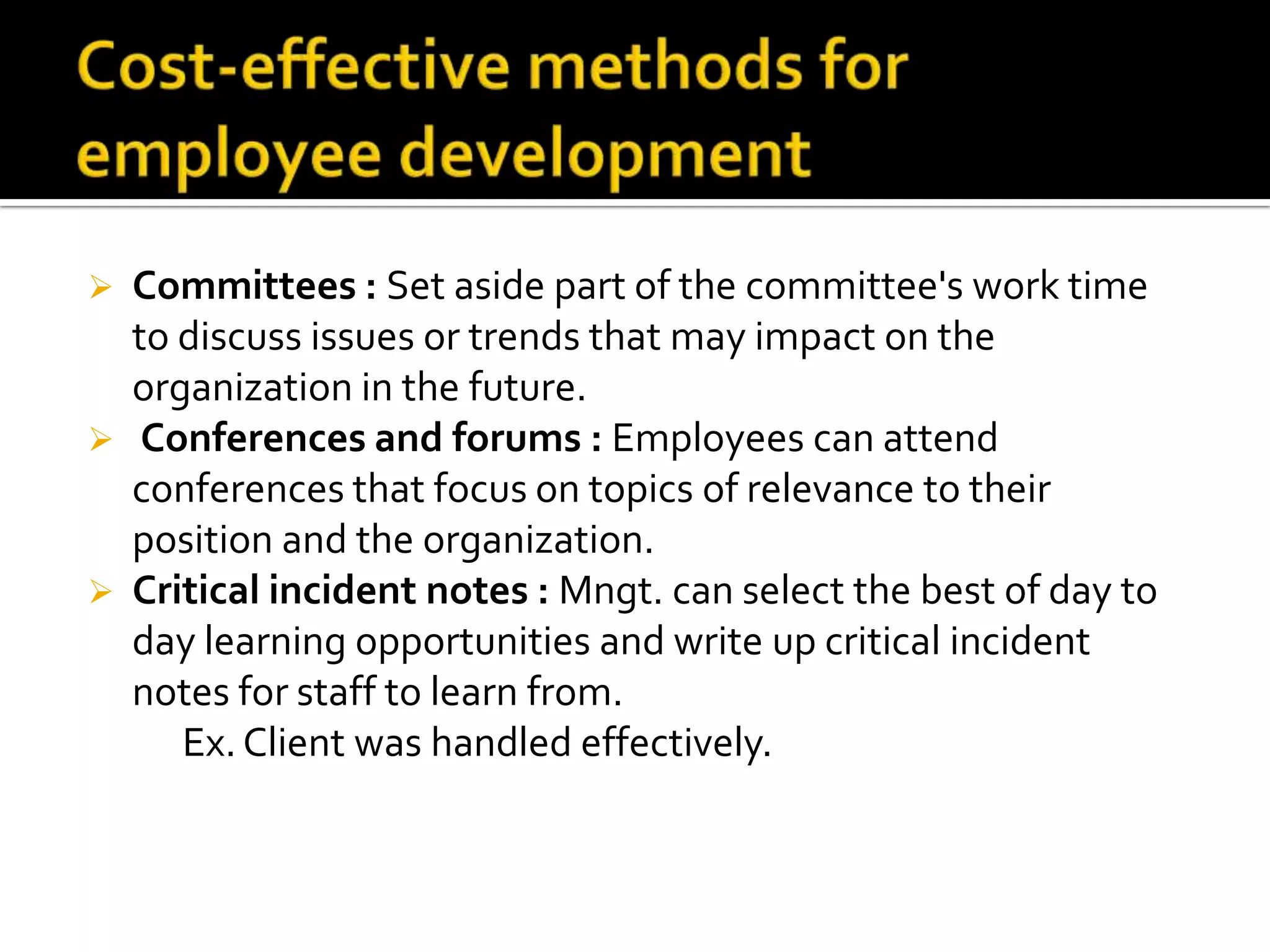
Committees : Set aside part of the committee's work time
to discuss issues or trends that may impact on the
organization in the future.
Conferences and forums : Employees can attend
conferences that focus on topics of relevance to their
position and the organization.
Critical incident notes : Mngt. can select the best of day to
day learning opportunities and write up critical incident
notes for staff to learn from.
Ex. Client was handled effectively.





This presentation is prepared simply for
practicing presentation skills .
All content is simply for learning purpose.
We don’t claim any accuracy or complete
info.
All info is presented for overview. Any
inadvertent use of company name, images
are unintentional & if brought to notice , we
will remove them.

Employee Training & development

  • 1.
    Sec-D Neeraj Mantri Imtiaz Khan SnehaVarghese Anant Nafde Abhishek Uttam 13BSP0454 13BSP0508 13BSP0801 13BSP1301 13BSP1385
  • 2.
     Development - formaleducation, job experiences, relationships, and assessments of personality and abilities that help employees perform effectively in their current or future job and company.
  • 4.
  • 5.
  • 6.
     Job experiencesrefer to relationships, problems, demands, tasks, or other features that employees face in their jobs  Most employee development occurs through job experiences  A major assumption is that development is most likely to occur when there is a mismatch between the employee’s skills and past experiences and the skills required for the job
  • 7.
    Lateral Moves Job Rotation (lateral move) VerticalAssignments promotion Enlargement of current job experiences Downward move Transfer (lateral move) Temporary assignment, projects & volunteer work
  • 8.
             Participation is voluntary Matchingprocess is flexible Mentors are chosen on ability and willingness Purpose is clearly understood Program length is specified Minimum level of contact is specified Contact among participants is encouraged Program is evaluated Employee development is rewarded
  • 9.
     Career Support  Coach,protect, sponsors and provide challenging assignments, exposure and visibility.  Psychological support  Serve as a friend and role model, provide positive regard and acceptance and create an outlet for a protégé to share anxieties and fears.  Group Mentoring Program  A program pairing a successful senior employees with a less experienced protégés.
  • 10.
    Employee Development Process ManagementsShould Provide a well-crafted job description . Employee Should Introspect & improve upon skills required for this specified job description. • Develop a good understanding of the • Identify goals and activities for development knowledge, skills and abilities that the and prepare an individual development plan. organization will need in the future. • Absorb the knowledge shared by the •Long-term goals of the organization management & try to apply it in the current & •Implications of these goals for employee future situations. development? Share this knowledge with staff Look for learning opportunities in every-day activity. Was there an incident with a client that everyone could learn from? Take a learning from the 360 feedbacks & feedbacks from seniors & try to improve his/her performance as compared to the past.
  • 11.
       Committees : Setaside part of the committee's work time to discuss issues or trends that may impact on the organization in the future. Conferences and forums : Employees can attend conferences that focus on topics of relevance to their position and the organization. Critical incident notes : Mngt. can select the best of day to day learning opportunities and write up critical incident notes for staff to learn from. Ex. Client was handled effectively.
  • 12.
        This presentation isprepared simply for practicing presentation skills . All content is simply for learning purpose. We don’t claim any accuracy or complete info. All info is presented for overview. Any inadvertent use of company name, images are unintentional & if brought to notice , we will remove them.