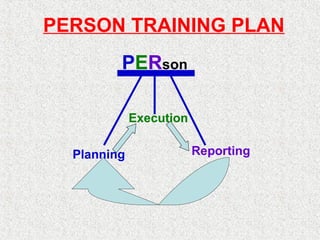
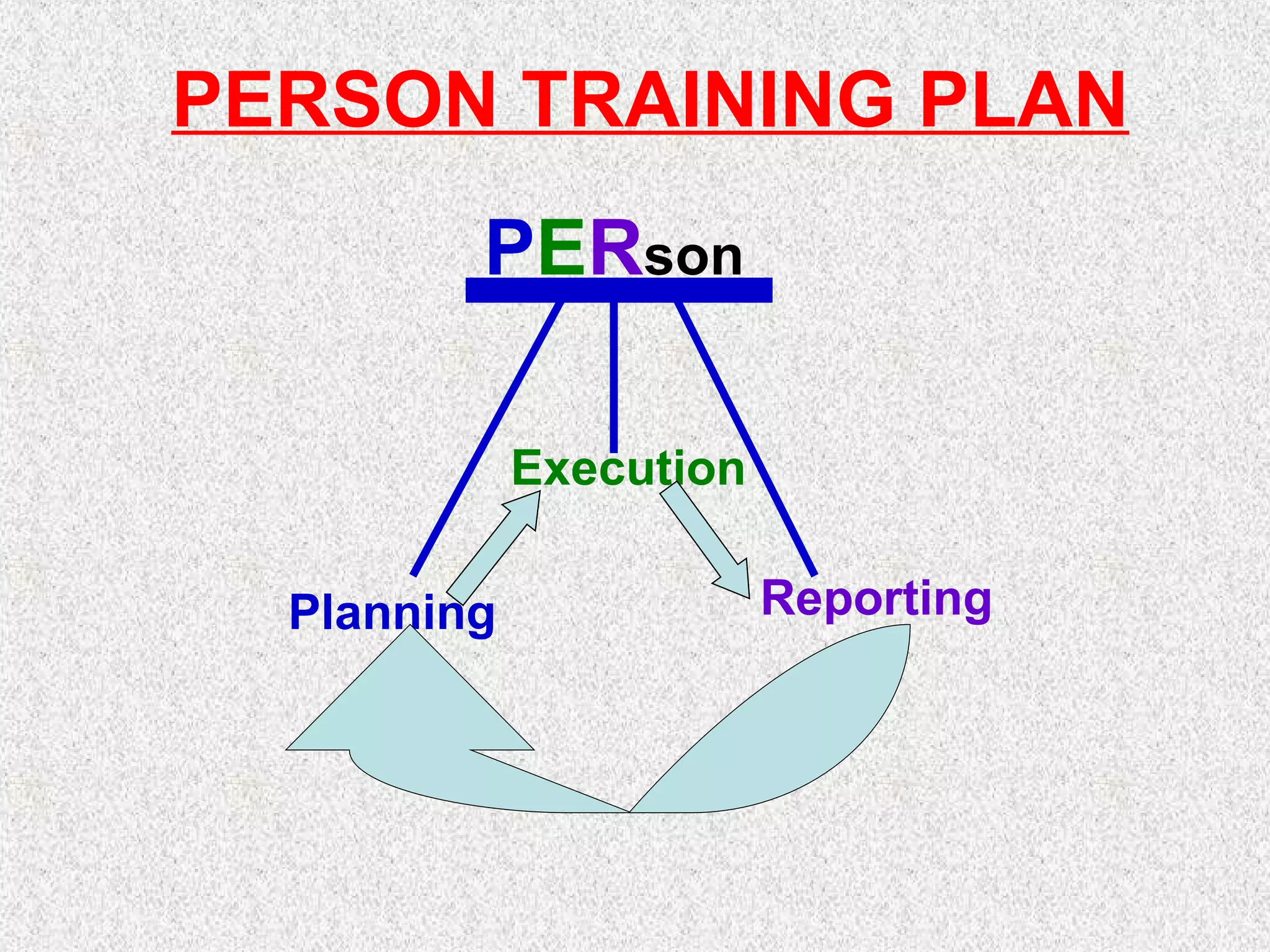
Planning Execution Reporting P E R son PERSON TRAINING PLAN
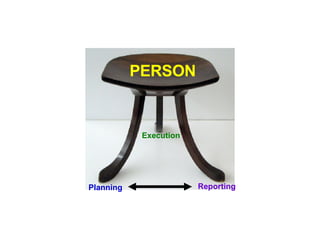
Planning Execution Reporting PERSON
A plan is like a map. When following a plan, you can always see how much you have progressed towards your project goal and how far you are from your destination. Knowing where you are is essential for making good decisions on where to go or what to do next.  The act of executing; a carrying into effect or to completion; performance; achievement; consummation; as, the execution of a plan, a work, etc.  To Save Time For Supervisor & Co-Workers  To Develop Realistic Job Expectations, Positive Attitudes and Job Satisfaction  􀂄 what is expected of them, and what to expect from others,  􀂄 learning about the values and attitudes of the organization.
Orientation Orienting employees to their workplaces and their jobs is one of the most neglected functions in many organizations. An employee handbook and piles of paperwork is not sufficient anymore when it comes to welcoming a new employee to your organization.  The most frequent complaints about new employee orientation are that it is overwhelming, boring, or that the new employee is left to sink or swim. 􀂄 The result is often a confused new employeewho is not productive and is more likely to leave the organization within a year Employers have to realize that orientation isn't just a nice gesture put on by the organization.  It serves as an important element of the recruitment and retention process.
To Reduce Employee Turnover Employee turnover increases as employees feel they are not valued, or are put in positions where they can't possibly do their jobs. Orientation shows that the organization values the employee, and helps provide the tools necessary for succeeding in the job.  1. To Reduce Startup Costs Proper orientation can help the employee get "up to speed" much more quickly, thereby reducing the costs associated with learning the job.  Some key purposes are: 2.To Reduce Anxiety Proper orientation helps to reduce anxiety that results from entering into an unknown situation, and helps provide guidelines for behavior and conduct, so the employee doesn't have to experience the stress of guessing.
The Purpose of New-Employee Orientation Orientation may be done by the supervisor, the HRM staff or some combination.  Formal or informal, depending on the size of the organization. Covers such things as: The organization’s objectives History Philosophy Procedures Rules HRM policies and benefits Fellow employees
The Purpose of New-Employee Orientation Learning the Organization’s  Culture   Culture includes long-standing, often unwritten rules about what is appropriate behavior.   Socialized employees know how things are done, what matters, and which behaviors and perspectives are acceptable.
The Purpose of New-Employee Orientation The CEO’s Role in Orientation   Senior management are often visible during the new employee orientation process. CEOs can : Welcome employees.   Provide a vision for the company.   Introduce company culture -- what matters.   Convey that the company cares about employees.   Allay some new employee anxieties and help them to feel good about their job choice.
The Purpose of New-Employee Orientation HRM’s Role in Orientation   Coordinating Role : HRM instructs new employees when and where to report; provides information about benefits choices.   Participant Role :  HRM offers its assistance for future employee needs (career guidance, training, etc.).

Person

  • 1.
    Planning Execution ReportingP E R son PERSON TRAINING PLAN
  • 2.
  • 3.
    A plan islike a map. When following a plan, you can always see how much you have progressed towards your project goal and how far you are from your destination. Knowing where you are is essential for making good decisions on where to go or what to do next. The act of executing; a carrying into effect or to completion; performance; achievement; consummation; as, the execution of a plan, a work, etc. To Save Time For Supervisor & Co-Workers To Develop Realistic Job Expectations, Positive Attitudes and Job Satisfaction 􀂄 what is expected of them, and what to expect from others, 􀂄 learning about the values and attitudes of the organization.
  • 4.
    Orientation Orienting employeesto their workplaces and their jobs is one of the most neglected functions in many organizations. An employee handbook and piles of paperwork is not sufficient anymore when it comes to welcoming a new employee to your organization. The most frequent complaints about new employee orientation are that it is overwhelming, boring, or that the new employee is left to sink or swim. 􀂄 The result is often a confused new employeewho is not productive and is more likely to leave the organization within a year Employers have to realize that orientation isn't just a nice gesture put on by the organization. It serves as an important element of the recruitment and retention process.
  • 5.
    To Reduce EmployeeTurnover Employee turnover increases as employees feel they are not valued, or are put in positions where they can't possibly do their jobs. Orientation shows that the organization values the employee, and helps provide the tools necessary for succeeding in the job. 1. To Reduce Startup Costs Proper orientation can help the employee get "up to speed" much more quickly, thereby reducing the costs associated with learning the job. Some key purposes are: 2.To Reduce Anxiety Proper orientation helps to reduce anxiety that results from entering into an unknown situation, and helps provide guidelines for behavior and conduct, so the employee doesn't have to experience the stress of guessing.
  • 6.
    The Purpose ofNew-Employee Orientation Orientation may be done by the supervisor, the HRM staff or some combination. Formal or informal, depending on the size of the organization. Covers such things as: The organization’s objectives History Philosophy Procedures Rules HRM policies and benefits Fellow employees
  • 7.
    The Purpose ofNew-Employee Orientation Learning the Organization’s Culture Culture includes long-standing, often unwritten rules about what is appropriate behavior. Socialized employees know how things are done, what matters, and which behaviors and perspectives are acceptable.
  • 8.
    The Purpose ofNew-Employee Orientation The CEO’s Role in Orientation Senior management are often visible during the new employee orientation process. CEOs can : Welcome employees. Provide a vision for the company. Introduce company culture -- what matters. Convey that the company cares about employees. Allay some new employee anxieties and help them to feel good about their job choice.
  • 9.
    The Purpose ofNew-Employee Orientation HRM’s Role in Orientation Coordinating Role : HRM instructs new employees when and where to report; provides information about benefits choices. Participant Role : HRM offers its assistance for future employee needs (career guidance, training, etc.).