Emotions & Moods
 Affect covers broad range of feeling that
people experience. It encompasses both
emotions and moods
 Emotions are intense feeling that people
experience
 Moods: Feelings that tend to be less intense
than emotions and often lack a contextual
stimulus
 Emotion
 Caused by specific
event
 Brief in duration
 Accompanied by facial
expression
 Action oriented in
nature

 Mood
 Cause generally
unclear
 Lasts longer. More
general in nature
 Not indicated by facial
expression
 Cognitive in nature
Some aspects of Emotion






Biology of emotions
Intensity
Frequency and duration
Irrationality and emotion
Functions of emotion
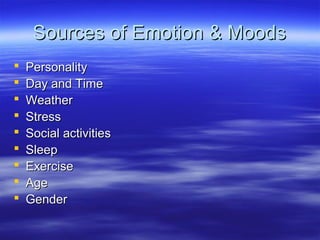
Sources of Emotion & Moods










Personality
Day and Time
Weather
Stress
Social activities
Sleep
Exercise
Age
Gender
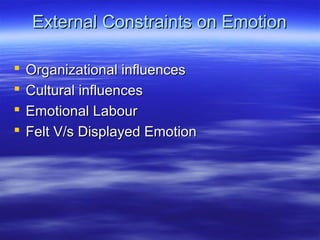
External Constraints on Emotion





Organizational influences
Cultural influences
Emotional Labour
Felt V/s Displayed Emotion
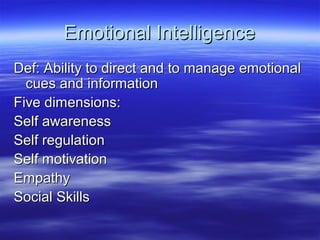
Emotional Intelligence
Def: Ability to direct and to manage emotional
cues and information
Five dimensions:
Self awareness
Self regulation
Self motivation
Empathy
Social Skills
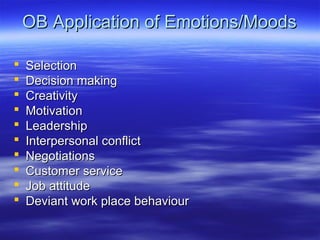
OB Application of Emotions/Moods











Selection
Decision making
Creativity
Motivation
Leadership
Interpersonal conflict
Negotiations
Customer service
Job attitude
Deviant work place behaviour

Emotions and moods

  • 1.
    Emotions & Moods Affect covers broad range of feeling that people experience. It encompasses both emotions and moods  Emotions are intense feeling that people experience  Moods: Feelings that tend to be less intense than emotions and often lack a contextual stimulus
  • 2.
     Emotion  Causedby specific event  Brief in duration  Accompanied by facial expression  Action oriented in nature  Mood  Cause generally unclear  Lasts longer. More general in nature  Not indicated by facial expression  Cognitive in nature
  • 3.
    Some aspects ofEmotion      Biology of emotions Intensity Frequency and duration Irrationality and emotion Functions of emotion
  • 4.
    Sources of Emotion& Moods          Personality Day and Time Weather Stress Social activities Sleep Exercise Age Gender
  • 5.
    External Constraints onEmotion     Organizational influences Cultural influences Emotional Labour Felt V/s Displayed Emotion
  • 6.
    Emotional Intelligence Def: Abilityto direct and to manage emotional cues and information Five dimensions: Self awareness Self regulation Self motivation Empathy Social Skills
  • 7.
    OB Application ofEmotions/Moods           Selection Decision making Creativity Motivation Leadership Interpersonal conflict Negotiations Customer service Job attitude Deviant work place behaviour