Emergency
Response
Planning
What is an Emergency Action Plan?
▪ An Emergency Action Plan (EAP) is intended to facilitate and
organize employer and employee action during a workplace
emergency
▪ Well developed plans and training help workers and emergency
responders understand their roles and responsibilities during a
workplace emergency event reducing the severity and frequency of
injuries and property damage.
▪ OSHA standards 29 CFR 1910.38(a) for General Industry and 29
CFR 1926.35 for Construction require written EAPs
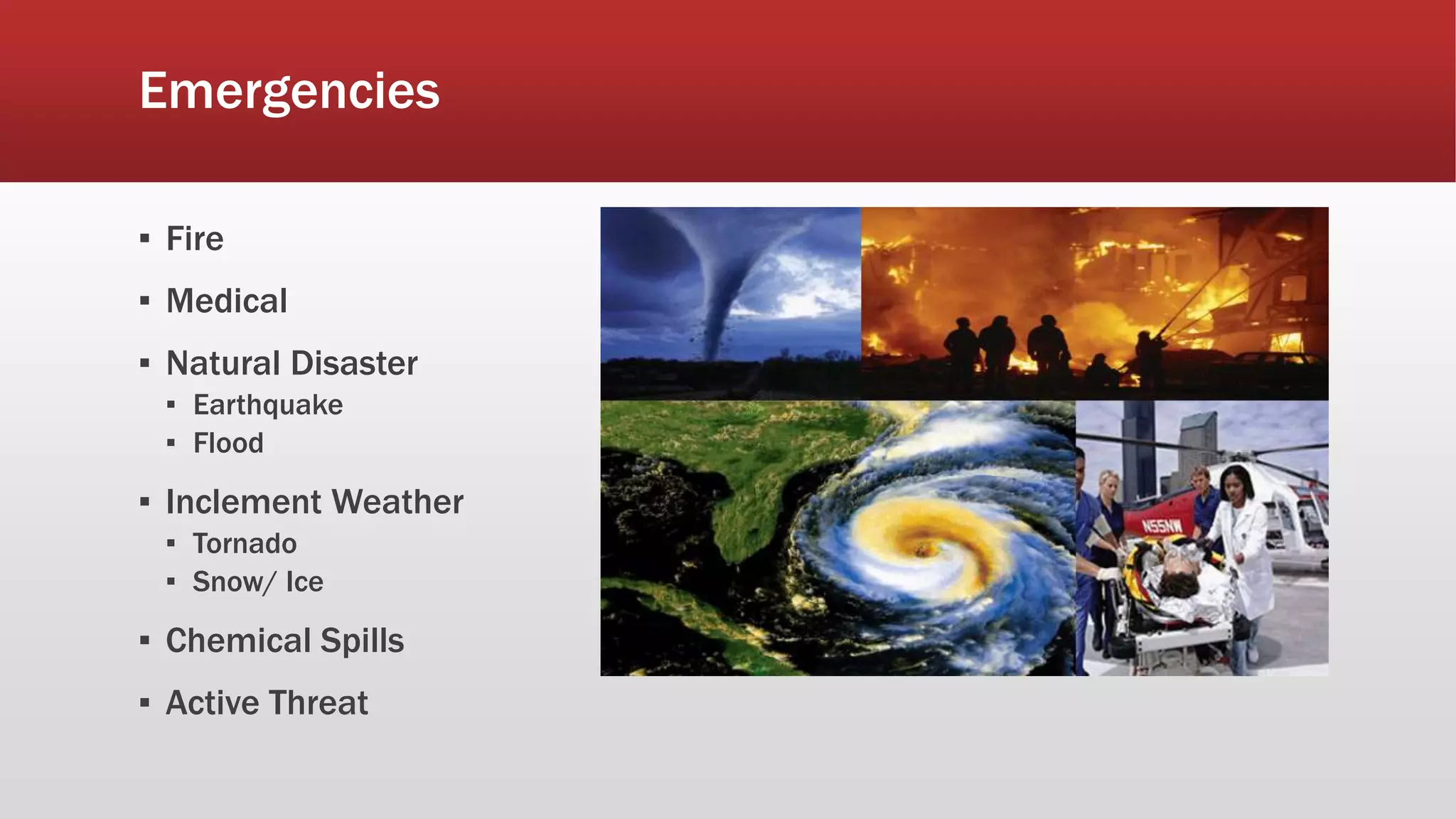
Emergencies
▪ Fire
▪ Medical
▪ Natural Disaster
▪ Earthquake
▪ Flood
▪ Inclement Weather
▪ Tornado
▪ Snow/ Ice
▪ Chemical Spills
▪ Active Threat
OSHA Minimum Plan Requirements
▪ Procedures for reporting a fire or other emergency
▪ Procedures for emergency evacuation/ shelter in place
▪ Procedures for employees who remain to operate critical systems
before they evacuate
▪ Procedure to account for all employees after evacuation
▪ Emergency contacts
▪ Employee alert system
▪ Training
▪ Plan review
Additional Requirements
▪ Additional EAP procedures may need to be included when required
by specific OSHA regulations such as:
▪ Confined Space
▪ Diving Operations
▪ Bloodborne Pathogens
▪ Open Excavations
▪ Underground Construction
▪ RCRA
▪ HAZWOPER
▪ Respiratory Protection
▪ Process Safety Management for Highly Hazardous Substances (PSM)
Additional Considerations for an EAP
▪ Neighboring facilities
▪ Railways
▪ Landing strips
▪ Sensitive Environmental Areas
▪ ALICE/ Run, Hide, Fight
▪ Storage of records and documents essential for business
continuity
▪ Company Disaster Recovery Plan
▪ Media Coordinator
Developing an EAP
▪ Plans may range significantly in complexity. Simple plans will
suffice in offices, retail stores, and small manufacturing settings
with few or no hazardous materials or processes.
▪ An EAP should be site specific to effectively address potential
hazards.
▪ Approach development from a worst case scenario.
▪ Assess potential hazards in the workplace
▪ Roles and responsibilities clearly defined
▪ Coordinate with outside shareholders; neighboring businesses,
local police and fire, HAZMAT teams, etc.
Reporting
▪ Who to notify
▪ Emergency Coordinator
▪ Supervisor
▪ Public Emergency Services
▪ Employees
▪ How to notify
▪ Alarm systems
▪ Calling trees
▪ Paging systems
▪ Alert systems
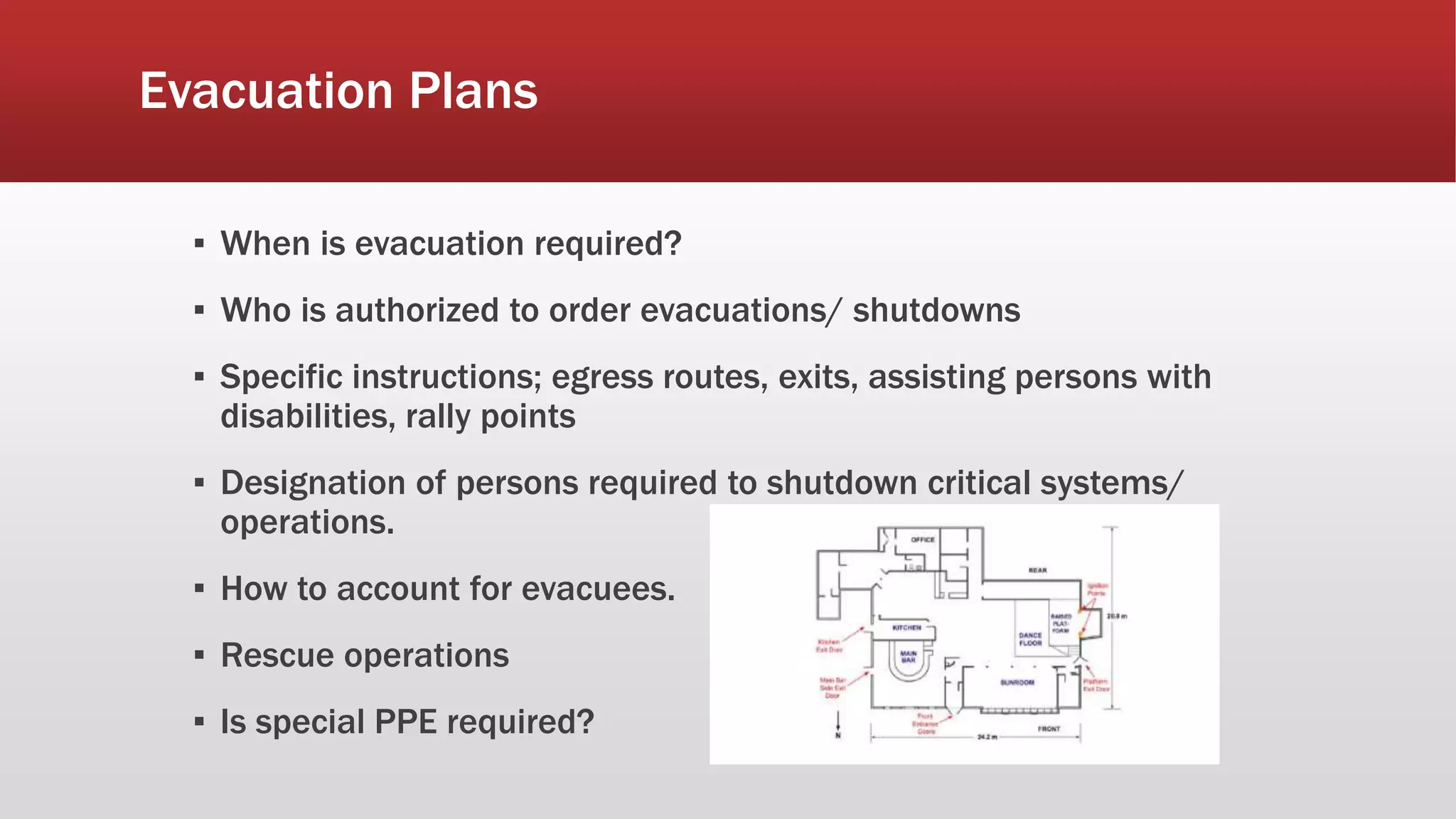
Evacuation Plans
▪ When is evacuation required?
▪ Who is authorized to order evacuations/ shutdowns
▪ Specific instructions; egress routes, exits, assisting persons with
disabilities, rally points
▪ Designation of persons required to shutdown critical systems/
operations.
▪ How to account for evacuees.
▪ Rescue operations
▪ Is special PPE required?
Accounting for Employees
▪ Designated rally points
▪ Who performs headcounts
▪ Procedure for unaccounted employees
▪ Communication to emergency services
Emergency Contacts
▪ Emergency Coordinator
▪ Fire, EMS, Police
▪ Spill Responders
▪ First Responders
▪ Site Nurse
▪ Ensure emergency contacts are
conspicuously posted throughout facility
Training
▪ Roles and Responsibilities
▪ Notification, warning and communications procedures/systems
▪ Hazards, threats, proactive actions
▪ Emergency shutdown
▪ Emergency contacts
▪ Emergency shelter and rally points
▪ Accountability procedures
Training
▪ Training should be done:
▪ Plan is newly developed
▪ New hires
▪ Facility, process, or equipment changes that affect evacuation routes
or hazards
▪ When the plan is revised
▪ Annually
Plan Review
▪ Plans should be reviewed at least annually to ensure compliance
with all applicable standards.
▪ Plans should be reviewed anytime:
▪ There is an emergency response
▪ Operational changes
▪ Facility changes
▪ Use of drills, incident reporting and actual events should be used
to gauge effectiveness of plan and identify weaknesses.
Tools for Developing Plans
▪ OSHA Emergency Action Plan eTool
https://www.osha.gov/SLTC/etools/evacuation/eap.html
▪ U.S. Dept. of Labor- How to Plan for Workplace Emergencies and
Evacuations https://www.osha.gov/Publications/osha3088.html
▪ Wayne County Ohio Alerts http://www.911alert.me/
▪ Wayne County Emergency Management Agency
https://www.wcemaoh.org/
▪ Training on assisting persons with disabilities- Ohio Dept. of Health
https://www.train.org/odh/course/1072437/compilation
Bring Emergency Preparedness Home
▪ Encourage employees to create emergency action plans for home.
▪ Learn First Aid/ CPR
▪ Vehicle/Home emergency kits
▪ Red Cross- http://www.redcross.org/get-help/how-to-prepare-for-
emergencies/make-a-plan
▪ Ready.gov- https://www.ready.gov/make-a-plan
▪ NSC Emergency Medical Response app
Questions?

Emergency Response Planning - James Keplar

  • 1.
  • 2.
    What is anEmergency Action Plan? ▪ An Emergency Action Plan (EAP) is intended to facilitate and organize employer and employee action during a workplace emergency ▪ Well developed plans and training help workers and emergency responders understand their roles and responsibilities during a workplace emergency event reducing the severity and frequency of injuries and property damage. ▪ OSHA standards 29 CFR 1910.38(a) for General Industry and 29 CFR 1926.35 for Construction require written EAPs
  • 3.
    Emergencies ▪ Fire ▪ Medical ▪Natural Disaster ▪ Earthquake ▪ Flood ▪ Inclement Weather ▪ Tornado ▪ Snow/ Ice ▪ Chemical Spills ▪ Active Threat
  • 4.
    OSHA Minimum PlanRequirements ▪ Procedures for reporting a fire or other emergency ▪ Procedures for emergency evacuation/ shelter in place ▪ Procedures for employees who remain to operate critical systems before they evacuate ▪ Procedure to account for all employees after evacuation ▪ Emergency contacts ▪ Employee alert system ▪ Training ▪ Plan review
  • 5.
    Additional Requirements ▪ AdditionalEAP procedures may need to be included when required by specific OSHA regulations such as: ▪ Confined Space ▪ Diving Operations ▪ Bloodborne Pathogens ▪ Open Excavations ▪ Underground Construction ▪ RCRA ▪ HAZWOPER ▪ Respiratory Protection ▪ Process Safety Management for Highly Hazardous Substances (PSM)
  • 6.
    Additional Considerations foran EAP ▪ Neighboring facilities ▪ Railways ▪ Landing strips ▪ Sensitive Environmental Areas ▪ ALICE/ Run, Hide, Fight ▪ Storage of records and documents essential for business continuity ▪ Company Disaster Recovery Plan ▪ Media Coordinator
  • 7.
    Developing an EAP ▪Plans may range significantly in complexity. Simple plans will suffice in offices, retail stores, and small manufacturing settings with few or no hazardous materials or processes. ▪ An EAP should be site specific to effectively address potential hazards. ▪ Approach development from a worst case scenario. ▪ Assess potential hazards in the workplace ▪ Roles and responsibilities clearly defined ▪ Coordinate with outside shareholders; neighboring businesses, local police and fire, HAZMAT teams, etc.
  • 8.
    Reporting ▪ Who tonotify ▪ Emergency Coordinator ▪ Supervisor ▪ Public Emergency Services ▪ Employees ▪ How to notify ▪ Alarm systems ▪ Calling trees ▪ Paging systems ▪ Alert systems
  • 9.
    Evacuation Plans ▪ Whenis evacuation required? ▪ Who is authorized to order evacuations/ shutdowns ▪ Specific instructions; egress routes, exits, assisting persons with disabilities, rally points ▪ Designation of persons required to shutdown critical systems/ operations. ▪ How to account for evacuees. ▪ Rescue operations ▪ Is special PPE required?
  • 10.
    Accounting for Employees ▪Designated rally points ▪ Who performs headcounts ▪ Procedure for unaccounted employees ▪ Communication to emergency services
  • 11.
    Emergency Contacts ▪ EmergencyCoordinator ▪ Fire, EMS, Police ▪ Spill Responders ▪ First Responders ▪ Site Nurse ▪ Ensure emergency contacts are conspicuously posted throughout facility
  • 12.
    Training ▪ Roles andResponsibilities ▪ Notification, warning and communications procedures/systems ▪ Hazards, threats, proactive actions ▪ Emergency shutdown ▪ Emergency contacts ▪ Emergency shelter and rally points ▪ Accountability procedures
  • 13.
    Training ▪ Training shouldbe done: ▪ Plan is newly developed ▪ New hires ▪ Facility, process, or equipment changes that affect evacuation routes or hazards ▪ When the plan is revised ▪ Annually
  • 14.
    Plan Review ▪ Plansshould be reviewed at least annually to ensure compliance with all applicable standards. ▪ Plans should be reviewed anytime: ▪ There is an emergency response ▪ Operational changes ▪ Facility changes ▪ Use of drills, incident reporting and actual events should be used to gauge effectiveness of plan and identify weaknesses.
  • 15.
    Tools for DevelopingPlans ▪ OSHA Emergency Action Plan eTool https://www.osha.gov/SLTC/etools/evacuation/eap.html ▪ U.S. Dept. of Labor- How to Plan for Workplace Emergencies and Evacuations https://www.osha.gov/Publications/osha3088.html ▪ Wayne County Ohio Alerts http://www.911alert.me/ ▪ Wayne County Emergency Management Agency https://www.wcemaoh.org/ ▪ Training on assisting persons with disabilities- Ohio Dept. of Health https://www.train.org/odh/course/1072437/compilation
  • 16.
    Bring Emergency PreparednessHome ▪ Encourage employees to create emergency action plans for home. ▪ Learn First Aid/ CPR ▪ Vehicle/Home emergency kits ▪ Red Cross- http://www.redcross.org/get-help/how-to-prepare-for- emergencies/make-a-plan ▪ Ready.gov- https://www.ready.gov/make-a-plan ▪ NSC Emergency Medical Response app
  • 17.

Editor's Notes

  • #3 Why are EAPs needed: 1) ensure everyone is trained and knows how to respond to potential emergencies, 2) prevent injuries, 3) reduce financial impacts of emergencies
  • #4 It is hard to plan for every emergency, an EAP provides a guideline for response to emergencies that don’t have a written plan
  • #5 OSHA 1910 and 1926 requirements.
  • #7 Do neighboring facilities have potential risks: increased risk with fire or chemical spill ALICE/ RHF- Proactive response to active threats
  • #8 Construction- each site/project may require specific plans Clearly defined roles and responsibilities allow for smooth response Outside shareholders- Tours with local emergency responders to understand hazards and, layout , and special conditions such as extremely hazardous materials.
  • #9 Wayne County Ohio Alerts- to get weather/ civil/ police alerts; IAlert; Alert Media
  • #10 Rescue operations for confined space; PPE requirements for hazardous atmospheres
  • #11 Rally point- where do wwe meet, does it change depending on the evacuation Headcount- who does and to whom do they report; who relays to emergency services Site Coordinators- emergency coordinator- media coordinator and emergency services