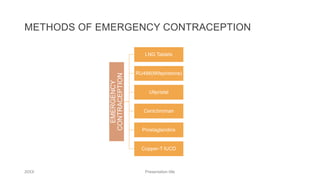
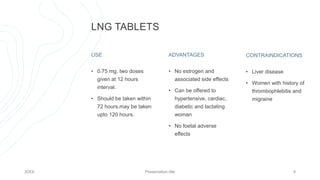
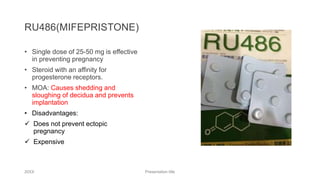
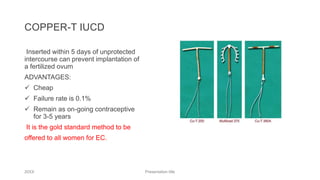
Emergency contraception, also known as postcoital contraception, aims to prevent pregnancy after unprotected sex by interfering with fertilization or implantation. It works primarily by delaying or inhibiting ovulation, thickening cervical mucus, or causing endometrial changes to prevent implantation. Methods of emergency contraception include levonorgestrel pills, ulipristal acetate pills, mifepristone, copper IUD insertion, and prostaglandins. The levonorgestrel pill is most commonly used and involves taking two doses twelve hours apart within 72 hours of intercourse. A copper IUD can also provide reliable emergency contraception if inserted within 5 days. Emergency contraception is meant for occasional use and not as