Download to read offline
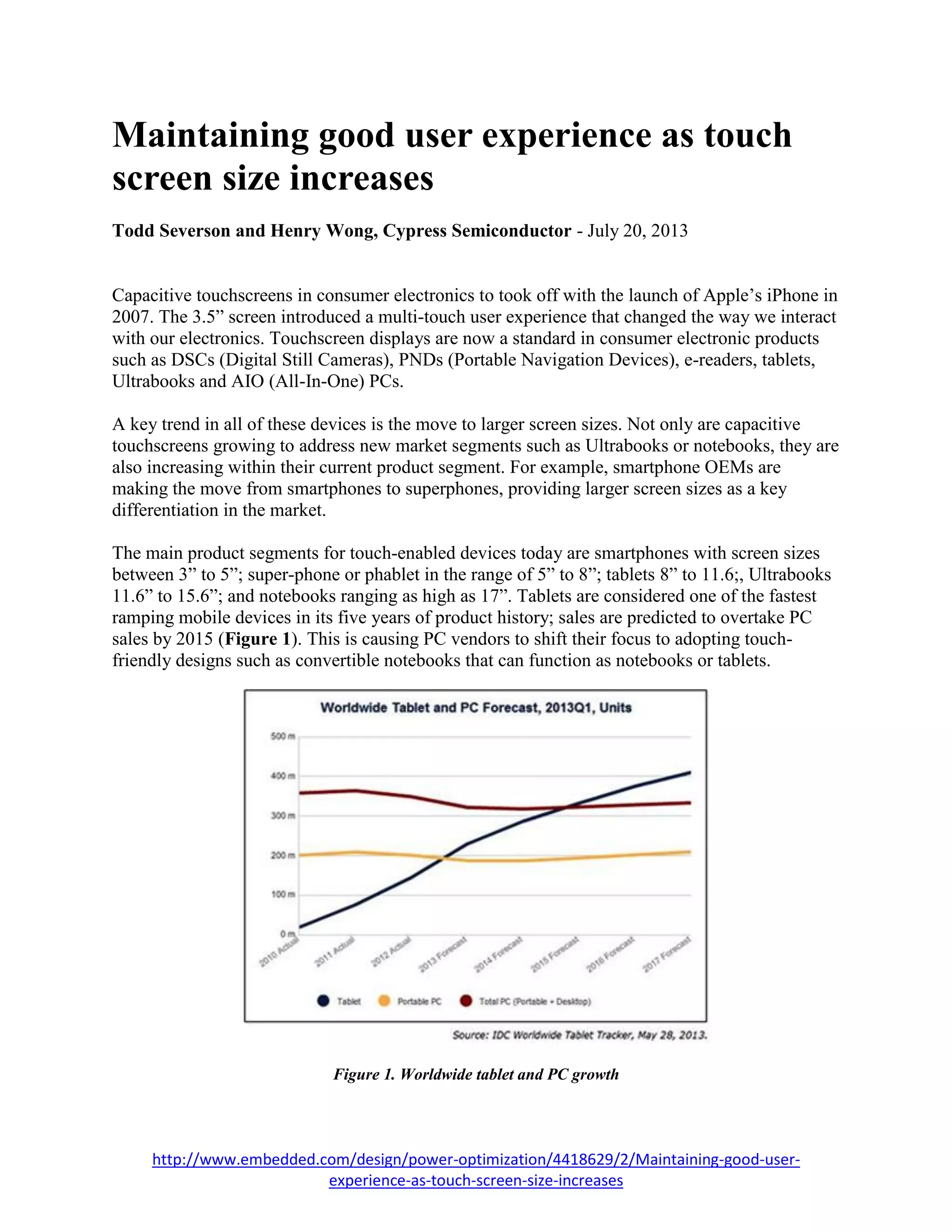
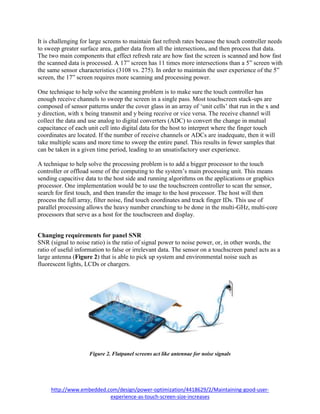
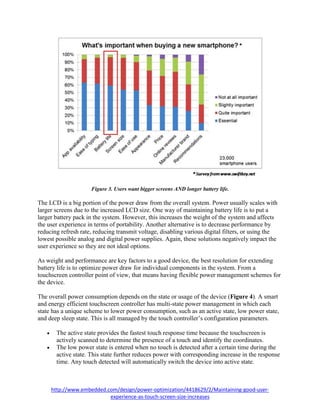
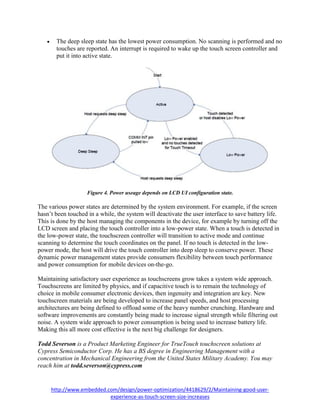


As touchscreen sizes increase in devices like smartphones, tablets, and PCs, maintaining a good user experience becomes more challenging. Larger screens have higher parasitic capacitance and resistance, which reduces transmit frequency and refresh rates. This can negatively impact touch sensitivity, tracking, and responsiveness. To overcome these issues, touch controllers must boost transmit voltages, add receive channels, offload processing to host CPUs, and implement dynamic power management with multiple states to optimize battery life for different usage scenarios. A system-wide approach is needed to balance touch performance and power consumption as screen sizes continue growing.


