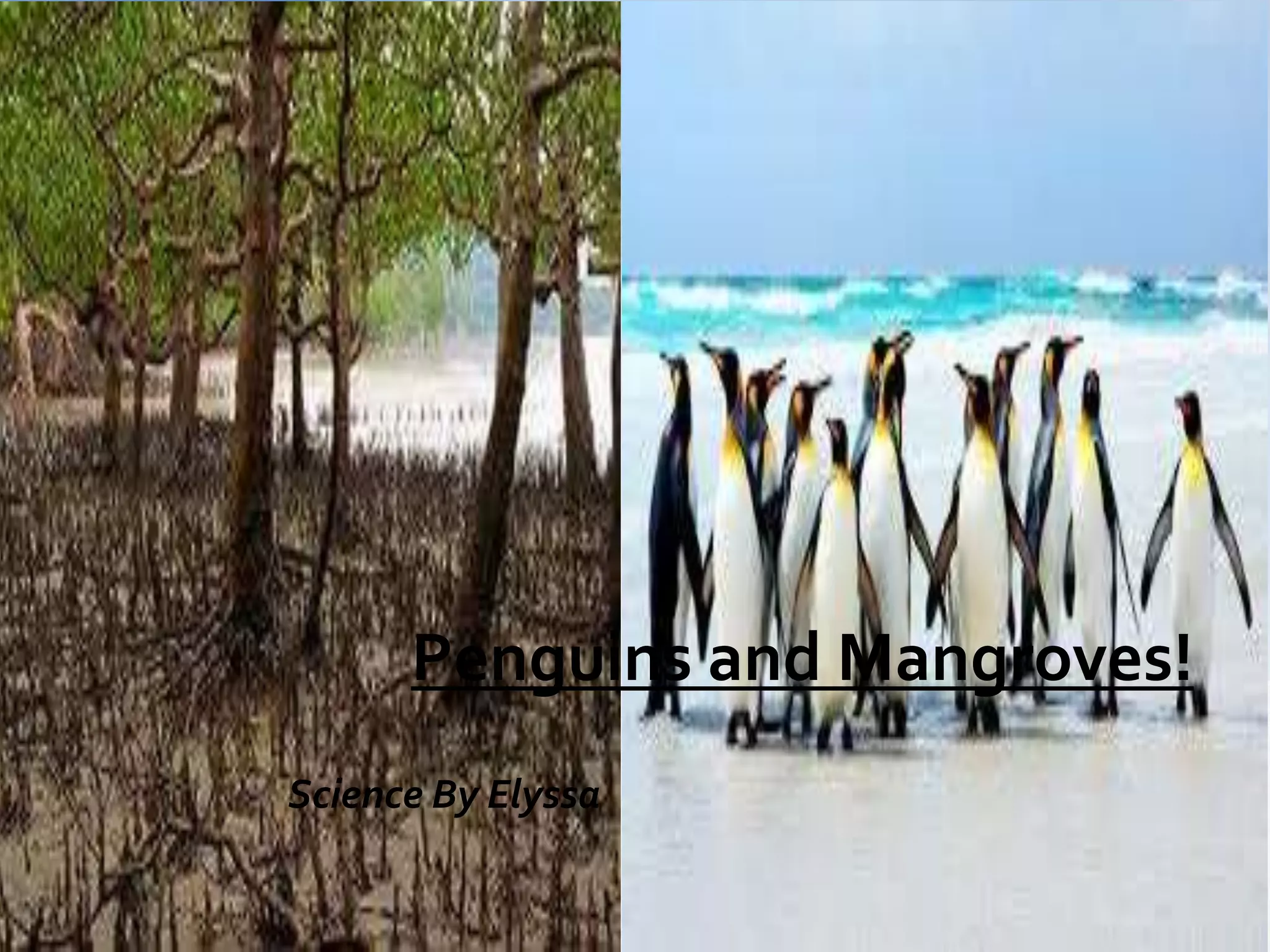
Penguins and Mangroves! 
Science By Elyssa
How do penguins adapt to their 
environment 
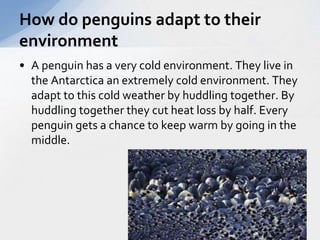
• A penguin has a very cold environment. They live in 
the Antarctica an extremely cold environment. They 
adapt to this cold weather by huddling together. By 
huddling together they cut heat loss by half. Every 
penguin gets a chance to keep warm by going in the 
middle.
How does a mangrove adapt to its 
environment 
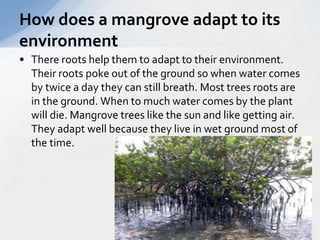
• There roots help them to adapt to their environment. 
Their roots poke out of the ground so when water comes 
by twice a day they can still breath. Most trees roots are 
in the ground. When to much water comes by the plant 
will die. Mangrove trees like the sun and like getting air. 
They adapt well because they live in wet ground most of 
the time.
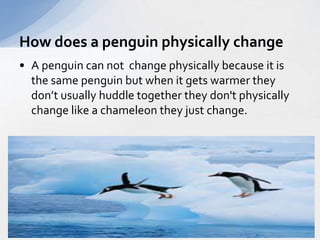
How does a penguin physically change 
• A penguin can not change physically because it is 
the same penguin but when it gets warmer they 
don’t usually huddle together they don't physically 
change like a chameleon they just change.
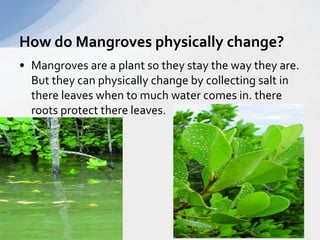
How do Mangroves physically change? 
• Mangroves are a plant so they stay the way they are. 
But they can physically change by collecting salt in 
there leaves when to much water comes in. there 
roots protect there leaves.
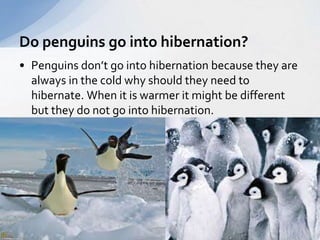
Do penguins go into hibernation? 
• Penguins don’t go into hibernation because they are 
always in the cold why should they need to 
hibernate. When it is warmer it might be different 
but they do not go into hibernation.
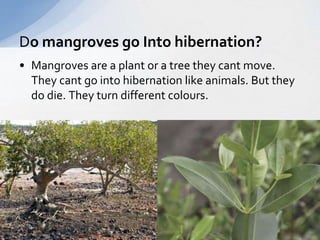
Do mangroves go Into hibernation? 
• Mangroves are a plant or a tree they cant move. 
They cant go into hibernation like animals. But they 
do die. They turn different colours.
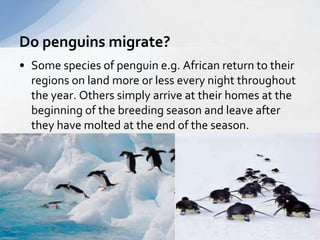
Do penguins migrate? 
• Some species of penguin e.g. African return to their 
regions on land more or less every night throughout 
the year. Others simply arrive at their homes at the 
beginning of the breeding season and leave after 
they have molted at the end of the season.
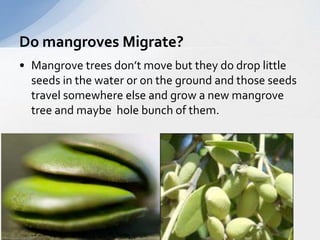
Do mangroves Migrate? 
• Mangrove trees don’t move but they do drop little 
seeds in the water or on the ground and those seeds 
travel somewhere else and grow a new mangrove 
tree and maybe hole bunch of them.
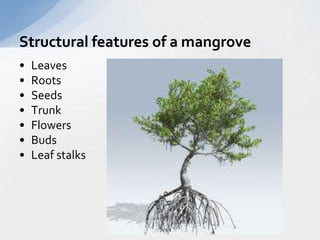
Structural features of a mangrove 
• Leaves 
• Roots 
• Seeds 
• Trunk 
• Flowers 
• Buds 
• Leaf stalks
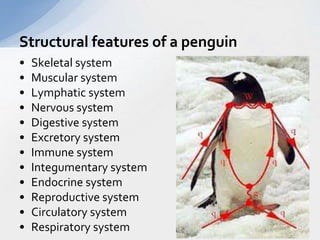
Structural features of a penguin 
• Skeletal system 
• Muscular system 
• Lymphatic system 
• Nervous system 
• Digestive system 
• Excretory system 
• Immune system 
• Integumentary system 
• Endocrine system 
• Reproductive system 
• Circulatory system 
• Respiratory system
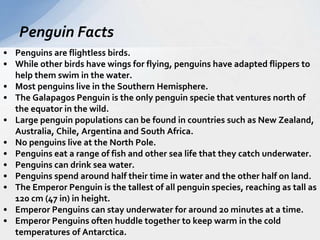
Penguin Facts 
• Penguins are flightless birds. 
• While other birds have wings for flying, penguins have adapted flippers to 
help them swim in the water. 
• Most penguins live in the Southern Hemisphere. 
• The Galapagos Penguin is the only penguin specie that ventures north of 
the equator in the wild. 
• Large penguin populations can be found in countries such as New Zealand, 
Australia, Chile, Argentina and South Africa. 
• No penguins live at the North Pole. 
• Penguins eat a range of fish and other sea life that they catch underwater. 
• Penguins can drink sea water. 
• Penguins spend around half their time in water and the other half on land. 
• The Emperor Penguin is the tallest of all penguin species, reaching as tall as 
120 cm (47 in) in height. 
• Emperor Penguins can stay underwater for around 20 minutes at a time. 
• Emperor Penguins often huddle together to keep warm in the cold 
temperatures of Antarctica.
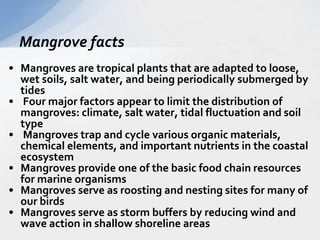
Mangrove facts 
• Mangroves are tropical plants that are adapted to loose, 
wet soils, salt water, and being periodically submerged by 
tides 
• Four major factors appear to limit the distribution of 
mangroves: climate, salt water, tidal fluctuation and soil 
type 
• Mangroves trap and cycle various organic materials, 
chemical elements, and important nutrients in the coastal 
ecosystem 
• Mangroves provide one of the basic food chain resources 
for marine organisms 
• Mangroves serve as roosting and nesting sites for many of 
our birds 
• Mangroves serve as storm buffers by reducing wind and 
wave action in shallow shoreline areas
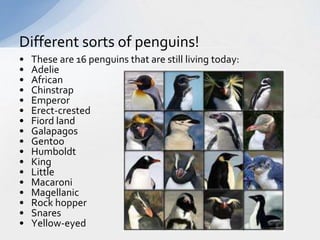
Different sorts of penguins! 
• These are 16 penguins that are still living today: 
• Adelie 
• African 
• Chinstrap 
• Emperor 
• Erect-crested 
• Fiord land 
• Galapagos 
• Gentoo 
• Humboldt 
• King 
• Little 
• Macaroni 
• Magellanic 
• Rock hopper 
• Snares 
• Yellow-eyed
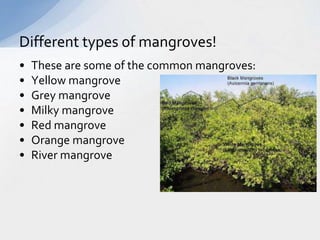
Different types of mangroves! 
• These are some of the common mangroves: 
• Yellow mangrove 
• Grey mangrove 
• Milky mangrove 
• Red mangrove 
• Orange mangrove 
• River mangrove
Thank You!

Elyssa Adaptations

  • 1.
    Penguins and Mangroves! Science By Elyssa
  • 2.
    How do penguinsadapt to their environment • A penguin has a very cold environment. They live in the Antarctica an extremely cold environment. They adapt to this cold weather by huddling together. By huddling together they cut heat loss by half. Every penguin gets a chance to keep warm by going in the middle.
  • 3.
    How does amangrove adapt to its environment • There roots help them to adapt to their environment. Their roots poke out of the ground so when water comes by twice a day they can still breath. Most trees roots are in the ground. When to much water comes by the plant will die. Mangrove trees like the sun and like getting air. They adapt well because they live in wet ground most of the time.
  • 4.
    How does apenguin physically change • A penguin can not change physically because it is the same penguin but when it gets warmer they don’t usually huddle together they don't physically change like a chameleon they just change.
  • 5.
    How do Mangrovesphysically change? • Mangroves are a plant so they stay the way they are. But they can physically change by collecting salt in there leaves when to much water comes in. there roots protect there leaves.
  • 6.
    Do penguins gointo hibernation? • Penguins don’t go into hibernation because they are always in the cold why should they need to hibernate. When it is warmer it might be different but they do not go into hibernation.
  • 7.
    Do mangroves goInto hibernation? • Mangroves are a plant or a tree they cant move. They cant go into hibernation like animals. But they do die. They turn different colours.
  • 8.
    Do penguins migrate? • Some species of penguin e.g. African return to their regions on land more or less every night throughout the year. Others simply arrive at their homes at the beginning of the breeding season and leave after they have molted at the end of the season.
  • 9.
    Do mangroves Migrate? • Mangrove trees don’t move but they do drop little seeds in the water or on the ground and those seeds travel somewhere else and grow a new mangrove tree and maybe hole bunch of them.
  • 10.
    Structural features ofa mangrove • Leaves • Roots • Seeds • Trunk • Flowers • Buds • Leaf stalks
  • 11.
    Structural features ofa penguin • Skeletal system • Muscular system • Lymphatic system • Nervous system • Digestive system • Excretory system • Immune system • Integumentary system • Endocrine system • Reproductive system • Circulatory system • Respiratory system
  • 12.
    Penguin Facts •Penguins are flightless birds. • While other birds have wings for flying, penguins have adapted flippers to help them swim in the water. • Most penguins live in the Southern Hemisphere. • The Galapagos Penguin is the only penguin specie that ventures north of the equator in the wild. • Large penguin populations can be found in countries such as New Zealand, Australia, Chile, Argentina and South Africa. • No penguins live at the North Pole. • Penguins eat a range of fish and other sea life that they catch underwater. • Penguins can drink sea water. • Penguins spend around half their time in water and the other half on land. • The Emperor Penguin is the tallest of all penguin species, reaching as tall as 120 cm (47 in) in height. • Emperor Penguins can stay underwater for around 20 minutes at a time. • Emperor Penguins often huddle together to keep warm in the cold temperatures of Antarctica.
  • 13.
    Mangrove facts •Mangroves are tropical plants that are adapted to loose, wet soils, salt water, and being periodically submerged by tides • Four major factors appear to limit the distribution of mangroves: climate, salt water, tidal fluctuation and soil type • Mangroves trap and cycle various organic materials, chemical elements, and important nutrients in the coastal ecosystem • Mangroves provide one of the basic food chain resources for marine organisms • Mangroves serve as roosting and nesting sites for many of our birds • Mangroves serve as storm buffers by reducing wind and wave action in shallow shoreline areas
  • 14.
    Different sorts ofpenguins! • These are 16 penguins that are still living today: • Adelie • African • Chinstrap • Emperor • Erect-crested • Fiord land • Galapagos • Gentoo • Humboldt • King • Little • Macaroni • Magellanic • Rock hopper • Snares • Yellow-eyed
  • 15.
    Different types ofmangroves! • These are some of the common mangroves: • Yellow mangrove • Grey mangrove • Milky mangrove • Red mangrove • Orange mangrove • River mangrove
  • 16.

Editor's Notes

  • #5 A penguin can not change physically because it is the same penguin but when it gets warmer they don’t usually huddle together they don't physically change like a chameleon they just change like bam I can fly. It doesn't work that way.