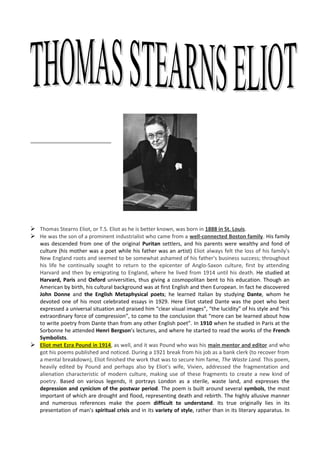
T.S. Eliot's poem The Waste Land explores the spiritual and moral confusion of the modern world. It uses fragments from various sources without narrative to portray a "waste land" society fragmented by war. Some key aspects include its use of the Grail legend as a framework to discuss themes of fertility and rebirth. It also employs the "objective correlative" technique of using imagery to represent emotions. The poem had a profound influence on modernist literature through its revolutionary structure and style.