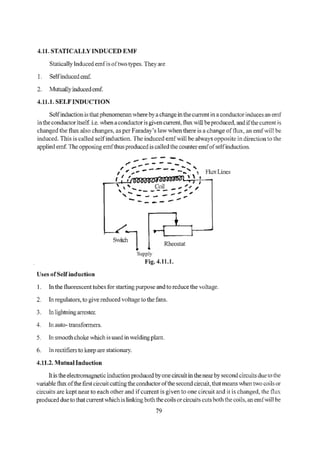
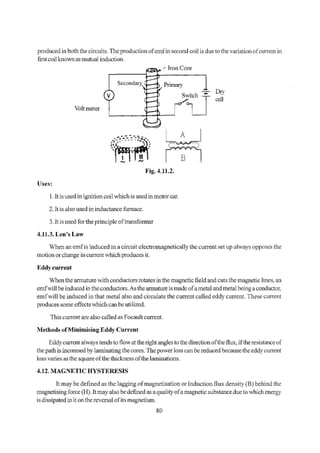
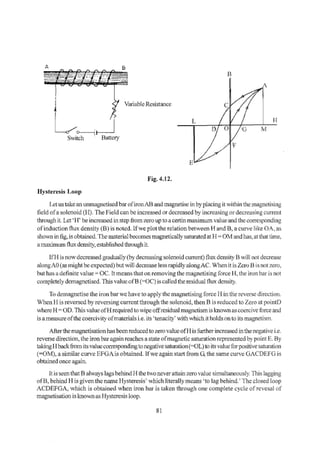
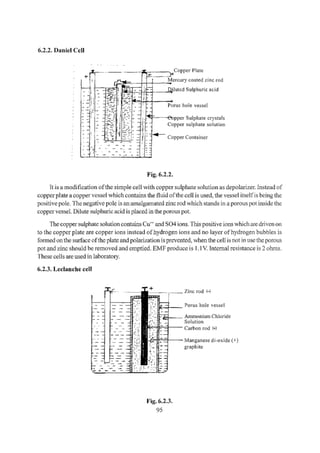
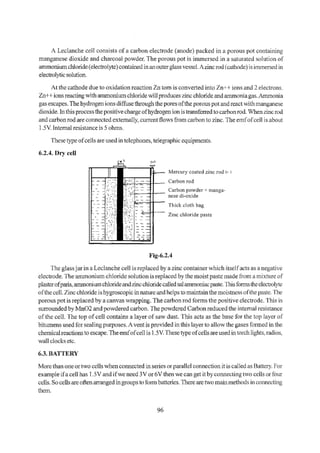
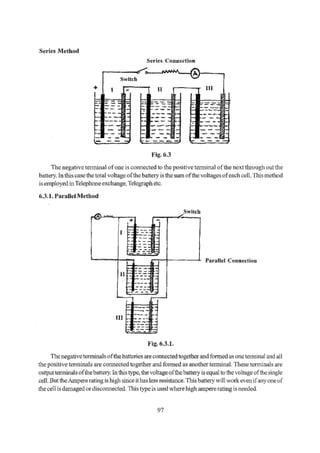
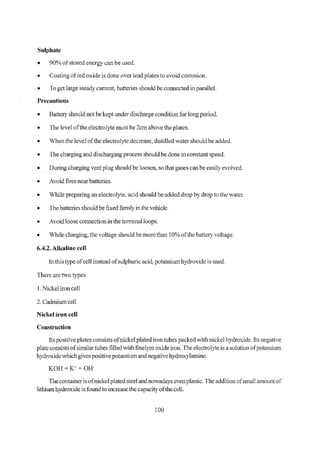
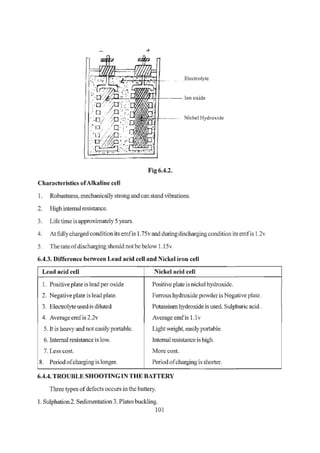
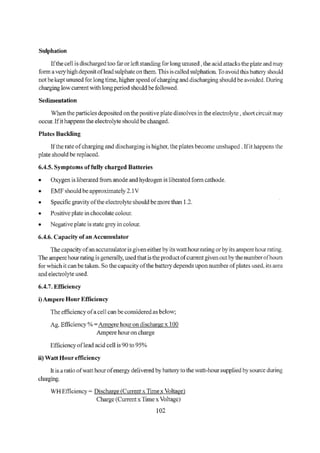
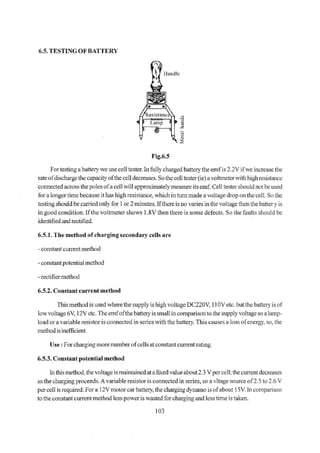
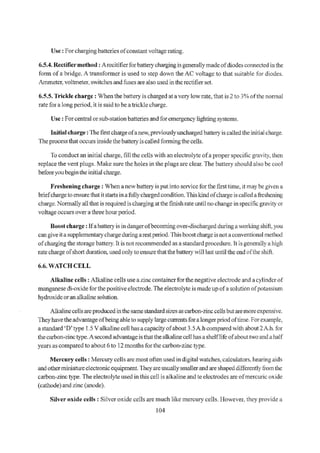
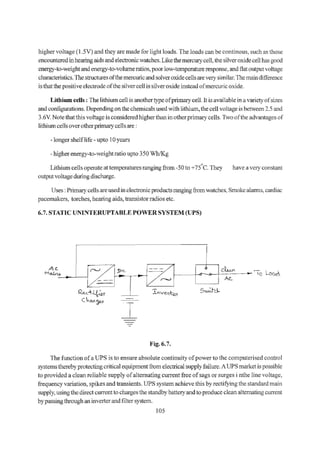
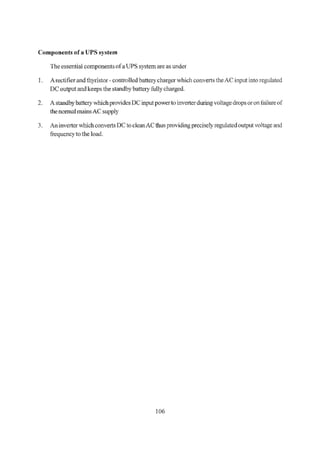
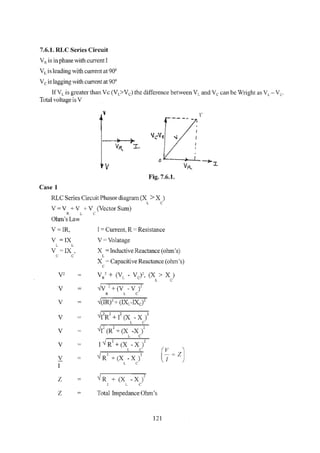
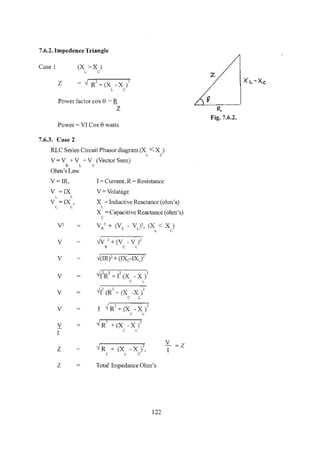
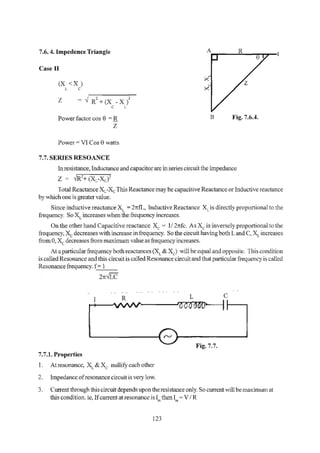
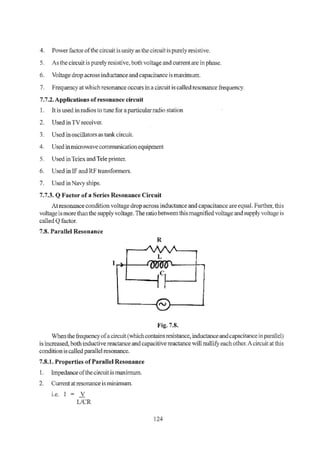
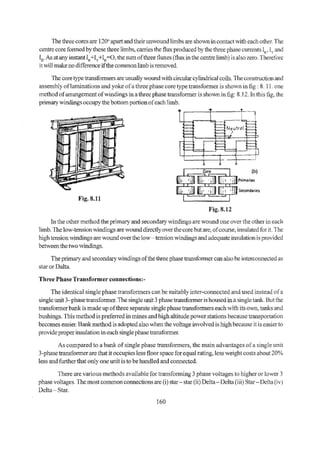
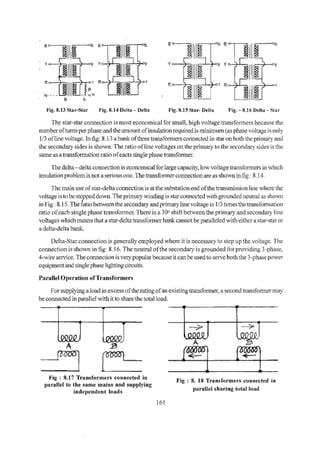
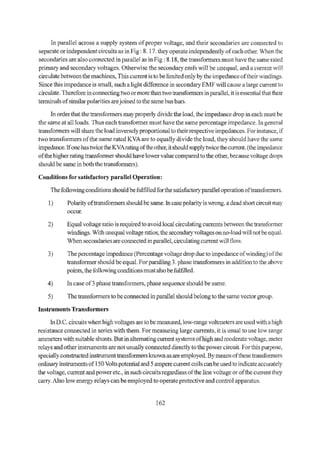
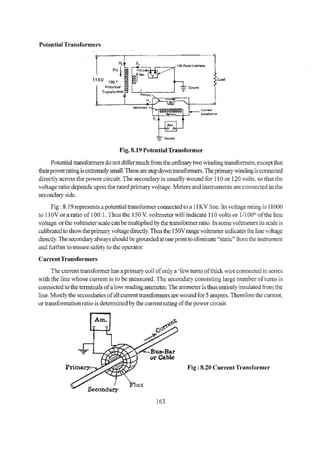
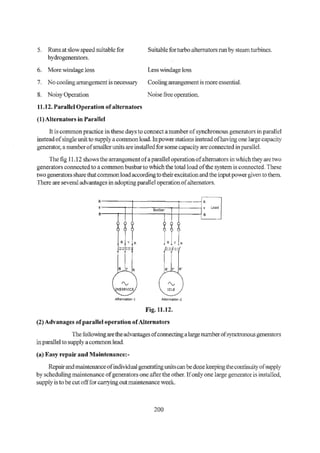
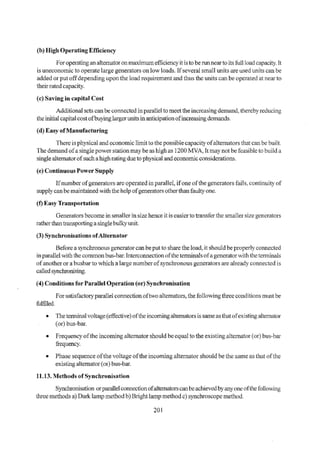
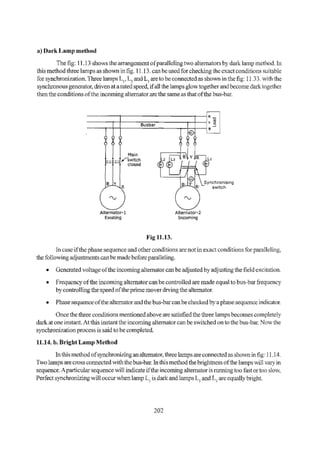
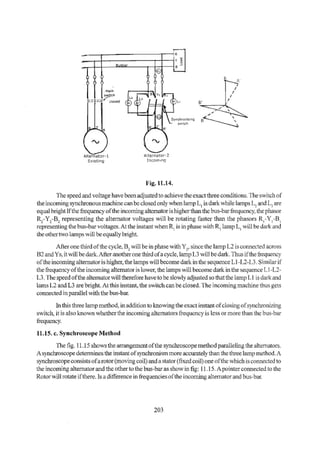
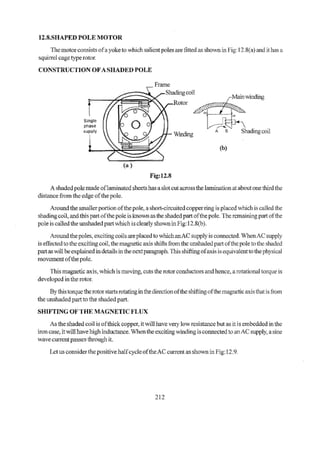
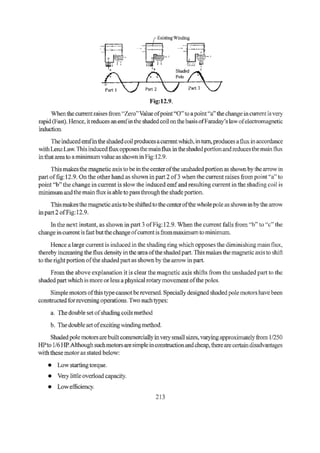
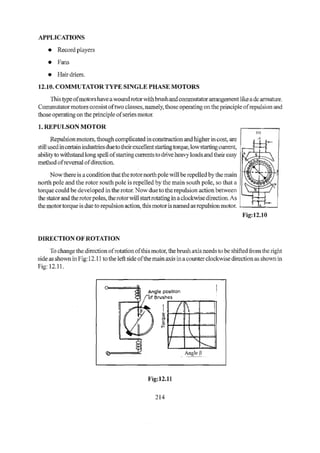
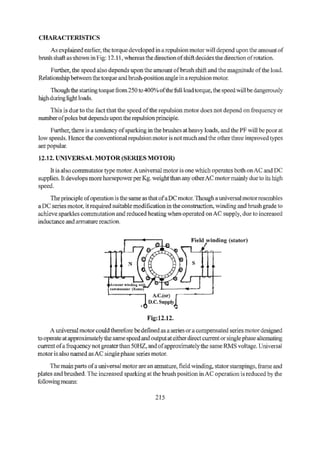
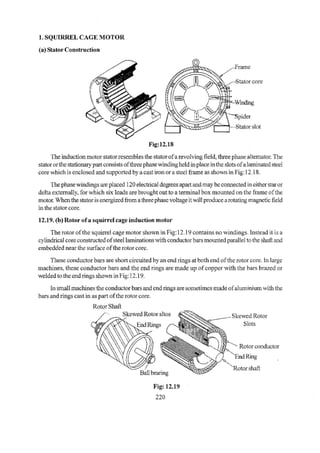
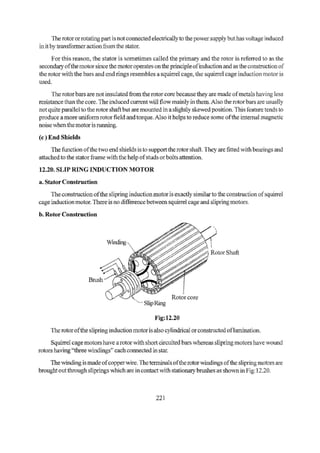
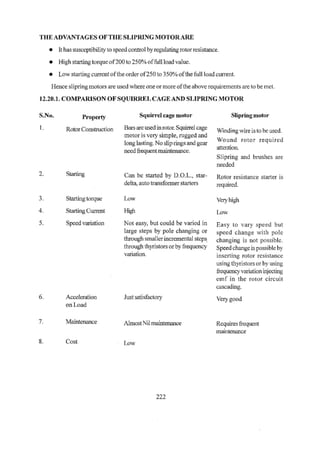
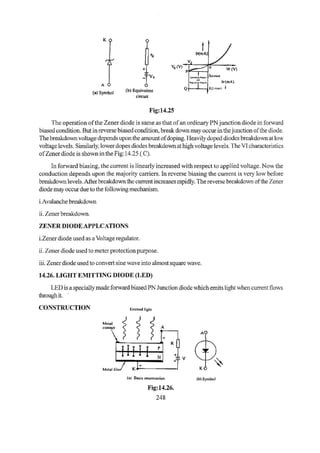
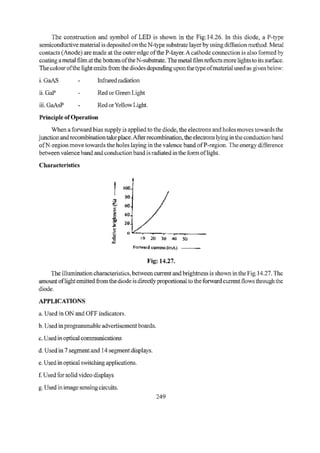
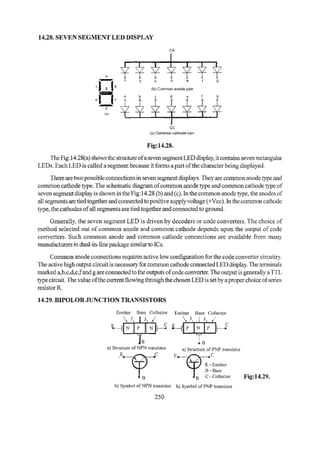
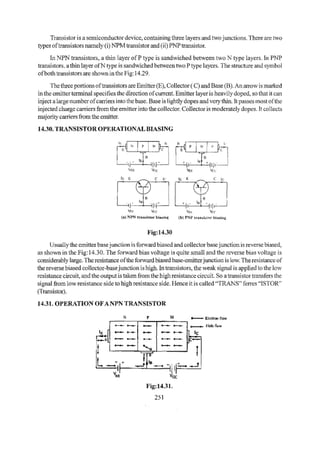
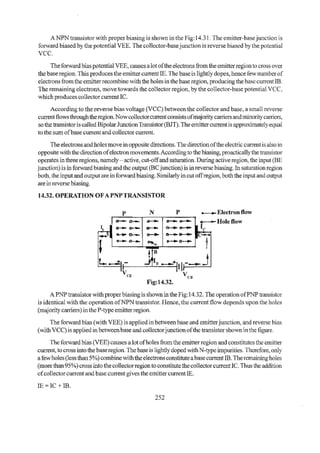
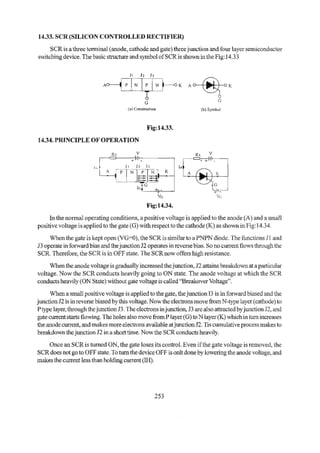
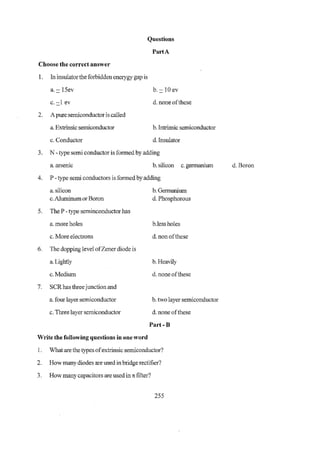
v
13. MOTOR STARTERS
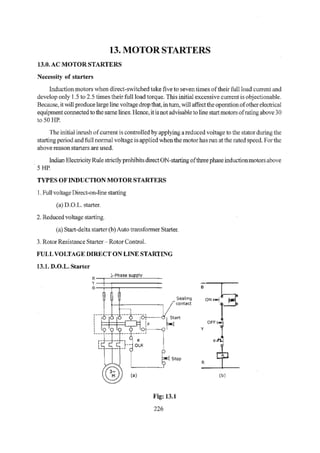
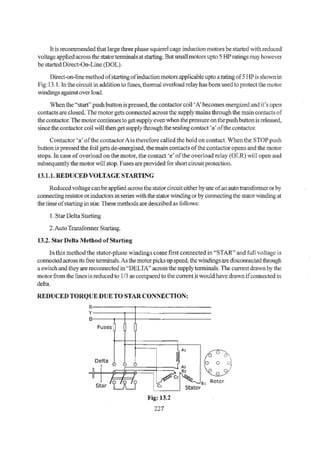
AC motor starters: DOL starter - star / delta starter - Auto transformer starter - slipring
motor starter (resistance type starter).
DC MOTOR STARTERS
Three point starter- four point starter.
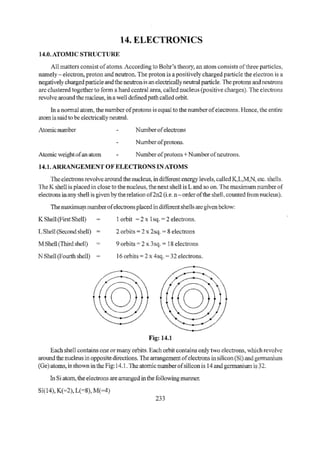
14. ELECTRONICS
Semi conductors - electrons and holes - intrinsic semi conductor - extrinsic semi conductor-
dopping of semi conductor - N. type semi conductor - P. type semi conductor - PN Junction diode -
half wave rectifier- full wave rectifire - bridge recti fire - Zener diode -light emitting diode - Junction
transistor - PNP, NPN transistors - SCR.
va
CONTENT
Sl.No. Page No.
1. Introduction of Electrical Engineering 1
2. Materials and Tools Used in Electrical Engineering Department 10
3. Electrical Terms and DC Circuits 20
4. Electro Magnetism 71
5. Electrical Effect 84
6. Batteries 92
7. A.C. Circuits and Electrical Measuring Instruments 109
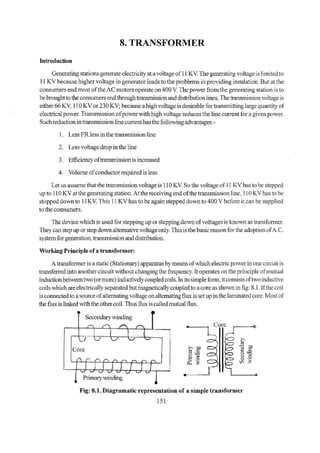
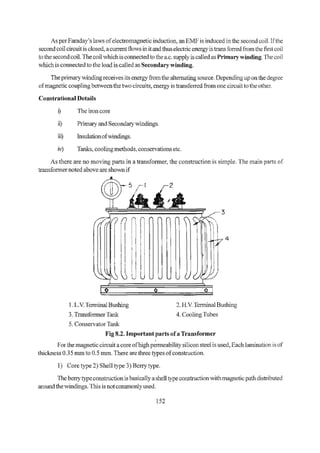
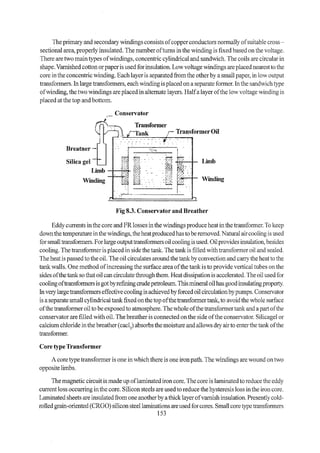
8. Transformer 151
9. DC Generator 168
10. DC Motor 184
11. AC Generator (Alternator) 193
12. AC Motors 206
13. Motor Starters 226
14. Electronics 233
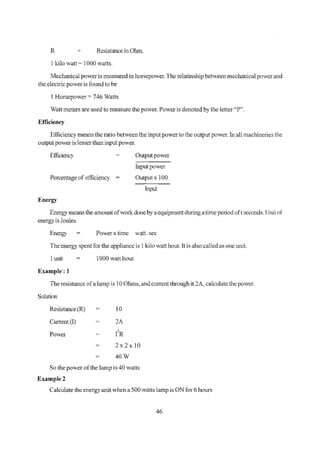
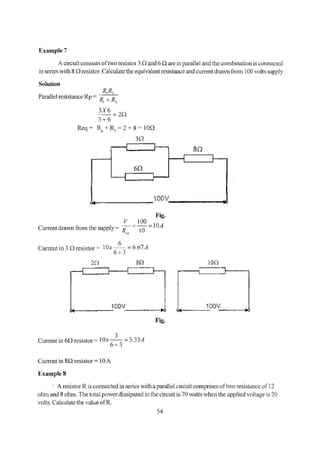
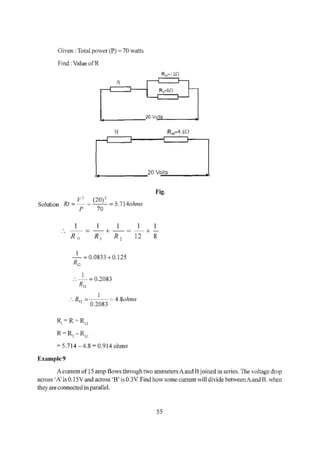
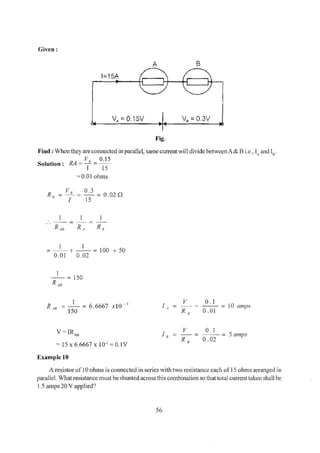
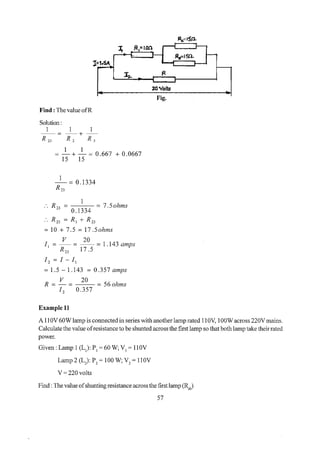
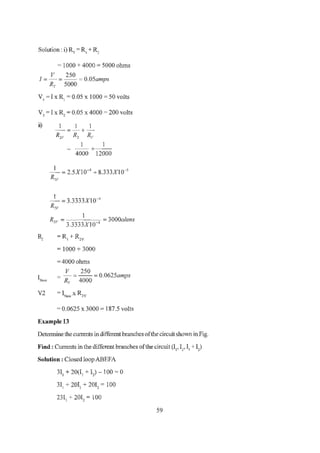
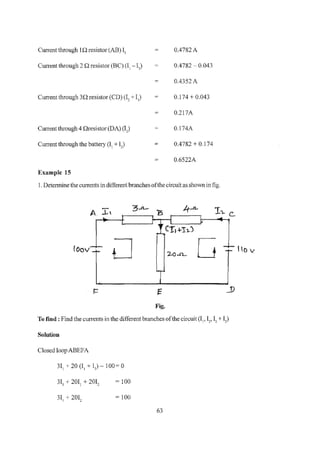
Solution
1000 watts x 1 Hour 1Unit
Energyconsurned = 500 x 6 3000 Watt-hrs.
3000 =3 Unit
1000
3 Unit of energy is spent by using 500 watts lamp for 6 hours.
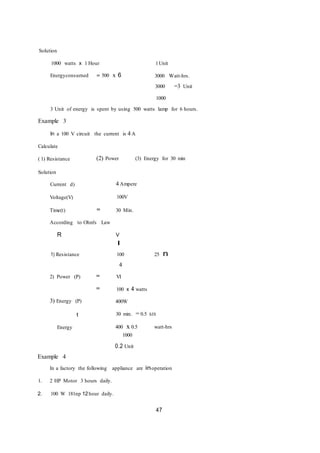
Example 3
In a 100 V circuit the current is 4 A
Calculate
( 1) Resistance
Solution
(2) Power (3) Energy for 30 min
Current d)
Voltage(V)
Time(t)
4 Ampere
100V
= 30 Min.
According to Ohm's Law
R V
I
1) Resistance
2) Power (P) =
100
4
VI
25 n
= 100 x 4 watts
3) Energy (P)
t
400W
30 min. = 0.5 hIS
Energy 400 x 0.5
1000
0.2 Unit
watt-hrs
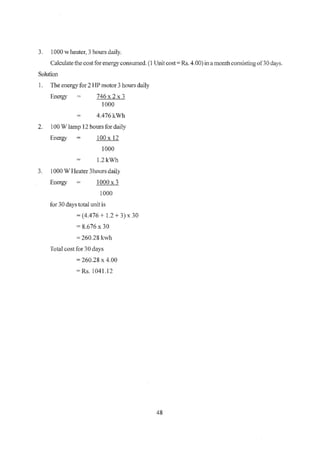
Example 4
In a factory the following appliance are inoperation
1. 2 HP Motor 3 hours daily.
2. 100 W 181np 12hour daily.
47
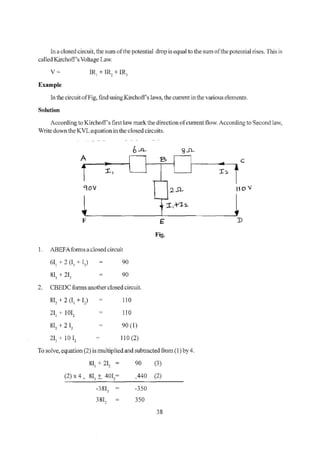
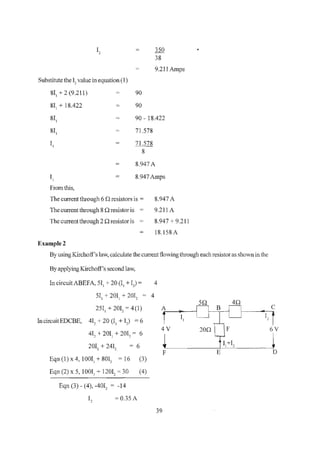
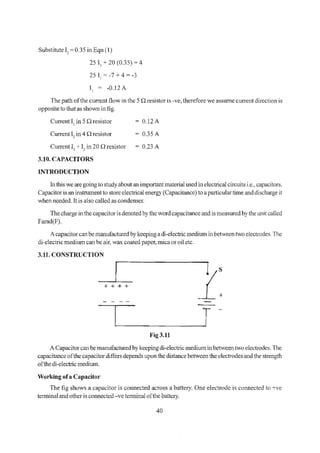
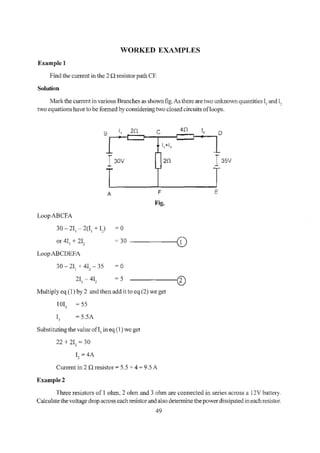
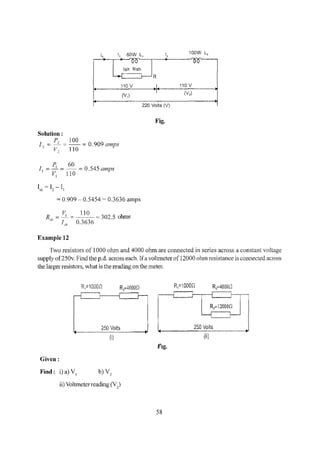
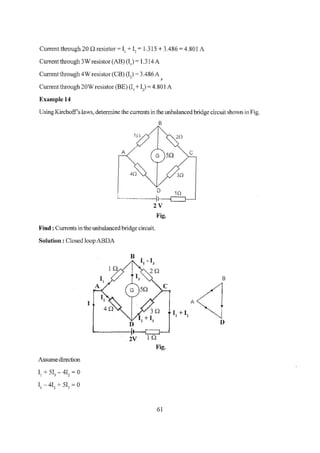
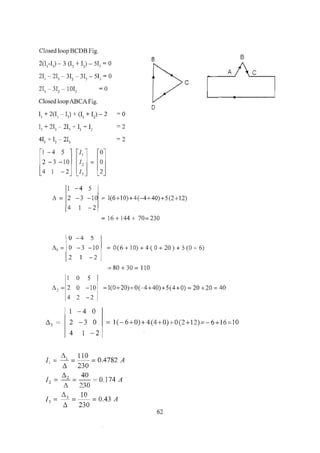
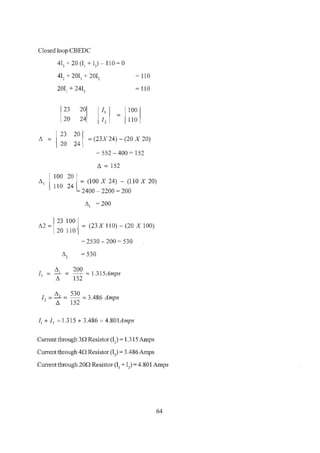
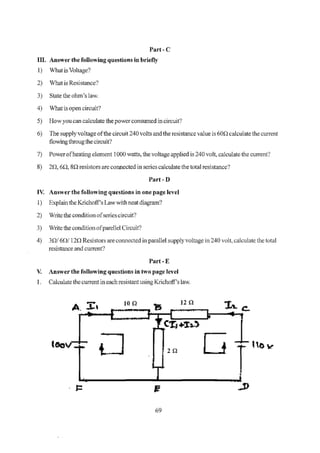
Closed loop CBEDC
412 + 20(11 + I) - 110 = 0
412 + 2011
+ 2012
= 110
2012
+ 2412 = 110
30
100V 1iOV
100V 110V
F E D
Fig.
[~~~[J
~J
= [:~~]
23 20
,1 = 20 24 = (23X24) - (20X20) = 152
10020
,11 = 110 24 = (1OOX24) - (20Xl1 0) = 200
23 100
,12 = 20 110 =(23XlOO)-(100X20) = 530
II = ~ = 200 = 1.315A
Ll 152
1 = ,12 = 530 = 3.486 A
2 ,1 132
60
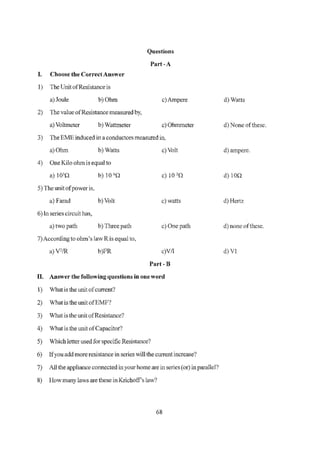
2) What is buzzar?
3) Write the parts oflron Box?
4) What are the types of heating appliances?
5) What is incandecent lamp?
Part- D
:rv. Answer the following questions in one page level
1) Draw the neat sketch of incandecent lamp?
2) Explain magnetic circuit breaker?
3) Explain Electric heaterwith neatdiagram?
Part-E
V. Answer the following questions in two page level
1) Explain the working principle of tube lamp?
2) Explain the working principle of Electric Bell with neatdiagram
91
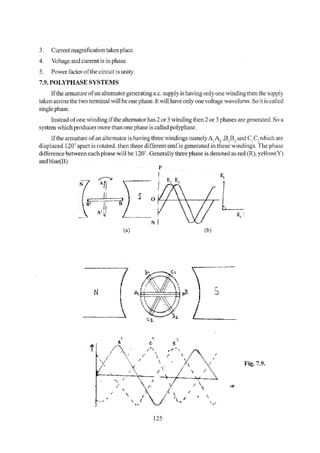
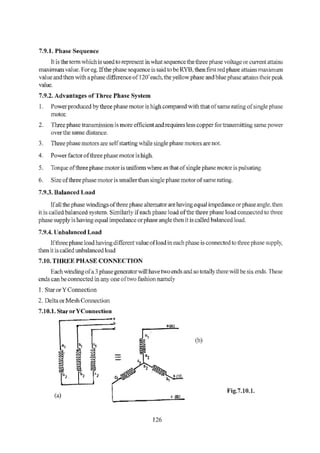
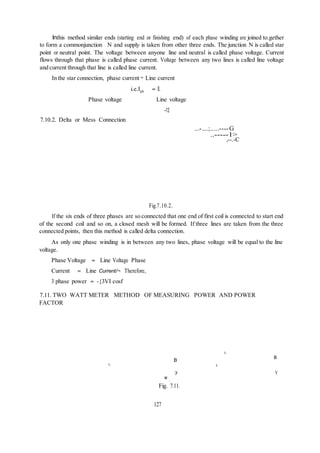
Inthis method similar ends (starting end or finishing end) of each phase winding are joined to.gether
to form a commonjunction N and supply is taken from other three ends. The junction N is called star
point or neutral point. The voltage between anyone line and neutral is called phase voltage. Current
flows through that phase is called phase current. Voltage between any two lines is called line voltage
and current through that line is called line current.
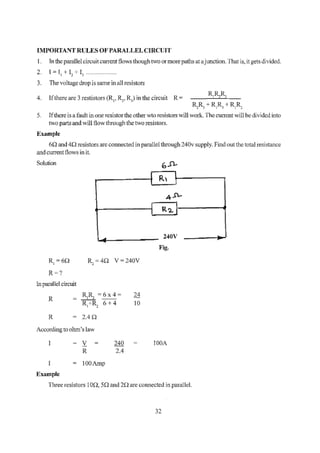
In the star connection, phase current = Line current
i.e.Iph = IL
Phase voltage Line voltage
--13
7.10.2. Delta or Mess Connection
...-....;.....----G
..-----1>
,--.-C
Fig.7.10.2.
If the six ends of three phases are so connected that one end of first coil is connected to start end
of the second coil and so on, a closed mesh will be formed. If three lines are taken from the three
connected points, then this method is called delta connection.
As only one phase winding is in between any two lines, phase voltage will be equal to the line
voltage.
Phase Voltage = Line Voltage Phase
Current = Line Current/~ Therefore,
3 phase power = -{3VI cosf
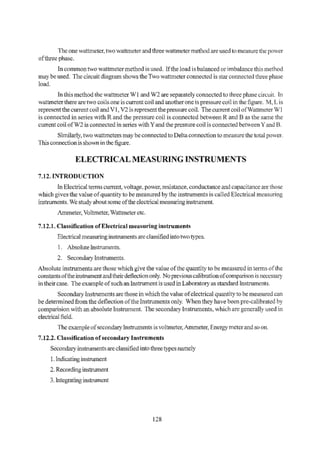
7.11. TWO WATT METER METHOD OF MEASURING POWER AND POWER
FACTOR
L
B
B
L L
:y Y
w
2
Fig. 7.11.
127
174
,I  / 
t
Mica insulation
Fig. 9.7 (a)
Fig. 9.8 (b)
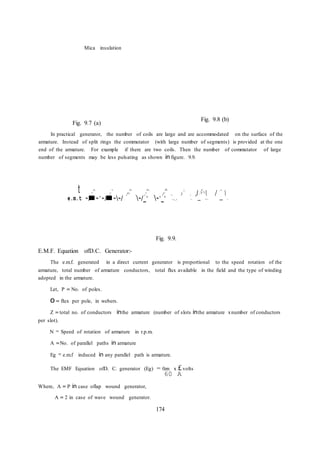
In practical generator, the number of coils are large and are accommodated on the surface of the
armature. Instead of split rings the commutator (with large number of segments) is provided at the one
end of the armature. For example if there are two coils. Then the number of commutator of large
number of segments may be less pulsating as shown in figure. 9.9.
I. ' 1' r-. r ;, I' . I '
" " 1 " I' I, ,'1''
, I , I  . (  . I ' I 
e.m.t ~/ ~'~/ ~~/ ~/_' ~'_' '~/_ I '~ ~~ ~
E.M.F. Equation ofD.C. Generator:-
Fig. 9.9.
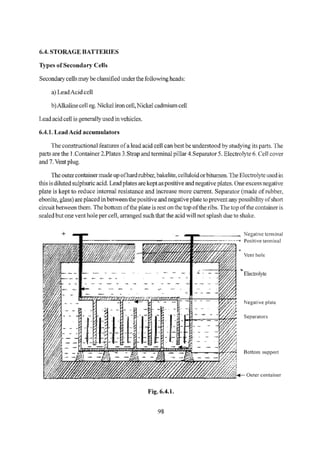
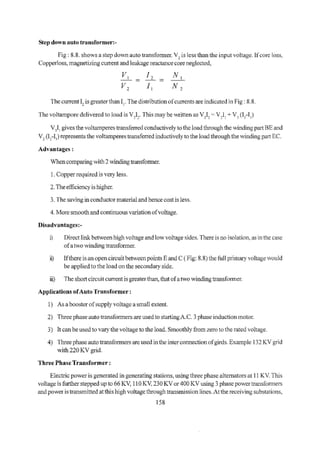
The e.m.f. generated in a direct current generator is proportional to the speed rotation of the
armature, total number of armature conductors, total flux available in the field and the type of winding
adopted in the armature.
Let, P = No. of poles.
o= flux per pole, in webers.
Z = total no. of conductors inthe armature (number of slots inthe armature xnumber of conductors
per slot).
N = Speed of rotation of armature in r.p.m.
A =No. of parallel paths in armature
Eg = e.m.f induced in any parallel path is armature.
The EMF Equation ofD. C. generator (Eg) = 0zn x £volts
60 A
Where, A = P in case oflap wound generator,
A = 2 in case of wave wound generator.
175
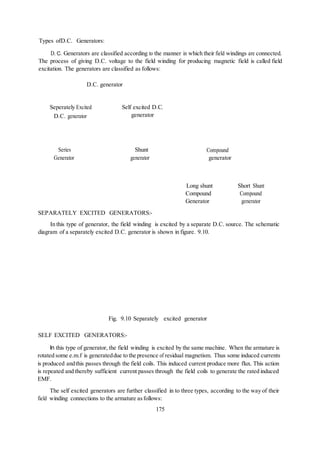
Types ofD.C. Generators:
D. C. Generators are classified according to the manner in which their field windings are connected.
The process of giving D.C. voltage to the field winding for producing magnetic field is called field
excitation. The generators are classified as follows:
D.C. generator
Seperately Excited
D.C. generator
Self excited D.C.
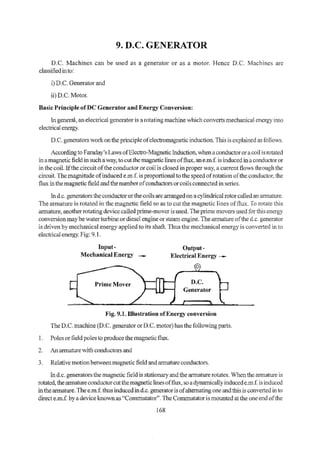
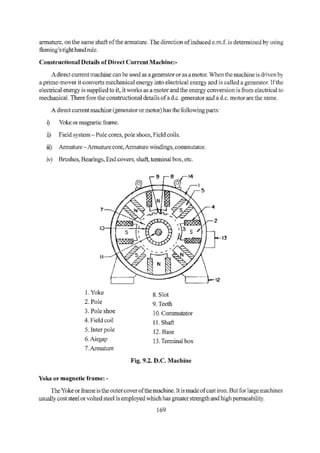
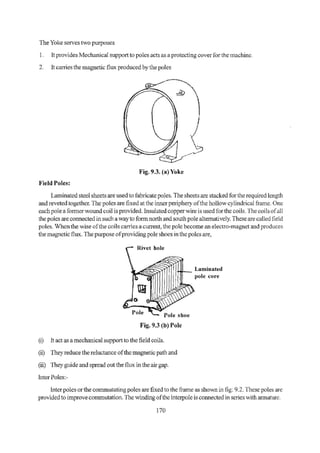
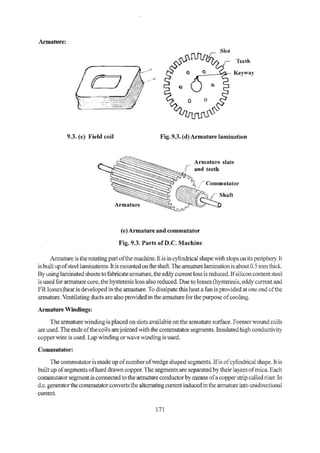
generator
Series
Generator
Shunt
generator
Compound
generator
SEPARATELY EXCITED GENERATORS:-
Long shunt
Compound
Generator
Short Shunt
Compound
generator
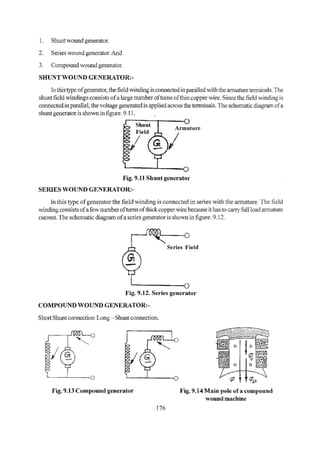
In this type of generator, the field winding is excited by a separate D.C. source. The schematic
diagram of a separately excited D.C. generator is shown in figure. 9.10.
Fig. 9.10 Separately excited generator
SELF EXCITED GENERATORS:-
In this type of generator, the field winding is excited by the same machine. When the armature is
rotated some e.m.f is generateddue to the presence of residual magnetism. Thus some induced currents
is produced andthis passes through the field coils. This induced current produce more flux. This action
is repeated and thereby sufficient current passes through the field coils to generate the rated induced
EMF.
The self excited generators are further classified in to three types, according to the way of their
field winding connections to the armature asfollows:
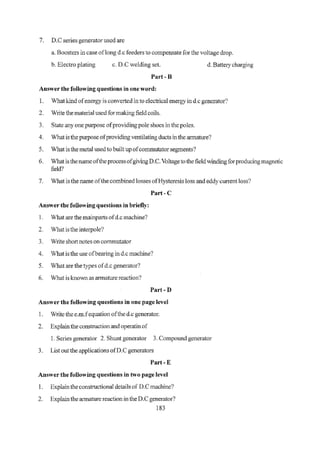
3. COMPOUND GENERATORS
a) Level Compound: Used where reated terminal voltage is required at full load conditions.
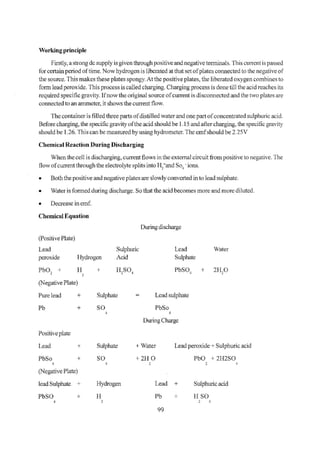
b) Over Compound: Used where power is to be transmitted to a long distance. In this case, the
voltage at load remains constant.
c) Differential compound: - Used for D.C. welding sets since they have an inherent character to limit
the short circuit current.
4. SEPERATELY EXCITED GENERATORS
These generators are used for (l) Supplying D.C. motors whose speed in to be varied widely (2)
where a wide range of D.C. voltage is required for testing purpose.
Questions
Part A
choose the correct answer
1. The e.m.finduced in the d.c generator is alternating one and this is converted in to direct e.m.fby
a. slipring b. corbon brush
c. commulator d. end rings.
2. The direction of induced e.m.fis determined by using
a. fleming's right hand rule
c. Kirchoff's law
b. fleming's left hand rule
d. Mutual induction.
3. The Yoke or frame of the d.c machine is made of
a. Copper b.Aluminium
c. Cast iron d.Bronze
4. Inter poles are provided to
a. Generate the e.m.f
c. economical basis
b. operate in over load.
d. improve commutation
5. Armature lamination is about
a. 1 Cm thick
c. 0.5 mm thick
b.1 mmthick
d. 0.5 inch thick
6. Compensating windings are provided in slots made on the
a.armature b. mainpole faces
c. Inter pole faces d. none of these
182
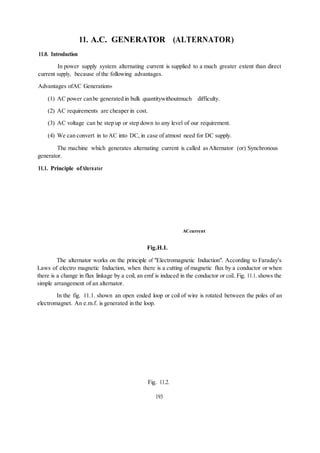
11. A.C. GENERATOR (ALTERNATOR)
11.0. Introduction
In power supply system alternating current is supplied to a much greater extent than direct
current supply, because of the following advantages.
Advantages ofAC Generation»
(1) AC power canbe generated in bulk quantitywithoutmuch difficulty.
(2) AC requirements are cheaper in cost.
(3) AC voltage can be step up or step down to any level of our requirement.
(4) We can convert in to AC into DC, in case of atmost need for DC supply.
The machine which generates alternating current is called asAlternator (or) Synchronous
generator.
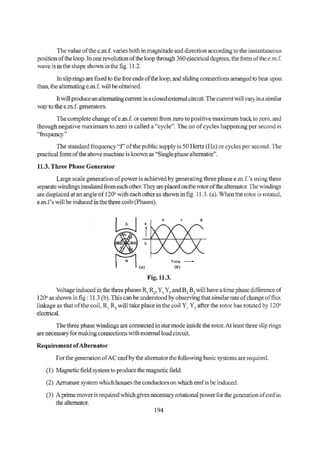
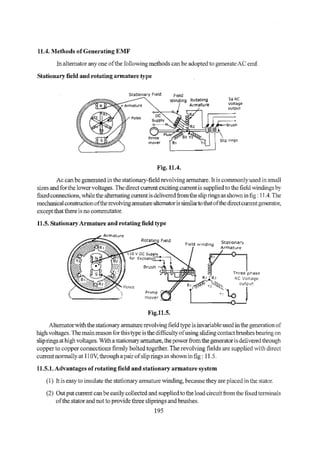
11.1. Principle ofAlternator
ACcurrent
Fig.H.I.
The alternator works on the principle of "Electromagnetic Induction". According to Faraday's
Laws of electro magnetic Induction, when there is a cutting of magnetic flux by a conductor or when
there is a change in flux linkage by a coil, an emf is induced in the conductor or coiL Fig. 11.1. shows the
simple arrangement of an alternator.
In the fig. 11.1. shown an open ended loop or coil of wire is rotated between the poles of an
electromagnet. An e.m.f. is generated in the loop.
Fig. 11.2.
193
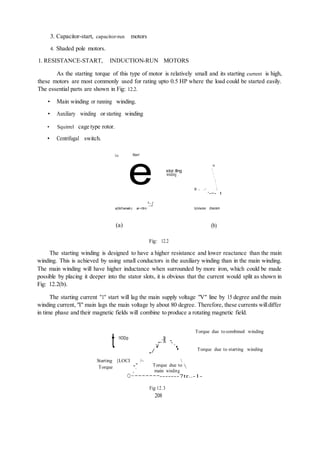
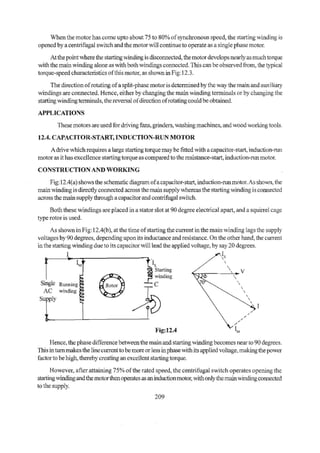
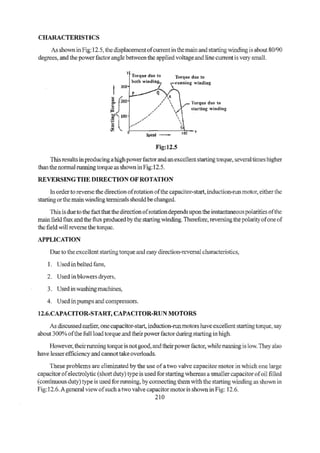
3. Capacitor-start, capacitor-run motors
4. Shaded pole motors.
1. RESISTANCE-START, INDUCTION-RUN MOTORS
As the starting torque of this type of motor is relatively small and its starting current is high,
these motors are most commonly used for rating upto 0.5 HP where the load could be started easily.
The essential parts are shown in Fig: 12.2.
• Main winding or running winding.
• Auxiliary winding or starting winding
• Squirrel cage type rotor.
• Centrifugal switch.
lit
e
Main'
Is
stor.tlng


winding 


I
":::J
IW -..- ... ~ 
'-~- I
a)Sd1amati c ai~rttrn b)Voctor dlaoram
(a) (b)
Fig: 12.2
The starting winding is designed to have a higher resistance and lower reactance than the main
winding. This is achieved by using small conductors in the auxiliary winding than in the main winding.
The main winding will have higher inductance when surrounded by more iron, which could be made
possible by placing it deeper into the stator slots, it is obvious that the current would split as shown in
Fig: 12.2(b).
The starting current "1" start will lag the main supply voltage "V" line by 15 degree and the main
winding current, "I" main lags the main voltage by about 80 degree. Therefore, these currents willdiffer
in time phase and their magnetic fields will combine to produce a rotating magnetic field.
t !lODp
,
.,,...·R -,..,
,/ . '
Torque due to combined winding
Torque due to starting winding
Starting {LOCI /~ 
Torque "." Torque due to 
, main winding
O~--------------7tr..-1-
Fig:12.3
208
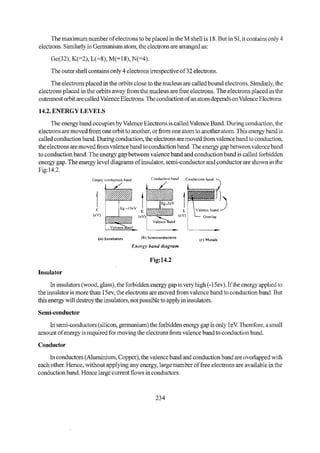
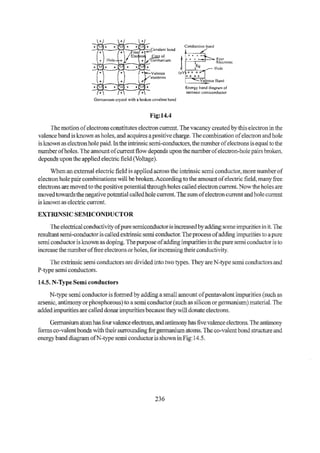
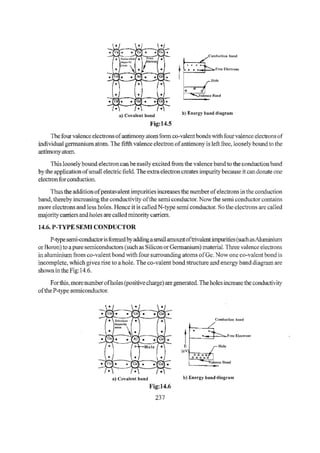
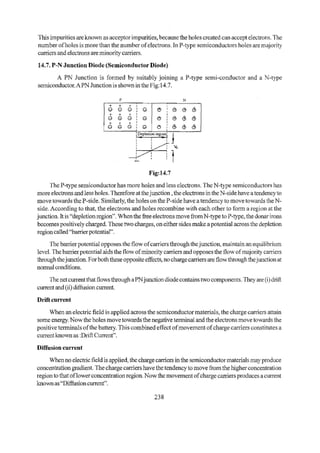
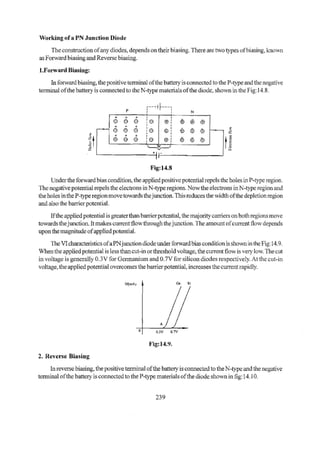
14.2.1. TYPES OF SEMI·CONDUCTORS:
In every elements, the atoms, are tied together by the bending action of valence electrons. Si
and Ge atoms contain only 4 valence electrons. These electrons have a tendency to fill the last
outermost orbit. Inthis way, the electrons placed in the last orbit of an atom share the electrons with their
neighbouring atoms. Similarly, all electrons are tied together with their neighbouring atoms. For this,
they form a band called co-valent bond.
The semi conductors are classified as follows:
Semi -conductors
Extrinsic
Intrinsic Semi conductors Semi conductors
N. Type Semi -conductors P.Type Semi -conductors,
. 14.3. INTRINSIC SEMI CONDUCTORS
Valence electron
Fig: 14.3
A pure semi conductor is called intrinsic semi conductor. The silicon and germani urn atoms
contains only four electrons in the outermost orbit. So they are called tetravalent atoms. The co-valent
band structure of germanium atom is shown in the Fig: 14.3.
At low temperature (0 K), the semiconductor behaves asa perfect consulator. Now no electrons
get away from the co-valent band. So the current flow (electron flow) is zero. At room temperature,
some ofthe valence electrons may acquire sufficient energy. The bonds may be broken, the electrons
become free and are shifted to the conduction band as shown in the Fig: 14.4.
235
m
-Vm
Vm
I
I
I
------~-- I I
Transf ormer secondary v oltage
I
I
o .f----+----+----!---...;..I ---II-
,4rr
I
lin --
Rectif ied current
Fig:14.13
14.14. Fullwave Rectifier
Full wave rectifier contains two diodes, so these diodes conduct full cycles of the input signal. The
circuit diagram of a fullwave rectifier is shown in the Fig: 14.14. This rectifier uses centre tap transformer
which produces two equalmagnitude of voltages at the opposite terminals. One end terminal voltage is
out of phase with the other end terminal voltage with respect to centre tap terminal.
Dl
o
I ~
V Sin e )
0 ---,
I RL
a
)
Fig.14.14
Operation
During the positive half cycles of the input voltage, terminal A is positive, and B is negative with
respectto terminal O. Now the diode D 1 conducts in forward bias and diode D2 conducts in reverse
bias. So the current 1.1 flows from the terminal A to the load through diode 01. No current flows
through the diode D2.
Similarly, during the negative half cycle of the input voltage, terminal B is positive and A is negative
with respect to terminal O. Now the diode D2 conducts in forward bias and the diode D.1. conducts
in reverse bias. So the current i2 flows from terminal B to the load through the diode D2. The currents
242
El.engg.theory notes 1 book

El.engg.theory notes 1 book

  • 5.
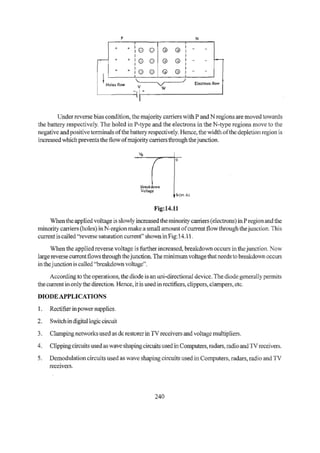
    v 13. MOTOR STARTERS ACmotor starters: DOL starter - star / delta starter - Auto transformer starter - slipring motor starter (resistance type starter). DC MOTOR STARTERS Three point starter- four point starter. 14. ELECTRONICS Semi conductors - electrons and holes - intrinsic semi conductor - extrinsic semi conductor- dopping of semi conductor - N. type semi conductor - P. type semi conductor - PN Junction diode - half wave rectifier- full wave rectifire - bridge recti fire - Zener diode -light emitting diode - Junction transistor - PNP, NPN transistors - SCR.
  • 7.
    va CONTENT Sl.No. Page No. 1.Introduction of Electrical Engineering 1 2. Materials and Tools Used in Electrical Engineering Department 10 3. Electrical Terms and DC Circuits 20 4. Electro Magnetism 71 5. Electrical Effect 84 6. Batteries 92 7. A.C. Circuits and Electrical Measuring Instruments 109 8. Transformer 151 9. DC Generator 168 10. DC Motor 184 11. AC Generator (Alternator) 193 12. AC Motors 206 13. Motor Starters 226 14. Electronics 233
  • 54.
    Solution 1000 watts x1 Hour 1Unit Energyconsurned = 500 x 6 3000 Watt-hrs. 3000 =3 Unit 1000 3 Unit of energy is spent by using 500 watts lamp for 6 hours. Example 3 In a 100 V circuit the current is 4 A Calculate ( 1) Resistance Solution (2) Power (3) Energy for 30 min Current d) Voltage(V) Time(t) 4 Ampere 100V = 30 Min. According to Ohm's Law R V I 1) Resistance 2) Power (P) = 100 4 VI 25 n = 100 x 4 watts 3) Energy (P) t 400W 30 min. = 0.5 hIS Energy 400 x 0.5 1000 0.2 Unit watt-hrs Example 4 In a factory the following appliance are inoperation 1. 2 HP Motor 3 hours daily. 2. 100 W 181np 12hour daily. 47
  • 67.
    Closed loop CBEDC 412+ 20(11 + I) - 110 = 0 412 + 2011 + 2012 = 110 2012 + 2412 = 110 30 100V 1iOV 100V 110V F E D Fig. [~~~[J ~J = [:~~] 23 20 ,1 = 20 24 = (23X24) - (20X20) = 152 10020 ,11 = 110 24 = (1OOX24) - (20Xl1 0) = 200 23 100 ,12 = 20 110 =(23XlOO)-(100X20) = 530 II = ~ = 200 = 1.315A Ll 152 1 = ,12 = 530 = 3.486 A 2 ,1 132 60
  • 98.
    2) What isbuzzar? 3) Write the parts oflron Box? 4) What are the types of heating appliances? 5) What is incandecent lamp? Part- D :rv. Answer the following questions in one page level 1) Draw the neat sketch of incandecent lamp? 2) Explain magnetic circuit breaker? 3) Explain Electric heaterwith neatdiagram? Part-E V. Answer the following questions in two page level 1) Explain the working principle of tube lamp? 2) Explain the working principle of Electric Bell with neatdiagram 91
  • 134.
    Inthis method similarends (starting end or finishing end) of each phase winding are joined to.gether to form a commonjunction N and supply is taken from other three ends. The junction N is called star point or neutral point. The voltage between anyone line and neutral is called phase voltage. Current flows through that phase is called phase current. Voltage between any two lines is called line voltage and current through that line is called line current. In the star connection, phase current = Line current i.e.Iph = IL Phase voltage Line voltage --13 7.10.2. Delta or Mess Connection ...-....;.....----G ..-----1> ,--.-C Fig.7.10.2. If the six ends of three phases are so connected that one end of first coil is connected to start end of the second coil and so on, a closed mesh will be formed. If three lines are taken from the three connected points, then this method is called delta connection. As only one phase winding is in between any two lines, phase voltage will be equal to the line voltage. Phase Voltage = Line Voltage Phase Current = Line Current/~ Therefore, 3 phase power = -{3VI cosf 7.11. TWO WATT METER METHOD OF MEASURING POWER AND POWER FACTOR L B B L L :y Y w 2 Fig. 7.11. 127
  • 181.
    174 ,I / t Mica insulation Fig. 9.7 (a) Fig. 9.8 (b) In practical generator, the number of coils are large and are accommodated on the surface of the armature. Instead of split rings the commutator (with large number of segments) is provided at the one end of the armature. For example if there are two coils. Then the number of commutator of large number of segments may be less pulsating as shown in figure. 9.9. I. ' 1' r-. r ;, I' . I ' " " 1 " I' I, ,'1'' , I , I . ( . I ' I e.m.t ~/ ~'~/ ~~/ ~/_' ~'_' '~/_ I '~ ~~ ~ E.M.F. Equation ofD.C. Generator:- Fig. 9.9. The e.m.f. generated in a direct current generator is proportional to the speed rotation of the armature, total number of armature conductors, total flux available in the field and the type of winding adopted in the armature. Let, P = No. of poles. o= flux per pole, in webers. Z = total no. of conductors inthe armature (number of slots inthe armature xnumber of conductors per slot). N = Speed of rotation of armature in r.p.m. A =No. of parallel paths in armature Eg = e.m.f induced in any parallel path is armature. The EMF Equation ofD. C. generator (Eg) = 0zn x £volts 60 A Where, A = P in case oflap wound generator, A = 2 in case of wave wound generator.
  • 182.
    175 Types ofD.C. Generators: D.C. Generators are classified according to the manner in which their field windings are connected. The process of giving D.C. voltage to the field winding for producing magnetic field is called field excitation. The generators are classified as follows: D.C. generator Seperately Excited D.C. generator Self excited D.C. generator Series Generator Shunt generator Compound generator SEPARATELY EXCITED GENERATORS:- Long shunt Compound Generator Short Shunt Compound generator In this type of generator, the field winding is excited by a separate D.C. source. The schematic diagram of a separately excited D.C. generator is shown in figure. 9.10. Fig. 9.10 Separately excited generator SELF EXCITED GENERATORS:- In this type of generator, the field winding is excited by the same machine. When the armature is rotated some e.m.f is generateddue to the presence of residual magnetism. Thus some induced currents is produced andthis passes through the field coils. This induced current produce more flux. This action is repeated and thereby sufficient current passes through the field coils to generate the rated induced EMF. The self excited generators are further classified in to three types, according to the way of their field winding connections to the armature asfollows:
  • 189.
    3. COMPOUND GENERATORS a)Level Compound: Used where reated terminal voltage is required at full load conditions. b) Over Compound: Used where power is to be transmitted to a long distance. In this case, the voltage at load remains constant. c) Differential compound: - Used for D.C. welding sets since they have an inherent character to limit the short circuit current. 4. SEPERATELY EXCITED GENERATORS These generators are used for (l) Supplying D.C. motors whose speed in to be varied widely (2) where a wide range of D.C. voltage is required for testing purpose. Questions Part A choose the correct answer 1. The e.m.finduced in the d.c generator is alternating one and this is converted in to direct e.m.fby a. slipring b. corbon brush c. commulator d. end rings. 2. The direction of induced e.m.fis determined by using a. fleming's right hand rule c. Kirchoff's law b. fleming's left hand rule d. Mutual induction. 3. The Yoke or frame of the d.c machine is made of a. Copper b.Aluminium c. Cast iron d.Bronze 4. Inter poles are provided to a. Generate the e.m.f c. economical basis b. operate in over load. d. improve commutation 5. Armature lamination is about a. 1 Cm thick c. 0.5 mm thick b.1 mmthick d. 0.5 inch thick 6. Compensating windings are provided in slots made on the a.armature b. mainpole faces c. Inter pole faces d. none of these 182
  • 200.
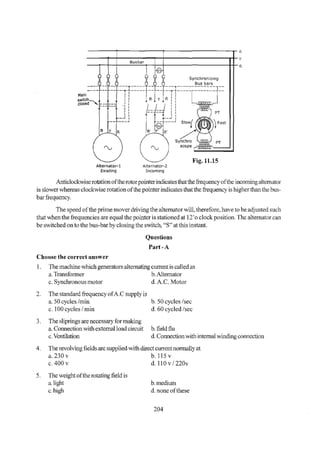
    11. A.C. GENERATOR(ALTERNATOR) 11.0. Introduction In power supply system alternating current is supplied to a much greater extent than direct current supply, because of the following advantages. Advantages ofAC Generation» (1) AC power canbe generated in bulk quantitywithoutmuch difficulty. (2) AC requirements are cheaper in cost. (3) AC voltage can be step up or step down to any level of our requirement. (4) We can convert in to AC into DC, in case of atmost need for DC supply. The machine which generates alternating current is called asAlternator (or) Synchronous generator. 11.1. Principle ofAlternator ACcurrent Fig.H.I. The alternator works on the principle of "Electromagnetic Induction". According to Faraday's Laws of electro magnetic Induction, when there is a cutting of magnetic flux by a conductor or when there is a change in flux linkage by a coil, an emf is induced in the conductor or coiL Fig. 11.1. shows the simple arrangement of an alternator. In the fig. 11.1. shown an open ended loop or coil of wire is rotated between the poles of an electromagnet. An e.m.f. is generated in the loop. Fig. 11.2. 193
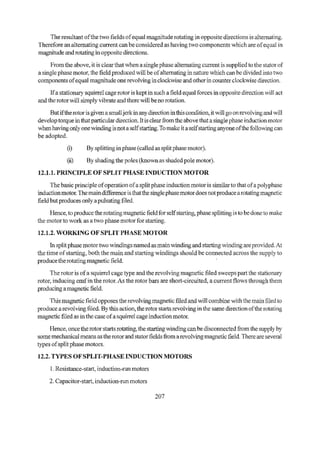
  • 215.
    3. Capacitor-start, capacitor-runmotors 4. Shaded pole motors. 1. RESISTANCE-START, INDUCTION-RUN MOTORS As the starting torque of this type of motor is relatively small and its starting current is high, these motors are most commonly used for rating upto 0.5 HP where the load could be started easily. The essential parts are shown in Fig: 12.2. • Main winding or running winding. • Auxiliary winding or starting winding • Squirrel cage type rotor. • Centrifugal switch. lit e Main' Is stor.tlng winding I ":::J IW -..- ... ~ '-~- I a)Sd1amati c ai~rttrn b)Voctor dlaoram (a) (b) Fig: 12.2 The starting winding is designed to have a higher resistance and lower reactance than the main winding. This is achieved by using small conductors in the auxiliary winding than in the main winding. The main winding will have higher inductance when surrounded by more iron, which could be made possible by placing it deeper into the stator slots, it is obvious that the current would split as shown in Fig: 12.2(b). The starting current "1" start will lag the main supply voltage "V" line by 15 degree and the main winding current, "I" main lags the main voltage by about 80 degree. Therefore, these currents willdiffer in time phase and their magnetic fields will combine to produce a rotating magnetic field. t !lODp , .,,...·R -,.., ,/ . ' Torque due to combined winding Torque due to starting winding Starting {LOCI /~ Torque "." Torque due to , main winding O~--------------7tr..-1- Fig:12.3 208
  • 242.
    14.2.1. TYPES OFSEMI·CONDUCTORS: In every elements, the atoms, are tied together by the bending action of valence electrons. Si and Ge atoms contain only 4 valence electrons. These electrons have a tendency to fill the last outermost orbit. Inthis way, the electrons placed in the last orbit of an atom share the electrons with their neighbouring atoms. Similarly, all electrons are tied together with their neighbouring atoms. For this, they form a band called co-valent bond. The semi conductors are classified as follows: Semi -conductors Extrinsic Intrinsic Semi conductors Semi conductors N. Type Semi -conductors P.Type Semi -conductors, . 14.3. INTRINSIC SEMI CONDUCTORS Valence electron Fig: 14.3 A pure semi conductor is called intrinsic semi conductor. The silicon and germani urn atoms contains only four electrons in the outermost orbit. So they are called tetravalent atoms. The co-valent band structure of germanium atom is shown in the Fig: 14.3. At low temperature (0 K), the semiconductor behaves asa perfect consulator. Now no electrons get away from the co-valent band. So the current flow (electron flow) is zero. At room temperature, some ofthe valence electrons may acquire sufficient energy. The bonds may be broken, the electrons become free and are shifted to the conduction band as shown in the Fig: 14.4. 235
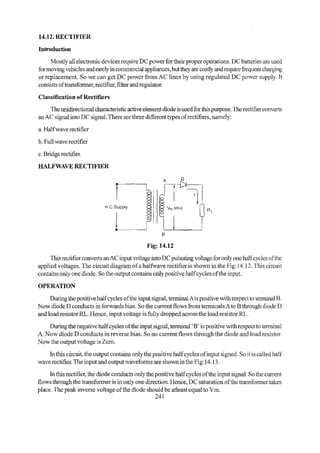
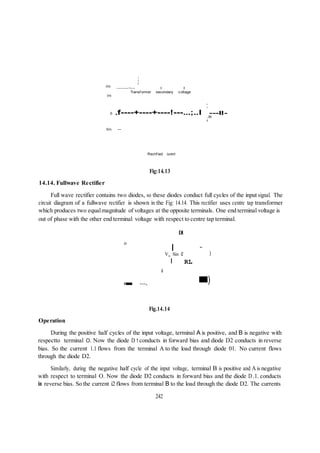
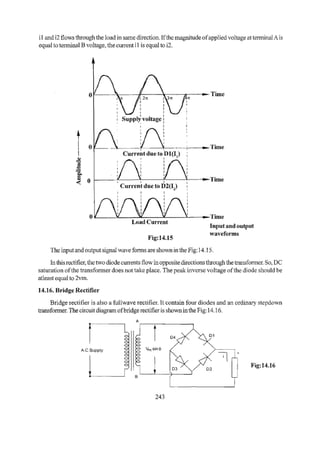
  • 249.
    m -Vm Vm I I I ------~-- I I Transformer secondary v oltage I I o .f----+----+----!---...;..I ---II- ,4rr I lin -- Rectif ied current Fig:14.13 14.14. Fullwave Rectifier Full wave rectifier contains two diodes, so these diodes conduct full cycles of the input signal. The circuit diagram of a fullwave rectifier is shown in the Fig: 14.14. This rectifier uses centre tap transformer which produces two equalmagnitude of voltages at the opposite terminals. One end terminal voltage is out of phase with the other end terminal voltage with respect to centre tap terminal. Dl o I ~ V Sin e ) 0 ---, I RL a ) Fig.14.14 Operation During the positive half cycles of the input voltage, terminal A is positive, and B is negative with respectto terminal O. Now the diode D 1 conducts in forward bias and diode D2 conducts in reverse bias. So the current 1.1 flows from the terminal A to the load through diode 01. No current flows through the diode D2. Similarly, during the negative half cycle of the input voltage, terminal B is positive and A is negative with respect to terminal O. Now the diode D2 conducts in forward bias and the diode D.1. conducts in reverse bias. So the current i2 flows from terminal B to the load through the diode D2. The currents 242