“Experience design is the design of anything, independent of medium, or across
media, with human experience as an explicit outcome, and human engagement
as an explicit goal.” – Jesse James Garrett
Elements of User Experience
by Jesse James Garrett
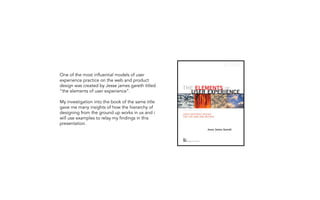
One of the most influential models of user
experience practice on the web and product
design was created by Jesse james gareth titled
“the elements of user experience”.
My investigation into the book of the same title
gave me many insights of how the hierarchy of
designing from the ground up works in ux and i
will use examples to relay my findings in this
presentation.
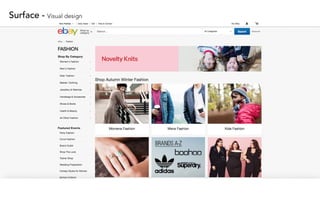
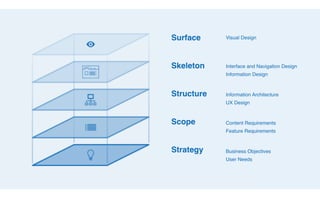
Surface - Visual design
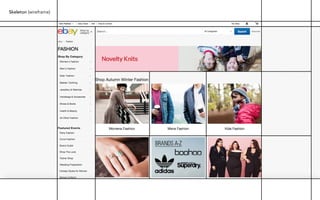
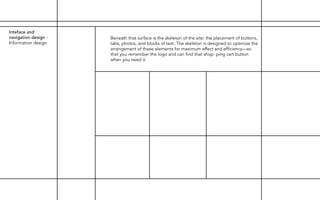
Skeleton (wireframe)
Inteface and
navigation design -
Information design
Beneath that surface is the skeleton of the site: the placement of buttons,
tabs, photos, and blocks of text. The skeleton is designed to optimize the
arrangement of these elements for maximum effect and efficiency—so
that you remember the logo and can find that shop- ping cart button
when you need it.
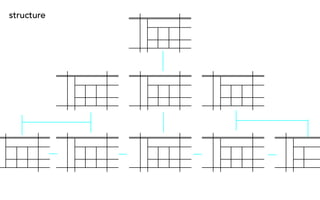
structure
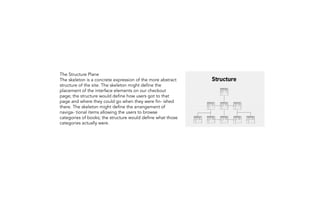
The Structure Plane
The skeleton is a concrete expression of the more abstract
structure of the site. The skeleton might define the
placement of the interface elements on our checkout
page; the structure would define how users got to that
page and where they could go when they were fin- ished
there. The skeleton might define the arrangement of
naviga- tional items allowing the users to browse
categories of books; the structure would define what those
categories actually were.
Scope
Scope plane
The features and the overall vision of the
product is defined, the structure plane helps
utilise the fundamentals (backbone) of the
product whilst the scope aims to show whats
included and how the product will be defined.
The scope can also help with setting limits,
collecting data and analysing it.
Strategy
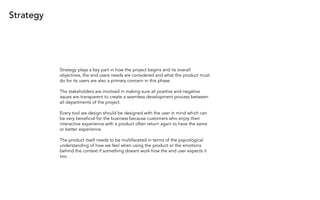
Strategy plays a key part in how the project begins and its overall
objectives, the end users needs are considered and what the product must
do for its users are also a primary concern in this phase.
The stakeholders are involved in making sure all positive and negative
issues are transparent to create a seamless development process between
all departments of the project.
Every tool we design should be designed with the user in mind which can
be very beneficial for the business because customers who enjoy their
interactive experience with a product often return again to have the same
or better experience.
The product itself needs to be multifaceted in terms of the psycological
understanding of how we feel when using the product or the emotions
behind the context if something doesnt work how the end user expects it
too.
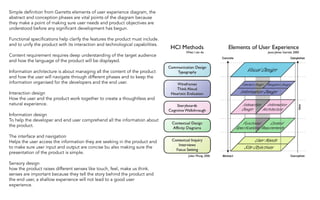
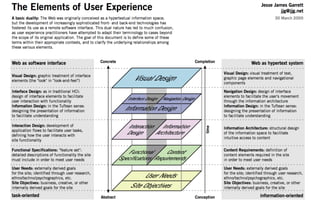
Simple definition from Garretts elements of user experience diagram, the
abstract and conception phases are vital points of the diagram because
they make a point of making sure user needs and product objectives are
understood before any significant development has begun.
Functional specifications help clarify the features the product must include.
and to unify the product with its interaction and technological capabilities.
Content requirement requires deep understanding of the target audience
and how the language of the product will be displayed.
Information architecture is about managing all the content of the product
and how the user will navigate through different phases and to keep the
information organised for the developers and the end user.
Interaction design
How the user and the product work together to create a thoughtless and
natural experience.
Information design
To help the developer and end user comprehend all the information about
the product.
The interface and navigation
Helps the user access the information they are seeking in the product and
to make sure user input and output are concise bu also making sure the
presentation of the product is simple.
Sensory design
how the product raises different senses like touch, feel, make us think.
senses are important because they tell the story behind the product and
the end user, a shallow experience will not lead to a good user
experience.
References
Elements of User Experience diagram Site exit disclaimer by Jesse James
Garrett
The Elements of User Experience: User-Centered Design for the Web and
Beyond (2nd Edition) by Jesse James Garrett

Elements of user experience presentation

  • 1.
    “Experience design isthe design of anything, independent of medium, or across media, with human experience as an explicit outcome, and human engagement as an explicit goal.” – Jesse James Garrett Elements of User Experience by Jesse James Garrett
  • 2.
    One of themost influential models of user experience practice on the web and product design was created by Jesse james gareth titled “the elements of user experience”. My investigation into the book of the same title gave me many insights of how the hierarchy of designing from the ground up works in ux and i will use examples to relay my findings in this presentation.
  • 3.
  • 4.
  • 5.
    Inteface and navigation design- Information design Beneath that surface is the skeleton of the site: the placement of buttons, tabs, photos, and blocks of text. The skeleton is designed to optimize the arrangement of these elements for maximum effect and efficiency—so that you remember the logo and can find that shop- ping cart button when you need it.
  • 6.
  • 7.
    The Structure Plane Theskeleton is a concrete expression of the more abstract structure of the site. The skeleton might define the placement of the interface elements on our checkout page; the structure would define how users got to that page and where they could go when they were fin- ished there. The skeleton might define the arrangement of naviga- tional items allowing the users to browse categories of books; the structure would define what those categories actually were.
  • 8.
    Scope Scope plane The featuresand the overall vision of the product is defined, the structure plane helps utilise the fundamentals (backbone) of the product whilst the scope aims to show whats included and how the product will be defined. The scope can also help with setting limits, collecting data and analysing it.
  • 9.
    Strategy Strategy plays akey part in how the project begins and its overall objectives, the end users needs are considered and what the product must do for its users are also a primary concern in this phase. The stakeholders are involved in making sure all positive and negative issues are transparent to create a seamless development process between all departments of the project. Every tool we design should be designed with the user in mind which can be very beneficial for the business because customers who enjoy their interactive experience with a product often return again to have the same or better experience. The product itself needs to be multifaceted in terms of the psycological understanding of how we feel when using the product or the emotions behind the context if something doesnt work how the end user expects it too.
  • 11.
    Simple definition fromGarretts elements of user experience diagram, the abstract and conception phases are vital points of the diagram because they make a point of making sure user needs and product objectives are understood before any significant development has begun. Functional specifications help clarify the features the product must include. and to unify the product with its interaction and technological capabilities. Content requirement requires deep understanding of the target audience and how the language of the product will be displayed. Information architecture is about managing all the content of the product and how the user will navigate through different phases and to keep the information organised for the developers and the end user. Interaction design How the user and the product work together to create a thoughtless and natural experience. Information design To help the developer and end user comprehend all the information about the product. The interface and navigation Helps the user access the information they are seeking in the product and to make sure user input and output are concise bu also making sure the presentation of the product is simple. Sensory design how the product raises different senses like touch, feel, make us think. senses are important because they tell the story behind the product and the end user, a shallow experience will not lead to a good user experience.
  • 13.
    References Elements of UserExperience diagram Site exit disclaimer by Jesse James Garrett The Elements of User Experience: User-Centered Design for the Web and Beyond (2nd Edition) by Jesse James Garrett