Employment Termination


    Reported by:

    Maria Cristina d.L Payofelin


1
termination
     It is the separation of the employee
     from the organization. This process
     is used by firms when they close
     facilities, reduce their workforce,
     or respond to continued poor
     performance

2
When do you need to fire
         an employee?

     If you have taken the necessary
     steps to help the employee
     improve his work performance -
     and they are not working - it may
     be time.
3
2 Major types of Termination
     Termination for cause
              - ethical violations
              - performance-related issues
              - poor personality fit or attitude fit
     with the company
              - attendance issues
              - violating company policies
              - lack of work

4
 Layoffs
            - attrition
            - early retirement programs
            - job sharing
            - group dismissal


5
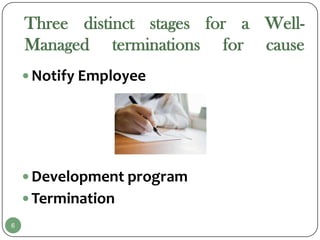
Three distinct stages for a Well-
    Managed terminations for cause
     Notify Employee


     Development program
     Termination
6
3 Critical Factors to consider before any
                    employee
     Factor #1: Fight Or Flight… How The Problem
     Employee Will Take Advantage Of You

     Factor #2: Your Problem Employee Will Destroy
     Your Morale and Results… If You Don’t Do
     Something About It Today

     Factor #3: The Longer You Wait… The Harder It
     Is To Terminate The Problem Employee
7
The Do's and Don'ts of Terminating
     Employees to Keep You Out of Hot
                  Water
    What to do?
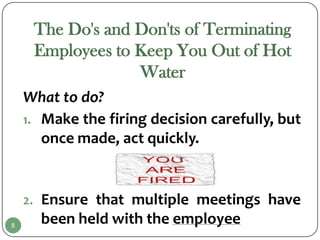
    1. Make the firing decision carefully, but
       once made, act quickly.


    2. Ensure that multiple meetings have
8
      been held with the employee
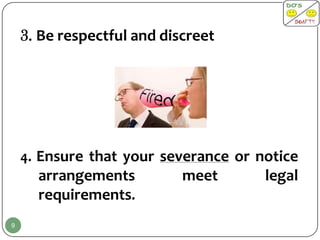
3. Be respectful and discreet


    4. Ensure that your severance or notice
      arrangements          meet      legal
      requirements.
9
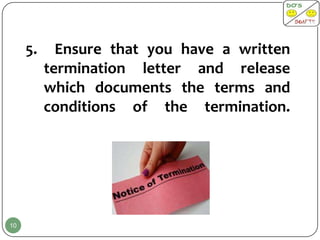
5.     Ensure that you have a written
          termination letter and release
          which documents the terms and
          conditions of the termination.


10
What not to Do?

     1. Don't get personal.
     2. Don't make a decision to terminate for
        cause without conducting a proper
        investigation.


     3. Don't hold the termination meeting in a
11
       public place.
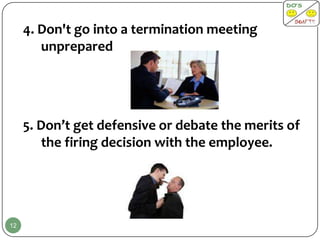
4. Don't go into a termination meeting
        unprepared


     5. Don’t get defensive or debate the merits of
         the firing decision with the employee.


12

Employment termination

  • 1.
    Employment Termination Reported by: Maria Cristina d.L Payofelin 1
  • 2.
    termination  It is the separation of the employee from the organization. This process is used by firms when they close facilities, reduce their workforce, or respond to continued poor performance 2
  • 3.
    When do youneed to fire an employee?  If you have taken the necessary steps to help the employee improve his work performance - and they are not working - it may be time. 3
  • 4.
    2 Major typesof Termination  Termination for cause - ethical violations - performance-related issues - poor personality fit or attitude fit with the company - attendance issues - violating company policies - lack of work 4
  • 5.
     Layoffs - attrition - early retirement programs - job sharing - group dismissal 5
  • 6.
    Three distinct stagesfor a Well- Managed terminations for cause  Notify Employee  Development program  Termination 6
  • 7.
    3 Critical Factorsto consider before any employee  Factor #1: Fight Or Flight… How The Problem Employee Will Take Advantage Of You  Factor #2: Your Problem Employee Will Destroy Your Morale and Results… If You Don’t Do Something About It Today  Factor #3: The Longer You Wait… The Harder It Is To Terminate The Problem Employee 7
  • 8.
    The Do's andDon'ts of Terminating Employees to Keep You Out of Hot Water What to do? 1. Make the firing decision carefully, but once made, act quickly. 2. Ensure that multiple meetings have 8 been held with the employee
  • 9.
    3. Be respectfuland discreet 4. Ensure that your severance or notice arrangements meet legal requirements. 9
  • 10.
    5. Ensure that you have a written termination letter and release which documents the terms and conditions of the termination. 10
  • 11.
    What not toDo? 1. Don't get personal. 2. Don't make a decision to terminate for cause without conducting a proper investigation. 3. Don't hold the termination meeting in a 11 public place.
  • 12.
    4. Don't gointo a termination meeting unprepared 5. Don’t get defensive or debate the merits of the firing decision with the employee. 12