BRAND ELEMENT
Learning Objectives
◻ Identify the different types of brand elements
◻ List the general criteria for choosing brand
elements
◻ Describe key tactics in choosing different
brand elements
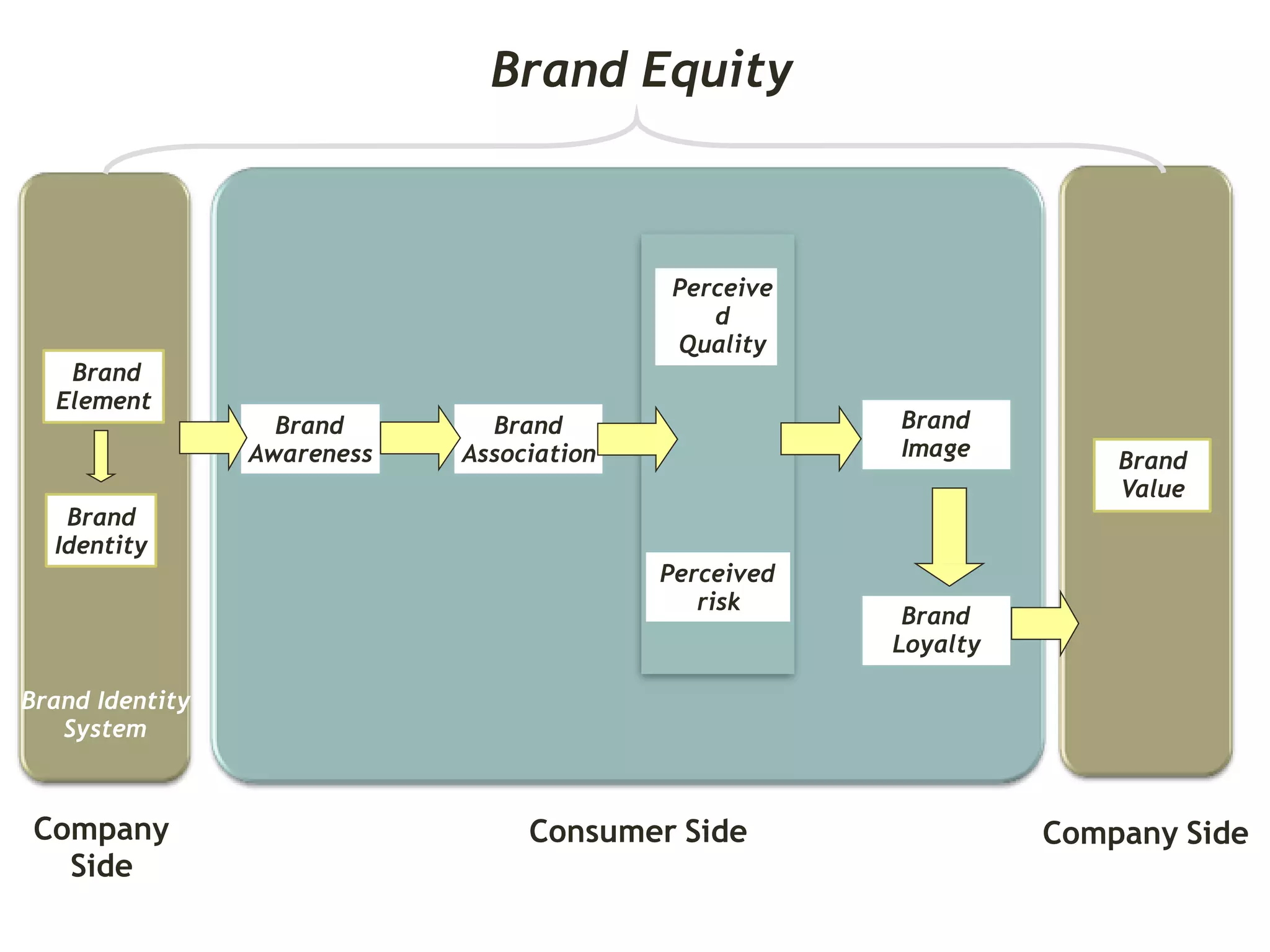
Brand
Identity
Brand
Awareness
Brand
Association
Brand
Loyalty
Brand
Element
Perceive
d
Quality
Perceived
risk
Brand
Image
Brand
Value
Company
Side
Company Side
Consumer Side
Brand Identity
System
Brand Equity
Logo
Symbol
Character
Slogan
Brand element
Name
are trademark-able devices that serve to identify an
differentiate the brand from those of competition
Packaging
Jingle
URL
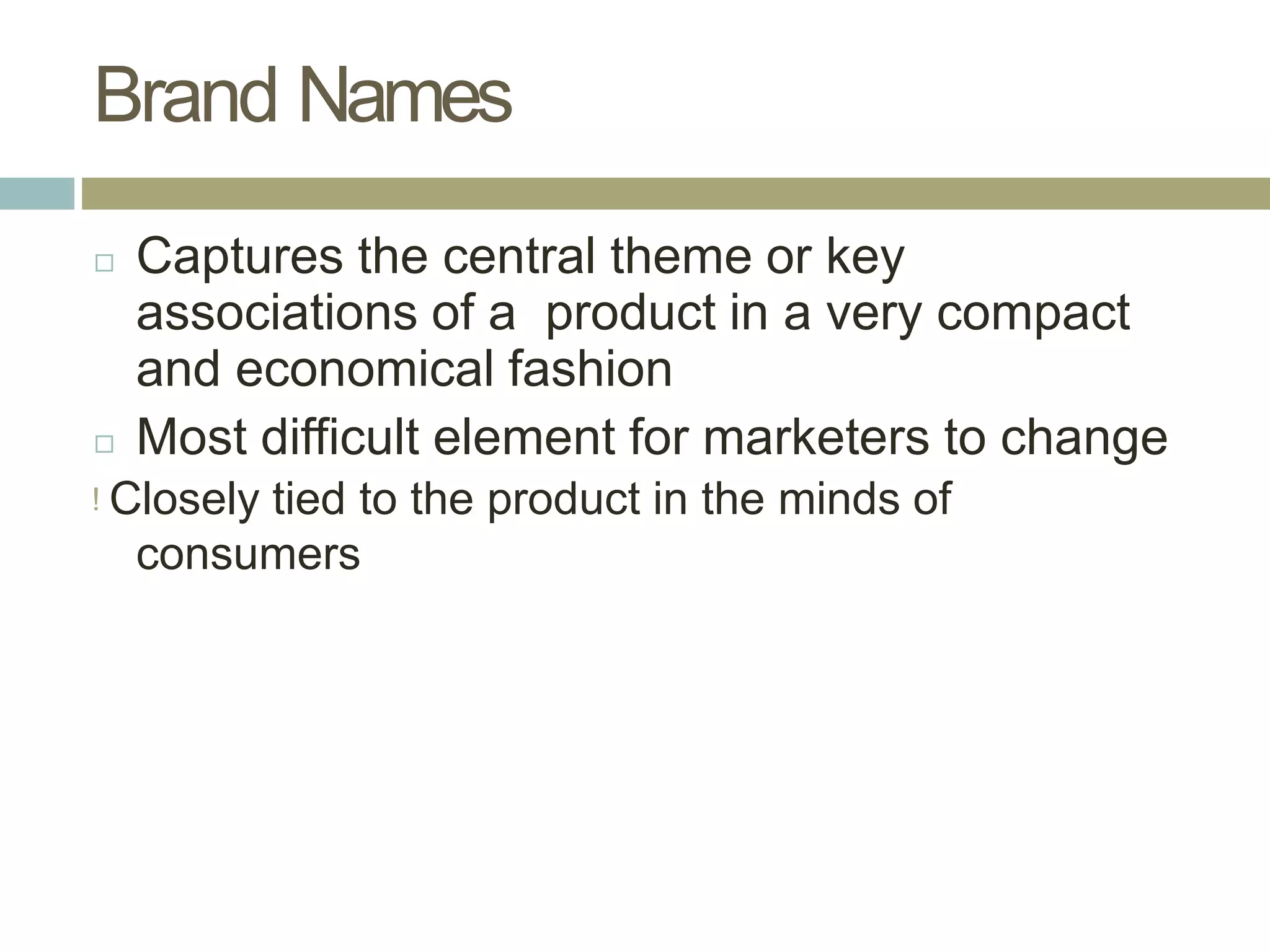
Brand Names
◻ Captures the central theme or key
associations of a product in a very compact
and economical fashion
◻ Most difficult element for marketers to change
! Closely tied to the product in the minds of
consumers
Short & Simple
Easy to Spell & Read
Easy to Recognize & Remember
Easy to Pronounce
Can Pronounce in Only One Way Can Pronounce in All
Languages
Suggests Product Benefits
Meets Packaging/Labeling Needs No Undesirable
Imagery
Always Timely
Adapts to Any Advertising Medium Legally Available for
Use
Thinking about a new brand
Difference between Logos & Symbols
Logo is the short version of
logotype. It is the name of a
business designed specifically for
that company. IBM, written in blue
stripes, is a logo.
A symbol is just that. A symbol (but
not the name of the company)
that represents that company. The
apple with the piece out of it is a
symbol of Apple computers.
• A special type of brand
symbol—one that takes
on human or real-life
characteristics
• Some are animated
• Others are live-action
figures like Ronald
McDonald.
Characters
• Slogans are short phrases that
communicate descriptive or persuasive
information about the brand.
Function as useful “hooks” or “handles”
to help consumers grasp the meaning
of a brand
•
• Slogans are powerful branding devices
because, like brand names, they are
an extremely efficient, shorthand
means to build brand equity
Slogans
• From the perspective of both
the firm and consumers,
packaging must achieve a
number of objectives:
– Identify the brand
– Convey descriptive and
persuasive information
– Facilitate product
transportation and
protection
– Assist at-home storage
– Aid product consumption
Packaging
Our sense of
taste and touch
is very
suggestible, and
what we see on a
package can lead
us to taste what
we think we are
going to taste.
Packaging can influence taste
Jingles
◻ Musical messages written around the brand
◻ Have catchy hooks and choruses that
become permanently registered in the minds
of listeners
◻ Enhance brand awareness by repeating the
brand name in clever and amusing ways
Putting brand elements all together
• The entire set of brand elements makes up the brand
identity, the contribution of all brand elements to
awareness and image.
• The cohesiveness of the brand identity depends on the
extent to which the brand elements are consistent.
Article: “Strategi Berani Propan …”
Apa yang melandasi Propan mengubah
logo dan simbolnya? Apa makna
simbol dan logo
baru ini?
brand element choice criteria
◻ Memorable
! Easily Recognized
! Easily Recalled
◻ Meaningful
! Credible & Suggestive
! Rich Visual & Verbal
Imagery
◻ Appealing
! Fun & Interesting
! Aesthetics (estetika)
▪ Adaptable
▪ Flexible &
▪ Updateable
▪ Protectable
▪ Legally
▪ Competitively
▪ Transferrable
▪ Within & Across Product
Categories
▪ Across Geographical
Boundaries & Cultures
Bra. nd elements should
inherently be memorable and
attention- getting, and
therefore facilitate recall or
recognition.
Example
A brand of propane gas cylinders
named Blue Rhino featuring a
powder-blue animal mascot
with a distinctive yellow flame
is likely to stick in the minds
of consumers.
Memorability
Br.and elements may take on
all kinds of meaning, with
either descriptive or
persuasive content.
Two particularly important
criteria
▪General information about the
nature of the product category
▪Specific information about
particular attributes and
benefits of the brand
Meaningful
• .Do customers find the
brand element
aesthetically appealing?
• Descriptive and persuasive
elements reduce the
burden on marketing
communications to build
awareness.
Appealing
• The more adaptable and
fle xi b le t h e b ra n d
element, the easier it is
to update it to changes
in consumer values and
opinions.
• Logos and characters
can be given a new look
or a new design to make
them appear mo r e
modern and relevant.
Adaptability
1930
1907 1914
1898
Marketers should:
•Choose brand elements that can be
legally protected internationally.
•Formally register chosen brand
elements with the appropriate legal
bodies.
•Vigorously defend trademarks from
competitor
Watch out with names that are close
to category names!
Protectability
• How useful is the
brand element for line
or category
extensions?
• To what extent does
the brand element add
to brand equity across
geographic boundaries
and market segments?
Transferability
Figure4.1- Criteria for ChoosingBrand Elements
ToSumup...
◻ Entire set of brand elements makes up the
brand identity
◻ Cohesiveness of the brand identity depends
on the extent to which the brand elements are
consistent
◻ Each brand element plays a different role in
building brand equity, so marketers should
“mix and match” to maximize brand equity
Elements of Branding.ppt

Elements of Branding.ppt

  • 1.
  • 2.
    Learning Objectives ◻ Identifythe different types of brand elements ◻ List the general criteria for choosing brand elements ◻ Describe key tactics in choosing different brand elements
  • 3.
  • 4.
    Logo Symbol Character Slogan Brand element Name are trademark-abledevices that serve to identify an differentiate the brand from those of competition Packaging Jingle URL
  • 5.
    Brand Names ◻ Capturesthe central theme or key associations of a product in a very compact and economical fashion ◻ Most difficult element for marketers to change ! Closely tied to the product in the minds of consumers
  • 6.
    Short & Simple Easyto Spell & Read Easy to Recognize & Remember Easy to Pronounce Can Pronounce in Only One Way Can Pronounce in All Languages Suggests Product Benefits Meets Packaging/Labeling Needs No Undesirable Imagery Always Timely Adapts to Any Advertising Medium Legally Available for Use Thinking about a new brand
  • 7.
    Difference between Logos& Symbols Logo is the short version of logotype. It is the name of a business designed specifically for that company. IBM, written in blue stripes, is a logo. A symbol is just that. A symbol (but not the name of the company) that represents that company. The apple with the piece out of it is a symbol of Apple computers.
  • 8.
    • A specialtype of brand symbol—one that takes on human or real-life characteristics • Some are animated • Others are live-action figures like Ronald McDonald. Characters
  • 9.
    • Slogans areshort phrases that communicate descriptive or persuasive information about the brand. Function as useful “hooks” or “handles” to help consumers grasp the meaning of a brand • • Slogans are powerful branding devices because, like brand names, they are an extremely efficient, shorthand means to build brand equity Slogans
  • 10.
    • From theperspective of both the firm and consumers, packaging must achieve a number of objectives: – Identify the brand – Convey descriptive and persuasive information – Facilitate product transportation and protection – Assist at-home storage – Aid product consumption Packaging
  • 11.
    Our sense of tasteand touch is very suggestible, and what we see on a package can lead us to taste what we think we are going to taste. Packaging can influence taste
  • 12.
    Jingles ◻ Musical messageswritten around the brand ◻ Have catchy hooks and choruses that become permanently registered in the minds of listeners ◻ Enhance brand awareness by repeating the brand name in clever and amusing ways
  • 13.
    Putting brand elementsall together • The entire set of brand elements makes up the brand identity, the contribution of all brand elements to awareness and image. • The cohesiveness of the brand identity depends on the extent to which the brand elements are consistent.
  • 14.
    Article: “Strategi BeraniPropan …” Apa yang melandasi Propan mengubah logo dan simbolnya? Apa makna simbol dan logo baru ini?
  • 15.
    brand element choicecriteria ◻ Memorable ! Easily Recognized ! Easily Recalled ◻ Meaningful ! Credible & Suggestive ! Rich Visual & Verbal Imagery ◻ Appealing ! Fun & Interesting ! Aesthetics (estetika) ▪ Adaptable ▪ Flexible & ▪ Updateable ▪ Protectable ▪ Legally ▪ Competitively ▪ Transferrable ▪ Within & Across Product Categories ▪ Across Geographical Boundaries & Cultures
  • 16.
    Bra. nd elementsshould inherently be memorable and attention- getting, and therefore facilitate recall or recognition. Example A brand of propane gas cylinders named Blue Rhino featuring a powder-blue animal mascot with a distinctive yellow flame is likely to stick in the minds of consumers. Memorability
  • 17.
    Br.and elements maytake on all kinds of meaning, with either descriptive or persuasive content. Two particularly important criteria ▪General information about the nature of the product category ▪Specific information about particular attributes and benefits of the brand Meaningful
  • 19.
    • .Do customersfind the brand element aesthetically appealing? • Descriptive and persuasive elements reduce the burden on marketing communications to build awareness. Appealing
  • 20.
    • The moreadaptable and fle xi b le t h e b ra n d element, the easier it is to update it to changes in consumer values and opinions. • Logos and characters can be given a new look or a new design to make them appear mo r e modern and relevant. Adaptability
  • 21.
  • 22.
    Marketers should: •Choose brandelements that can be legally protected internationally. •Formally register chosen brand elements with the appropriate legal bodies. •Vigorously defend trademarks from competitor Watch out with names that are close to category names! Protectability
  • 23.
    • How usefulis the brand element for line or category extensions? • To what extent does the brand element add to brand equity across geographic boundaries and market segments? Transferability
  • 24.
    Figure4.1- Criteria forChoosingBrand Elements
  • 25.
    ToSumup... ◻ Entire setof brand elements makes up the brand identity ◻ Cohesiveness of the brand identity depends on the extent to which the brand elements are consistent ◻ Each brand element plays a different role in building brand equity, so marketers should “mix and match” to maximize brand equity