Gel electrophoresis is a method for separation and
analysis of macromolecules(DNA, RNA and proteins)
and their fragments, based on their size and charge.
Applications of Agarose Gel
Electrophoresis
• Separation of restriction enzyme digested DNA
including genomic DNA.
• Analysis of PCR products after polymerase chain
reaction to assess for target DNA amplification.
• Allows for the estimation of the size of DNA molecules
using a DNA marker or ladder which contains DNA
fragments of various known sizes.
• Allows the rough estimation of DNA quantity and
quality.
Components of an Electrophoresis System
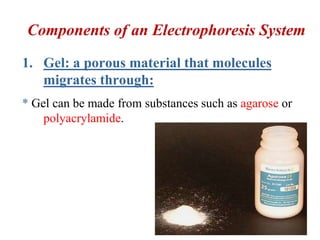
1. Gel: a porous material that molecules
migrates through:
* Gel can be made from substances such as agarose or
polyacrylamide.
Agarose “ a complex sugar chain from red seaweed”.
*Non toxic carbohydrate.
*It is commonly used in foods (ice cream, and jellies) and many
biological mediums.
*It has a large pore size good for separating large molecules quickly.
*Acts as a sieve for separating molecules.
*This solid matrix will allow the separation of fragments by size.
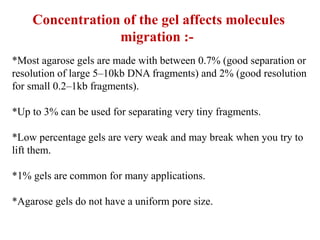
Concentration of the gel affects molecules
migration :-
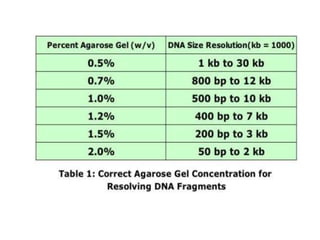
*Most agarose gels are made with between 0.7% (good separation or
resolution of large 5–10kb DNA fragments) and 2% (good resolution
for small 0.2–1kb fragments).
*Up to 3% can be used for separating very tiny fragments.
*Low percentage gels are very weak and may break when you try to
lift them.
*1% gels are common for many applications.
*Agarose gels do not have a uniform pore size.
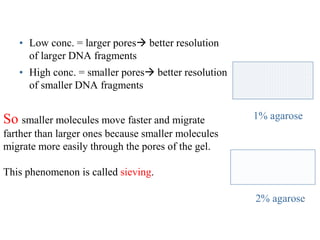
• Low conc. = larger pores better resolution
of larger DNA fragments
• High conc. = smaller pores better resolution
of smaller DNA fragments
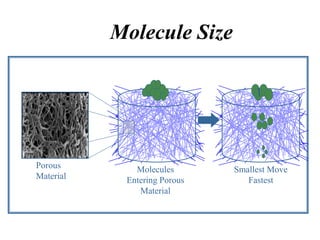
So smaller molecules move faster and migrate
farther than larger ones because smaller molecules
migrate more easily through the pores of the gel.
This phenomenon is called sieving.
1% agarose
2% agarose
Molecule Size
Porous
Material
Molecules
Entering Porous
Material
Smallest Move
Fastest
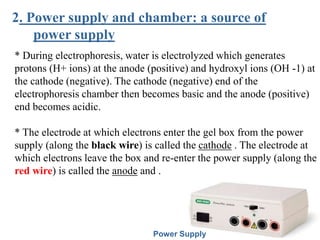
Power Supply
2. Power supply and chamber: a source of
power supply
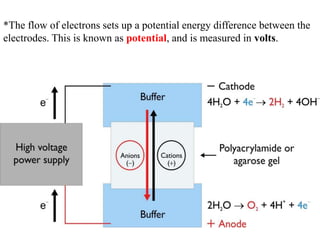
* During electrophoresis, water is electrolyzed which generates
protons (H+ ions) at the anode (positive) and hydroxyl ions (OH -1) at
the cathode (negative). The cathode (negative) end of the
electrophoresis chamber then becomes basic and the anode (positive)
end becomes acidic.
* The electrode at which electrons enter the gel box from the power
supply (along the black wire) is called the cathode . The electrode at
which electrons leave the box and re-enter the power supply (along the
red wire) is called the anode and .
*The flow of electrons sets up a potential energy difference between the
electrodes. This is known as potential, and is measured in volts.
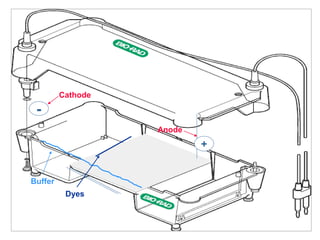
Buffer
Dyes
+
-
Cathode
Anode
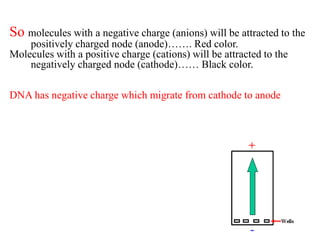
So molecules with a negative charge (anions) will be attracted to the
positively charged node (anode)……. Red color.
Molecules with a positive charge (cations) will be attracted to the
negatively charged node (cathode)…… Black color.
DNA has negative charge which migrate from cathode to anode
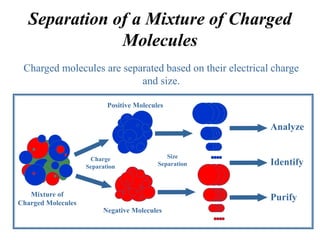
Charged molecules are separated based on their electrical charge
and size.
Separation of a Mixture of Charged
Molecules
Charge
Separation
Size
Separation
Analyze
Identify
Purify
Mixture of
Charged Molecules
Positive Molecules
Negative Molecules
3. Buffer: a fluid mixture of water and ions.
*A buffer is a chemical system that maintains a relatively constant
pH even when strong acids or bases are added. Buffer solutions
contain either a weak acid or weak base and one of their salts.
Because a change in pH can alter the charge on a particle, it is
important to use a buffer solution when separating during
electrophoresis.
Electrophoresis Buffer
• TAE (Tris -acetate-EDTA) and TBE (Tris-borate-EDTA) –
pH buffer.
1. Tris a pH buffer.
2. Acetic acid provide ions to support conductivity and
maintain pH.
3. EDTA, prevent brake down of molecules. “all dissolved
in water”.
Notes:
Use of water will produce no migraton
Agarose dissolved in electrophoresis buffer
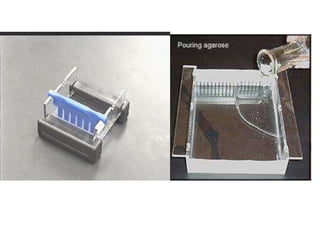
• Gel Preparation
• Loading the gel
• Running the gel
Overview of Agarose Gel Electrophoresis
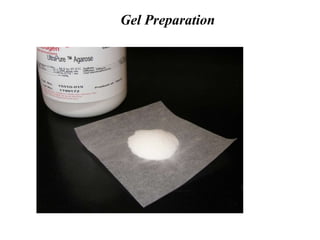
Agarose is a linear polymer extracted from seaweed.
Gel Preparation
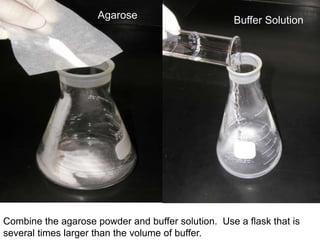
Agarose Buffer Solution
Combine the agarose powder and buffer solution. Use a flask that is
several times larger than the volume of buffer.
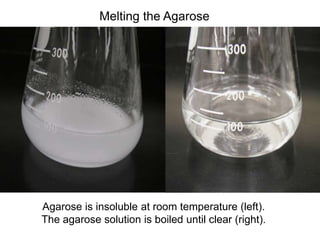
Agarose is insoluble at room temperature (left).
The agarose solution is boiled until clear (right).
Melting the Agarose
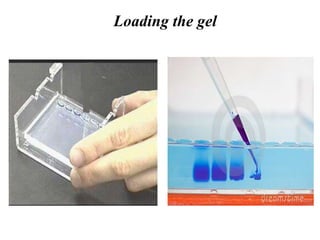
Loading the gel
• Gels are covered with a buffer solution. Prior
to loading the samples.
• The DNA must be mixed with a loading dye.
• The loading dye serves two purposes:
1. Increases the density of the DNA so it will
sink into the wells.
2. Provides a visual marker so you know how
far the DNA (which is not visible) has
traveled in the gel.
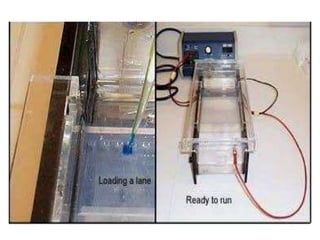
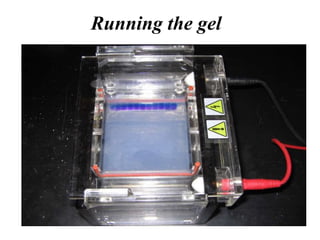
Running the gel
Visualization
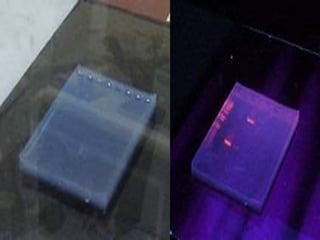
• DNA may be visualized using ethidium
bromide which, when intercalated into
DNA, fluoresce under ultraviolet light.
electrophoresis.ppt

electrophoresis.ppt

  • 2.
    Gel electrophoresis isa method for separation and analysis of macromolecules(DNA, RNA and proteins) and their fragments, based on their size and charge.
  • 3.
    Applications of AgaroseGel Electrophoresis • Separation of restriction enzyme digested DNA including genomic DNA. • Analysis of PCR products after polymerase chain reaction to assess for target DNA amplification. • Allows for the estimation of the size of DNA molecules using a DNA marker or ladder which contains DNA fragments of various known sizes. • Allows the rough estimation of DNA quantity and quality.
  • 4.
    Components of anElectrophoresis System 1. Gel: a porous material that molecules migrates through: * Gel can be made from substances such as agarose or polyacrylamide.
  • 5.
    Agarose “ acomplex sugar chain from red seaweed”. *Non toxic carbohydrate. *It is commonly used in foods (ice cream, and jellies) and many biological mediums. *It has a large pore size good for separating large molecules quickly. *Acts as a sieve for separating molecules. *This solid matrix will allow the separation of fragments by size.
  • 6.
    Concentration of thegel affects molecules migration :- *Most agarose gels are made with between 0.7% (good separation or resolution of large 5–10kb DNA fragments) and 2% (good resolution for small 0.2–1kb fragments). *Up to 3% can be used for separating very tiny fragments. *Low percentage gels are very weak and may break when you try to lift them. *1% gels are common for many applications. *Agarose gels do not have a uniform pore size.
  • 8.
    • Low conc.= larger pores better resolution of larger DNA fragments • High conc. = smaller pores better resolution of smaller DNA fragments So smaller molecules move faster and migrate farther than larger ones because smaller molecules migrate more easily through the pores of the gel. This phenomenon is called sieving. 1% agarose 2% agarose
  • 9.
  • 10.
    Power Supply 2. Powersupply and chamber: a source of power supply * During electrophoresis, water is electrolyzed which generates protons (H+ ions) at the anode (positive) and hydroxyl ions (OH -1) at the cathode (negative). The cathode (negative) end of the electrophoresis chamber then becomes basic and the anode (positive) end becomes acidic. * The electrode at which electrons enter the gel box from the power supply (along the black wire) is called the cathode . The electrode at which electrons leave the box and re-enter the power supply (along the red wire) is called the anode and .
  • 11.
    *The flow ofelectrons sets up a potential energy difference between the electrodes. This is known as potential, and is measured in volts.
  • 12.
  • 13.
    So molecules witha negative charge (anions) will be attracted to the positively charged node (anode)……. Red color. Molecules with a positive charge (cations) will be attracted to the negatively charged node (cathode)…… Black color. DNA has negative charge which migrate from cathode to anode
  • 14.
    Charged molecules areseparated based on their electrical charge and size. Separation of a Mixture of Charged Molecules Charge Separation Size Separation Analyze Identify Purify Mixture of Charged Molecules Positive Molecules Negative Molecules
  • 15.
    3. Buffer: afluid mixture of water and ions. *A buffer is a chemical system that maintains a relatively constant pH even when strong acids or bases are added. Buffer solutions contain either a weak acid or weak base and one of their salts. Because a change in pH can alter the charge on a particle, it is important to use a buffer solution when separating during electrophoresis.
  • 16.
    Electrophoresis Buffer • TAE(Tris -acetate-EDTA) and TBE (Tris-borate-EDTA) – pH buffer. 1. Tris a pH buffer. 2. Acetic acid provide ions to support conductivity and maintain pH. 3. EDTA, prevent brake down of molecules. “all dissolved in water”. Notes: Use of water will produce no migraton Agarose dissolved in electrophoresis buffer
  • 17.
    • Gel Preparation •Loading the gel • Running the gel Overview of Agarose Gel Electrophoresis
  • 18.
    Agarose is alinear polymer extracted from seaweed. Gel Preparation
  • 19.
    Agarose Buffer Solution Combinethe agarose powder and buffer solution. Use a flask that is several times larger than the volume of buffer.
  • 20.
    Agarose is insolubleat room temperature (left). The agarose solution is boiled until clear (right). Melting the Agarose
  • 22.
  • 23.
    • Gels arecovered with a buffer solution. Prior to loading the samples. • The DNA must be mixed with a loading dye. • The loading dye serves two purposes: 1. Increases the density of the DNA so it will sink into the wells. 2. Provides a visual marker so you know how far the DNA (which is not visible) has traveled in the gel.
  • 25.
  • 26.
    Visualization • DNA maybe visualized using ethidium bromide which, when intercalated into DNA, fluoresce under ultraviolet light.