
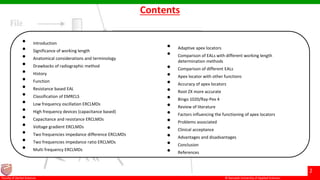
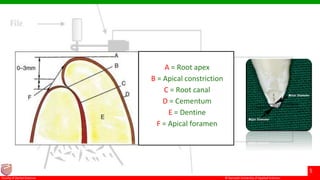
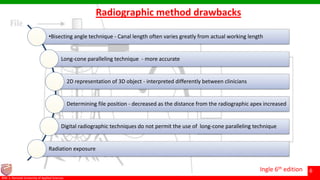
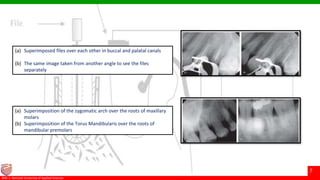
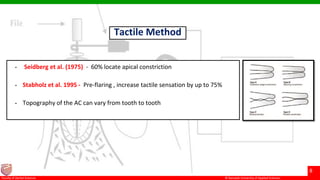
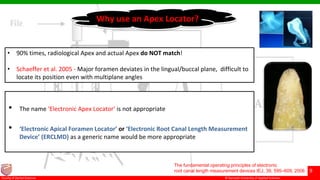
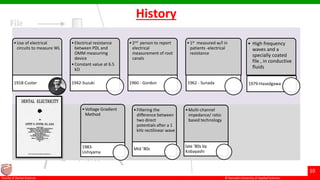
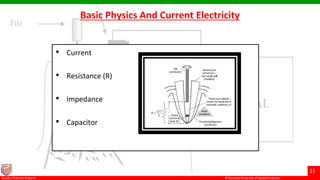
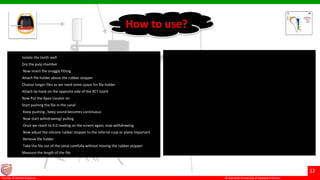
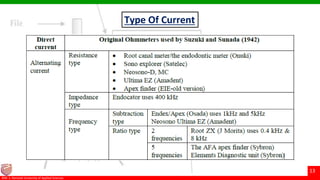
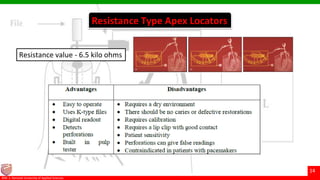
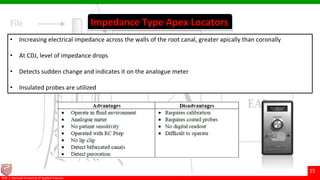
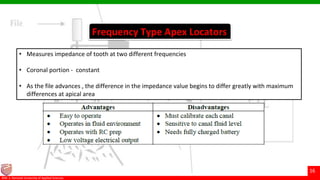
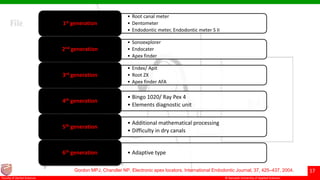
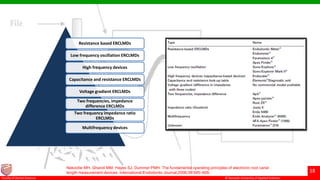
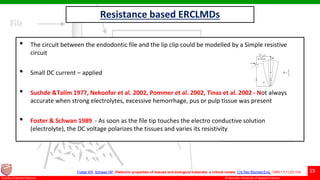
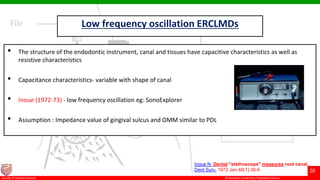
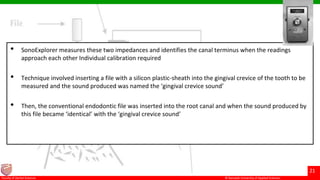
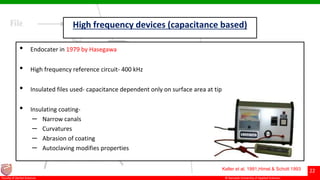
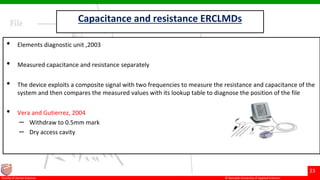
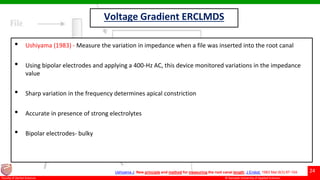
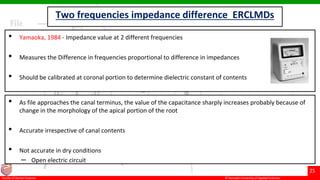
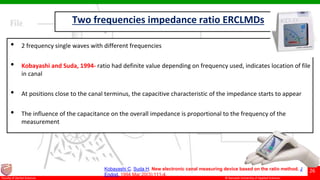
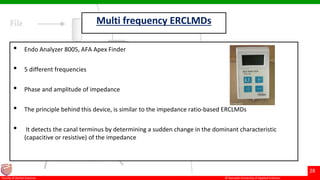
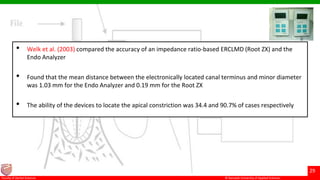
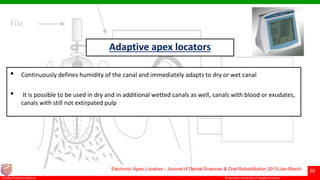
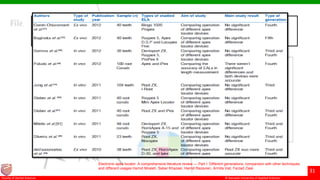
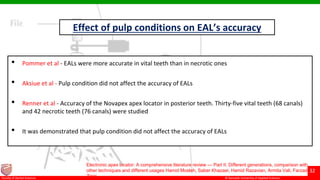

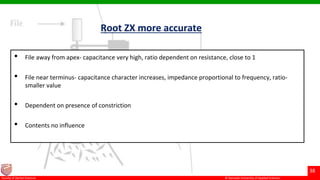
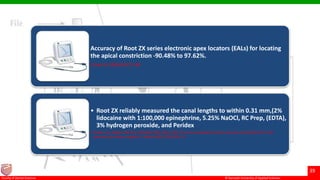
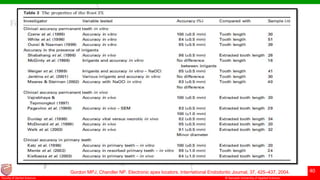
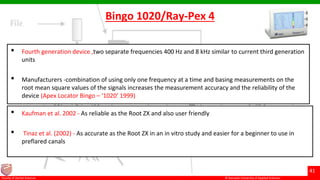
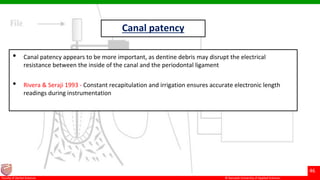
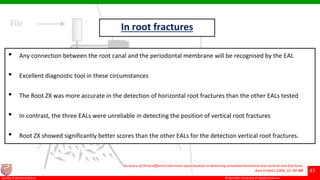
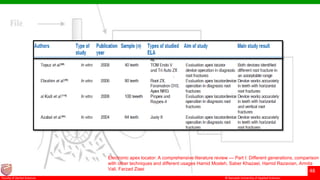
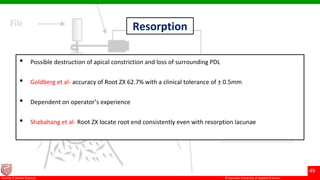
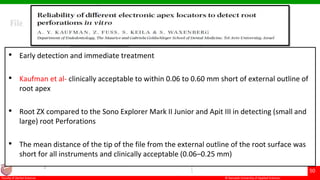
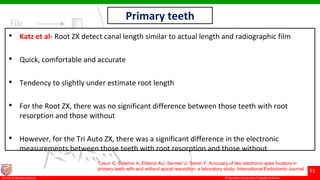
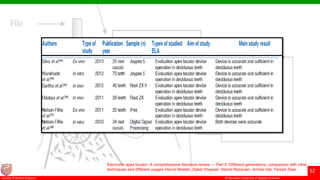
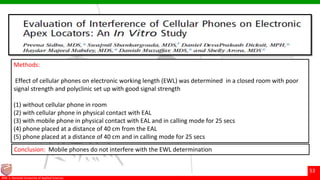
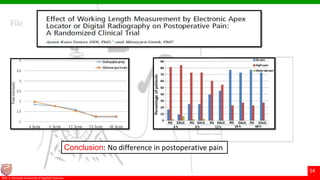
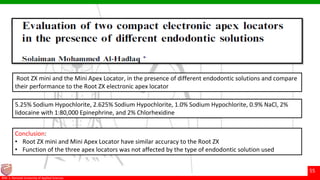
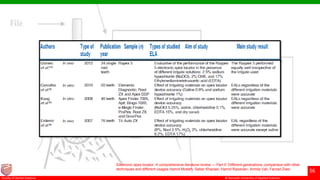
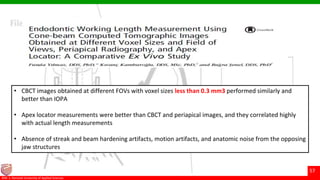
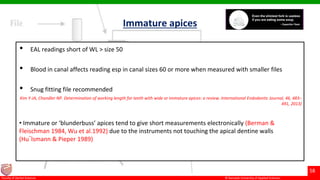
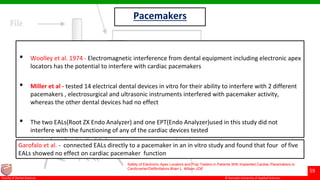
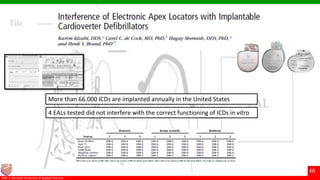
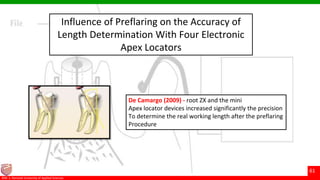
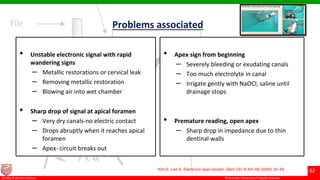
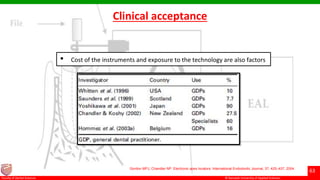
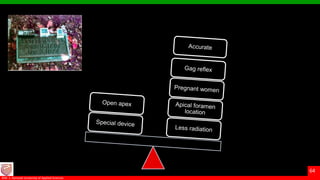



This document discusses electronic apex locators (EALs), which are devices used to determine the working length during root canal treatment. It provides a brief history of EALs, explaining how they have evolved from early resistance-based models to current multi-frequency devices. The document outlines various EAL classification systems and operating principles, including resistance-based, low frequency oscillation, high frequency, capacitance and resistance, voltage gradient, and two/multi-frequency models. Accuracy and factors influencing EAL performance are also addressed. Overall, the document provides an overview of EAL technology and classifications to help dental professionals understand how these devices function.


