Electrolysis
and
Electrical Properties of Solution
PRESENTED TO
MD. SHAKIL AHMED
Lecturer
Dept. of Textile Engineering
Green University
The Author’s
Shahinur Rahman - 203002070
Joy Pal - 201002418
Fahim Tazwoar Sourav - 201002110
Nusrat Jahan Nizhum - 203002037
Sabina Yasmin Kalpona - 203002023
 Electrolysis
 Electrical Units
 FARADAY’s Laws of Electrolysis
 Conductance of Electrolytes
 Electrolytic conductance
 Strong Electrolytes
 Weak Electrolytes
Contents
Electrolysis
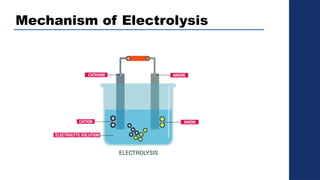
• A process where electrical energy is transformed
into chemical energy
• It is not spontaneous, electrical energy must be
supplied for a reaction to occur
Application of Electrolysis
• Electroplating
• Extraction of reactive metals such as Na, Al from metal ore
• Industrial production of NaOH, Cl2,H2
• Recharging of car batteries & other rechargeable cells
• Refining of copper metals
Mechanism of Electrolysis
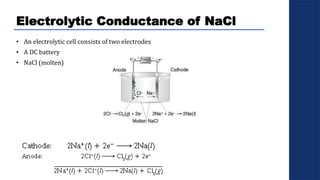
Electrolytic Conductance of NaCl
• An electrolytic cell consists of two electrodes
• A DC battery
• NaCl (molten)
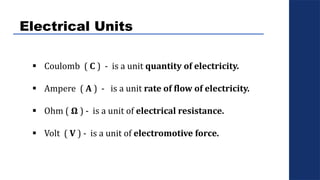
Electrical Units
 Coulomb ( C ) - is a unit quantity of electricity.
 Ampere ( A ) - is a unit rate of flow of electricity.
 Ohm ( Ω ) - is a unit of electrical resistance.
 Volt ( V ) - is a unit of electromotive force.
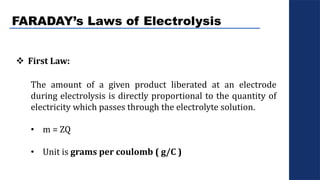
FARADAY’s Laws of Electrolysis
 First Law:
The amount of a given product liberated at an electrode
during electrolysis is directly proportional to the quantity of
electricity which passes through the electrolyte solution.
• m = ZQ
• Unit is grams per coulomb ( g/C )
FARADAY’s Laws of Electrolysis
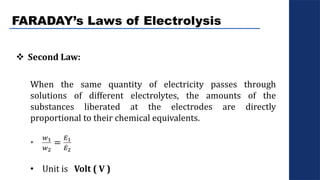
 Second Law:
When the same quantity of electricity passes through
solutions of different electrolytes, the amounts of the
substances liberated at the electrodes are directly
proportional to their chemical equivalents.
•
𝑤1
𝑤2
=
𝐸1
𝐸2
• Unit is Volt ( V )
Conductance of Electrolytes
The power of electrolytes to conduct electric currents is
termed conductivity or conductance.
• The flow of electricity through an electrolytic conductor.
• Electricity passes in the form of ions.
Three main factors :
1. The concentration of ions
2. The types of ions
3. Temperature
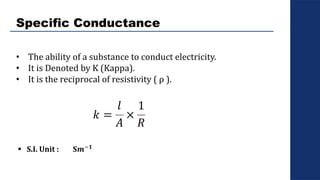
Specific Conductance
• The ability of a substance to conduct electricity.
• It is Denoted by K (Kappa).
• It is the reciprocal of resistivity ( ρ ).
𝑘 =
𝑙
𝐴
×
1
𝑅
 S.I. Unit : S𝒎−𝟏
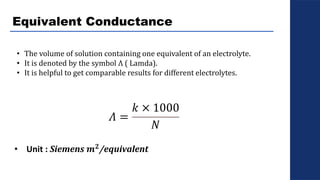
Equivalent Conductance
• The volume of solution containing one equivalent of an electrolyte.
• It is denoted by the symbol Λ ( Lamda).
• It is helpful to get comparable results for different electrolytes.
𝛬 =
𝑘 × 1000
𝑁
• Unit : Siemens 𝒎𝟐/equivalent
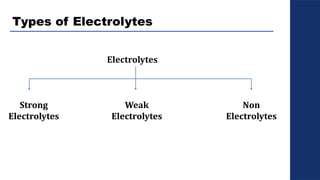
Types of Electrolytes
Electrolytes
Strong
Electrolytes
Weak
Electrolytes
Non
Electrolytes
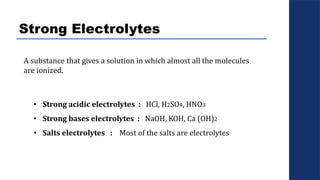
Strong Electrolytes
• Strong acidic electrolytes : HCl, H2SO4, HNO3
• Strong bases electrolytes : NaOH, KOH, Ca (OH)2
• Salts electrolytes : Most of the salts are electrolytes
A substance that gives a solution in which almost all the molecules
are ionized.
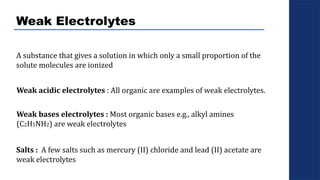
Weak Electrolytes
A substance that gives a solution in which only a small proportion of the
solute molecules are ionized
Weak acidic electrolytes : All organic are examples of weak electrolytes.
Weak bases electrolytes : Most organic bases e.g., alkyl amines
(C2H5NH2) are weak electrolytes
Salts : A few salts such as mercury (II) chloride and lead (II) acetate are
weak electrolytes
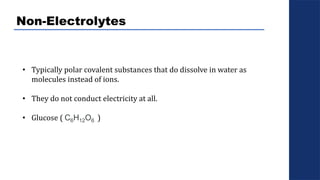
Non-Electrolytes
• Typically polar covalent substances that do dissolve in water as
molecules instead of ions.
• They do not conduct electricity at all.
• Glucose ( C6H12O6 )
Electrolysis and Electrical Properties of Solution

Electrolysis and Electrical Properties of Solution

  • 1.
  • 2.
    PRESENTED TO MD. SHAKILAHMED Lecturer Dept. of Textile Engineering Green University
  • 3.
    The Author’s Shahinur Rahman- 203002070 Joy Pal - 201002418 Fahim Tazwoar Sourav - 201002110 Nusrat Jahan Nizhum - 203002037 Sabina Yasmin Kalpona - 203002023
  • 4.
     Electrolysis  ElectricalUnits  FARADAY’s Laws of Electrolysis  Conductance of Electrolytes  Electrolytic conductance  Strong Electrolytes  Weak Electrolytes Contents
  • 5.
    Electrolysis • A processwhere electrical energy is transformed into chemical energy • It is not spontaneous, electrical energy must be supplied for a reaction to occur
  • 6.
    Application of Electrolysis •Electroplating • Extraction of reactive metals such as Na, Al from metal ore • Industrial production of NaOH, Cl2,H2 • Recharging of car batteries & other rechargeable cells • Refining of copper metals
  • 7.
  • 8.
    Electrolytic Conductance ofNaCl • An electrolytic cell consists of two electrodes • A DC battery • NaCl (molten)
  • 9.
    Electrical Units  Coulomb( C ) - is a unit quantity of electricity.  Ampere ( A ) - is a unit rate of flow of electricity.  Ohm ( Ω ) - is a unit of electrical resistance.  Volt ( V ) - is a unit of electromotive force.
  • 10.
    FARADAY’s Laws ofElectrolysis  First Law: The amount of a given product liberated at an electrode during electrolysis is directly proportional to the quantity of electricity which passes through the electrolyte solution. • m = ZQ • Unit is grams per coulomb ( g/C )
  • 11.
    FARADAY’s Laws ofElectrolysis  Second Law: When the same quantity of electricity passes through solutions of different electrolytes, the amounts of the substances liberated at the electrodes are directly proportional to their chemical equivalents. • 𝑤1 𝑤2 = 𝐸1 𝐸2 • Unit is Volt ( V )
  • 12.
    Conductance of Electrolytes Thepower of electrolytes to conduct electric currents is termed conductivity or conductance. • The flow of electricity through an electrolytic conductor. • Electricity passes in the form of ions. Three main factors : 1. The concentration of ions 2. The types of ions 3. Temperature
  • 13.
    Specific Conductance • Theability of a substance to conduct electricity. • It is Denoted by K (Kappa). • It is the reciprocal of resistivity ( ρ ). 𝑘 = 𝑙 𝐴 × 1 𝑅  S.I. Unit : S𝒎−𝟏
  • 14.
    Equivalent Conductance • Thevolume of solution containing one equivalent of an electrolyte. • It is denoted by the symbol Λ ( Lamda). • It is helpful to get comparable results for different electrolytes. 𝛬 = 𝑘 × 1000 𝑁 • Unit : Siemens 𝒎𝟐/equivalent
  • 15.
  • 16.
    Strong Electrolytes • Strongacidic electrolytes : HCl, H2SO4, HNO3 • Strong bases electrolytes : NaOH, KOH, Ca (OH)2 • Salts electrolytes : Most of the salts are electrolytes A substance that gives a solution in which almost all the molecules are ionized.
  • 17.
    Weak Electrolytes A substancethat gives a solution in which only a small proportion of the solute molecules are ionized Weak acidic electrolytes : All organic are examples of weak electrolytes. Weak bases electrolytes : Most organic bases e.g., alkyl amines (C2H5NH2) are weak electrolytes Salts : A few salts such as mercury (II) chloride and lead (II) acetate are weak electrolytes
  • 18.
    Non-Electrolytes • Typically polarcovalent substances that do dissolve in water as molecules instead of ions. • They do not conduct electricity at all. • Glucose ( C6H12O6 )