ELECTRICAL SAFETY
Electrical Vehicles Safety and precaution‘s
INTRODUCTION
Definitions:
Electricity – movement
of the free electrons between atoms
Related terms:
 Current – the movement of electrical charge
 Resistance – opposition to current flow
 Voltage – a measurement of electrical force
 Conductors – substances, such as metals, that have little
resistance to electricity
 Insulators – substances, such as dry wood, rubber, glass and
Bakelite, that have high resistance to electricity
 Grounding – a conductive connection to the earth which acts
as a protective measure
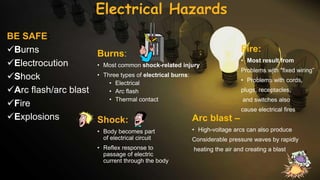
Electrical Hazards
Burns:
• Most common shock-related injury
• Three types of electrical burns:
• Electrical
• Arc flash
• Thermal contact
BE SAFE:
Burns
Electrocution
Shock
Arc flash/arc blast
Fire
Explosions
Fire:
• Most result from
Problems with "fixed wiring”
• Problems with cords,
plugs, receptacles,
and switches also
cause electrical fires
Shock:
• Body becomes part
of electrical circuit
• Reflex response to
passage of electric
current through the body
Arc blast –
• High-voltage arcs can also produce
Considerable pressure waves by rapidly
heating the air and creating a blast
YPES OF
E L E C T R I C A L
H A Z A R D ST
 Live parts
 The major hazards
 Electrical shock and burns
 Electrical shock occurs
when the body becomes
part of the electric circuit
.
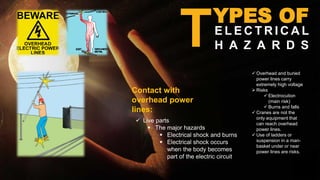
Contact with
overhead power
lines:
 Overhead and buried
power lines carry
extremely high voltage
 Risks
 Electrocution
(main risk)
 Burns and falls
 Cranes are not the
only equipment that
can reach overhead
power lines.
 Use of ladders or
suspension in a man-
basket under or near
power lines are risks.
HUMAN MISTAKE‘S
Great conductor
Allows current to flow more easily in wet conditions and through wet skin
WATER
Fault current may travel through a body, causing
electrical burns or death, if
Damaged or bare wires
Removing and leaving off terminal insulator on causes 440-volt
shock
Improper repairs
Extension and flexible cords
 Care
 Connection
 Capacity
Improper use:
Electrical Protection Methods
Inspect portable tools and extension cords:
• Workers need to inspect extension cords prior to their use for any cuts or
abrasion.
• Electric hand tools that are old, damaged, or misused may have damaged
insulation inside
• Follow tool safety tips to avoid misusing equipment
• Follow manufacturer’s instructions
Tool safety tips
• Never carry a tool by the cord.
• Never yank the cord to disconnect it.
• Keep cords away from heat, oil, and sharp edges.
• Disconnect when not in use and when changing
accessories such as blades and bits.
• Don’t use in wet/damp environments.
• Keep working areas well lit.
• Ensure that cords do not cause a tripping hazard.
• Remove damaged tools from use.
OBEY ALL SIGNS AND BARRIERS!
AREA IN FRONT OF THIS
ELECTRICAL PANEL MUST BE
KEPT CLEAR FOR 36 INCHES
OSHA - NEC REGULATIONS
C A U T I O N
PROTECT YOURSELF
FROM ELECTRICITY
Follow specialized procedures in
wet work areas
 Use lockout/ Tagout
 Conduct inspections
 Follow assured grounding programs
 Use GFCIs
 Guard energized parts
PPE Safety for
Rubber
Insulating
gloves
Blankets
Matting
Sleeves
Line hoses
Covers
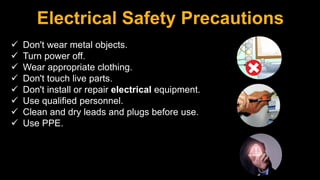
Electrical Safety Precautions
 Don't wear metal objects.
 Turn power off.
 Wear appropriate clothing.
 Don't touch live parts.
 Don't install or repair electrical equipment.
 Use qualified personnel.
 Clean and dry leads and plugs before use.
 Use PPE.
Thank YouInsert the Sub Title of Your Presentation
JOGA YOGESH
170101161037
PRESENTED BY

Electrical safety yogesh joga

  • 1.
    ELECTRICAL SAFETY Electrical VehiclesSafety and precaution‘s
  • 2.
    INTRODUCTION Definitions: Electricity – movement ofthe free electrons between atoms Related terms:  Current – the movement of electrical charge  Resistance – opposition to current flow  Voltage – a measurement of electrical force  Conductors – substances, such as metals, that have little resistance to electricity  Insulators – substances, such as dry wood, rubber, glass and Bakelite, that have high resistance to electricity  Grounding – a conductive connection to the earth which acts as a protective measure
  • 3.
    Electrical Hazards Burns: • Mostcommon shock-related injury • Three types of electrical burns: • Electrical • Arc flash • Thermal contact BE SAFE: Burns Electrocution Shock Arc flash/arc blast Fire Explosions Fire: • Most result from Problems with "fixed wiring” • Problems with cords, plugs, receptacles, and switches also cause electrical fires Shock: • Body becomes part of electrical circuit • Reflex response to passage of electric current through the body Arc blast – • High-voltage arcs can also produce Considerable pressure waves by rapidly heating the air and creating a blast
  • 4.
    YPES OF E LE C T R I C A L H A Z A R D ST  Live parts  The major hazards  Electrical shock and burns  Electrical shock occurs when the body becomes part of the electric circuit . Contact with overhead power lines:  Overhead and buried power lines carry extremely high voltage  Risks  Electrocution (main risk)  Burns and falls  Cranes are not the only equipment that can reach overhead power lines.  Use of ladders or suspension in a man- basket under or near power lines are risks.
  • 5.
    HUMAN MISTAKE‘S Great conductor Allowscurrent to flow more easily in wet conditions and through wet skin WATER Fault current may travel through a body, causing electrical burns or death, if Damaged or bare wires Removing and leaving off terminal insulator on causes 440-volt shock Improper repairs Extension and flexible cords  Care  Connection  Capacity Improper use:
  • 6.
    Electrical Protection Methods Inspectportable tools and extension cords: • Workers need to inspect extension cords prior to their use for any cuts or abrasion. • Electric hand tools that are old, damaged, or misused may have damaged insulation inside • Follow tool safety tips to avoid misusing equipment • Follow manufacturer’s instructions Tool safety tips • Never carry a tool by the cord. • Never yank the cord to disconnect it. • Keep cords away from heat, oil, and sharp edges. • Disconnect when not in use and when changing accessories such as blades and bits. • Don’t use in wet/damp environments. • Keep working areas well lit. • Ensure that cords do not cause a tripping hazard. • Remove damaged tools from use. OBEY ALL SIGNS AND BARRIERS! AREA IN FRONT OF THIS ELECTRICAL PANEL MUST BE KEPT CLEAR FOR 36 INCHES OSHA - NEC REGULATIONS C A U T I O N
  • 7.
    PROTECT YOURSELF FROM ELECTRICITY Followspecialized procedures in wet work areas  Use lockout/ Tagout  Conduct inspections  Follow assured grounding programs  Use GFCIs  Guard energized parts
  • 8.
  • 9.
    Electrical Safety Precautions Don't wear metal objects.  Turn power off.  Wear appropriate clothing.  Don't touch live parts.  Don't install or repair electrical equipment.  Use qualified personnel.  Clean and dry leads and plugs before use.  Use PPE.
  • 10.
    Thank YouInsert theSub Title of Your Presentation JOGA YOGESH 170101161037 PRESENTED BY