PRESENTED BY :
MAHAVEER SINGH
8th SEM / 4rd YEAR
ELECTRICAL DEPARMENT
MITS JADAN,PALI
GUIDE BY :
Mr. HITESH JAIN (Asst. Professor)
ELECTRICAL DEPARMENT
MITS JADAN,PALI
1
2
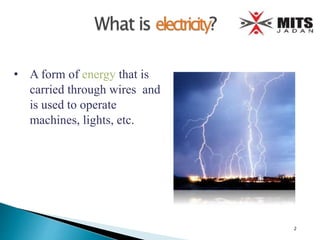
• A form of energy that is
carried through wires and
is used to operate
machines, lights, etc.
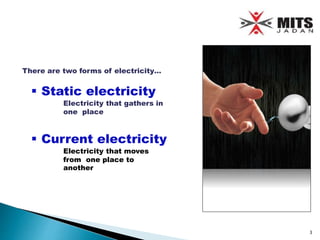
There are two forms of electricity…
 Static electricity
Electricity that gathers in
one place
 Current electricity
Electricity that moves
from one place to
another
3
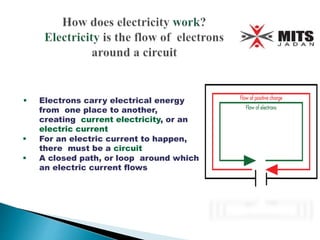
 Electrons carry electrical energy
from one place to another,
creating current electricity, or an
electric current
 For an electric current to happen,
there must be a circuit
 A closed path, or loop around which
an electric current flows
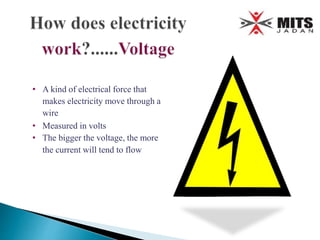
• A kind of electrical force that
makes electricity move through a
wire
• Measured in volts
• The bigger the voltage, the more
the current will tend to flow
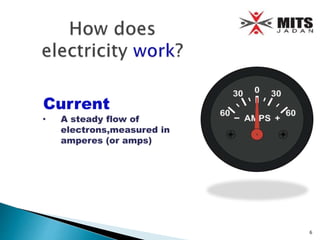
Current
• A steady flow of
electrons,measured in
amperes (or amps)
6
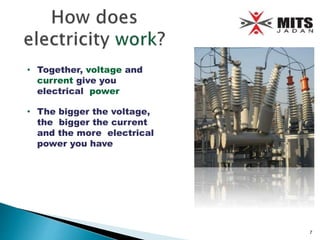
• Together, voltage and
current give you
electrical power
• The bigger the voltage,
the bigger the current
and the more electrical
power you have
7
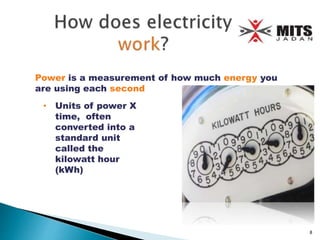
Power is a measurement of how much energy you
are using each second
• Units of power X
time, often
converted into a
standard unit
called the
kilowatt hour
(kWh)
8
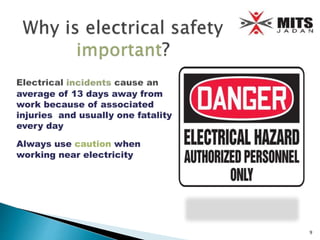
average of 13 days away from
work because of associated
injuries and usually one fatality
every day
Always use caution when
working near electricity
9
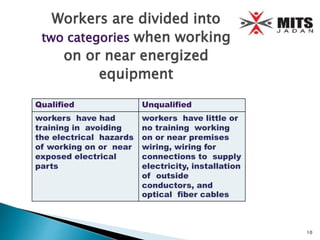
Workers are divided into
two categories when working
on or near energized
equipment
Qualified Unqualified
workers have had
training in avoiding
the electrical hazards
of working on or near
exposed electrical
parts
workers have little or
no training working
on or near premises
wiring, wiring for
connections to supply
electricity, installation
of outside
conductors, and
optical fiber cables
10
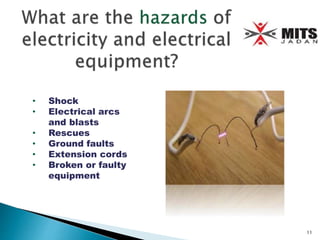
• Shock
• Electrical arcs
and blasts
• Rescues
• Ground faults
• Extension cords
• Broken or faulty
equipment
11
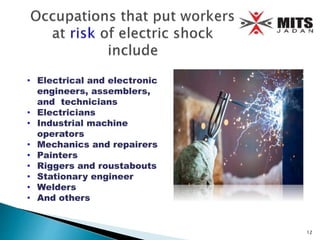
• Electrical and electronic
engineers, assemblers,
and technicians
• Electricians
• Industrial machine
operators
• Mechanics and repairers
• Painters
• Riggers and roustabouts
• Stationary engineer
• Welders
• And others
12
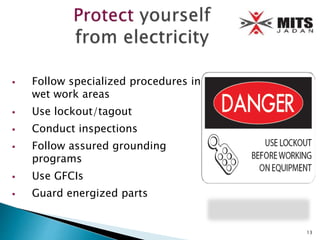
 Follow specialized procedures in
wet work areas
 Use lockout/tagout
 Conduct inspections
 Follow assured grounding
programs
 Use GFCIs
 Guard energized parts
13
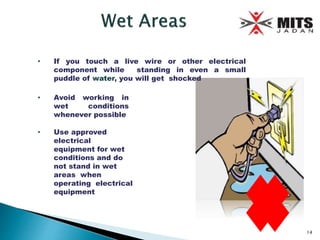
• If you touch a live wire or other electrical
component while standing in even a small
puddle of water, you will get shocked
• Avoid working in
wet conditions
whenever possible
• Use approved
electrical
equipment for wet
conditions and do
not stand in wet
areas when
operating electrical
equipment
14
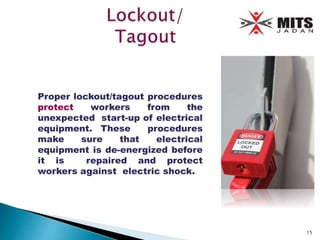
Proper lockout/tagout procedures
protect workers from the
unexpected start-up of electrical
equipment. These procedures
make sure that electrical
equipment is de-energized before
it is repaired and protect
workers against electric shock.
15
• Visually inspect all
electrical equipment
before use
• Remove any equipment
with frayed cords,
missing ground
prongs, cracked tool
casings, etc., from
service
16
This includes a written
program, daily visual
inspections, and a
method to detect a faulty
grounding wire in an
extension cord or hand
tool. Grounding gives a
stray current somewhere
to go and keeps workers
from becoming part of
the circuit.
17
 All circuits and
extension cords
 All noncurrent-
carrying metal parts
 Portable and semi-
portable tools and
equipment unless
they are double-
insulated
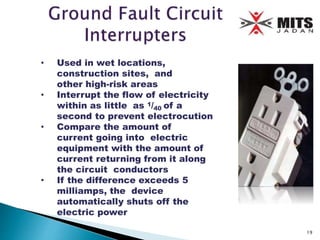
• Used in wet locations,
construction sites, and
other high-risk areas
• Interrupt the flow of electricity
within as little as 1/40 of a
second to prevent electrocution
• Compare the amount of
current going into electric
equipment with the amount of
current returning from it along
the circuit conductors
• If the difference exceeds 5
milliamps, the device
automatically shuts off the
electric power
19
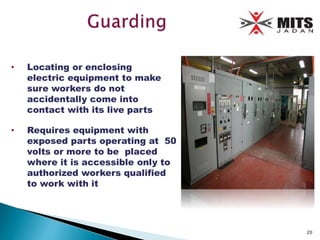
• Locating or enclosing
electric equipment to make
sure workers do not
accidentally come into
contact with its live parts
• Requires equipment with
exposed parts operating at 50
volts or more to be placed
where it is accessible only to
authorized workers qualified
to work with it
20
Double-insulated
• Tool is encased in plastic,
which will prevent a
worker from being
electrocuted if the tool
short circuits
• Identified with a square-
within-a- square logo or the
words “double- insulated”
on the label
21
 Rubber insulating
gloves
 Matting
 Blankets
 Covers
 Line hoses
 Sleeves
 Type E hard hats
 FRC
22
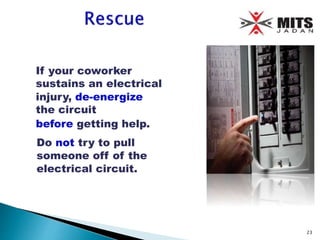
If your coworker
sustains an electrical
injury, de-energize
the circuit
before getting help.
Do not try to pull
someone off of the
electrical circuit.
23
24

ELECTRICAL SAFETY ASPECT

  • 1.
    PRESENTED BY : MAHAVEERSINGH 8th SEM / 4rd YEAR ELECTRICAL DEPARMENT MITS JADAN,PALI GUIDE BY : Mr. HITESH JAIN (Asst. Professor) ELECTRICAL DEPARMENT MITS JADAN,PALI 1
  • 2.
    2 • A formof energy that is carried through wires and is used to operate machines, lights, etc.
  • 3.
    There are twoforms of electricity…  Static electricity Electricity that gathers in one place  Current electricity Electricity that moves from one place to another 3
  • 4.
     Electrons carryelectrical energy from one place to another, creating current electricity, or an electric current  For an electric current to happen, there must be a circuit  A closed path, or loop around which an electric current flows
  • 5.
    • A kindof electrical force that makes electricity move through a wire • Measured in volts • The bigger the voltage, the more the current will tend to flow
  • 6.
    Current • A steadyflow of electrons,measured in amperes (or amps) 6
  • 7.
    • Together, voltageand current give you electrical power • The bigger the voltage, the bigger the current and the more electrical power you have 7
  • 8.
    Power is ameasurement of how much energy you are using each second • Units of power X time, often converted into a standard unit called the kilowatt hour (kWh) 8
  • 9.
    average of 13days away from work because of associated injuries and usually one fatality every day Always use caution when working near electricity 9
  • 10.
    Workers are dividedinto two categories when working on or near energized equipment Qualified Unqualified workers have had training in avoiding the electrical hazards of working on or near exposed electrical parts workers have little or no training working on or near premises wiring, wiring for connections to supply electricity, installation of outside conductors, and optical fiber cables 10
  • 11.
    • Shock • Electricalarcs and blasts • Rescues • Ground faults • Extension cords • Broken or faulty equipment 11
  • 12.
    • Electrical andelectronic engineers, assemblers, and technicians • Electricians • Industrial machine operators • Mechanics and repairers • Painters • Riggers and roustabouts • Stationary engineer • Welders • And others 12
  • 13.
     Follow specializedprocedures in wet work areas  Use lockout/tagout  Conduct inspections  Follow assured grounding programs  Use GFCIs  Guard energized parts 13
  • 14.
    • If youtouch a live wire or other electrical component while standing in even a small puddle of water, you will get shocked • Avoid working in wet conditions whenever possible • Use approved electrical equipment for wet conditions and do not stand in wet areas when operating electrical equipment 14
  • 15.
    Proper lockout/tagout procedures protectworkers from the unexpected start-up of electrical equipment. These procedures make sure that electrical equipment is de-energized before it is repaired and protect workers against electric shock. 15
  • 16.
    • Visually inspectall electrical equipment before use • Remove any equipment with frayed cords, missing ground prongs, cracked tool casings, etc., from service 16
  • 17.
    This includes awritten program, daily visual inspections, and a method to detect a faulty grounding wire in an extension cord or hand tool. Grounding gives a stray current somewhere to go and keeps workers from becoming part of the circuit. 17
  • 18.
     All circuitsand extension cords  All noncurrent- carrying metal parts  Portable and semi- portable tools and equipment unless they are double- insulated
  • 19.
    • Used inwet locations, construction sites, and other high-risk areas • Interrupt the flow of electricity within as little as 1/40 of a second to prevent electrocution • Compare the amount of current going into electric equipment with the amount of current returning from it along the circuit conductors • If the difference exceeds 5 milliamps, the device automatically shuts off the electric power 19
  • 20.
    • Locating orenclosing electric equipment to make sure workers do not accidentally come into contact with its live parts • Requires equipment with exposed parts operating at 50 volts or more to be placed where it is accessible only to authorized workers qualified to work with it 20
  • 21.
    Double-insulated • Tool isencased in plastic, which will prevent a worker from being electrocuted if the tool short circuits • Identified with a square- within-a- square logo or the words “double- insulated” on the label 21
  • 22.
     Rubber insulating gloves Matting  Blankets  Covers  Line hoses  Sleeves  Type E hard hats  FRC 22
  • 23.
    If your coworker sustainsan electrical injury, de-energize the circuit before getting help. Do not try to pull someone off of the electrical circuit. 23
  • 24.