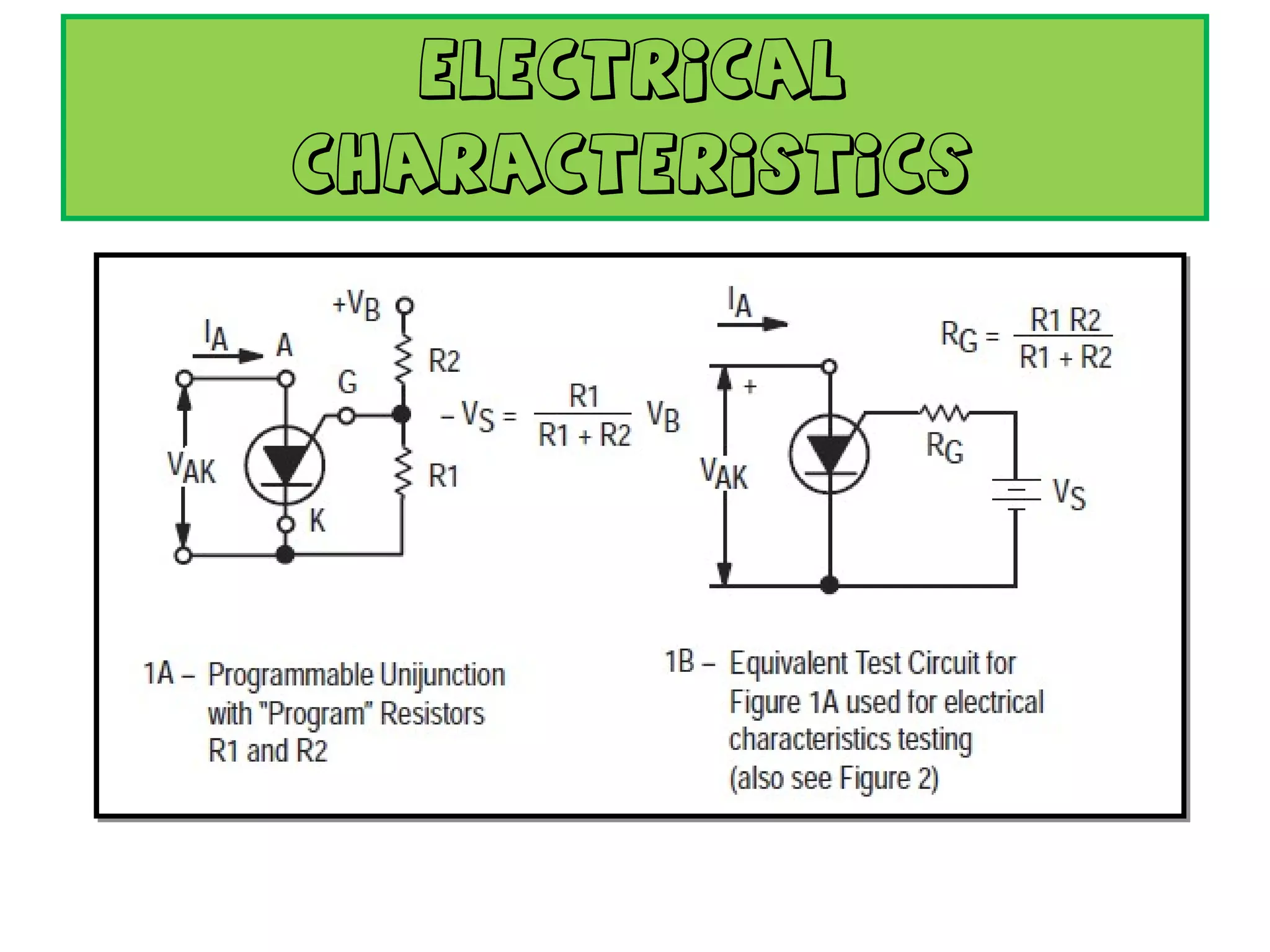
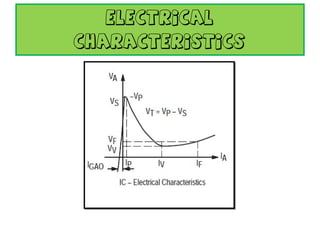
ELECTRICAL CHARACTERISTICS
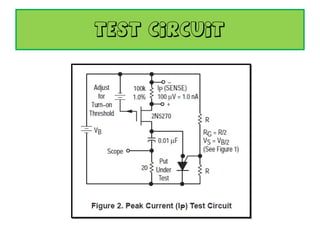
TEST CIRCUIT
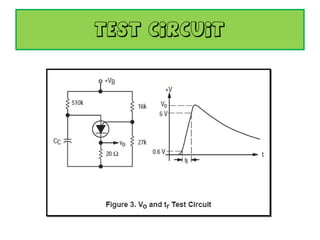
TEST CIRCUIT
types of Uni Junction Transistors The original Uni Junction Transistor (UJT)   a simple device that is essentially a bar of N type semiconductor material into which P type material has been diffused somewhere along its length.      
types of Uni Junction Transistors 2. The Programmable Uni Junction Transistor (PUT) is a close cousin to the Thyristor consists of four P-N layers  has an Anode and a Cathode connected to the first and the last layer, and a Gate connected to one of the inner layers.  They are not directly interchangeable with conventional UJTs but perform a similar function.
types of Uni Junction Transistors For both types, their main use is as a trigger device for thyristors and as the active device in relaxation oscillators. The graph of emitter voltage against emitter current of a Uni Junction Transistor shows an area of negative resistance; this is what makes it very useful.
TEST PUT Test 1 Set a Digital Multimeter in the Ohms position. Read the resistance between Base 1 and Base 2. Read the resistance between Base 2 and Base 1 (reversing the leads). Both of the readings should approximately be equal (high resistance).
TEST PUT Test 2 Connect the negative lead to the Emitter.  Measure the resistance from Emitter to Base 1 using the positive lead. Measure the resistance from Emitter to Base 2 using the positive lead. Both of the readings should approximately be equal (high resistance).
TEST PUT Test 3 Connect the positive lead to the Emitter.  Measure the resistance from Emitter to Base 1 using the negative lead. Measure the resistance from Emitter to Base 2 using the negative lead. Both of the readings should approximately be equal (low resistance).

Electrical characteristics

  • 1.
  • 2.
  • 3.
  • 4.
  • 5.
    types of UniJunction Transistors The original Uni Junction Transistor (UJT) a simple device that is essentially a bar of N type semiconductor material into which P type material has been diffused somewhere along its length.      
  • 6.
    types of UniJunction Transistors 2. The Programmable Uni Junction Transistor (PUT) is a close cousin to the Thyristor consists of four P-N layers has an Anode and a Cathode connected to the first and the last layer, and a Gate connected to one of the inner layers. They are not directly interchangeable with conventional UJTs but perform a similar function.
  • 7.
    types of UniJunction Transistors For both types, their main use is as a trigger device for thyristors and as the active device in relaxation oscillators. The graph of emitter voltage against emitter current of a Uni Junction Transistor shows an area of negative resistance; this is what makes it very useful.
  • 8.
    TEST PUT Test1 Set a Digital Multimeter in the Ohms position. Read the resistance between Base 1 and Base 2. Read the resistance between Base 2 and Base 1 (reversing the leads). Both of the readings should approximately be equal (high resistance).
  • 9.
    TEST PUT Test2 Connect the negative lead to the Emitter.  Measure the resistance from Emitter to Base 1 using the positive lead. Measure the resistance from Emitter to Base 2 using the positive lead. Both of the readings should approximately be equal (high resistance).
  • 10.
    TEST PUT Test3 Connect the positive lead to the Emitter.  Measure the resistance from Emitter to Base 1 using the negative lead. Measure the resistance from Emitter to Base 2 using the negative lead. Both of the readings should approximately be equal (low resistance).