ELECTRONIC AND CONTROL
LOGIC
BY: ROSHAN LAL KUMAWAT
Contd…
1. Brain of the nanosatellite
2. Maintains the function of the satellite
3. Processes the command or instruction given by
ground management system
4. Provides proper command to the required
subsystem
25-Sep-17 SATELLITE COMMUNICATION 4
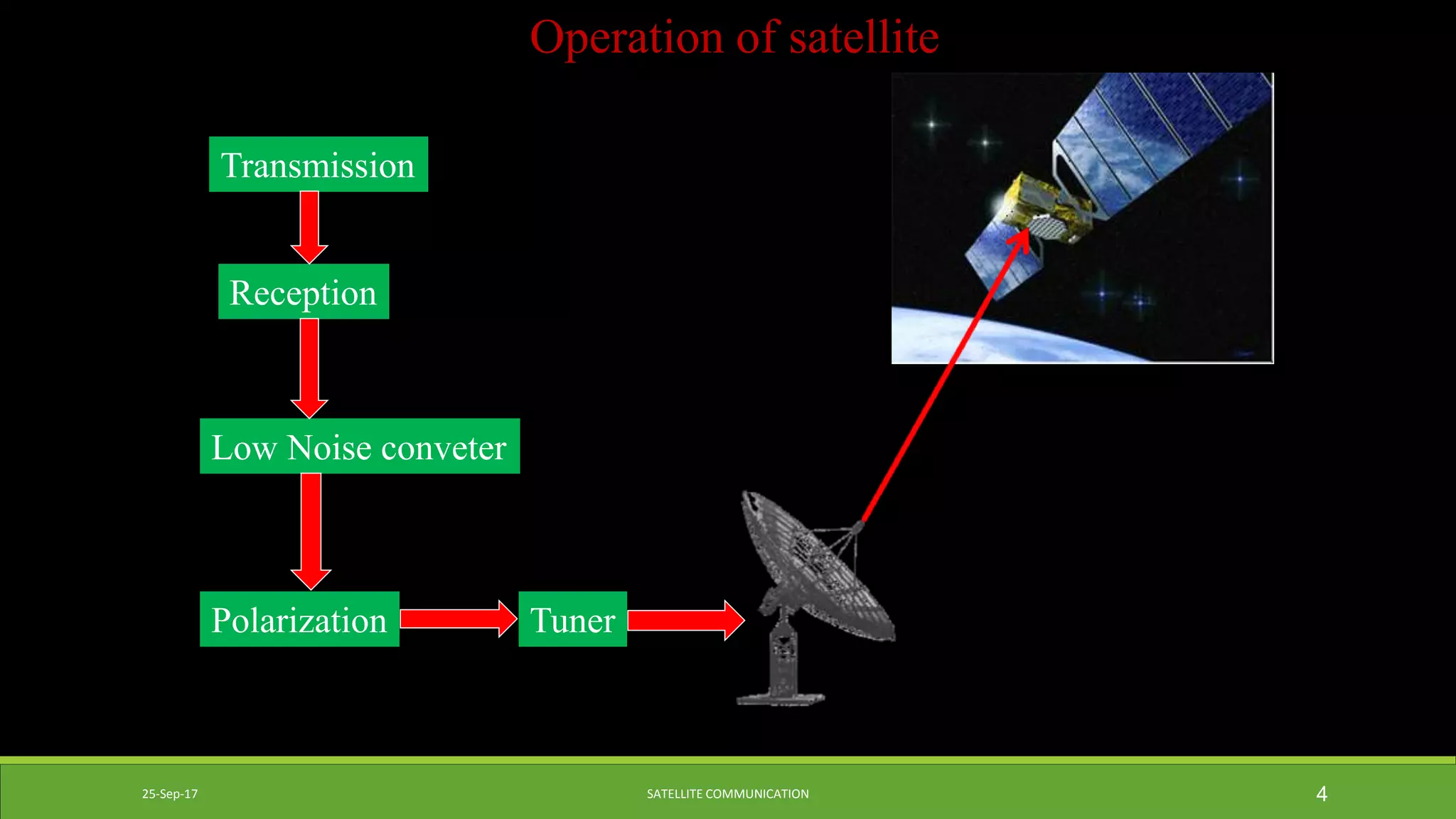
Transmission
Polarization
Low Noise conveter
Reception
Tuner
Operation of satellite
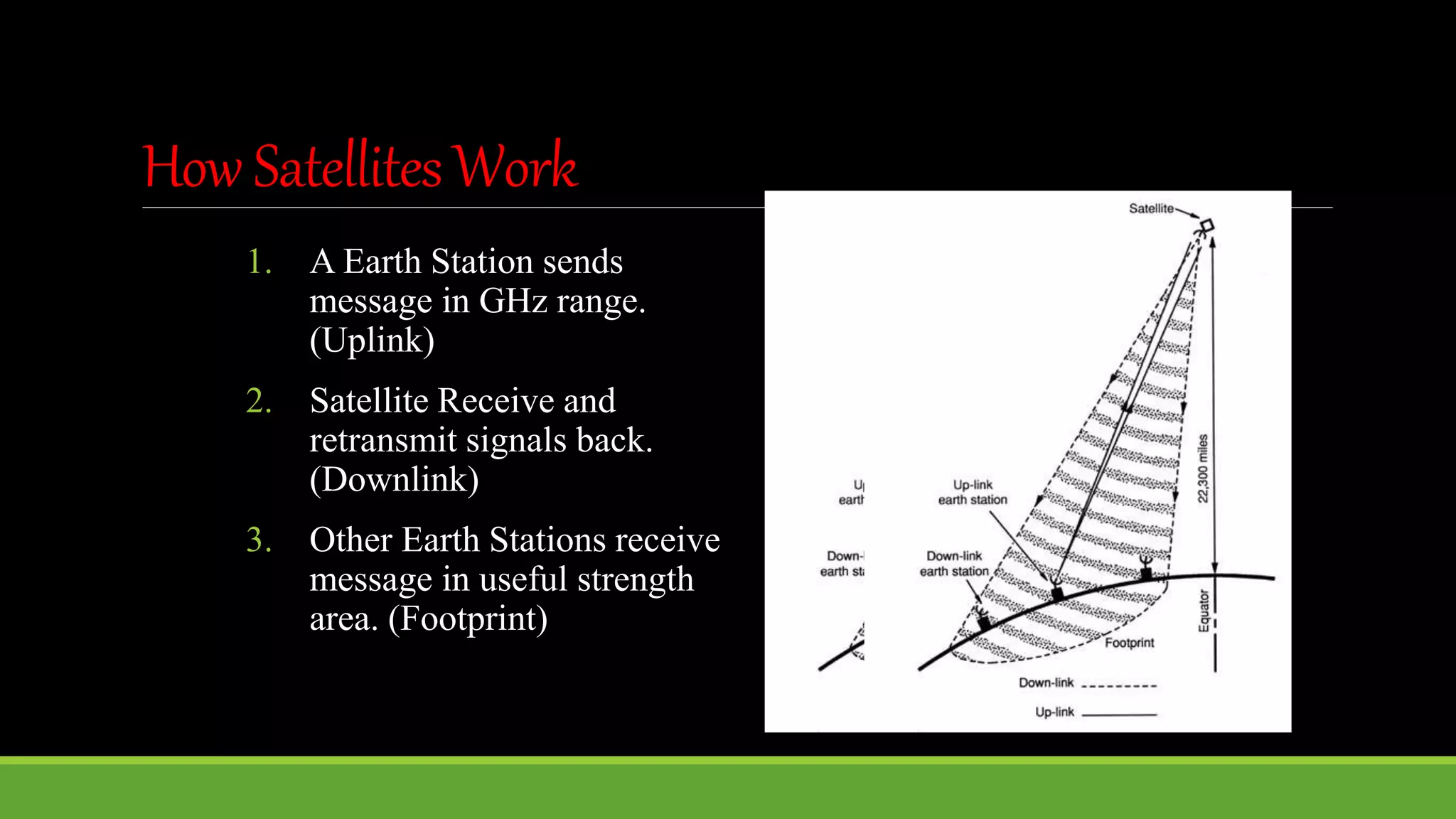
How SatellitesWork
1. A Earth Station sends
message in GHz range.
(Uplink)
2. Satellite Receive and
retransmit signals back.
(Downlink)
3. Other Earth Stations receive
message in useful strength
area. (Footprint)
Telemetry Tracking
& Command SERVICES
Introduction
The telemetry, tracking and control subsystem
provides vital communication to and from the
satellite
TT&C is the only way to observe and to control the
satellite’s functions and condition from the ground
TELEMETRY
Telemetry - one direction ( Satellite to ground )
Monitor the satellite through status reports &
anomalies.
Telemetry - set of measurements taken on board the
satellite and then sent to the operations control Centre.
Measurements concern magnitudes - temperatures,
voltages, currents etc.
COMMAND
1. Command In the other direction (ground to satellite)
2. Used either for routine programming or for sending
commands to carry out specific actions to handle
events.
3. Although modern satellites operate automatically, they
still need to receive commands from the ground.
4. If the solar arrays have been automatically deployed,
commands sent by the control centre switch on the
equipment that was off during the launch: recorders,
payloads and passengers if any.
TRACKINGThe same link is used for tracking. This term describes
measurements taken to accurately locate the orbiting
satellite (orbit determination);.
This involves:
Measuring the time taken by RF signals for the round
trip journey (station - satellite- station
Measuring, based on the Doppler effect, the frequency
shift due to satellite velocity - calculate satellite range
rate.
Measuring antenna orientation with respect to the north
(azimuth) and the horizon (elevation).
TT&CFunctions
1. Measuring of angle and range for the localization
of the satellite.
2. Transmission of housekeeping information.
3. Status of a satellite to the ground control station.
4. Receiving command signals for the station
keeping operations of the on-board equipments.
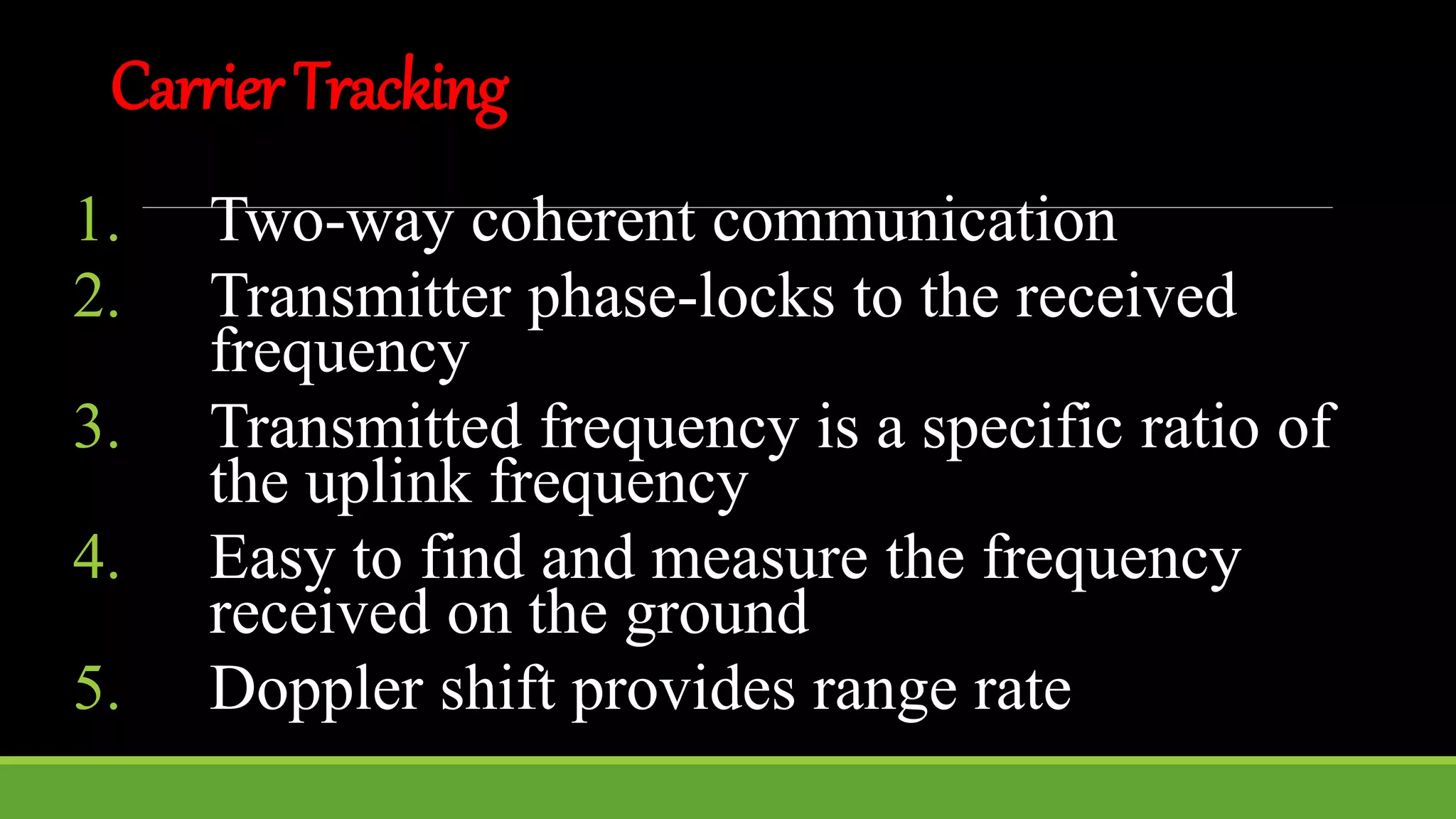
CarrierTracking
1. Two-way coherent communication
2. Transmitter phase-locks to the received
frequency
3. Transmitted frequency is a specific ratio of
the uplink frequency
4. Easy to find and measure the frequency
received on the ground
5. Doppler shift provides range rate
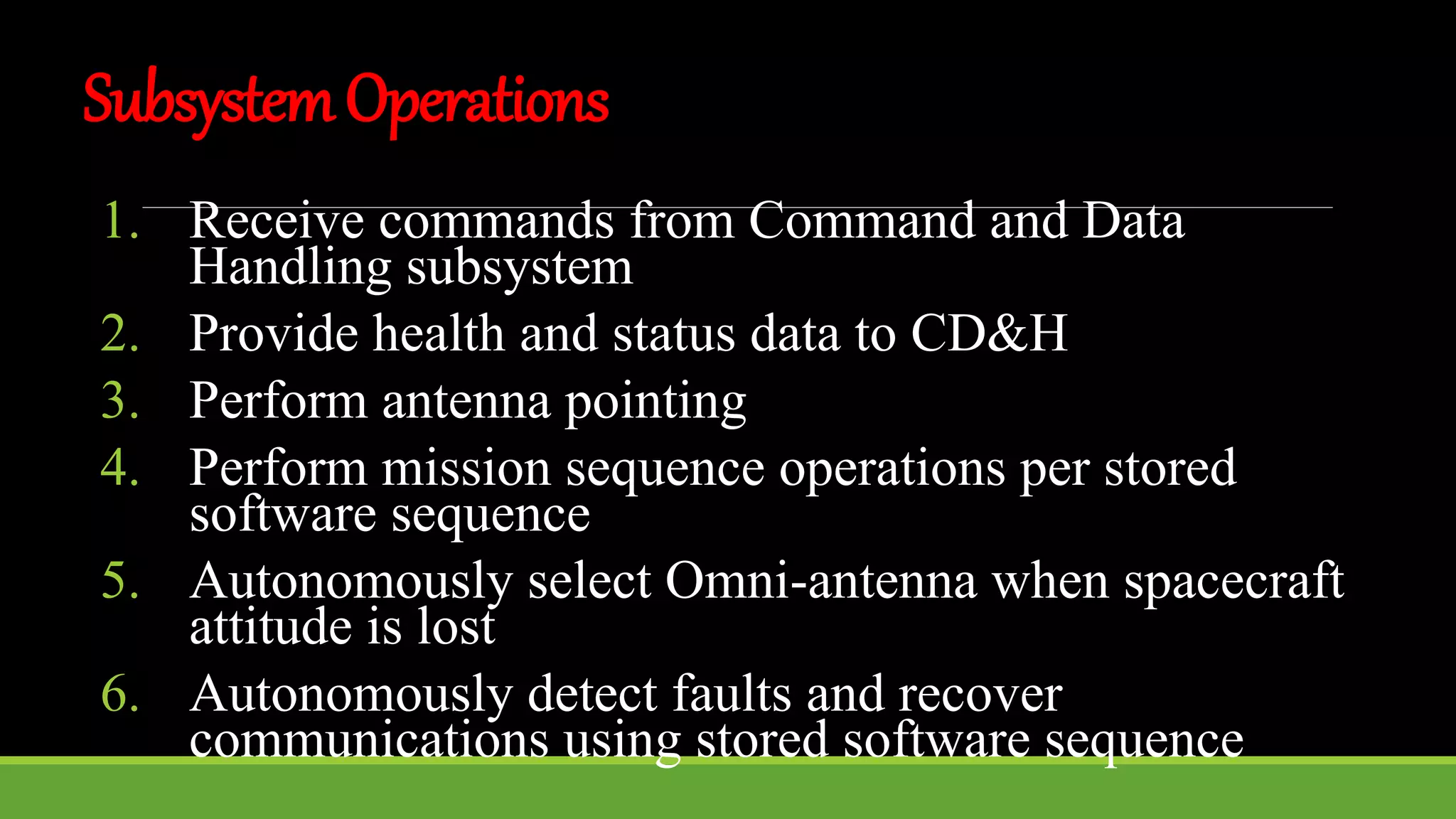
SubsystemOperations
1. Receive commands from Command and Data
Handling subsystem
2. Provide health and status data to CD&H
3. Perform antenna pointing
4. Perform mission sequence operations per stored
software sequence
5. Autonomously select Omni-antenna when spacecraft
attitude is lost
6. Autonomously detect faults and recover
communications using stored software sequence
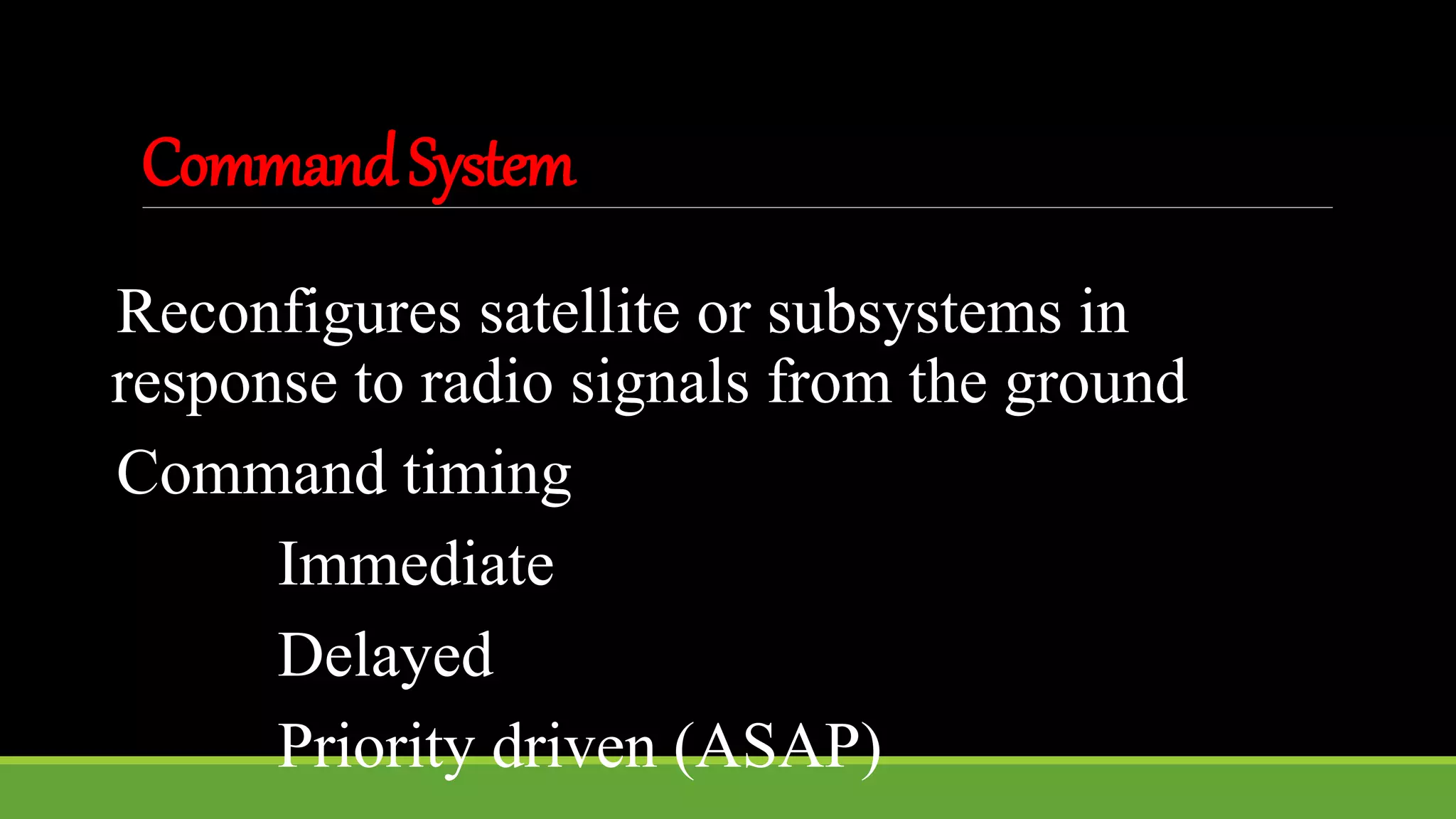
CommandSystem
Reconfigures satellite or subsystems in
response to radio signals from the ground
Command timing
Immediate
Delayed
Priority driven (ASAP)
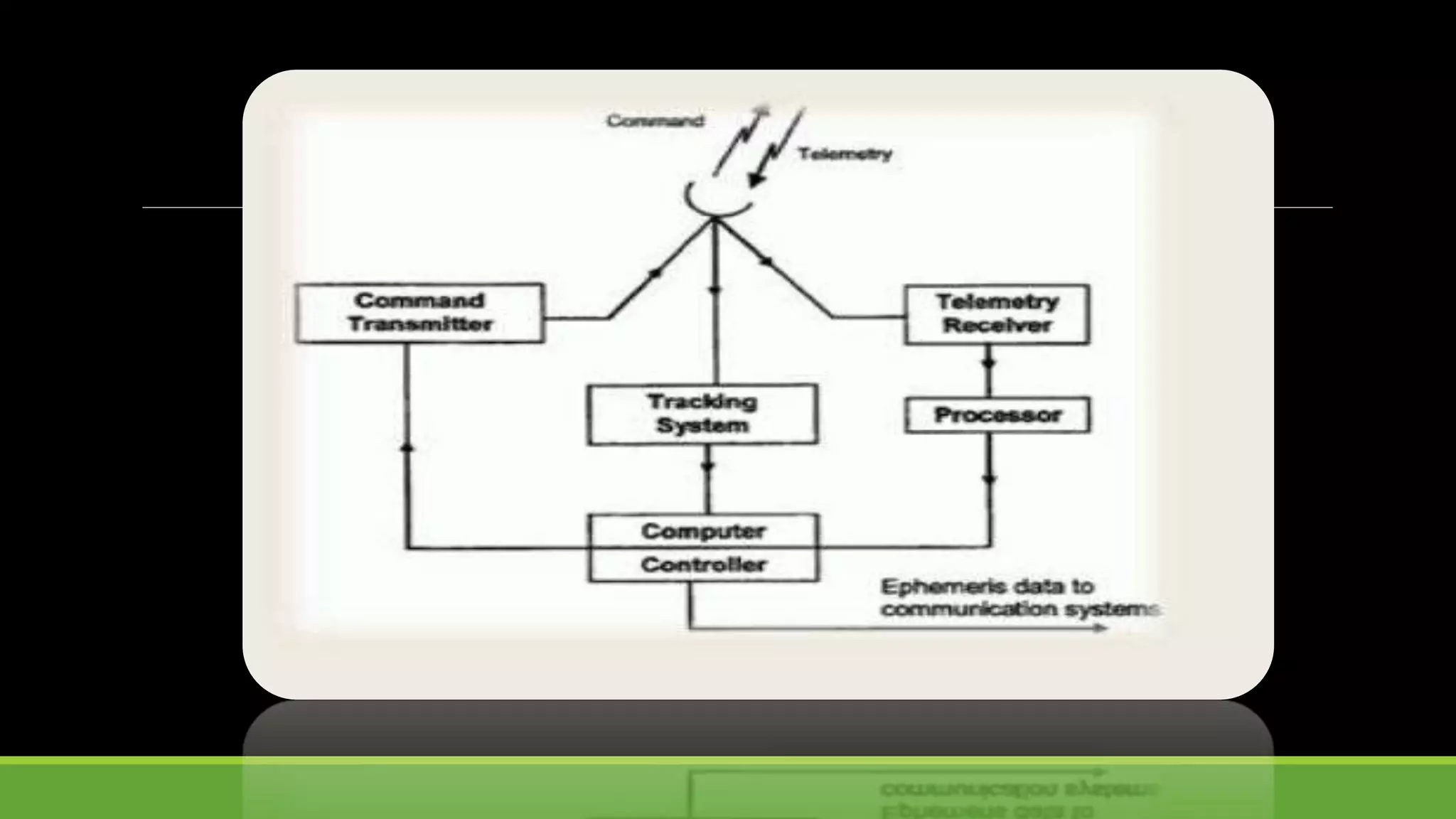
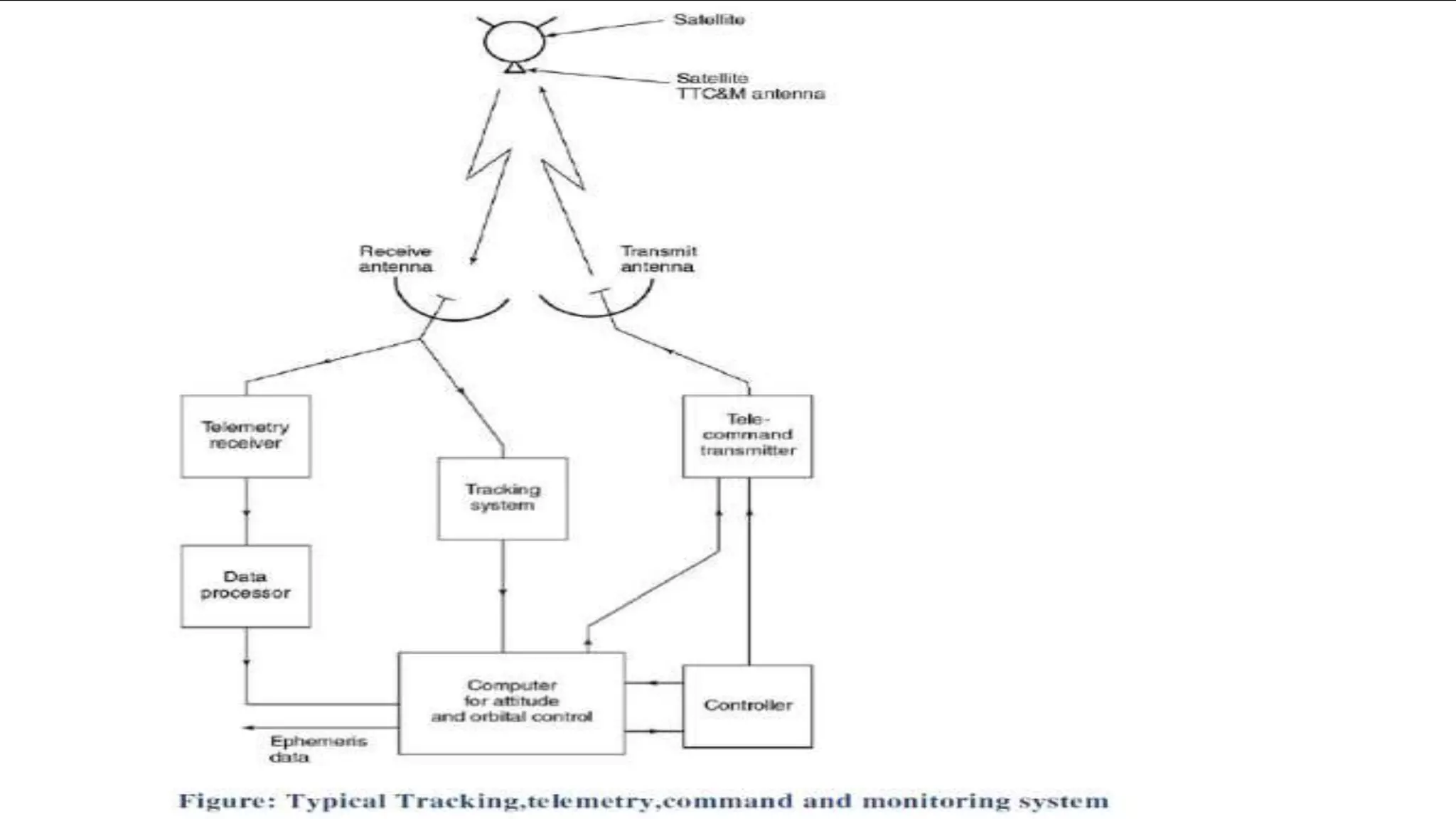
Typical tracking, telemetry, command and monitoring system.
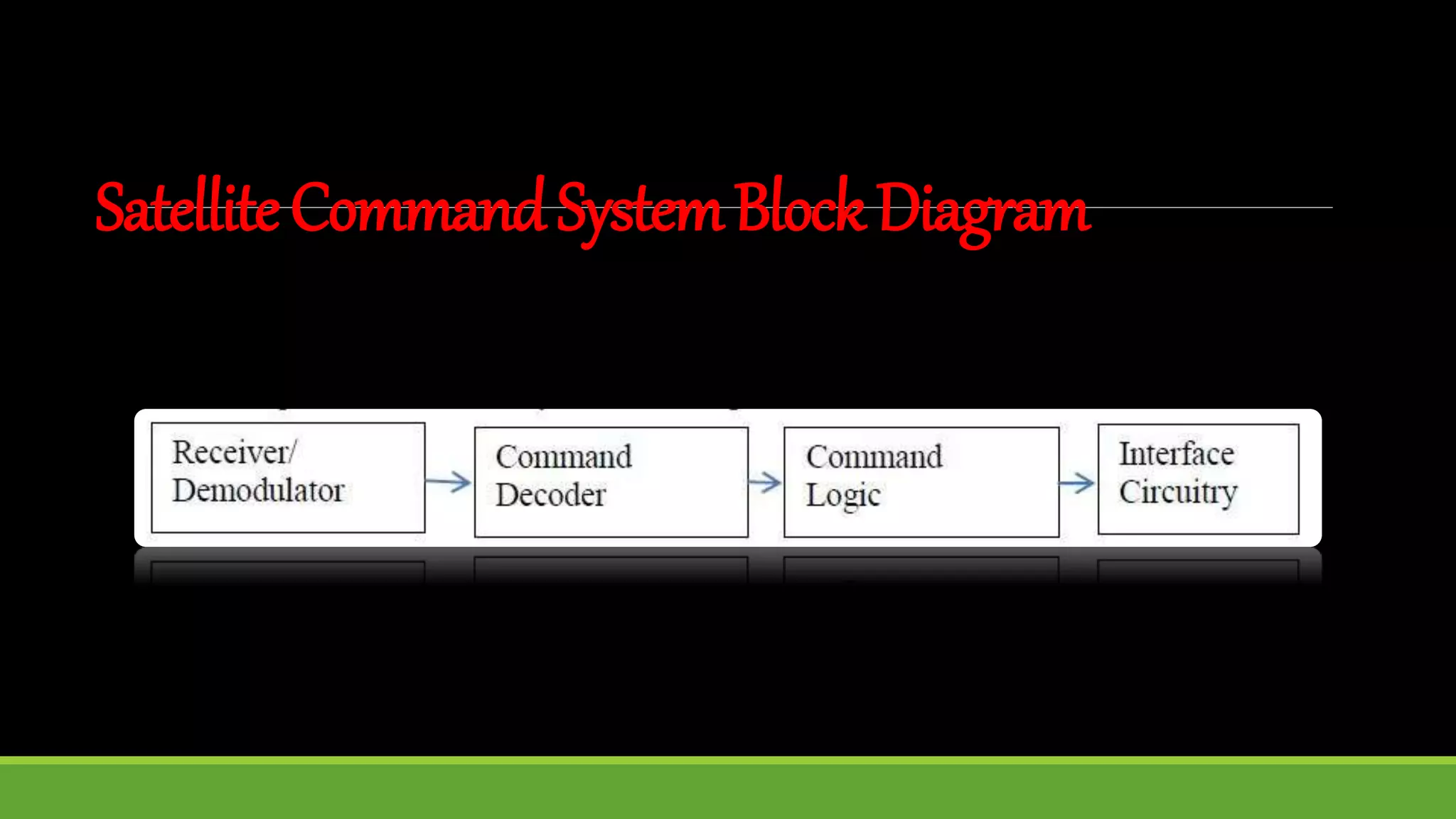
SatelliteCommandSystemBlockDiagram
25-Sep-17 SATELLITE COMMUNICATIONS 19
Thank You…..!!!!!

Satellite telemetry tracking command and monitoring subsystem & Electronic and control logic

  • 1.
  • 2.
    Contd… 1. Brain ofthe nanosatellite 2. Maintains the function of the satellite 3. Processes the command or instruction given by ground management system 4. Provides proper command to the required subsystem
  • 4.
    25-Sep-17 SATELLITE COMMUNICATION4 Transmission Polarization Low Noise conveter Reception Tuner Operation of satellite
  • 5.
    How SatellitesWork 1. AEarth Station sends message in GHz range. (Uplink) 2. Satellite Receive and retransmit signals back. (Downlink) 3. Other Earth Stations receive message in useful strength area. (Footprint)
  • 6.
  • 7.
    Introduction The telemetry, trackingand control subsystem provides vital communication to and from the satellite TT&C is the only way to observe and to control the satellite’s functions and condition from the ground
  • 8.
    TELEMETRY Telemetry - onedirection ( Satellite to ground ) Monitor the satellite through status reports & anomalies. Telemetry - set of measurements taken on board the satellite and then sent to the operations control Centre. Measurements concern magnitudes - temperatures, voltages, currents etc.
  • 9.
    COMMAND 1. Command Inthe other direction (ground to satellite) 2. Used either for routine programming or for sending commands to carry out specific actions to handle events. 3. Although modern satellites operate automatically, they still need to receive commands from the ground. 4. If the solar arrays have been automatically deployed, commands sent by the control centre switch on the equipment that was off during the launch: recorders, payloads and passengers if any.
  • 10.
    TRACKINGThe same linkis used for tracking. This term describes measurements taken to accurately locate the orbiting satellite (orbit determination);. This involves: Measuring the time taken by RF signals for the round trip journey (station - satellite- station Measuring, based on the Doppler effect, the frequency shift due to satellite velocity - calculate satellite range rate. Measuring antenna orientation with respect to the north (azimuth) and the horizon (elevation).
  • 11.
  • 12.
    1. Measuring ofangle and range for the localization of the satellite. 2. Transmission of housekeeping information. 3. Status of a satellite to the ground control station. 4. Receiving command signals for the station keeping operations of the on-board equipments.
  • 14.
    CarrierTracking 1. Two-way coherentcommunication 2. Transmitter phase-locks to the received frequency 3. Transmitted frequency is a specific ratio of the uplink frequency 4. Easy to find and measure the frequency received on the ground 5. Doppler shift provides range rate
  • 15.
    SubsystemOperations 1. Receive commandsfrom Command and Data Handling subsystem 2. Provide health and status data to CD&H 3. Perform antenna pointing 4. Perform mission sequence operations per stored software sequence 5. Autonomously select Omni-antenna when spacecraft attitude is lost 6. Autonomously detect faults and recover communications using stored software sequence
  • 16.
    CommandSystem Reconfigures satellite orsubsystems in response to radio signals from the ground Command timing Immediate Delayed Priority driven (ASAP)
  • 17.
    Typical tracking, telemetry,command and monitoring system.
  • 18.
  • 19.
    25-Sep-17 SATELLITE COMMUNICATIONS19 Thank You…..!!!!!

Editor's Notes

  • #9 Telemetry In one direction (satellite to ground), the link is used to monitor the satellite through status reports and anomalies detected by the onboard computer; this is telemetry. Telemetry is a set of measurements taken on board the satellite and then sent to the operations control center. The measurements describe the satellite, subsystem by subsystem. Measurements concern magnitudes as varied as temperatures, voltages, currents etc. For example, if we consider the solar array subsystem, we need to know the output voltage and current at all times.
  • #10 Command In the other direction (ground to satellite),the link is used either for routine programming or for sending commands to carry out specific actions to handle events as required (orbital maneuvers, equipment tests, anomalies, failures etc.); this is the command link. Although modern satellites operate automatically, they still need to receive commands from the ground. This need is particularly obvious during the satellite attitude acquisition phase. During this critical phase, the satellite needs to be very closely controlled from the operations control Centre. Once the solar arrays have been automatically deployed, commands sent by the control Centre switch on the equipment that was off during the launch: recorders, payloads and passengers if any.
  • #11 The same link is used for tracking. This term describes measurements taken to accurately locate the orbiting satellite (orbit determination);. This involves: Measuring the time taken by RF signals for the round trip journey (station - satellite- station). By measuring the time taken, it is possible to calculate the distance between the station and the satellite, an operation known as Ranging. Measuring, based on the Doppler effect, the frequency shift due to satellite velocity; this measurement is used to calculate satellite range rate. Measuring antenna orientation with respect to the north (azimuth) and the horizon (elevation), when the antenna is pointing towards the satellite. The complementary elevation and azimuth measurements are indispensable for determining the exact orbital position and thus for accurately calculating the satellite's orbit.
  • #15 Frequency bands Vhf – position low uplink freq around 150 downlink 140 S – band when position high uplink more than 2100 downlink more than 2000 Doppler – when a source and reciever are moving ….due to their relative motion…occurs a change in frequency of signal transmitted By this the distance of the receiver from source can b detected
  • #19 Decoders reproduce command messages and produce lock/enable and clock signals Command logic validates the command; default is to reject if any uncertainty of validity; drives appropriate interface security