Joint 3D inversion of gravity and
magnetic data with geological
constraints - an alternative approach
Ilya Prutkin (1), Peter Vajda (2), and Gerhard Jentzsch (1)
(1) Institute of Earth Sciences, Jena University, Jena, Germany
(2) Earth Science Institute, Slovak Academy of Sciences,
Bratislava, Slovakia
v
Our approach to 3D interpretation of
gravity/magnetic data
• Preliminary separation of sources
- in depth based on subsequent upward and downward
continuation
- in the lateral direction using approximation with the
field of several 3D line segments
- according to density and magnetization contrast by
calculation of pseudo-gravity
• Original algorithms for 3D gravity and magnetic data
inversion
- for restricted objects of arbitrary shape
- for 3D topography of contact surfaces
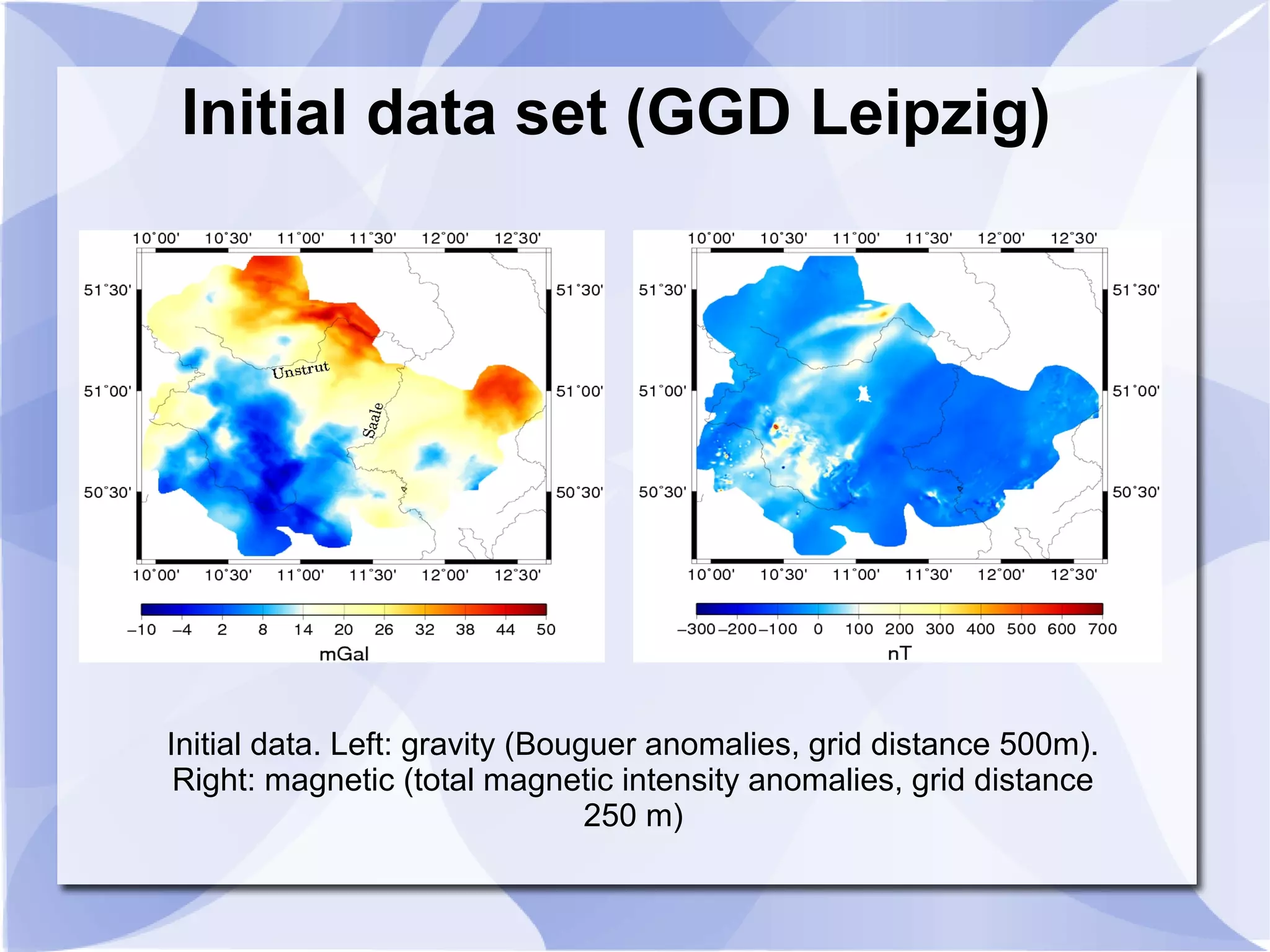
Initial data set (GGD Leipzig)
Initial data. Left: gravity (Bouguer anomalies, grid distance 500m).
Right: magnetic (total magnetic intensity anomalies, grid distance
250 m)
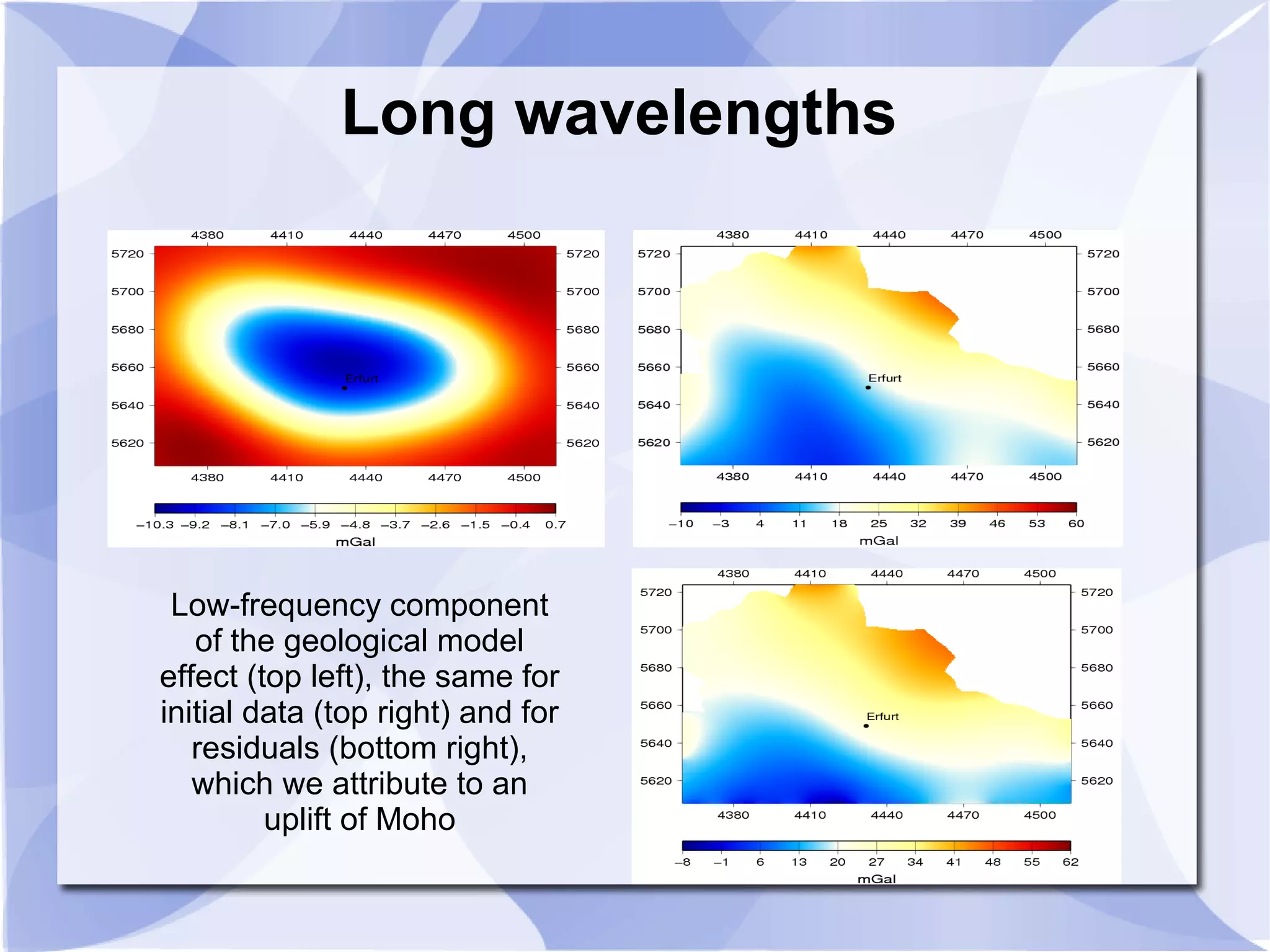
Long wavelengths
Low-frequency component
of the geological model
effect (top left), the same for
initial data (top right) and for
residuals (bottom right),
which we attribute to an
uplift of Moho
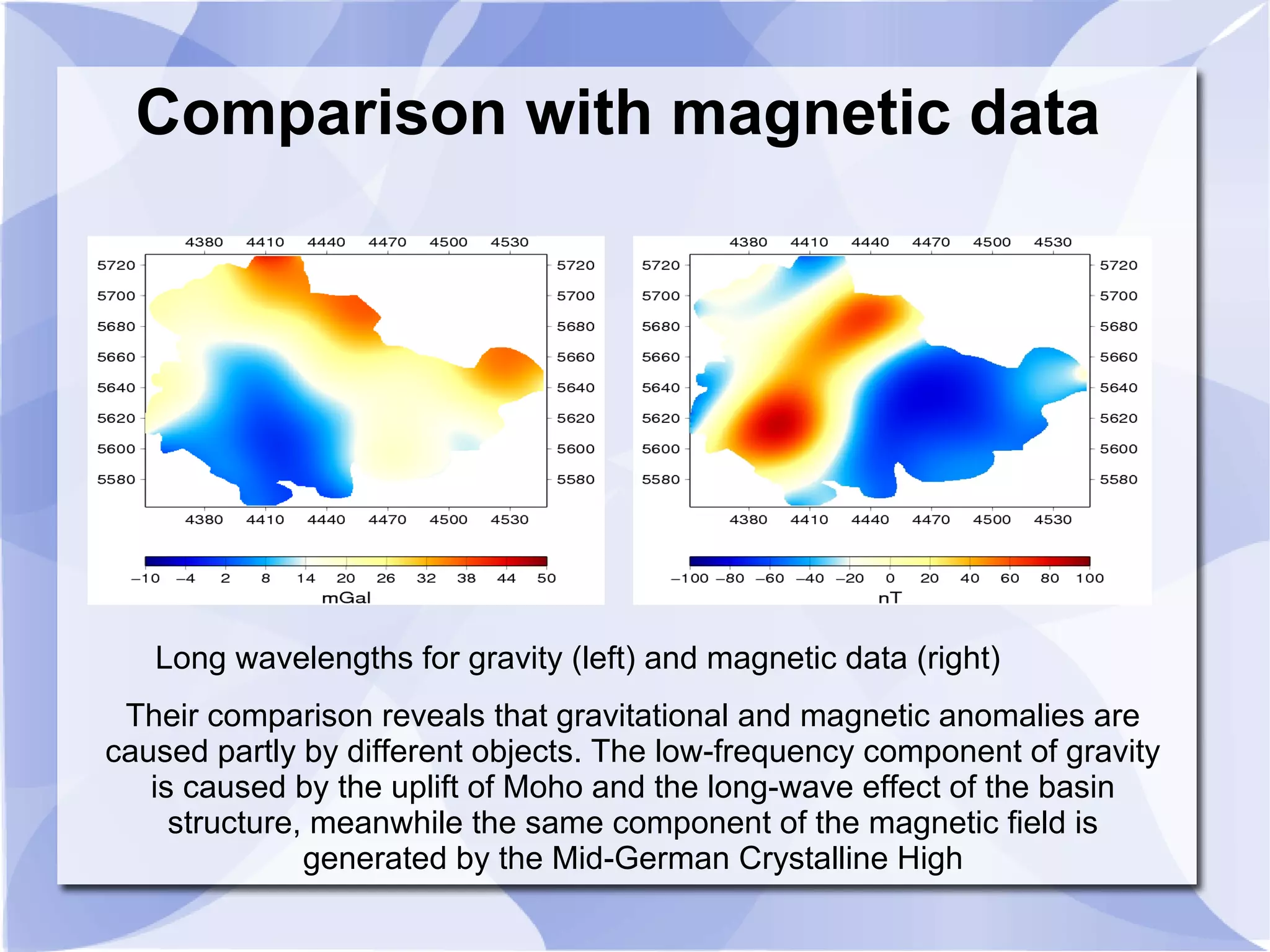
Comparison with magnetic data
Long wavelengths for gravity (left) and magnetic data (right)
Their comparison reveals that gravitational and magnetic anomalies are
caused partly by different objects. The low-frequency component of gravity
is caused by the uplift of Moho and the long-wave effect of the basin
structure, meanwhile the same component of the magnetic field is
generated by the Mid-German Crystalline High
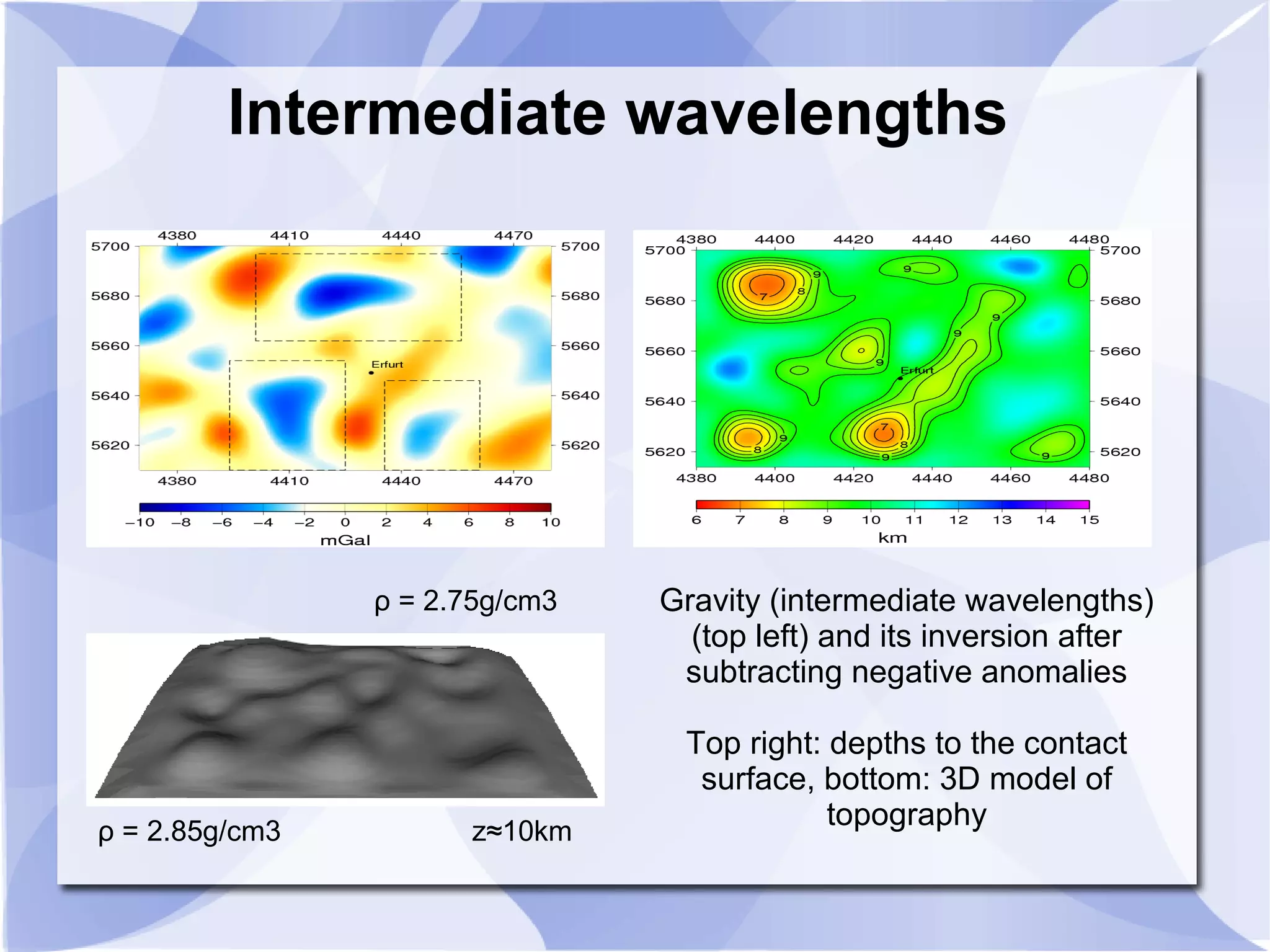
Intermediate wavelengths
ρ = 2.85g/cm3
ρ = 2.75g/cm3
z≈10km
Gravity (intermediate wavelengths)
(top left) and its inversion after
subtracting negative anomalies
Top right: depths to the contact
surface, bottom: 3D model of
topography
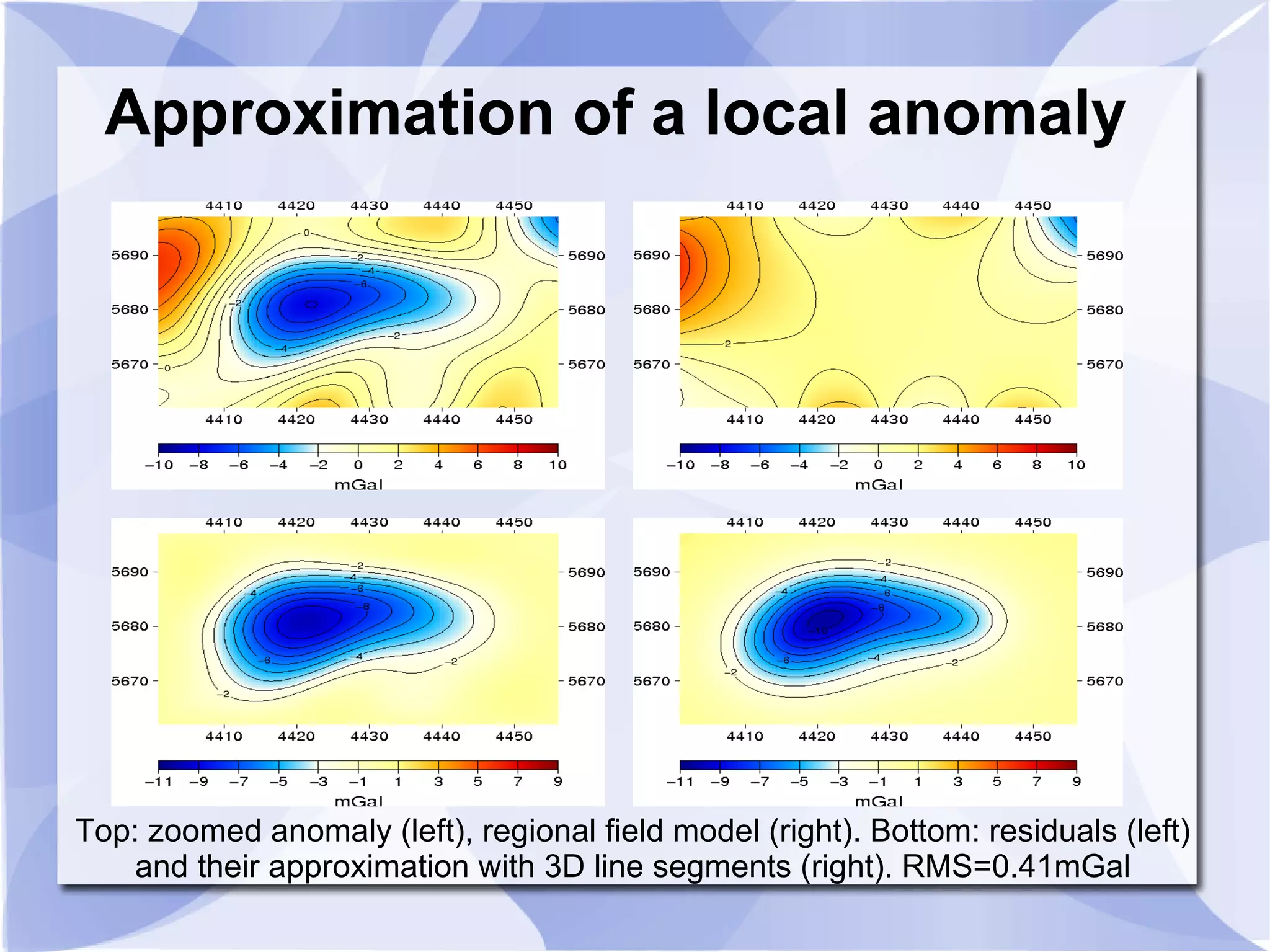
Approximation of a local anomaly
Top: zoomed anomaly (left), regional field model (right). Bottom: residuals (left)
and their approximation with 3D line segments (right). RMS=0.41mGal
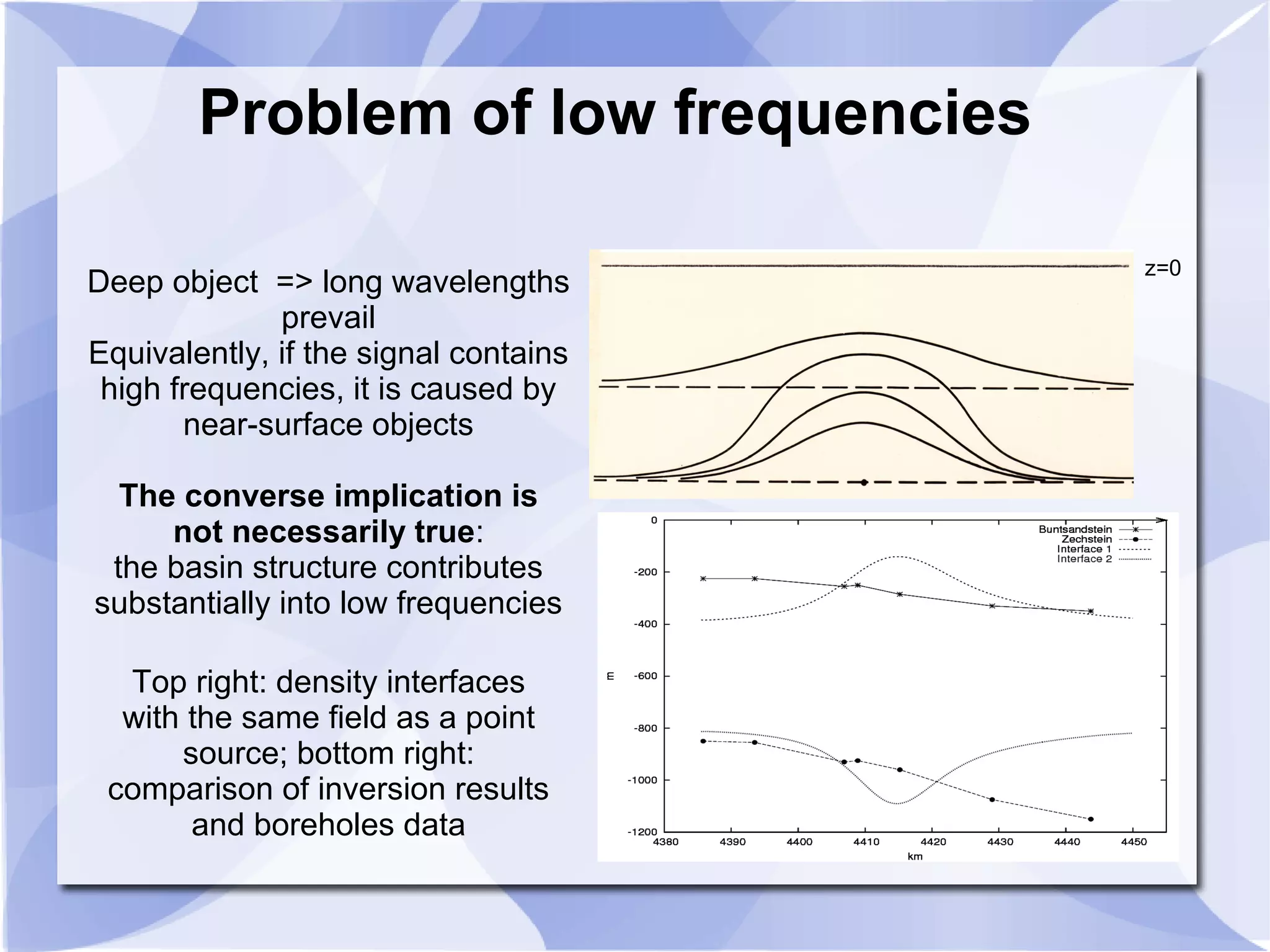
Problem of low frequencies
z=0
Deep object => long wavelengths
prevail
Equivalently, if the signal contains
high frequencies, it is caused by
near-surface objects
The converse implication is
not necessarily true:
the basin structure contributes
substantially into low frequencies
Top right: density interfaces
with the same field as a point
source; bottom right:
comparison of inversion results
and boreholes data
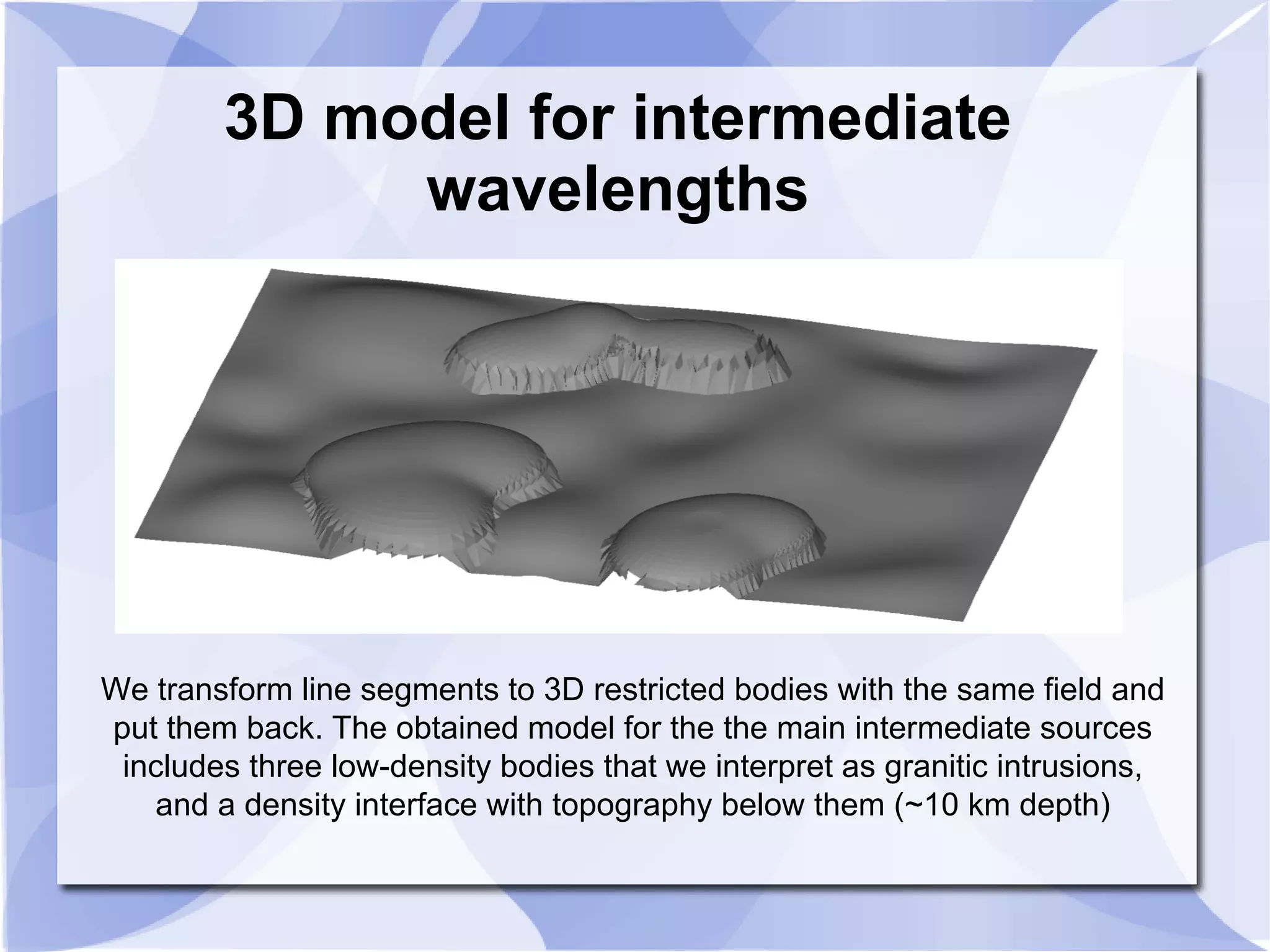
3D model for intermediate
wavelengths
We transform line segments to 3D restricted bodies with the same field and
put them back. The obtained model for the the main intermediate sources
includes three low-density bodies that we interpret as granitic intrusions,
and a density interface with topography below them (~10 km depth)
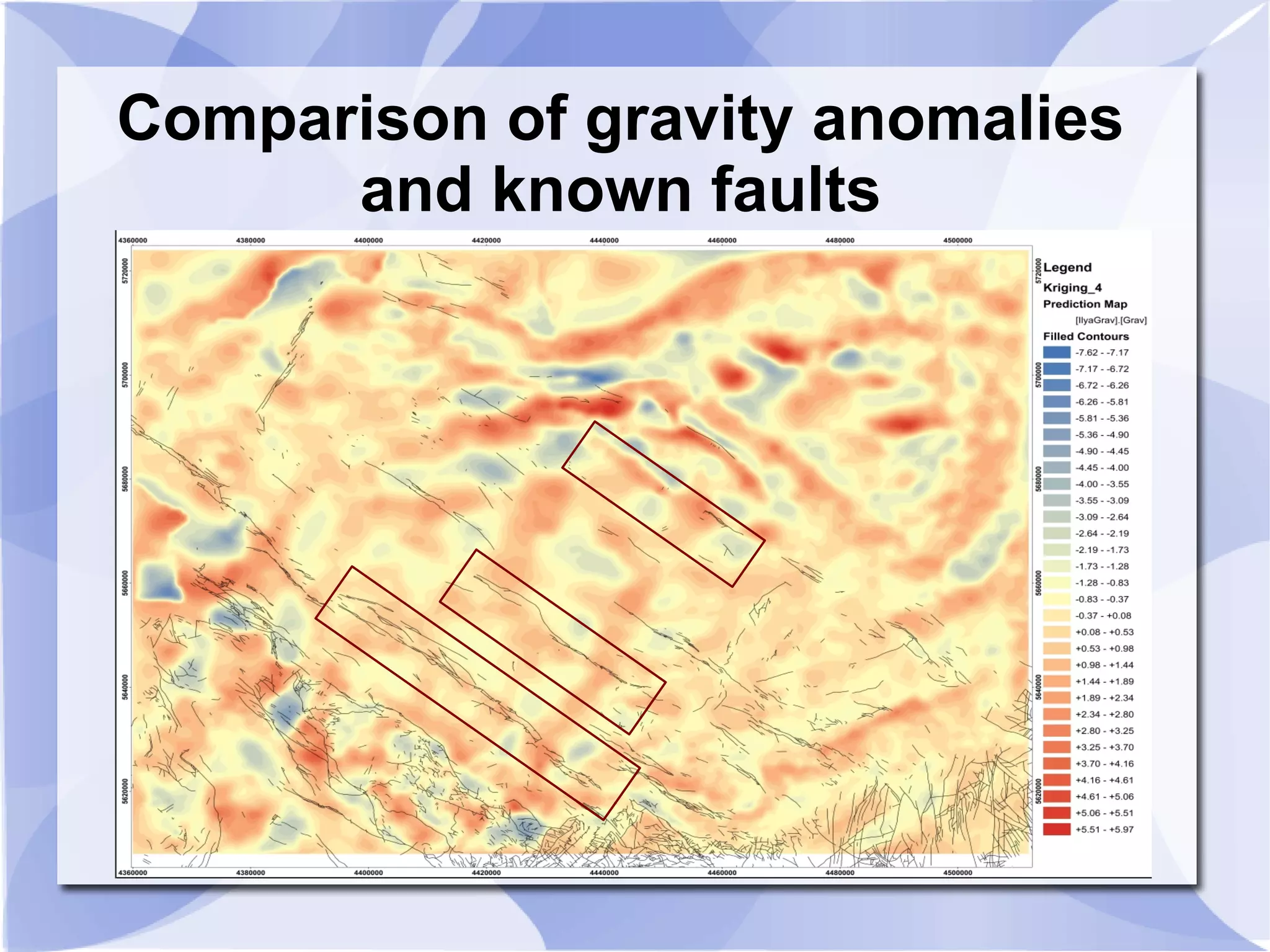
Comparison of gravity anomalies
and known faults
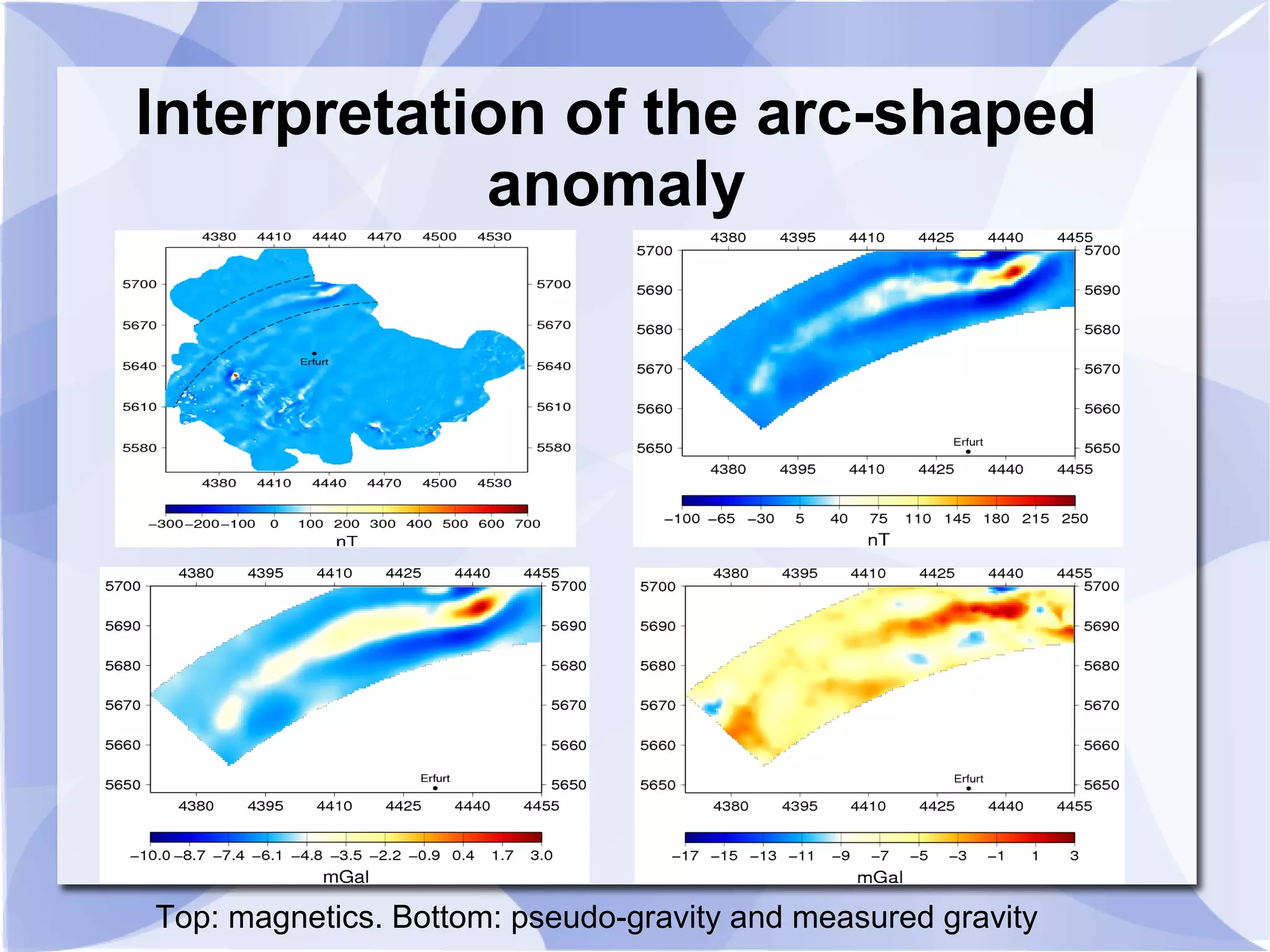
Interpretation of the arc-shaped
anomaly
Top: magnetics. Bottom: pseudo-gravity and measured gravity
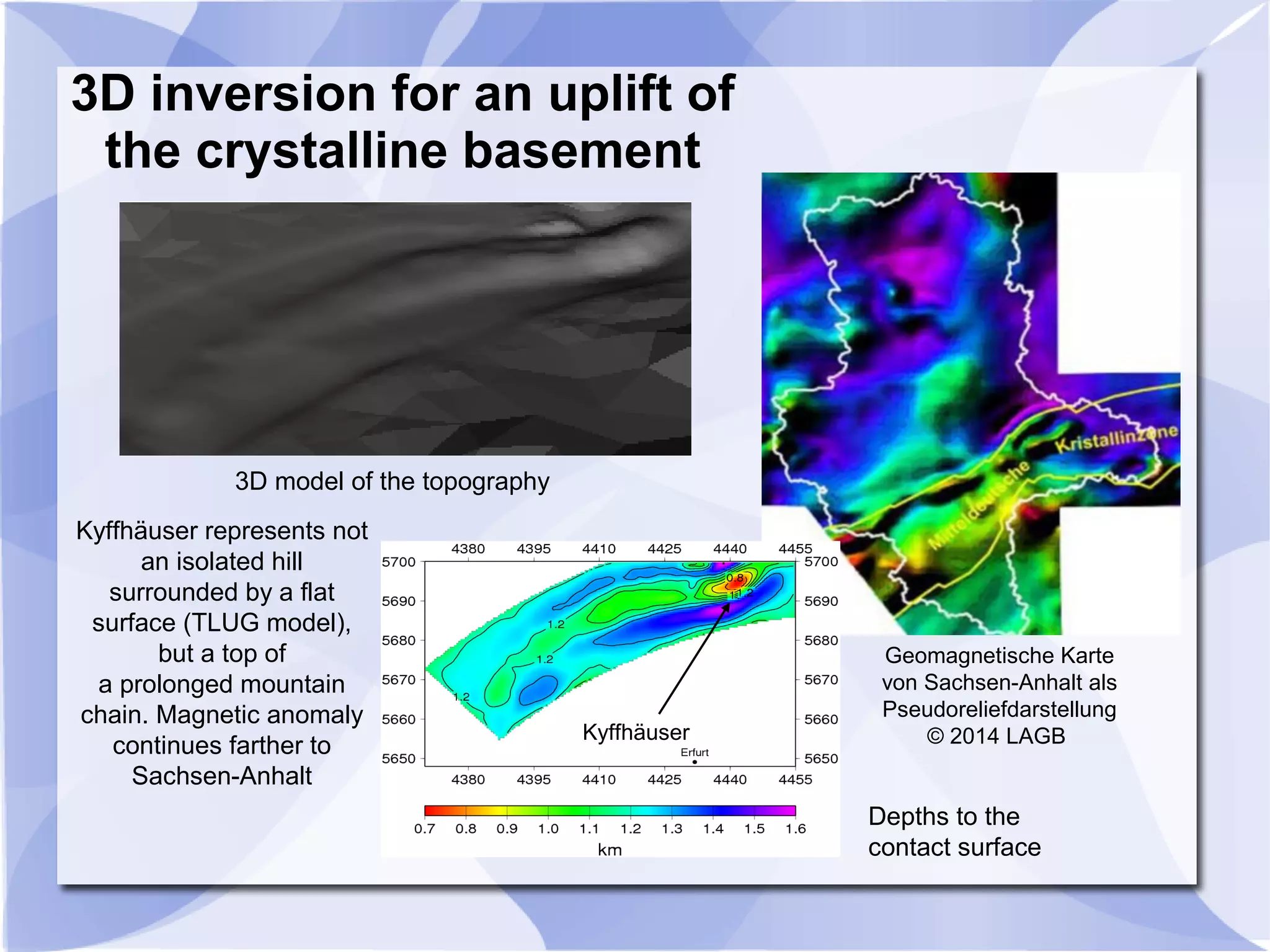
3D inversion for an uplift of
the crystalline basement
Kyffhäuser
Depths to the
contact surface
Geomagnetische Karte
von Sachsen-Anhalt als
Pseudoreliefdarstellung
© 2014 LAGB
Kyffhäuser represents not
an isolated hill
surrounded by a flat
surface (TLUG model),
but a top of
a prolonged mountain
chain. Magnetic anomaly
continues farther to
Sachsen-Anhalt
3D model of the topography
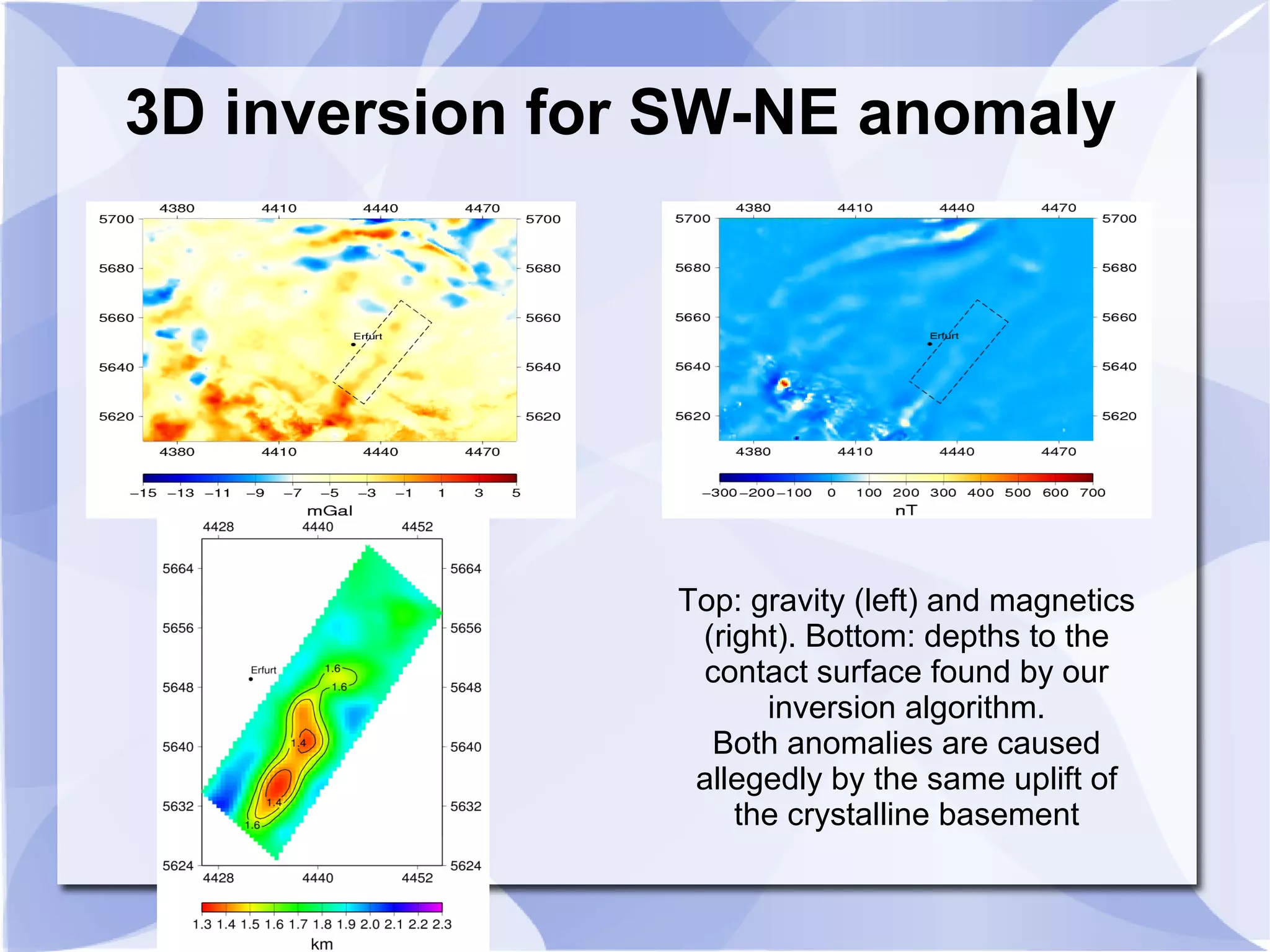
3D inversion for SW-NE anomaly
Top: gravity (left) and magnetics
(right). Bottom: depths to the
contact surface found by our
inversion algorithm.
Both anomalies are caused
allegedly by the same uplift of
the crystalline basement
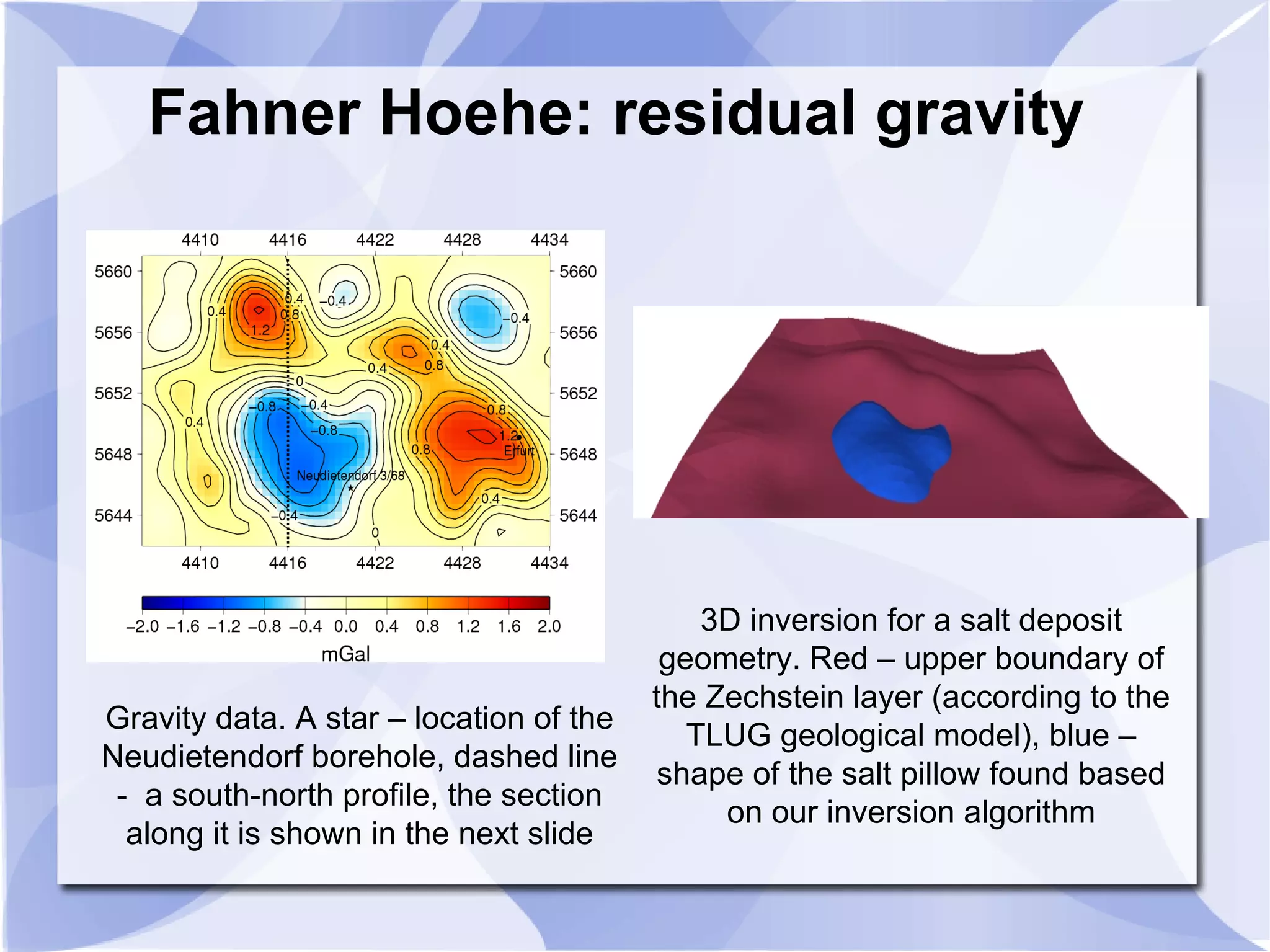
Fahner Hoehe: residual gravity
Gravity data. A star – location of the
Neudietendorf borehole, dashed line
- a south-north profile, the section
along it is shown in the next slide
3D inversion for a salt deposit
geometry. Red – upper boundary of
the Zechstein layer (according to the
TLUG geological model), blue –
shape of the salt pillow found based
on our inversion algorithm
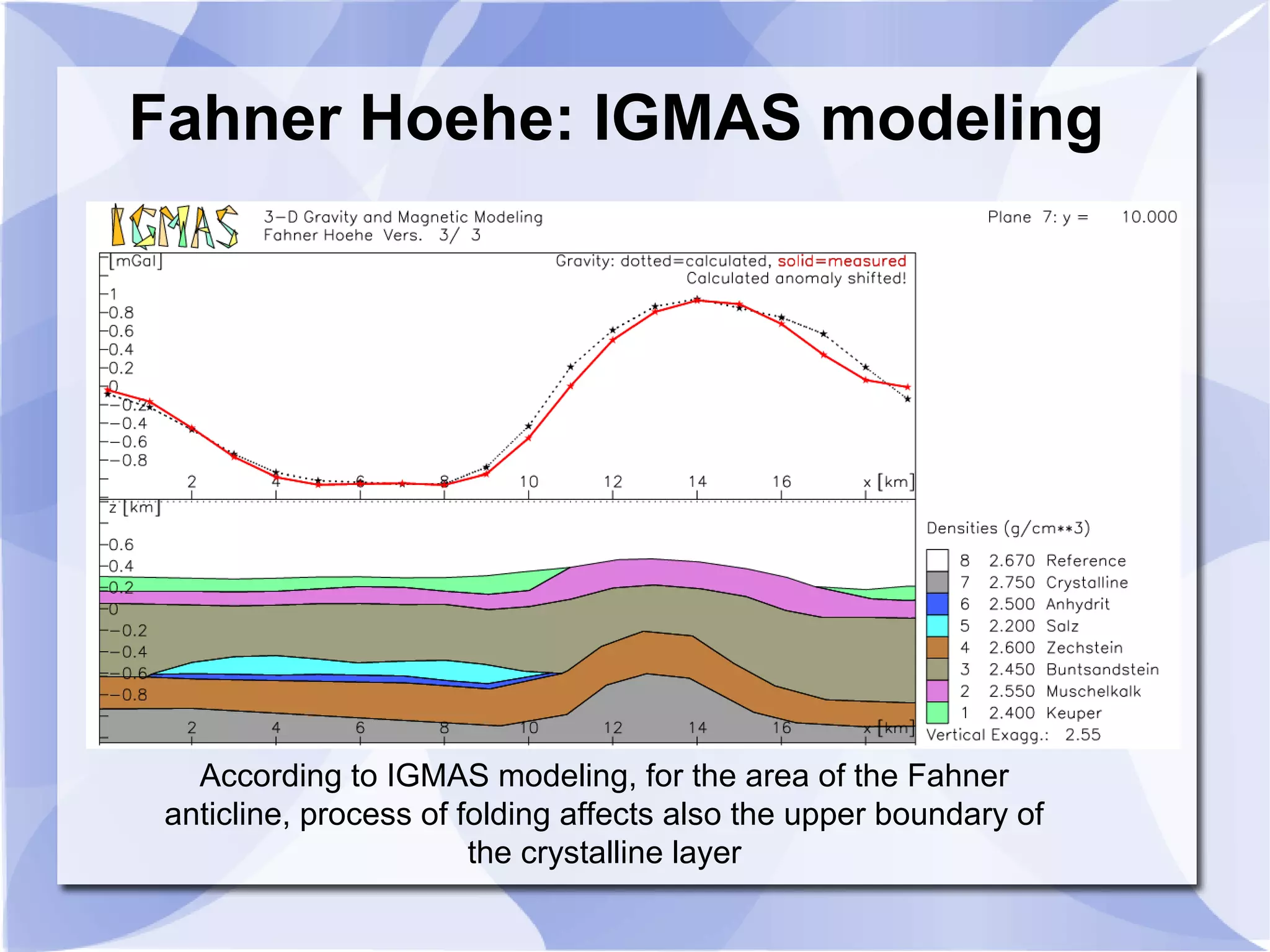
Fahner Hoehe: IGMAS modeling
According to IGMAS modeling, for the area of the Fahner
anticline, process of folding affects also the upper boundary of
the crystalline layer
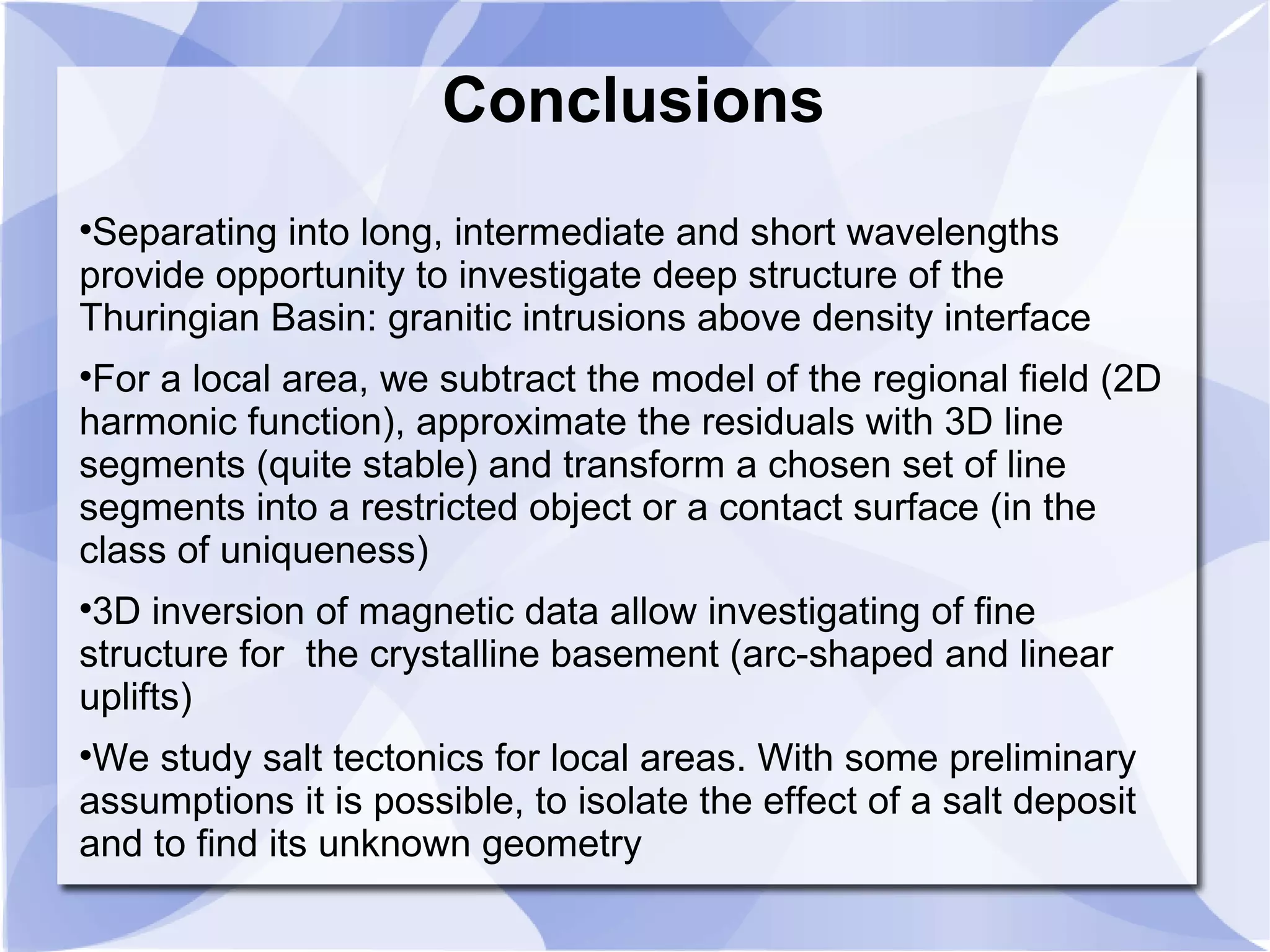
Conclusions

Separating into long, intermediate and short wavelengths
provide opportunity to investigate deep structure of the
Thuringian Basin: granitic intrusions above density interface

For a local area, we subtract the model of the regional field (2D
harmonic function), approximate the residuals with 3D line
segments (quite stable) and transform a chosen set of line
segments into a restricted object or a contact surface (in the
class of uniqueness)

3D inversion of magnetic data allow investigating of fine
structure for the crystalline basement (arc-shaped and linear
uplifts)

We study salt tectonics for local areas. With some preliminary
assumptions it is possible, to isolate the effect of a salt deposit
and to find its unknown geometry

eguPrutkin

  • 1.
    Joint 3D inversionof gravity and magnetic data with geological constraints - an alternative approach Ilya Prutkin (1), Peter Vajda (2), and Gerhard Jentzsch (1) (1) Institute of Earth Sciences, Jena University, Jena, Germany (2) Earth Science Institute, Slovak Academy of Sciences, Bratislava, Slovakia v
  • 2.
    Our approach to3D interpretation of gravity/magnetic data • Preliminary separation of sources - in depth based on subsequent upward and downward continuation - in the lateral direction using approximation with the field of several 3D line segments - according to density and magnetization contrast by calculation of pseudo-gravity • Original algorithms for 3D gravity and magnetic data inversion - for restricted objects of arbitrary shape - for 3D topography of contact surfaces
  • 3.
    Initial data set(GGD Leipzig) Initial data. Left: gravity (Bouguer anomalies, grid distance 500m). Right: magnetic (total magnetic intensity anomalies, grid distance 250 m)
  • 4.
    Long wavelengths Low-frequency component ofthe geological model effect (top left), the same for initial data (top right) and for residuals (bottom right), which we attribute to an uplift of Moho
  • 5.
    Comparison with magneticdata Long wavelengths for gravity (left) and magnetic data (right) Their comparison reveals that gravitational and magnetic anomalies are caused partly by different objects. The low-frequency component of gravity is caused by the uplift of Moho and the long-wave effect of the basin structure, meanwhile the same component of the magnetic field is generated by the Mid-German Crystalline High
  • 6.
    Intermediate wavelengths ρ =2.85g/cm3 ρ = 2.75g/cm3 z≈10km Gravity (intermediate wavelengths) (top left) and its inversion after subtracting negative anomalies Top right: depths to the contact surface, bottom: 3D model of topography
  • 7.
    Approximation of alocal anomaly Top: zoomed anomaly (left), regional field model (right). Bottom: residuals (left) and their approximation with 3D line segments (right). RMS=0.41mGal
  • 8.
    Problem of lowfrequencies z=0 Deep object => long wavelengths prevail Equivalently, if the signal contains high frequencies, it is caused by near-surface objects The converse implication is not necessarily true: the basin structure contributes substantially into low frequencies Top right: density interfaces with the same field as a point source; bottom right: comparison of inversion results and boreholes data
  • 9.
    3D model forintermediate wavelengths We transform line segments to 3D restricted bodies with the same field and put them back. The obtained model for the the main intermediate sources includes three low-density bodies that we interpret as granitic intrusions, and a density interface with topography below them (~10 km depth)
  • 10.
    Comparison of gravityanomalies and known faults
  • 11.
    Interpretation of thearc-shaped anomaly Top: magnetics. Bottom: pseudo-gravity and measured gravity
  • 12.
    3D inversion foran uplift of the crystalline basement Kyffhäuser Depths to the contact surface Geomagnetische Karte von Sachsen-Anhalt als Pseudoreliefdarstellung © 2014 LAGB Kyffhäuser represents not an isolated hill surrounded by a flat surface (TLUG model), but a top of a prolonged mountain chain. Magnetic anomaly continues farther to Sachsen-Anhalt 3D model of the topography
  • 13.
    3D inversion forSW-NE anomaly Top: gravity (left) and magnetics (right). Bottom: depths to the contact surface found by our inversion algorithm. Both anomalies are caused allegedly by the same uplift of the crystalline basement
  • 14.
    Fahner Hoehe: residualgravity Gravity data. A star – location of the Neudietendorf borehole, dashed line - a south-north profile, the section along it is shown in the next slide 3D inversion for a salt deposit geometry. Red – upper boundary of the Zechstein layer (according to the TLUG geological model), blue – shape of the salt pillow found based on our inversion algorithm
  • 15.
    Fahner Hoehe: IGMASmodeling According to IGMAS modeling, for the area of the Fahner anticline, process of folding affects also the upper boundary of the crystalline layer
  • 16.
    Conclusions  Separating into long,intermediate and short wavelengths provide opportunity to investigate deep structure of the Thuringian Basin: granitic intrusions above density interface  For a local area, we subtract the model of the regional field (2D harmonic function), approximate the residuals with 3D line segments (quite stable) and transform a chosen set of line segments into a restricted object or a contact surface (in the class of uniqueness)  3D inversion of magnetic data allow investigating of fine structure for the crystalline basement (arc-shaped and linear uplifts)  We study salt tectonics for local areas. With some preliminary assumptions it is possible, to isolate the effect of a salt deposit and to find its unknown geometry