The Effects of Storytelling and Story Reading
on the Oral Language Complexity
and Story Comprehension of Young Children
EFFECTS
OF STORYTELLING AND STORY READING
Purpose
Literature
Review
Method
Result
Conclusion
Participants
Measurement
Procedure
Further Study
The influence on
the language development
and story comprehension
of young children
Purpose
The development of oral language is
one of children’s most massive accomplishments
that occur during the first five years of life
(Genishi, 1988)
Literature
Review
Influence of Story Reading on
Language Development
Literature
Review
Wells (1986) states that the number of hours a child is read to during their preschool
years is the best predictor of the child's later reading achievement in school.
Not only do children acquire language and literacy skills, but they also experience
vocabulary growth, knowledge of handling books, and many other skills (Snow, 1983).
Story reading can foster communication opportunities for young children, as they
discuss the text and illustrations (Kaderavek & Justice).
Literature
Review
Influence of Storytelling on
Language Development
Literature
Review
Imaginative development is a key benefit of stories being told (Ellis, 1997).
He also suggested that storytelling is the most effective way to develop listening skills.
Both can enhance children's imaginations
as well as encourage them to create mental pictures (Aina, 1999).
Storytelling, however, seems to require more visual imagination than story reading,
because there are no book illustrations to preempt (선수치다)the listeners' attention.
Trostle and Hicks (1998) conducted a study to determine whether children who
heard stories told performed better on comprehension and vocabulary tests as
compared to children who heard stories read.
Literature
Review
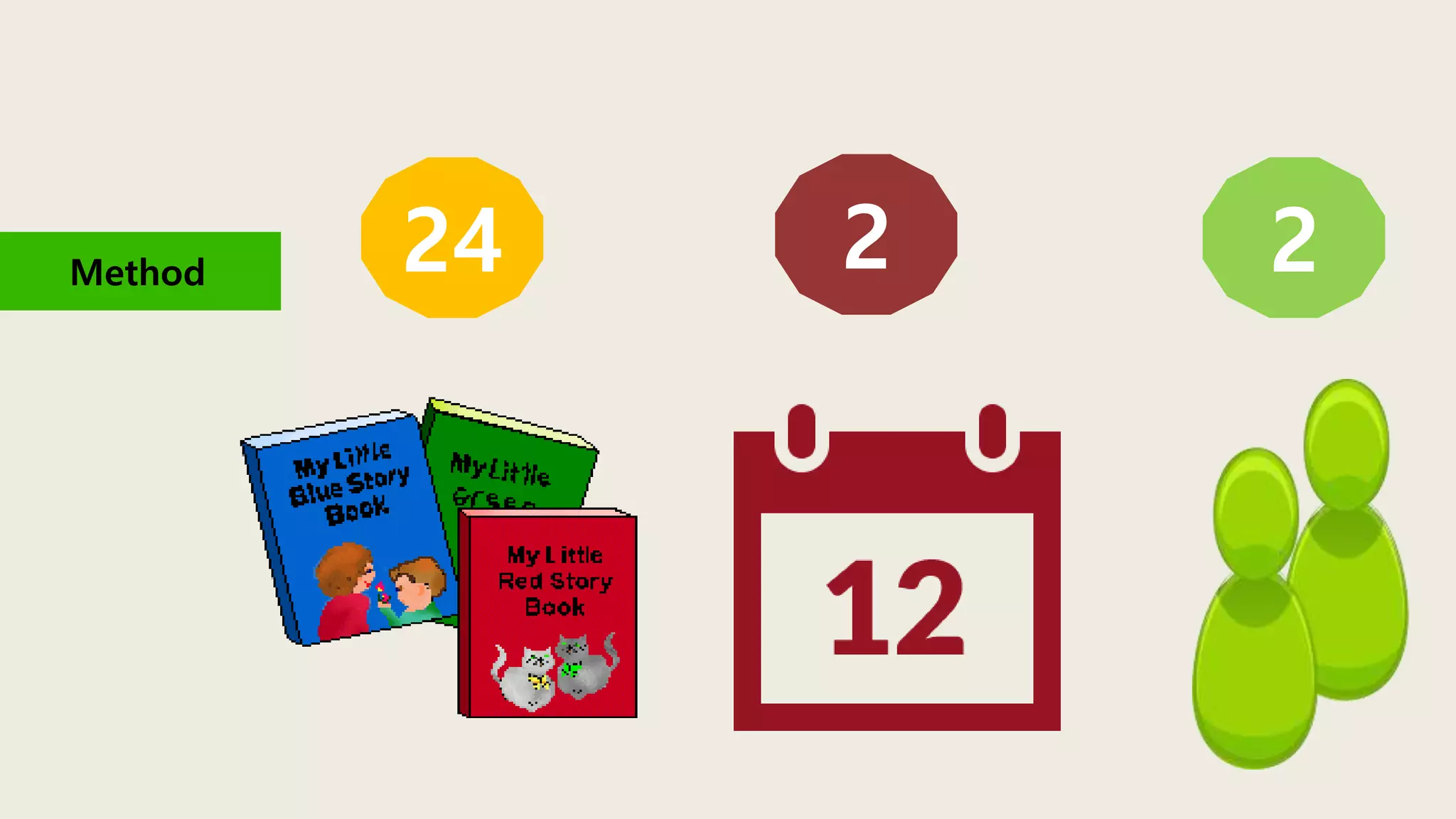
24 22Method
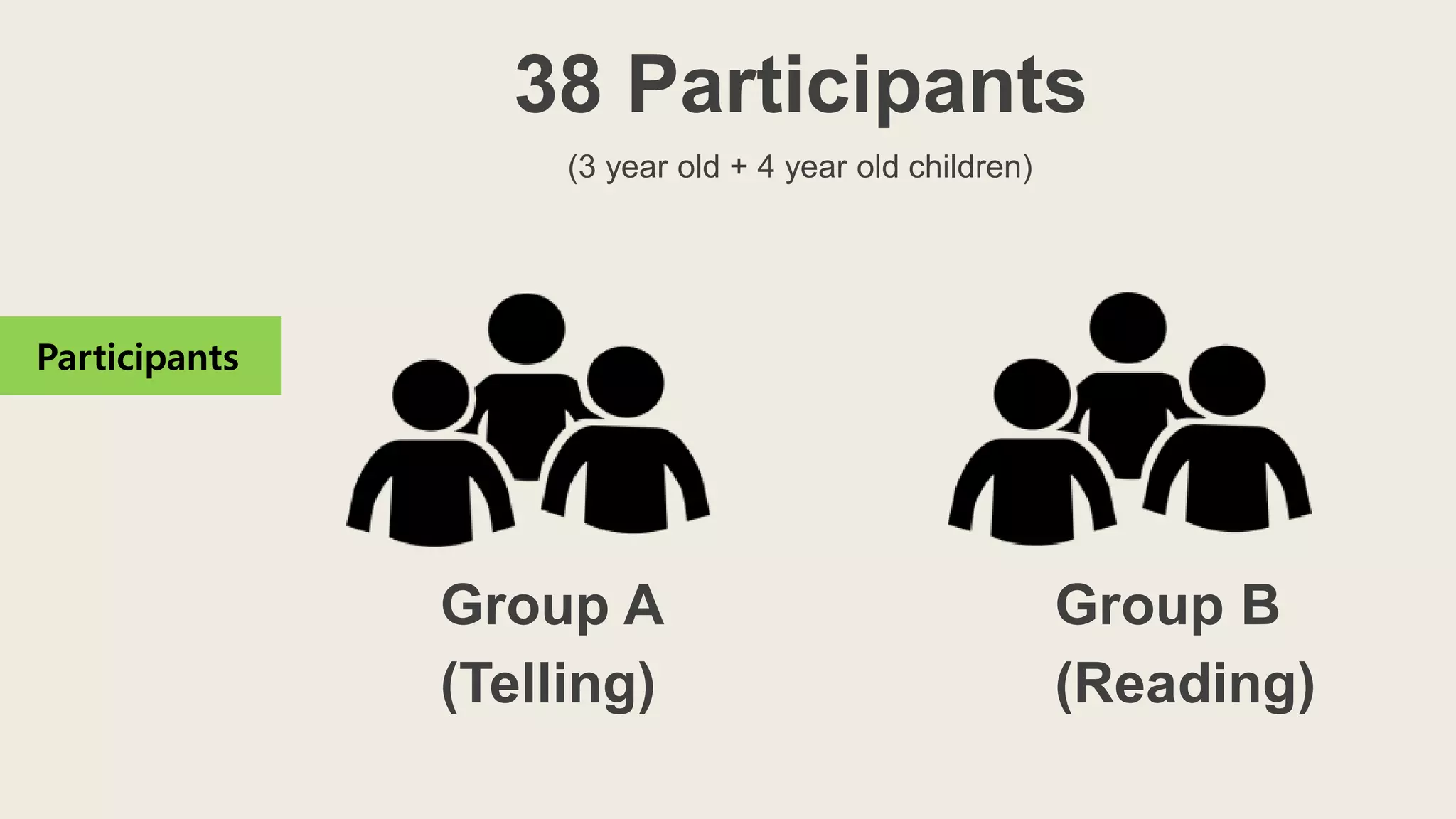
Group A
(Telling)
Group B
(Reading)
38 Participants
(3 year old + 4 year old children)
Participants
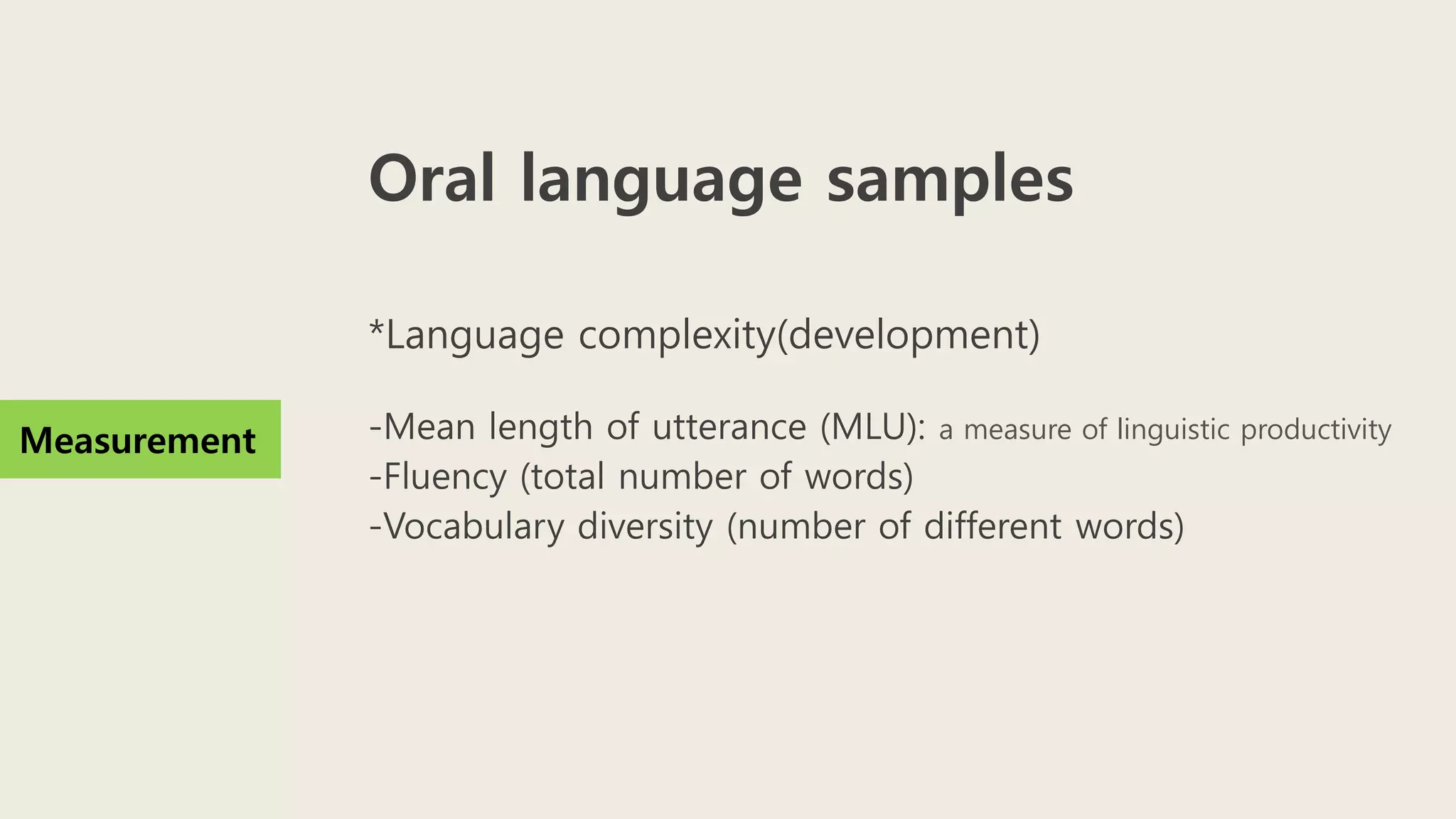
Oral language samples
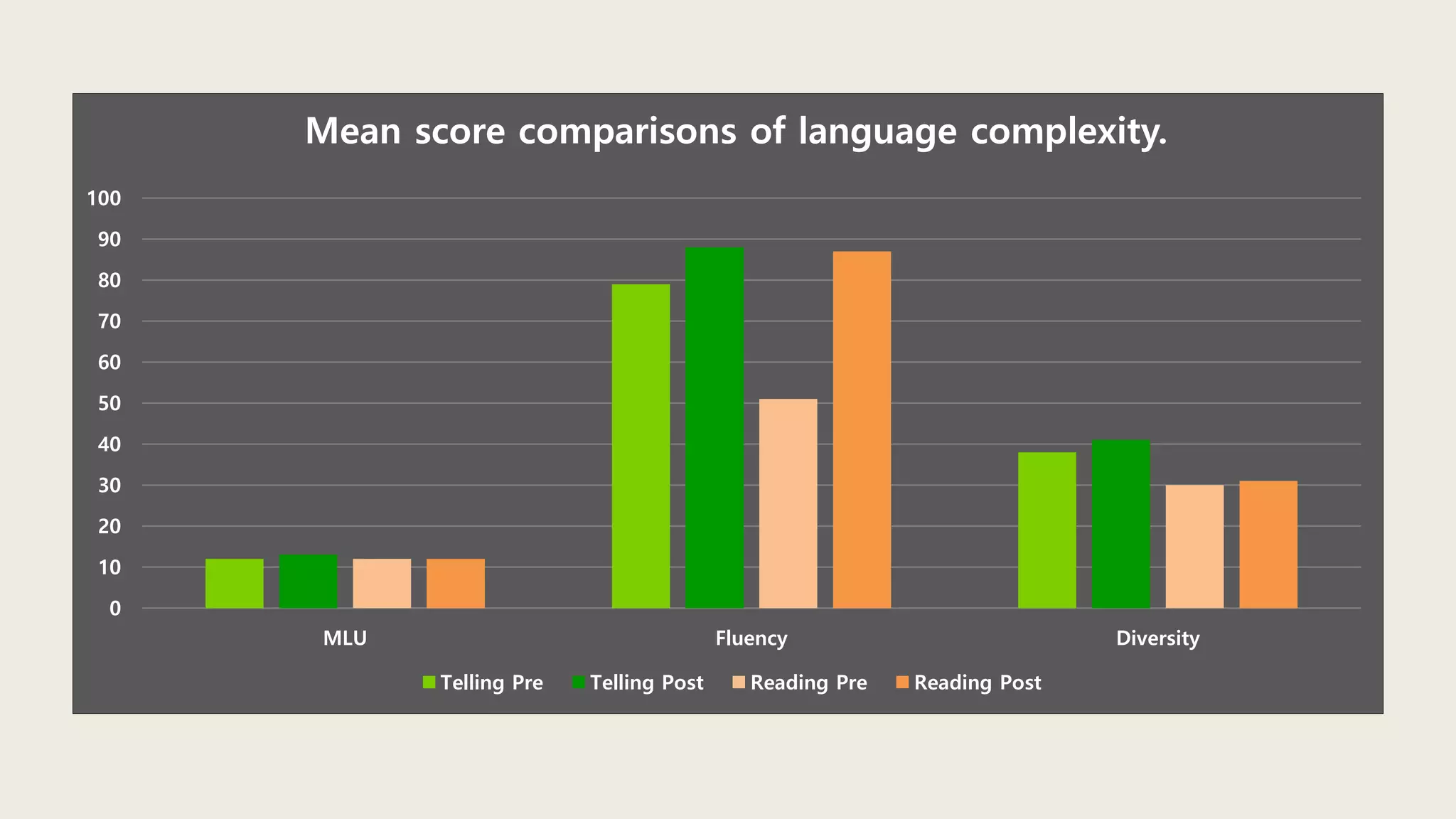
*Language complexity(development)
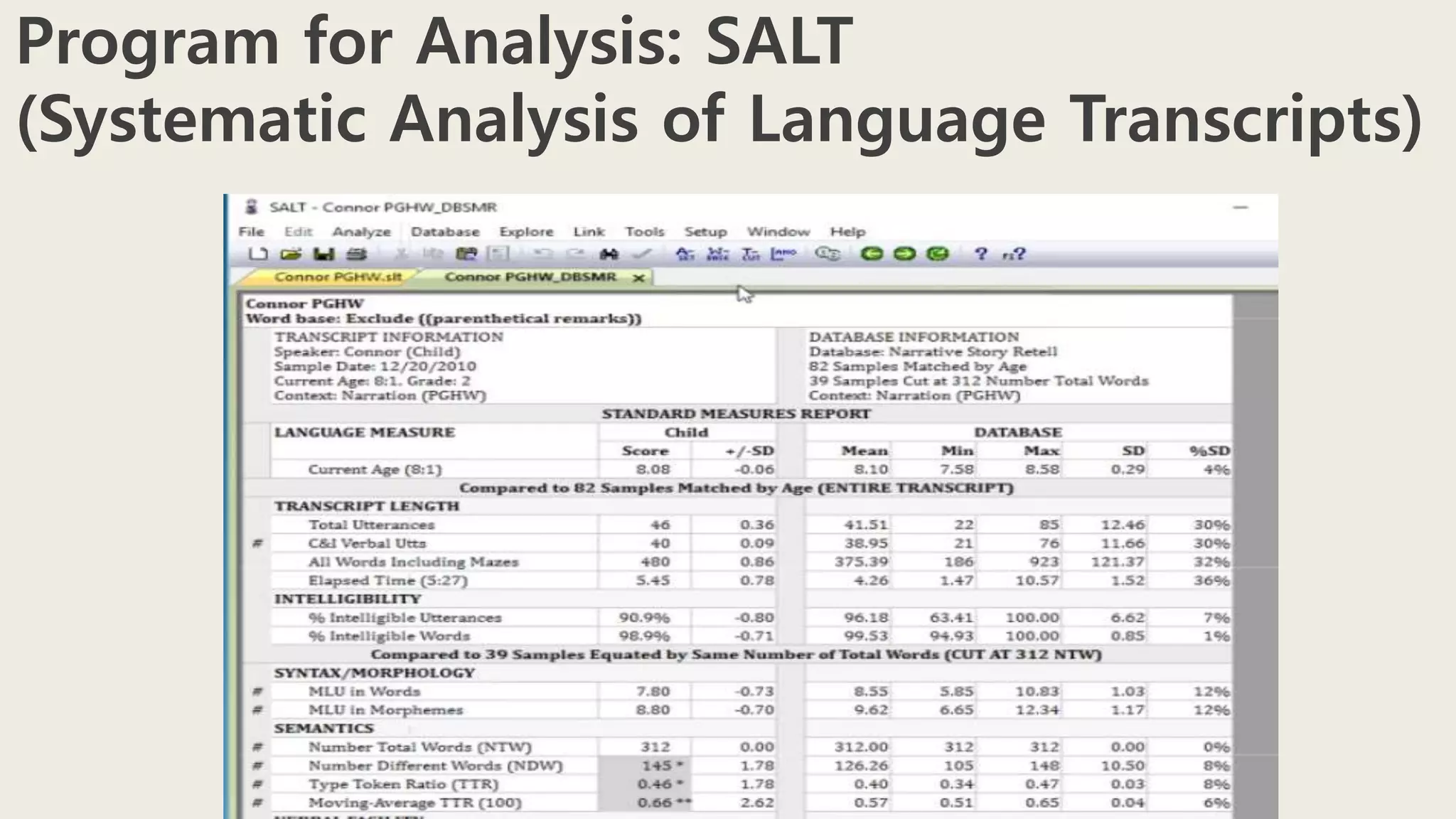
-Mean length of utterance (MLU): a measure of linguistic productivity
-Fluency (total number of words)
-Vocabulary diversity (number of different words)
Measurement
Program for Analysis: SALT
(Systematic Analysis of Language Transcripts)
Oral language samples
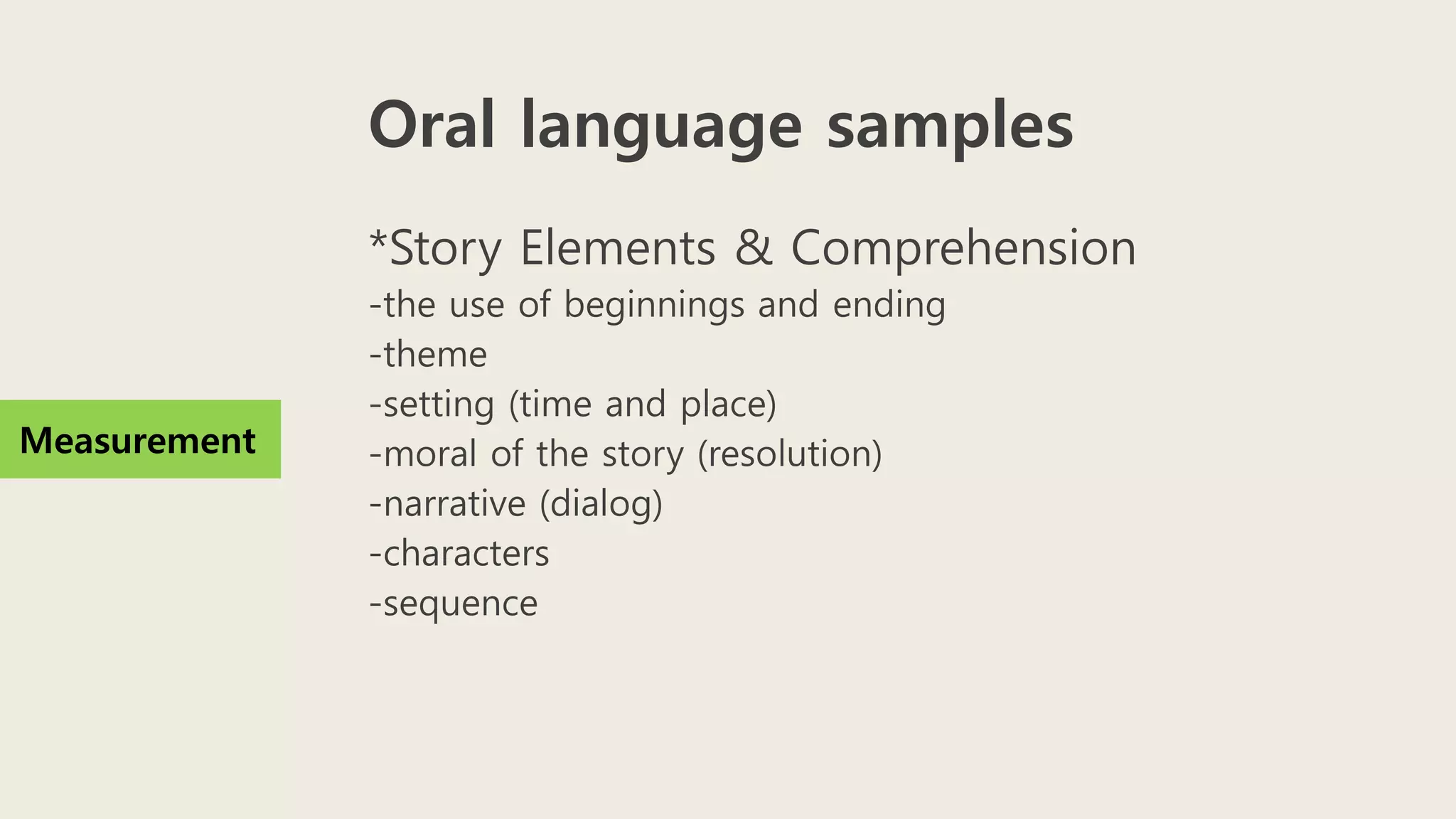
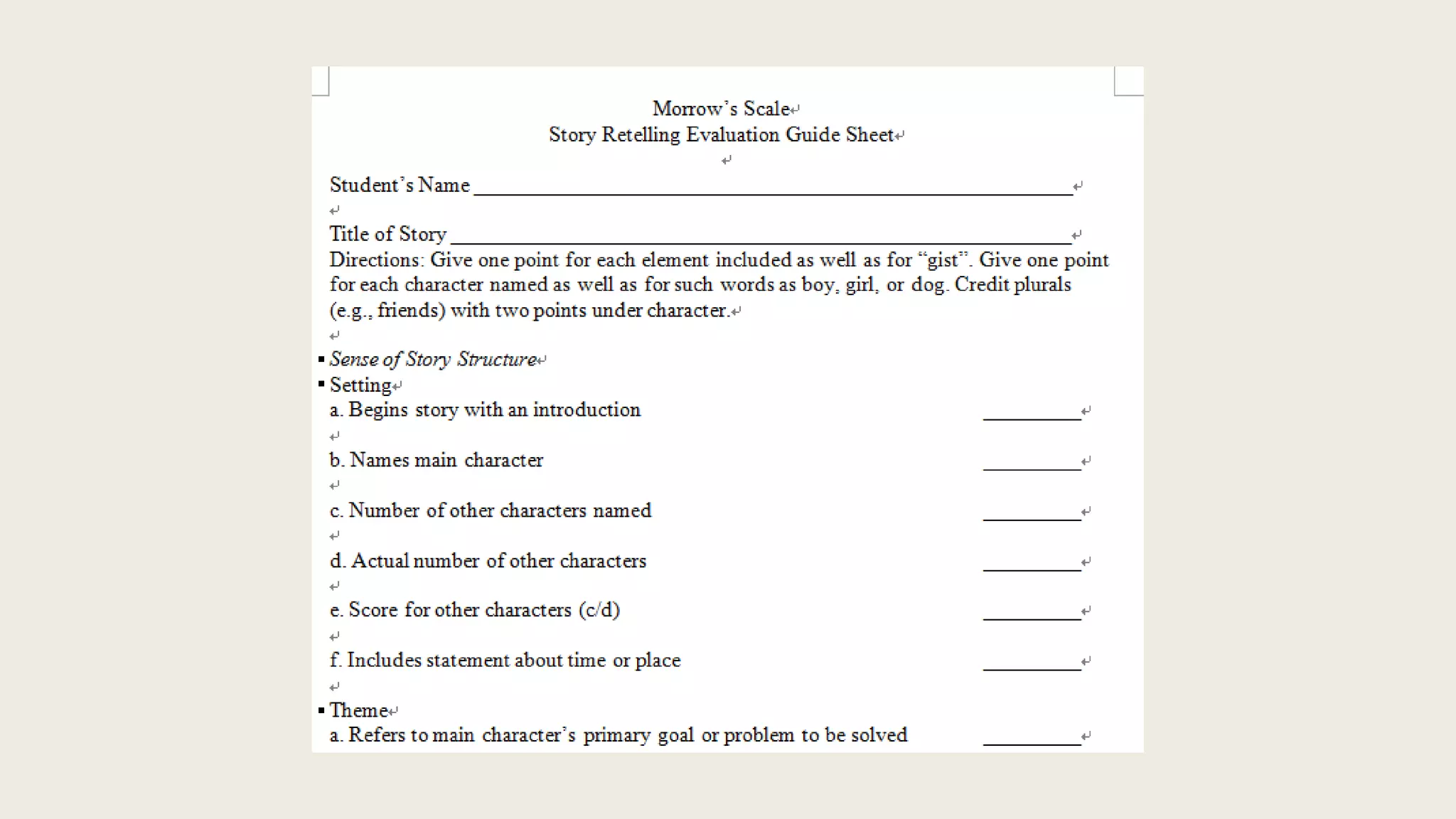
*Story Elements & Comprehension
-the use of beginnings and ending
-theme
-setting (time and place)
-moral of the story (resolution)
-narrative (dialog)
-characters
-sequence
Measurement
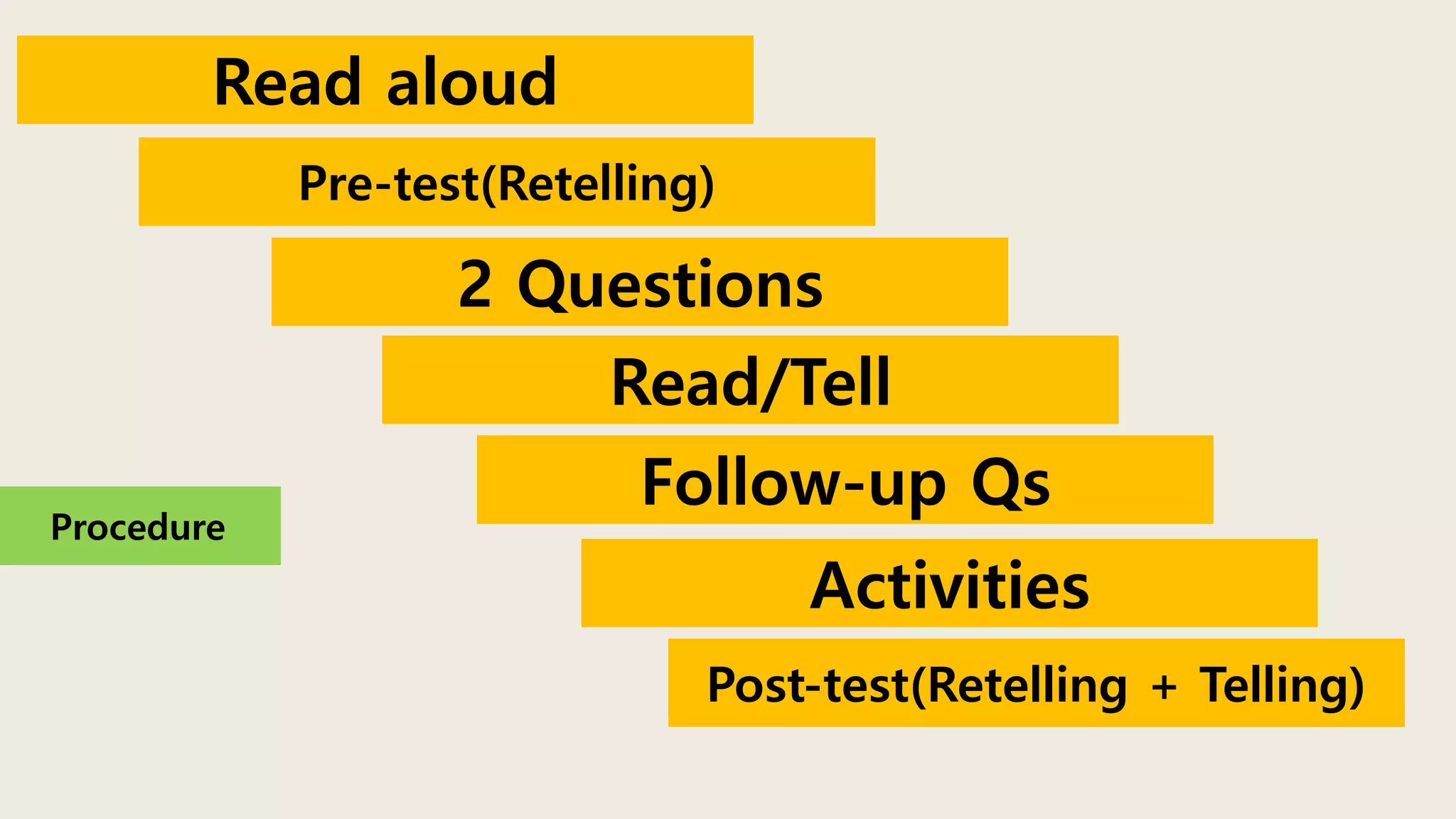
2 Questions
Read/Tell
Follow-up Qs
Activities
Read aloud
Post-test(Retelling + Telling)
Pre-test(Retelling)
Procedure
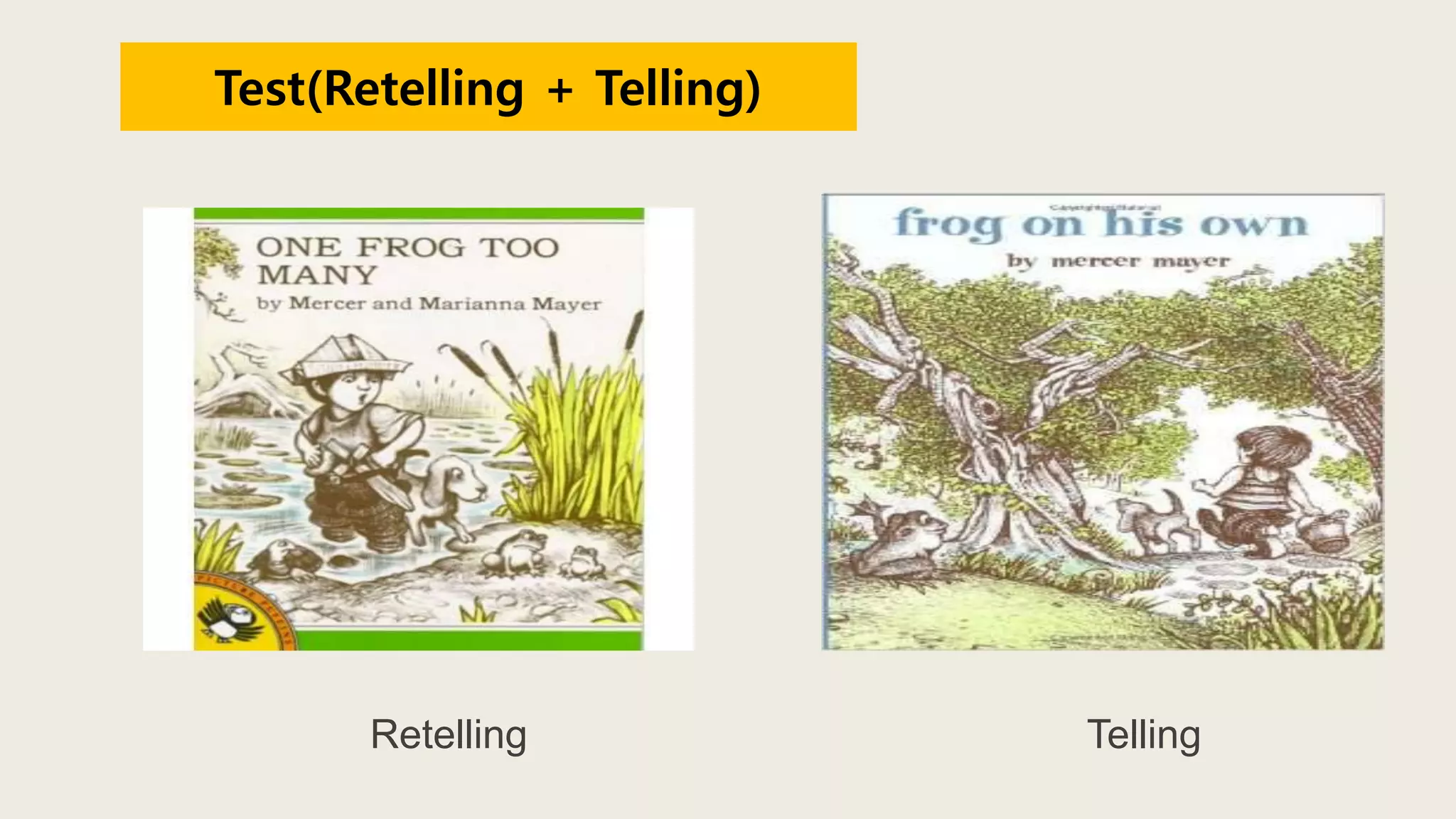
Retelling
Test(Retelling + Telling)
Telling
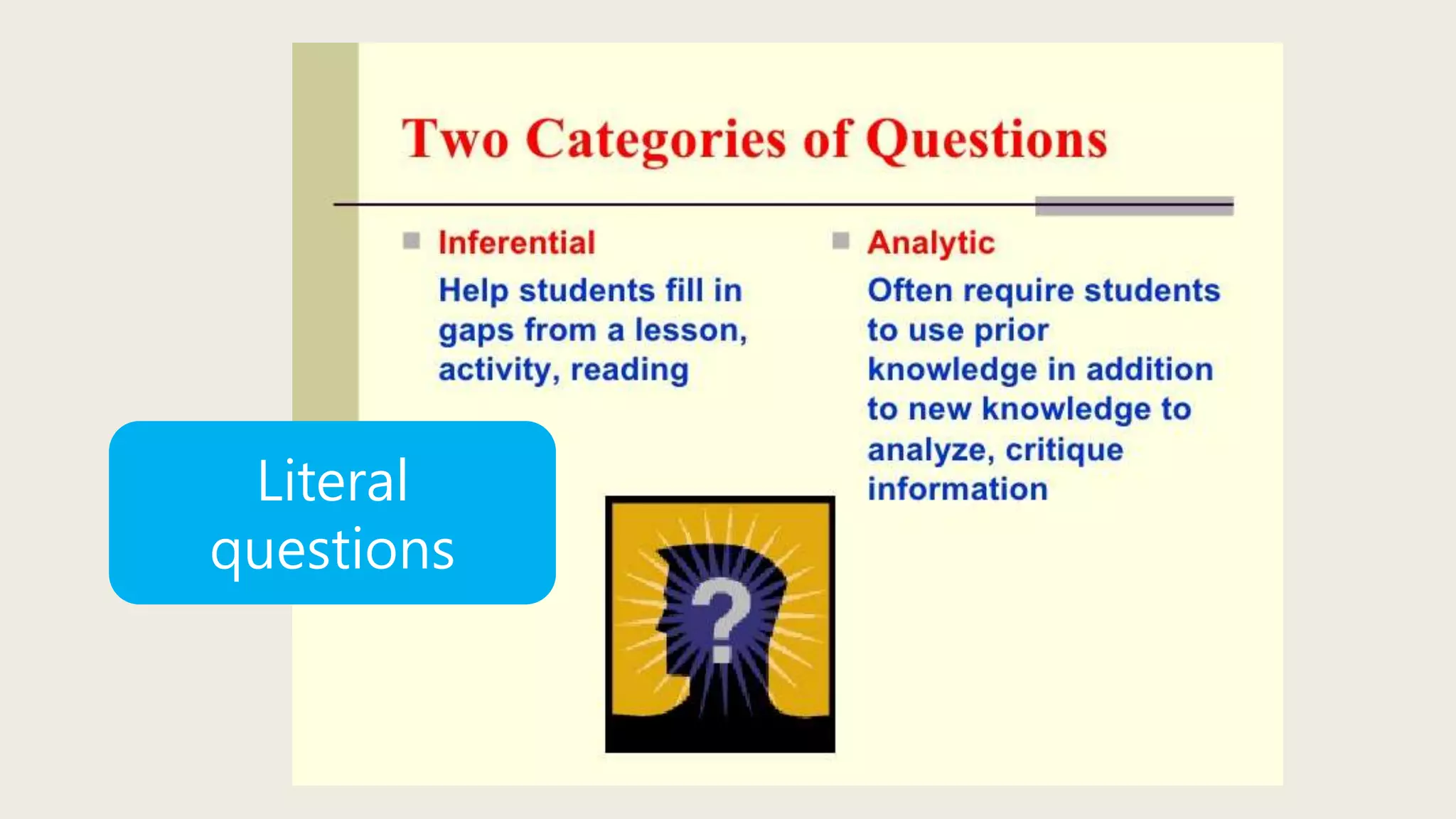
Literal
questions
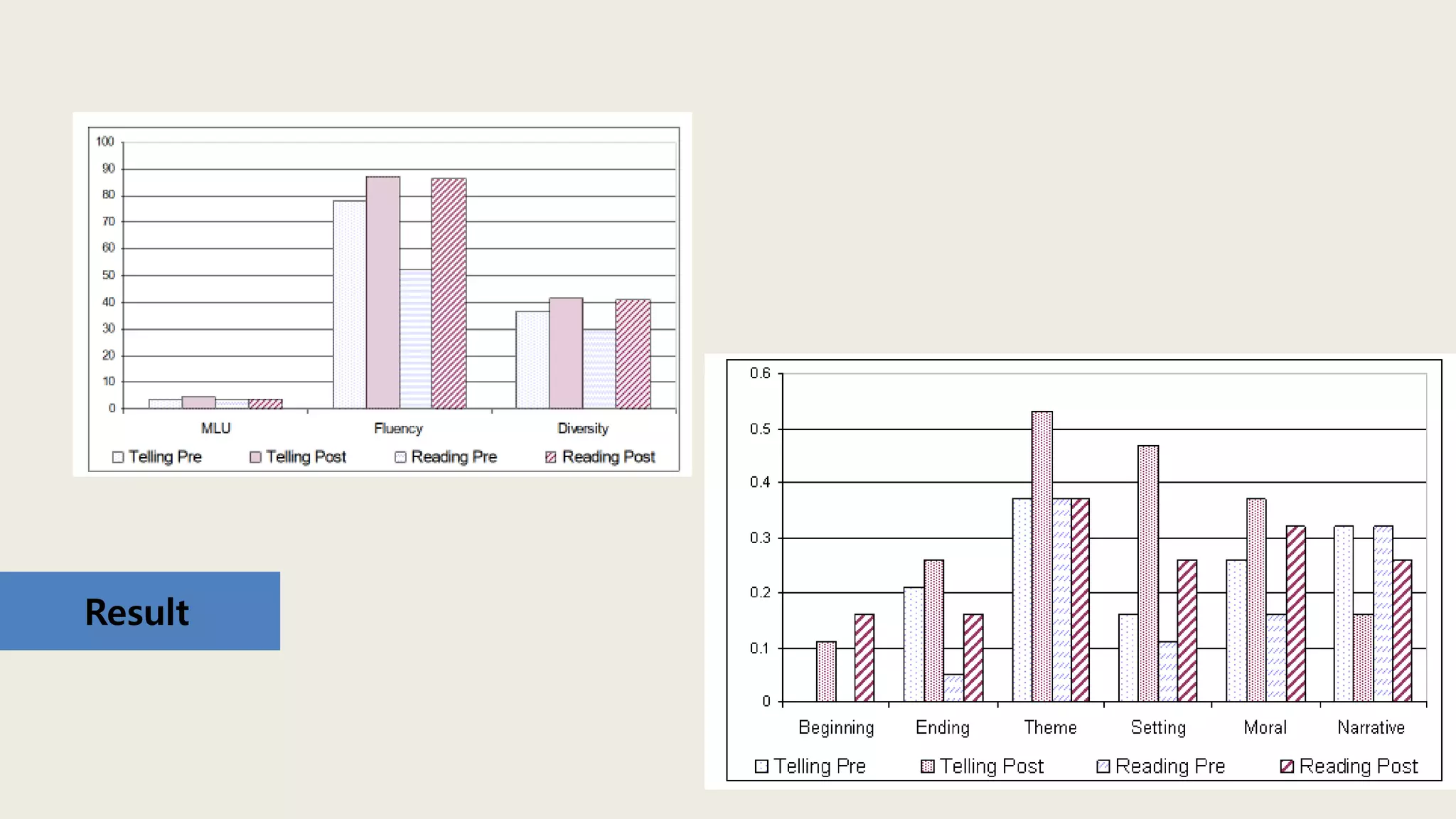
Result
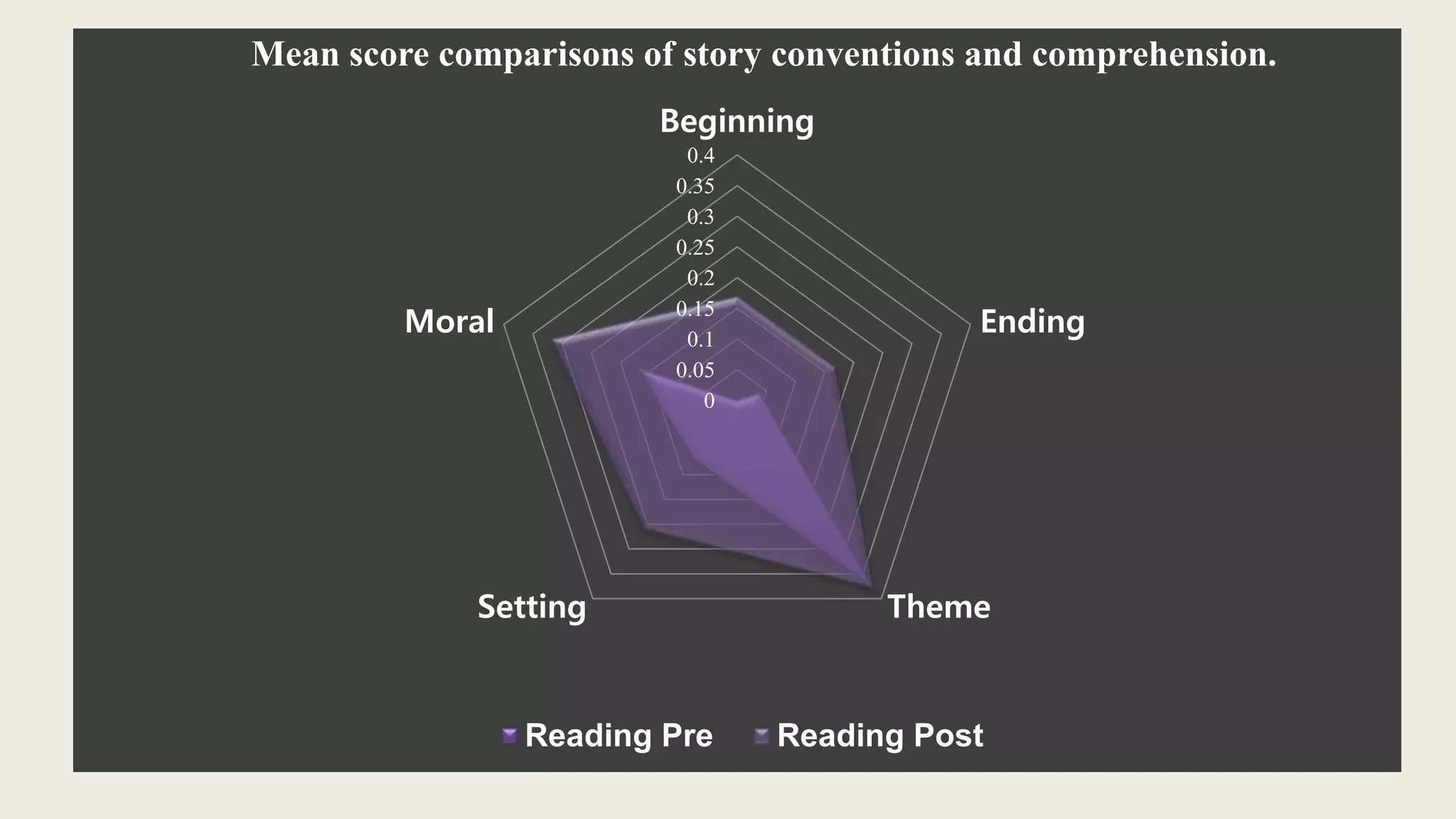
0
0.05
0.1
0.15
0.2
0.25
0.3
0.35
0.4
Beginning
Ending
ThemeSetting
Moral
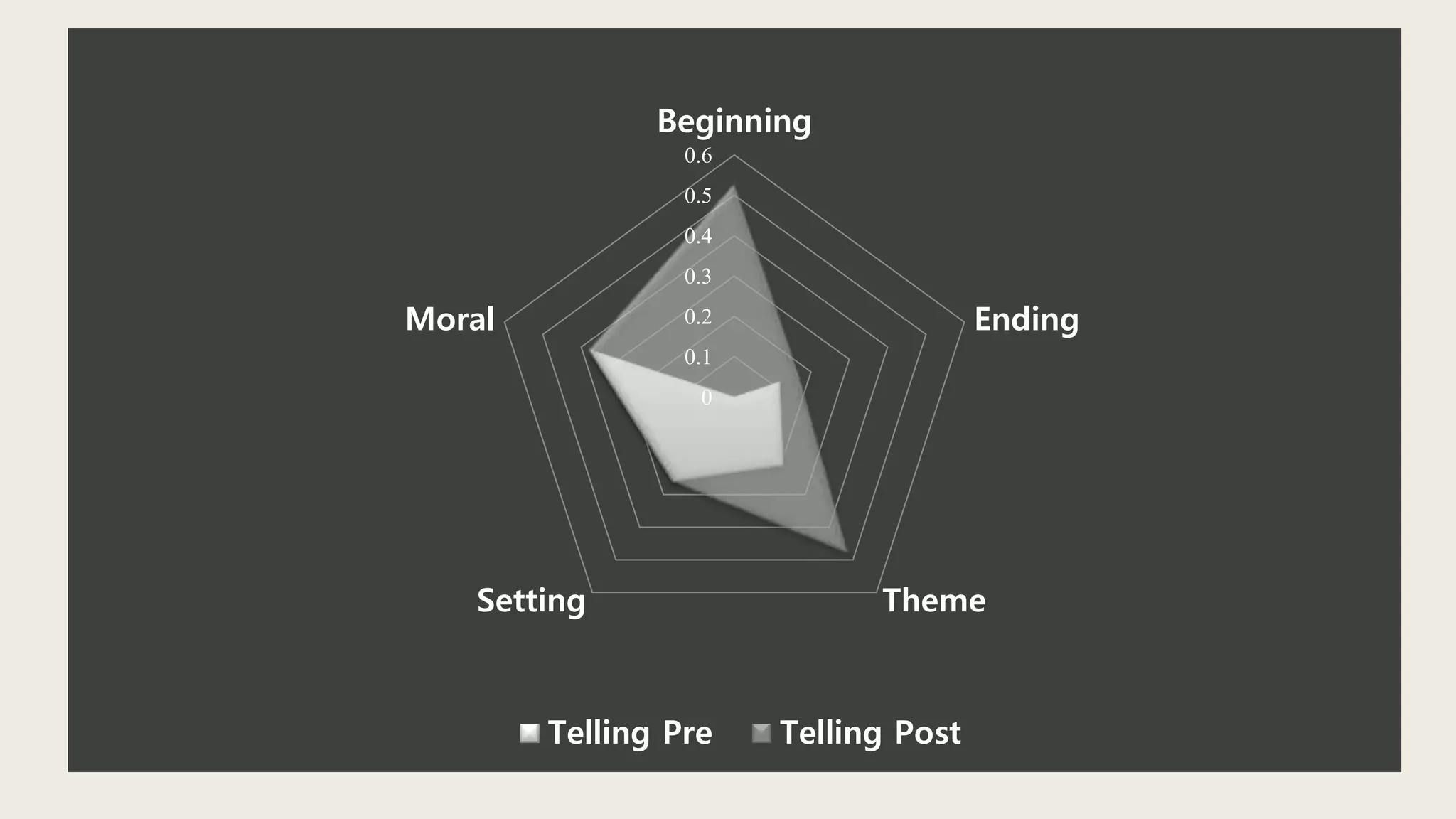
Mean score comparisons of story conventions and comprehension.
Reading Pre Reading Post
0
0.1
0.2
0.3
0.4
0.5
0.6
Beginning
Ending
ThemeSetting
Moral
Telling Pre Telling Post
0
10
20
30
40
50
60
70
80
90
100
MLU Fluency Diversity
Mean score comparisons of language complexity.
Telling Pre Telling Post Reading Pre Reading Post
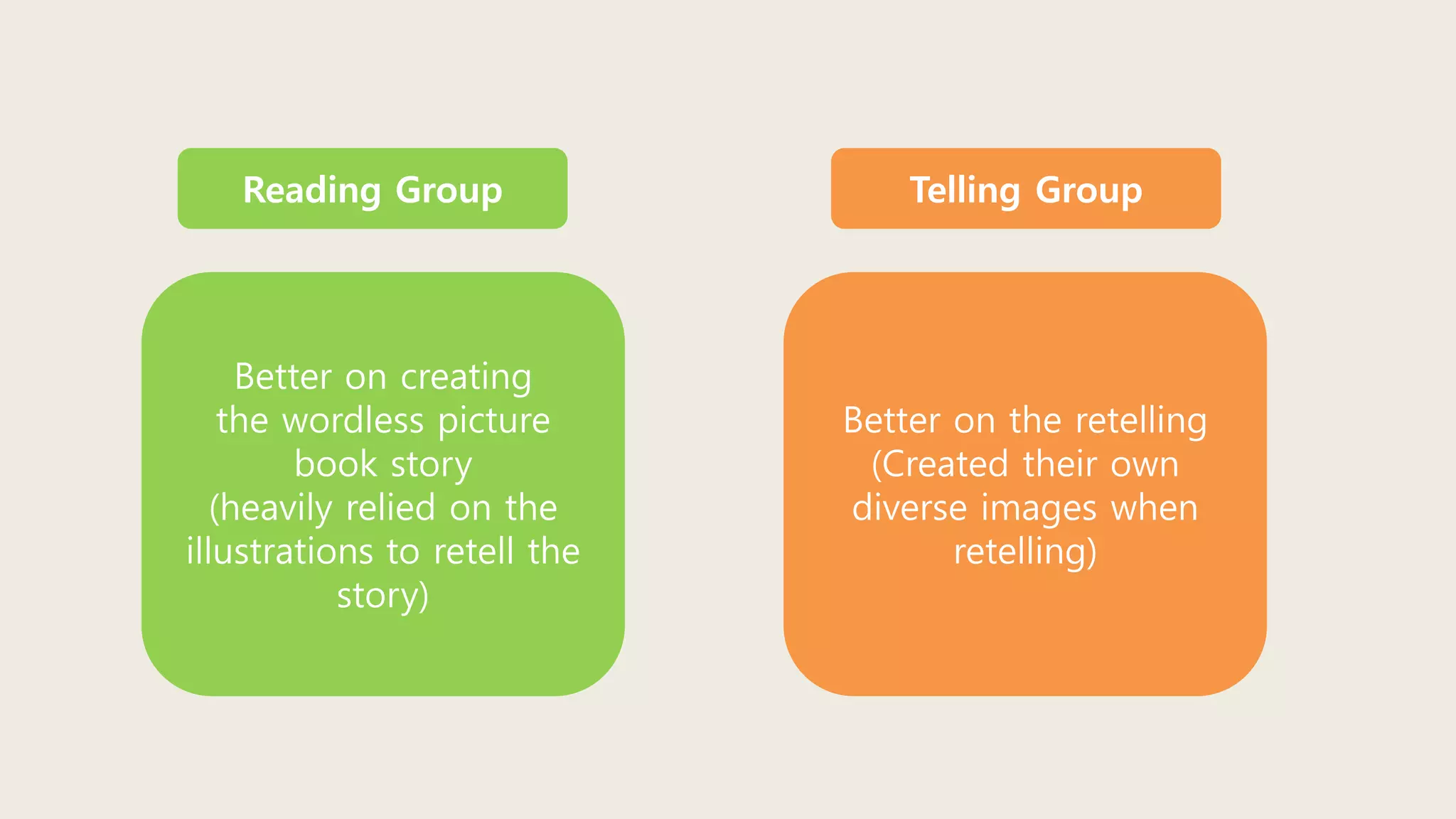
Reading Group
Better on creating
the wordless picture
book story
(heavily relied on the
illustrations to retell the
story)
Telling Group
Better on the retelling
(Created their own
diverse images when
retelling)
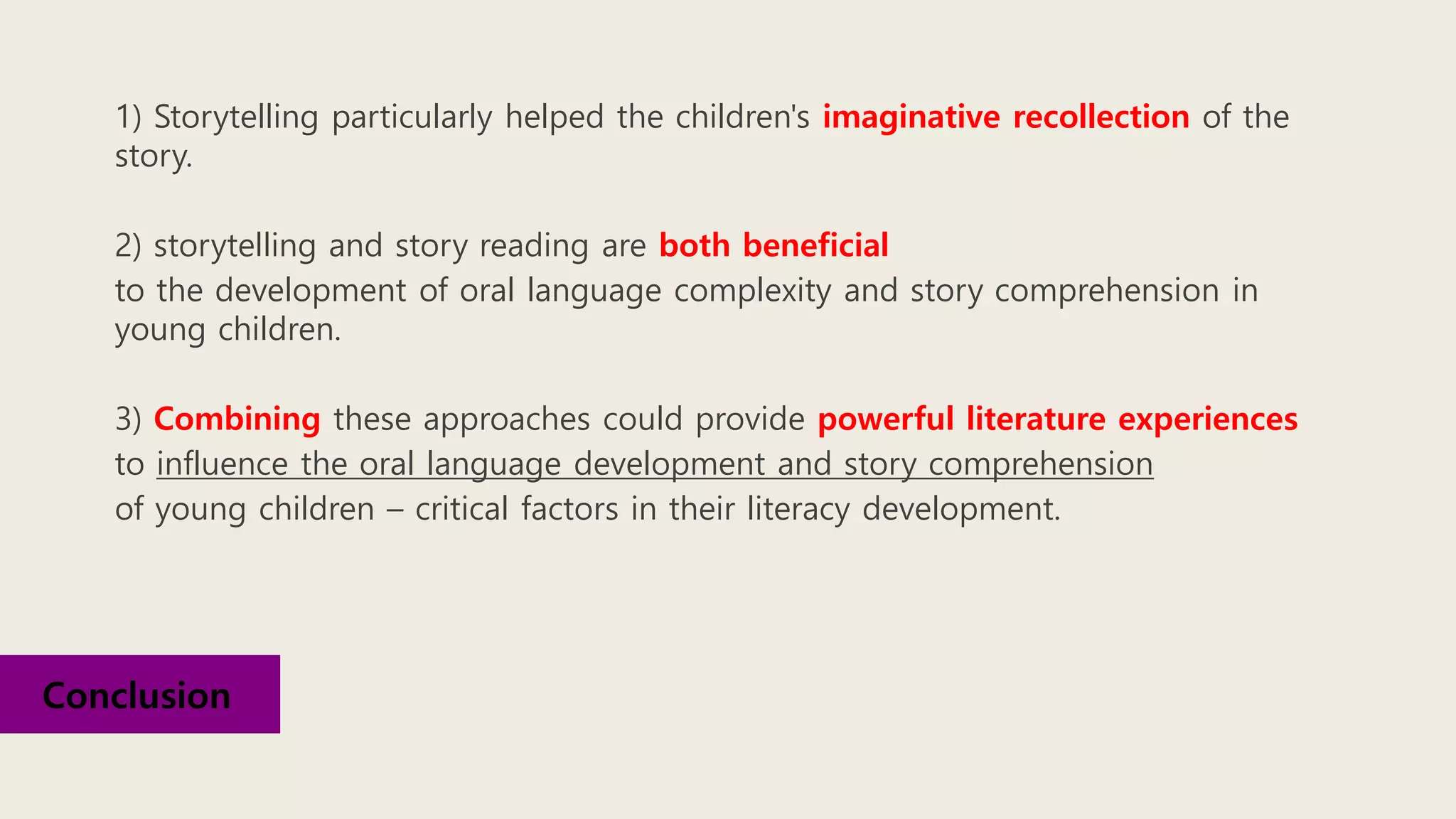
1) Storytelling particularly helped the children's imaginative recollection of the
story.
2) storytelling and story reading are both beneficial
to the development of oral language complexity and story comprehension in
young children.
3) Combining these approaches could provide powerful literature experiences
to influence the oral language development and story comprehension
of young children – critical factors in their literacy development.
Conclusion
Difference in attention levels between the groups
While presenting stories, the researchers commented that
they “felt sorry for the children in the story reading group,”
because they were not being given the same quality of experience
as the children in the storytelling group.
Telling group: less easily distracted from the story
more engaged as demonstrated by facial expressions and anticipation displayed
Further Study

Effects of storytelling and story reading

  • 1.
    The Effects ofStorytelling and Story Reading on the Oral Language Complexity and Story Comprehension of Young Children EFFECTS OF STORYTELLING AND STORY READING
  • 4.
  • 5.
    The influence on thelanguage development and story comprehension of young children Purpose
  • 6.
    The development oforal language is one of children’s most massive accomplishments that occur during the first five years of life (Genishi, 1988) Literature Review
  • 7.
    Influence of StoryReading on Language Development Literature Review
  • 8.
    Wells (1986) statesthat the number of hours a child is read to during their preschool years is the best predictor of the child's later reading achievement in school. Not only do children acquire language and literacy skills, but they also experience vocabulary growth, knowledge of handling books, and many other skills (Snow, 1983). Story reading can foster communication opportunities for young children, as they discuss the text and illustrations (Kaderavek & Justice). Literature Review
  • 9.
    Influence of Storytellingon Language Development Literature Review
  • 10.
    Imaginative development isa key benefit of stories being told (Ellis, 1997). He also suggested that storytelling is the most effective way to develop listening skills. Both can enhance children's imaginations as well as encourage them to create mental pictures (Aina, 1999). Storytelling, however, seems to require more visual imagination than story reading, because there are no book illustrations to preempt (선수치다)the listeners' attention. Trostle and Hicks (1998) conducted a study to determine whether children who heard stories told performed better on comprehension and vocabulary tests as compared to children who heard stories read. Literature Review
  • 11.
  • 12.
    Group A (Telling) Group B (Reading) 38Participants (3 year old + 4 year old children) Participants
  • 13.
    Oral language samples *Languagecomplexity(development) -Mean length of utterance (MLU): a measure of linguistic productivity -Fluency (total number of words) -Vocabulary diversity (number of different words) Measurement
  • 14.
    Program for Analysis:SALT (Systematic Analysis of Language Transcripts)
  • 15.
    Oral language samples *StoryElements & Comprehension -the use of beginnings and ending -theme -setting (time and place) -moral of the story (resolution) -narrative (dialog) -characters -sequence Measurement
  • 17.
    2 Questions Read/Tell Follow-up Qs Activities Readaloud Post-test(Retelling + Telling) Pre-test(Retelling) Procedure
  • 18.
  • 19.
  • 20.
  • 21.
    0 0.05 0.1 0.15 0.2 0.25 0.3 0.35 0.4 Beginning Ending ThemeSetting Moral Mean score comparisonsof story conventions and comprehension. Reading Pre Reading Post
  • 22.
  • 23.
    0 10 20 30 40 50 60 70 80 90 100 MLU Fluency Diversity Meanscore comparisons of language complexity. Telling Pre Telling Post Reading Pre Reading Post
  • 24.
    Reading Group Better oncreating the wordless picture book story (heavily relied on the illustrations to retell the story) Telling Group Better on the retelling (Created their own diverse images when retelling)
  • 25.
    1) Storytelling particularlyhelped the children's imaginative recollection of the story. 2) storytelling and story reading are both beneficial to the development of oral language complexity and story comprehension in young children. 3) Combining these approaches could provide powerful literature experiences to influence the oral language development and story comprehension of young children – critical factors in their literacy development. Conclusion
  • 26.
    Difference in attentionlevels between the groups While presenting stories, the researchers commented that they “felt sorry for the children in the story reading group,” because they were not being given the same quality of experience as the children in the storytelling group. Telling group: less easily distracted from the story more engaged as demonstrated by facial expressions and anticipation displayed Further Study