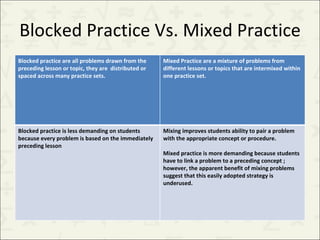
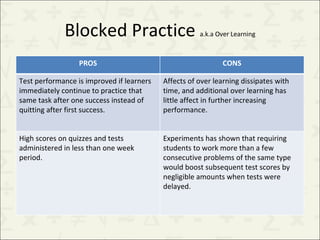
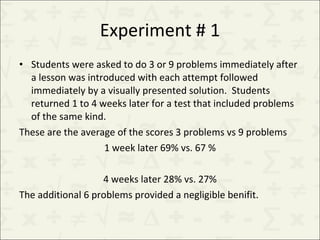
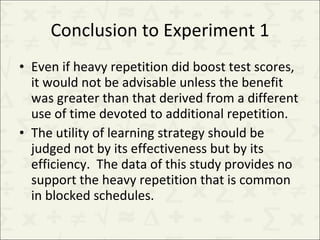
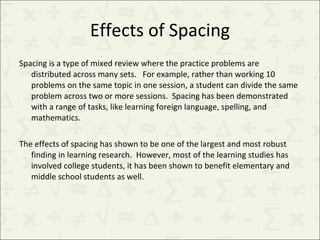
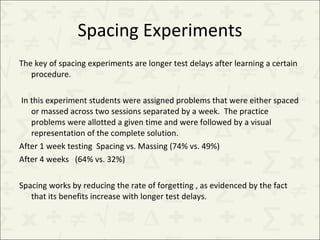
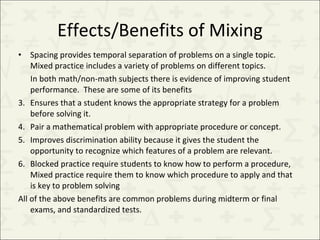
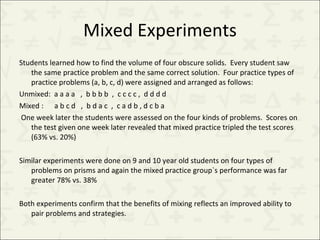
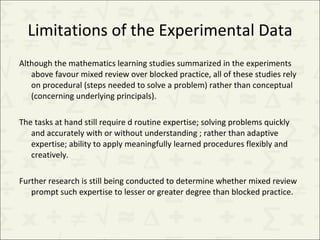
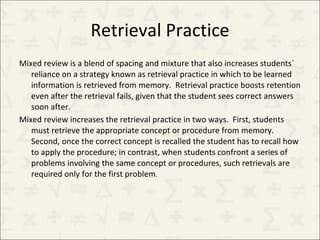
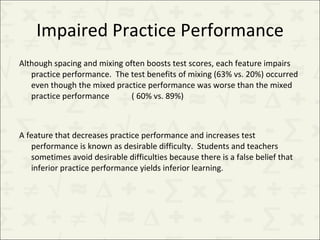
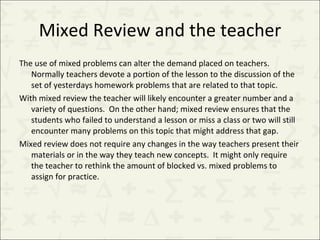
Blocked practice involves working similar problems from the same lesson or topic together, while mixed practice intermixes problems from different topics. Research shows that mixed practice improves students' ability to match problems to the appropriate concept or procedure and leads to better performance on assessments, especially those with longer delays between learning and testing. Spacing problems out over multiple practice sessions also benefits retention more than massing practice of the same problems together. While mixed and spaced practice makes initial practice more difficult, it incorporates desirable difficulties that enhance long-term learning and performance compared to blocked practice alone.


![FINAL The Effects of Peer Assisted Learning on Student [Autosaved]](https://cdn.slidesharecdn.com/ss_thumbnails/e6a560d1-0bf1-4529-8f7c-d166ebfdfead-150201132533-conversion-gate01-thumbnail.jpg?width=640&height=640&fit=bounds)


