Writing an
Outstanding
Final-Year PhD
Dissertation
AN ACADEMIC PRESENTATION BY
DR. NANCY AGNES, HEAD, TECHNICAL OPERATIONS, PHDASSISTANCE
GROUP WWW.PHDASSISTANCE.COM
EMAIL: INFO@PHDASSISTANCE.COM
IN-BRIEF
You will find the best Dissertation Research Areas / Topics for future
researchers enrolled in Engineering/management.
In order to identify the future research topics, we have reviewed the
Engineering literature (recent peer-reviewed studies) on the security
and privacy issues in the network environment for efficient network
provisioning.
The key challenge that you might be confronted with while undertaking
a PhD dissertation would be the problem you intend to resolve through
your research.
INTRODUCTION
A dissertation is something that is a part and parcel of your PhD course
which would eventually pave the way for assessment of a course of
higher education.
The dissertation is aimed at commencing and involving a scholar in
the domain of academic research. The purpose of including a
dissertation is to encourage and instil a sense of curiosity within PhD
scholar that forms the crux for knowledge development. Through this
article, a guide to writing an excellent dissertation is presented.
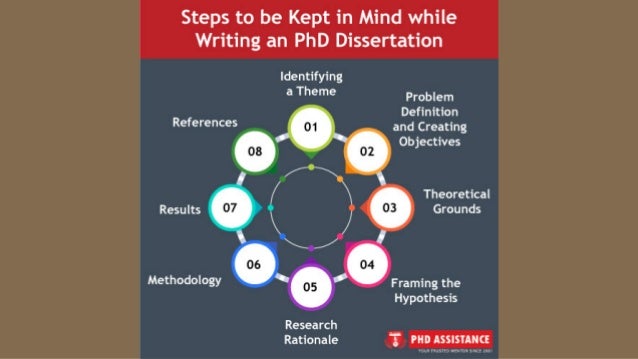
STEPS TO BE
KEPT IN MIND
WHILE WRITING
AN PHD
DISSERTATION
A theme in this case would pertain to the topic that will be investigated
through the research. It is selected on the basis of your (scholar’s) lived
experience or knowledge derived from books.
In order to select an appropriate theme for a research, it would be
helpful if you make a note of what is it that you intend to achieve
through the research.
Nonetheless, it would make sense to indicate that you need to delimit
your research prior to getting your hands dirty on the field and thus
eliminating the scope of getting stranded mid-way.
IDENTIFYING A THEME
The key challenge that you might be confronted with while
undertaking a PhD dissertation would be the problem you
intend to resolve through your research.
Following the topic being selected, it is time for defining the
problem in research. Defining the problem of research will be
instrumental in justifying why there is a need to conduct this
research.
Once the research problem has been defined, you set forth to
outline the research objectives.
PROBLEM DEFINITION AND CREATING OBJECTIVES
The research objectives forms the crux, it makes up the
central axis on which the research pivots. But please note
that it is not the subject, but what in a usually vast domain
attracts the attention of a researcher.
In case you decide to proceed further with your dissertation
without first outlining the research objectives, it will lead to
confusion and ultimately be a waste of time.
The theoretical ground is the basic component that lends
support to any scientific research.
A theoretical framework enables the researcher to situate
their concerns or challenges in the scope of the area of
knowledge where it has been added.
The component of Theoretical Framework with in Academic
Research would comprise of a review of articles, texts, books
and every other pertinent material within the subject or
domain being investigated.
THEORETICAL GROUNDS
Research hypotheses are nothing but statements that
attempt to provide answers to the problem of research.
Such ideas would come to the fore right at the beginning or
during the course of the investigative procedures on the
basis of the knowledge that the scholar has on the subject.
Any hypothesis that is good would be one that can be
challenged, which means one that can be confronted with
actual data.
FRAMING THE HYPOTHESIS
The rationale for the research would present the reader with
a rational justification as to why this research is being
carried out.
The justification comprises of four key rules; a) why a theme
was selected? b) what is the purpose of the research? c)
who would be the target audience for the research? and d)
the base (source of information where you work is based).
RESEARCH RATIONALE
For your PhD dissertation, you need to write around 200 to
250 words to justify your rationale.
This provides a valid and believable argument for your
research.
However, the argument needs to be logical, clear and direct
as it is worth deciding the continuity within your research
idea.
The methodology adopted for research will describe your
research process, that is, the manner in which you intend to
conduct your research.
In order to present the methodology adopted for research,
you should take into account the kind of research – the
manner of research, which means; you need to outline
whether your research will be descriptive, explanatory or
exploratory.
METHODOLOGY
The Research Methodology is what will guide your research
to reach the intended destination.
The choice of methodology would depend upon the
objectives that you have framed and what you intend to
achieve through the research.
The results are essentially the findings that you derive while
conducting the research. The tools for extracting results
would depend on the methodology.
For instance, if your study utilizes a Qualitative
Methodology, you would depend on a thematic analysis to
arrive at results. In contrast, if your study involves a
quantitative methodology, statistical tools would be used to
derive results.
RESULTS
There are several referencing and formatting styles that are
available and the choice of referencing and formatting style
would depend upon your educational institution.
Each institution follows a fixed style. The most common style
of referencing and formatting is Harvard which is in practice
across a large number of educational institution
REFERENCES
CONCLUSION
These are some of the components
that need to be kept in mind when
writing a PhD dissertation.
Though we have not covered
literature review in this, which
does not mean that Literature
Review is not important.
However, the way you frame your objectives, methodology
and define the problem statement within your research is
what would ensure that you achieve the aim with which
you are conducting this research.
CONTACT US
+44 7537144372
UNITED KINGDOM
+91-9176966446
EMAIL
INDIA
info@phdassistance.com

Writing an Outstanding Final-Year PhD Dissertation - Phdassistance

  • 1.
    Writing an Outstanding Final-Year PhD Dissertation ANACADEMIC PRESENTATION BY DR. NANCY AGNES, HEAD, TECHNICAL OPERATIONS, PHDASSISTANCE GROUP WWW.PHDASSISTANCE.COM EMAIL: INFO@PHDASSISTANCE.COM
  • 2.
    IN-BRIEF You will findthe best Dissertation Research Areas / Topics for future researchers enrolled in Engineering/management. In order to identify the future research topics, we have reviewed the Engineering literature (recent peer-reviewed studies) on the security and privacy issues in the network environment for efficient network provisioning. The key challenge that you might be confronted with while undertaking a PhD dissertation would be the problem you intend to resolve through your research.
  • 3.
    INTRODUCTION A dissertation issomething that is a part and parcel of your PhD course which would eventually pave the way for assessment of a course of higher education. The dissertation is aimed at commencing and involving a scholar in the domain of academic research. The purpose of including a dissertation is to encourage and instil a sense of curiosity within PhD scholar that forms the crux for knowledge development. Through this article, a guide to writing an excellent dissertation is presented.
  • 4.
    STEPS TO BE KEPTIN MIND WHILE WRITING AN PHD DISSERTATION
  • 6.
    A theme inthis case would pertain to the topic that will be investigated through the research. It is selected on the basis of your (scholar’s) lived experience or knowledge derived from books. In order to select an appropriate theme for a research, it would be helpful if you make a note of what is it that you intend to achieve through the research. Nonetheless, it would make sense to indicate that you need to delimit your research prior to getting your hands dirty on the field and thus eliminating the scope of getting stranded mid-way. IDENTIFYING A THEME
  • 7.
    The key challengethat you might be confronted with while undertaking a PhD dissertation would be the problem you intend to resolve through your research. Following the topic being selected, it is time for defining the problem in research. Defining the problem of research will be instrumental in justifying why there is a need to conduct this research. Once the research problem has been defined, you set forth to outline the research objectives. PROBLEM DEFINITION AND CREATING OBJECTIVES
  • 8.
    The research objectivesforms the crux, it makes up the central axis on which the research pivots. But please note that it is not the subject, but what in a usually vast domain attracts the attention of a researcher. In case you decide to proceed further with your dissertation without first outlining the research objectives, it will lead to confusion and ultimately be a waste of time.
  • 9.
    The theoretical groundis the basic component that lends support to any scientific research. A theoretical framework enables the researcher to situate their concerns or challenges in the scope of the area of knowledge where it has been added. The component of Theoretical Framework with in Academic Research would comprise of a review of articles, texts, books and every other pertinent material within the subject or domain being investigated. THEORETICAL GROUNDS
  • 10.
    Research hypotheses arenothing but statements that attempt to provide answers to the problem of research. Such ideas would come to the fore right at the beginning or during the course of the investigative procedures on the basis of the knowledge that the scholar has on the subject. Any hypothesis that is good would be one that can be challenged, which means one that can be confronted with actual data. FRAMING THE HYPOTHESIS
  • 11.
    The rationale forthe research would present the reader with a rational justification as to why this research is being carried out. The justification comprises of four key rules; a) why a theme was selected? b) what is the purpose of the research? c) who would be the target audience for the research? and d) the base (source of information where you work is based). RESEARCH RATIONALE
  • 12.
    For your PhDdissertation, you need to write around 200 to 250 words to justify your rationale. This provides a valid and believable argument for your research. However, the argument needs to be logical, clear and direct as it is worth deciding the continuity within your research idea.
  • 13.
    The methodology adoptedfor research will describe your research process, that is, the manner in which you intend to conduct your research. In order to present the methodology adopted for research, you should take into account the kind of research – the manner of research, which means; you need to outline whether your research will be descriptive, explanatory or exploratory. METHODOLOGY
  • 14.
    The Research Methodologyis what will guide your research to reach the intended destination. The choice of methodology would depend upon the objectives that you have framed and what you intend to achieve through the research.
  • 15.
    The results areessentially the findings that you derive while conducting the research. The tools for extracting results would depend on the methodology. For instance, if your study utilizes a Qualitative Methodology, you would depend on a thematic analysis to arrive at results. In contrast, if your study involves a quantitative methodology, statistical tools would be used to derive results. RESULTS
  • 16.
    There are severalreferencing and formatting styles that are available and the choice of referencing and formatting style would depend upon your educational institution. Each institution follows a fixed style. The most common style of referencing and formatting is Harvard which is in practice across a large number of educational institution REFERENCES
  • 17.
    CONCLUSION These are someof the components that need to be kept in mind when writing a PhD dissertation. Though we have not covered literature review in this, which does not mean that Literature Review is not important.
  • 18.
    However, the wayyou frame your objectives, methodology and define the problem statement within your research is what would ensure that you achieve the aim with which you are conducting this research.
  • 19.
    CONTACT US +44 7537144372 UNITEDKINGDOM +91-9176966446 EMAIL INDIA info@phdassistance.com