Developing an effective communication
strategy for a difficult cause
Fundraising for Less Popular Causes


Paul Farmer
CEO, Mind
Fundraising priorities

• Build up trust internally

• Identifying & targeting the best prospects for a
  “less popular” cause
Step 1 – Quick wins & build trust

• Proposed strategy to the Board

• Worked with Senior Management Team to
  identify fundable projects

• Clear focus on low cost high return

• And some relatively quick wins...
The key to our strategy...


• Celebrated successes with the Board & Senior
  Management Team to reaffirm trust & secure more
  resource
Step 2 – Build a sustainable base

Next we prioritised:

1. Individuals

2. Companies

3. Events
What if someone says...?

“We can never support you as long as you have
              a name like xxxxx”
Programme of corporate image
Why consider this at all?

• External factors

• Internal factors

• The experience of other organisations (SCOPE)
Programme of corporate change

Stage 1 – Who are you?
Stage 2 – Who do you want to be?
Stage 3 - What does that look like and
feel like?
Stage 4 – Making it happen
Stage 1 - Who are you?

• Low profile

• Little understanding of the whole organisation

• Confusion around name

• Lost opportunities

• Inconsistency in use of logo
Stage 2 - Who do you want to be?

• What personality do you want our image to
  portray?

• What are your views on our current name?

• What practical issues should we consider in
  actually using the identity?
Mission, Vision, Values

• Vision-long term objective-the 50 year ambition

• Mission-the “how” in 2 sentences

• Values-the way you do business
Stage 3 - What does that look & feel like?

 • Meaningful
 • Strong impact
 • Memorable & recognisable
 • Clear, simple & straight forward
 • Professional & consistent but flexible
 • Inviting, welcoming, uplifting & inspiring
 • Accessible to everyone
Audiences


• Primary

• Secondary
Stage 4 – making it happen

• Trustees agreement

• Recruited an agency

• Launched an “Anthology”

• AGM presentation to members

• Internal & external consultation
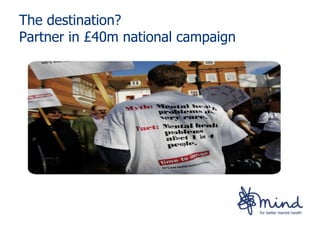
The destination?
Partner in £40m national campaign
Top tips corporate image change

•   Consult, consult, consult
•   “Brand essence” is vital
•   Avoid jargon
•   Work with experts / third parties where needed
•   Senior management & trustee support
•   Communicate clearly
Top tips for fundraising
• Someone cared enough about your cause to set up your
  charity – think about specific strengths you can play to
• Be realistic
• If you don’t have the contacts which of your supporters
  do?
• Be niche - focus on developing high quality products with
  high impact to the individual
• Win over your board and senior management team
Any questions?


For more information:
Visit www.mind.org.uk
Contact Paul Farmer – p.farmer@mind.org.uk

Developing an effective communication strategy for a difficult cause

  • 1.
    Developing an effectivecommunication strategy for a difficult cause Fundraising for Less Popular Causes Paul Farmer CEO, Mind
  • 2.
    Fundraising priorities • Buildup trust internally • Identifying & targeting the best prospects for a “less popular” cause
  • 3.
    Step 1 –Quick wins & build trust • Proposed strategy to the Board • Worked with Senior Management Team to identify fundable projects • Clear focus on low cost high return • And some relatively quick wins...
  • 4.
    The key toour strategy... • Celebrated successes with the Board & Senior Management Team to reaffirm trust & secure more resource
  • 5.
    Step 2 –Build a sustainable base Next we prioritised: 1. Individuals 2. Companies 3. Events
  • 6.
    What if someonesays...? “We can never support you as long as you have a name like xxxxx”
  • 7.
  • 8.
    Why consider thisat all? • External factors • Internal factors • The experience of other organisations (SCOPE)
  • 9.
    Programme of corporatechange Stage 1 – Who are you? Stage 2 – Who do you want to be? Stage 3 - What does that look like and feel like? Stage 4 – Making it happen
  • 10.
    Stage 1 -Who are you? • Low profile • Little understanding of the whole organisation • Confusion around name • Lost opportunities • Inconsistency in use of logo
  • 11.
    Stage 2 -Who do you want to be? • What personality do you want our image to portray? • What are your views on our current name? • What practical issues should we consider in actually using the identity?
  • 12.
    Mission, Vision, Values •Vision-long term objective-the 50 year ambition • Mission-the “how” in 2 sentences • Values-the way you do business
  • 13.
    Stage 3 -What does that look & feel like? • Meaningful • Strong impact • Memorable & recognisable • Clear, simple & straight forward • Professional & consistent but flexible • Inviting, welcoming, uplifting & inspiring • Accessible to everyone
  • 14.
  • 15.
    Stage 4 –making it happen • Trustees agreement • Recruited an agency • Launched an “Anthology” • AGM presentation to members • Internal & external consultation
  • 16.
    The destination? Partner in£40m national campaign
  • 17.
    Top tips corporateimage change • Consult, consult, consult • “Brand essence” is vital • Avoid jargon • Work with experts / third parties where needed • Senior management & trustee support • Communicate clearly
  • 18.
    Top tips forfundraising • Someone cared enough about your cause to set up your charity – think about specific strengths you can play to • Be realistic • If you don’t have the contacts which of your supporters do? • Be niche - focus on developing high quality products with high impact to the individual • Win over your board and senior management team
  • 19.
    Any questions? For moreinformation: Visit www.mind.org.uk Contact Paul Farmer – p.farmer@mind.org.uk

Editor's Notes

  • #2 Paul
  • #3 Lou
  • #4 Lou September 1998 - first key action to present very safe/ sensible strategy to the board
  • #5 Needed to build trust in fundraisingTo acquire resource – corporate & trust assistant and individualsSecondly – given the go ahead to fundraise from members
  • #6 Trusts would obviously plateau
  • #7 Mass dmCorporate supporters club – never got off the groundEvents made us good contacts one of whom was pretty senior at one of the high street banks. Very interested & engaged but...
  • #8 Paul
  • #9 PaulExternal factors: Competition for support – media coverage, tendering for services or fundraisingBarriers around using the word schizophrenia – some people think it acts as a beacon for people who need help, others feel it stigmatises people and many [rojects wouldnt put up NSF sign on their buildings.Uncertaintly whether the diagnosis would be used in future.NSF - National Service FrameworkInternal factors:A very different organisation to the one founded 27 years previouslyDesire to help a lot of people – not just those with a diagnosis of schizophrenia focus esp on those not yet diagnosedLot of inconsistency in the way the logo was used
  • #11 We’ve done some market research and we spoke to the general public and also to the professionals we come into contact with so the police, benefits staff, CPNs, GPs We know we have a low profile – by the way, most of the public haven’t heard of SANE either! The people who do know us (the professionals) respect our work but they often only know about the bit of NSF they deal with.  There’s a lot of confusion around our name, we get called the Schizophrenic Society, Federation, you name it… Because people don’t know what we do...we lose opportunities for funding. And often the people who need us most… in that really vital time before receiving a diagnosis…can’t find us. An internal analysis of the way we use our logo – showed there’s no consistency.
  • #12 The next stage was to consult internally, and this included staff, service users, group co-ordinators We asked them: What personality do you want our image to portray What are your views on our current name What practical issues should we consider in actually using the identity.
  • #13 In terms of the character which people want to come across They think NSF should be portrayed as being UnderstandingSupportiveProfessional And Optimistic realism – so “we know this illness destroys lives - but it doesn’t have to be like that”
  • #14 So what messages do we want to get across in our new image?   Because we take a grounded approach to our work and work on a grass roots level – NSF’s policies and views are built on experience not just theory. And we’ve got to fight stigma Our image must beMeaningful – it has to say somethingIt must have a strong impactBe memorable and recognisableClear, simple and straight forwardWe should be seen as meeting the professional demands of funders and partners. Consistent but flexible enough to be used by local services - Consistent – across all our offices, services and groupsInviting, welcoming, uplifting and inspiring - We should be welcoming and accessible to both users and carersAnd it must be accessible to everyoneAnd that says what we do or as the Ronseal advert puts it “does exactly what it says on the can”
  • #15 Our key audiences… Primarily it has to be the people we can help – carers and usersAlso donors – and by this we mean individuals and members of the public Our secondary audience are funders and partners  
  • #16 The BoT has given agreement to develop a new nameWe’ve recruited an agency and they’re currently visiting services and groups of people who get involved in creative workWe’ve launched an “Anthology” to enable us to gather images, words and pictures rooted in carers and users experiences – to give us a visual feel about mental illnessAt the AGM on Saturday, Paul Farmer presented the findings to date to our membersAnd staff will be consulted about ideas for a name in early 2001. 
  • #18 Paul
  • #19 Lou