EFA GOALS
EDUCATIONFOR ALL
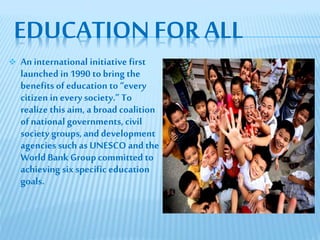
 An international initiative first
launched in 1990 to bring the
benefits of education to “every
citizen in every society.” To
realize this aim, a broad coalition
of national governments,civil
society groups, and development
agencies such as UNESCO and the
World Bank Group committed to
achieving six specific education
goals.
THE SIX EFA GOALS
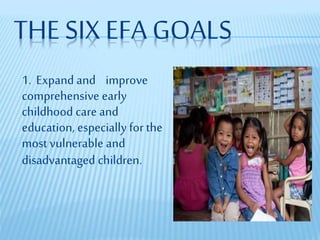
1. Expand and improve
comprehensive early
childhood care and
education, especially for the
most vulnerable and
disadvantaged children.
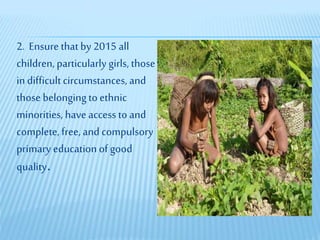
2. Ensure thatby 2015 all
children, particularly girls, those
in difficultcircumstances, and
those belongingto ethnic
minorities, have access to and
complete, free, and compulsory
primary education of good
quality.
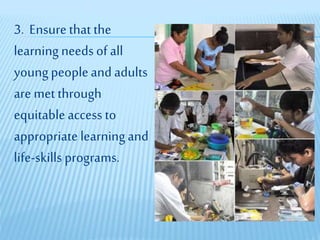
3. Ensurethat the
learningneedsof all
youngpeopleandadults
are met through
equitableaccess to
appropriate learningand
life-skills programs.
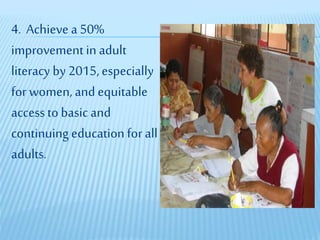
4. Achieve a 50%
improvement in adult
literacy by 2015,especially
for women, and equitable
accessto basic and
continuing education for all
adults.
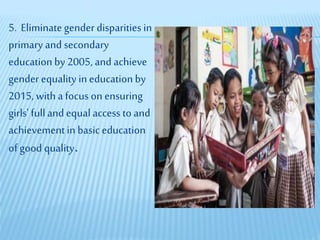
5. Eliminategender disparities in
primary and secondary
education by 2005, and achieve
gender equality in education by
2015, witha focus on ensuring
girls' fulland equal access to and
achievementin basiceducation
of good quality.
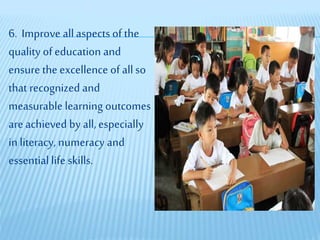
6. Improve allaspects of the
quality of education and
ensure the excellence of allso
that recognized and
measurable learning outcomes
are achieved by all,especially
in literacy, numeracy and
essential life skills.
OVERALL GOALS & OBJECTIVES OF
PHILIPPINEEFA 2015
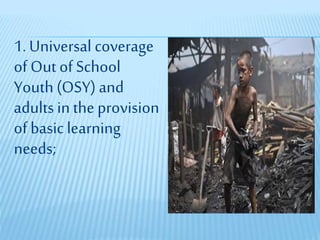
1. Universal coverage
of Out of School
Youth (OSY) and
adults in the provision
of basic learning
needs;
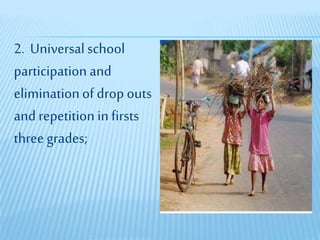
2. Universalschool
participation and
eliminationof drop outs
and repetition in firsts
three grades;
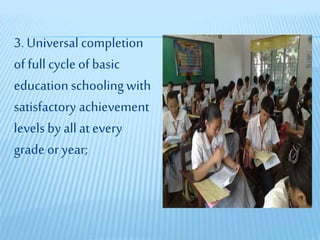
3. Universal completion
of full cycle of basic
educationschoolingwith
satisfactory achievement
levels byall at every
grade or year;
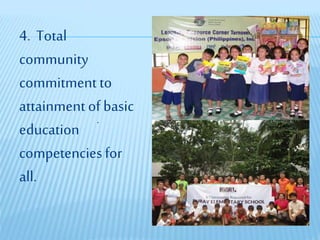
4. Total
community
commitmentto
attainmentof basic
education
competenciesfor
all.
.
THANK YOU!!!

Efa goals by jenrap14

  • 1.
  • 2.
    EDUCATIONFOR ALL  Aninternational initiative first launched in 1990 to bring the benefits of education to “every citizen in every society.” To realize this aim, a broad coalition of national governments,civil society groups, and development agencies such as UNESCO and the World Bank Group committed to achieving six specific education goals.
  • 3.
    THE SIX EFAGOALS 1. Expand and improve comprehensive early childhood care and education, especially for the most vulnerable and disadvantaged children.
  • 4.
    2. Ensure thatby2015 all children, particularly girls, those in difficultcircumstances, and those belongingto ethnic minorities, have access to and complete, free, and compulsory primary education of good quality.
  • 5.
    3. Ensurethat the learningneedsofall youngpeopleandadults are met through equitableaccess to appropriate learningand life-skills programs.
  • 6.
    4. Achieve a50% improvement in adult literacy by 2015,especially for women, and equitable accessto basic and continuing education for all adults.
  • 7.
    5. Eliminategender disparitiesin primary and secondary education by 2005, and achieve gender equality in education by 2015, witha focus on ensuring girls' fulland equal access to and achievementin basiceducation of good quality.
  • 8.
    6. Improve allaspectsof the quality of education and ensure the excellence of allso that recognized and measurable learning outcomes are achieved by all,especially in literacy, numeracy and essential life skills.
  • 9.
    OVERALL GOALS &OBJECTIVES OF PHILIPPINEEFA 2015
  • 10.
    1. Universal coverage ofOut of School Youth (OSY) and adults in the provision of basic learning needs;
  • 11.
    2. Universalschool participation and eliminationofdrop outs and repetition in firsts three grades;
  • 12.
    3. Universal completion offull cycle of basic educationschoolingwith satisfactory achievement levels byall at every grade or year;
  • 13.
  • 15.