Electroencephalography (EEG)
Dr. Amit M. Joshi
Assistant Professor
Department of Electronics &
Communication
ELECTROENCEPHALOGRAM (EEG)
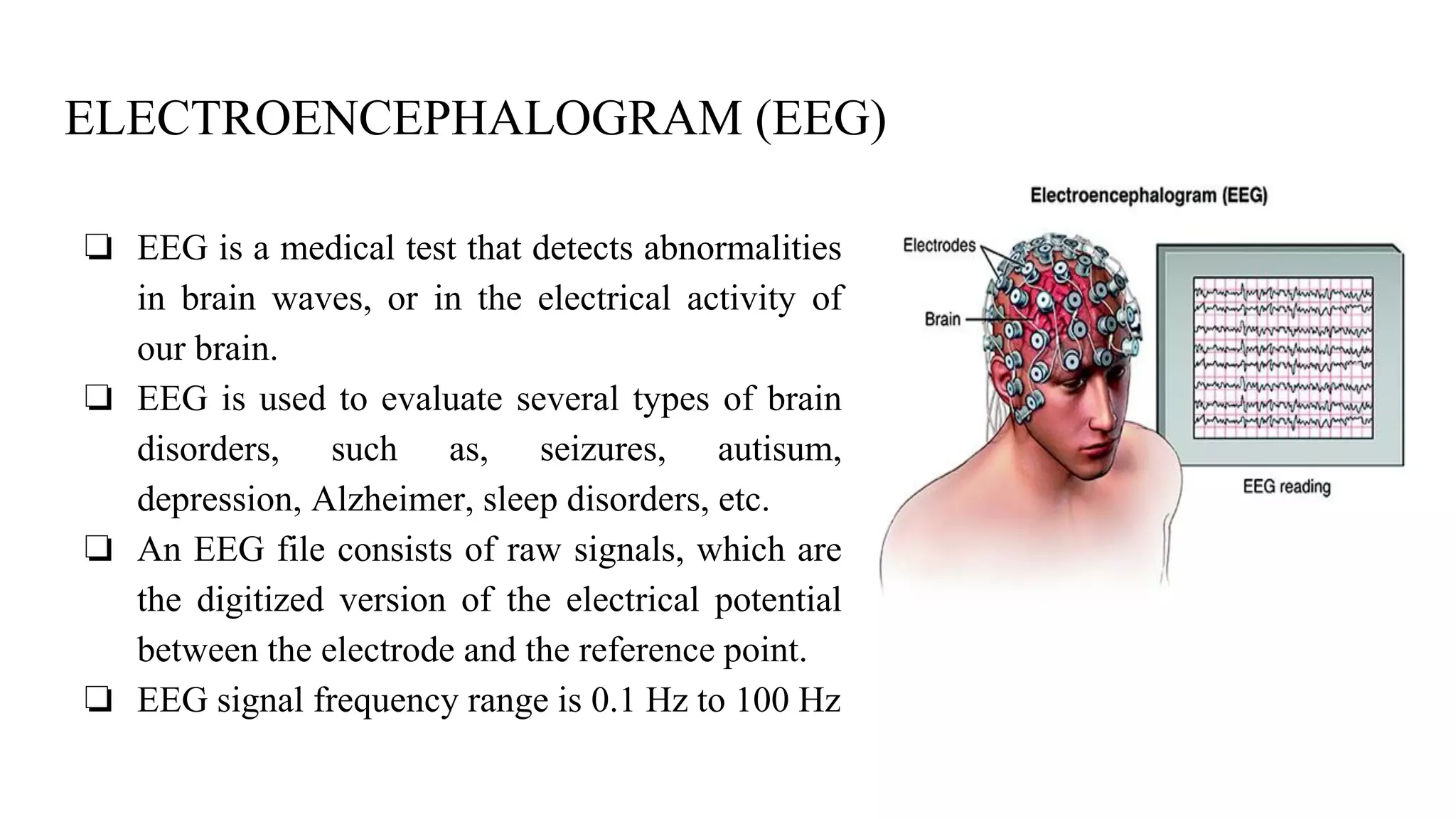
❏ EEG is a medical test that detects abnormalities
in brain waves, or in the electrical activity of
our brain.
❏ EEG is used to evaluate several types of brain
disorders, such as, seizures, autisum,
depression, Alzheimer, sleep disorders, etc.
❏ An EEG file consists of raw signals, which are
the digitized version of the electrical potential
between the electrode and the reference point.
❏ EEG signal frequency range is 0.1 Hz to 100 Hz
CAPTURING OF BRAIN WAVES THROUGH EEG
❏ Electrodes, consisting of small metal discs with
thin wire are posted on the scalp.
❏ The electrical activity of brain ranges typically
from 10 to 150 micro Volt.
❏ Tiny detected electrical charges from the brain
during various activity is amplified and shown
as a graph on the computer screen.
❏ Brain is divided into two hemisphere: Left &
Right Hemisphere
❏ Each hemisphere has four lobes: Frontal,
Temporal, Parietal and Occipital lobes
Lobes of Human Brain
Frontal Lobe:
● Frontal lobe is the largest lobe which is located at the forehead.
● It is also concerned with planning, organizing, problem-solving, memory,
impulse control, decision making, selective attention, controlling behaviour &
emotion.
Temporal lobe
● located on the sides of the brain under the parietal and behind the frontal lobe
● Responsible for sound, speech and memory
● It create hearing and sensory part like touching, smelling
Lobes of Human Brain
Occipital Lobe:
● is paced the lower back of the head
● responsible for perceptual and visual information
Temporal lobe
● located which integrates sensory information from different body part
● to understand the things, capturing the data
EEG Device
● Comprises of electrodes, conductive gel, amplifiers, and ADC
● Electrodes are placed at brain scalp with conducting gel (Ag-Cl)
● Multi channel device with a wearable cap
PHYSICAL PLACEMENT OF ELECTRODES
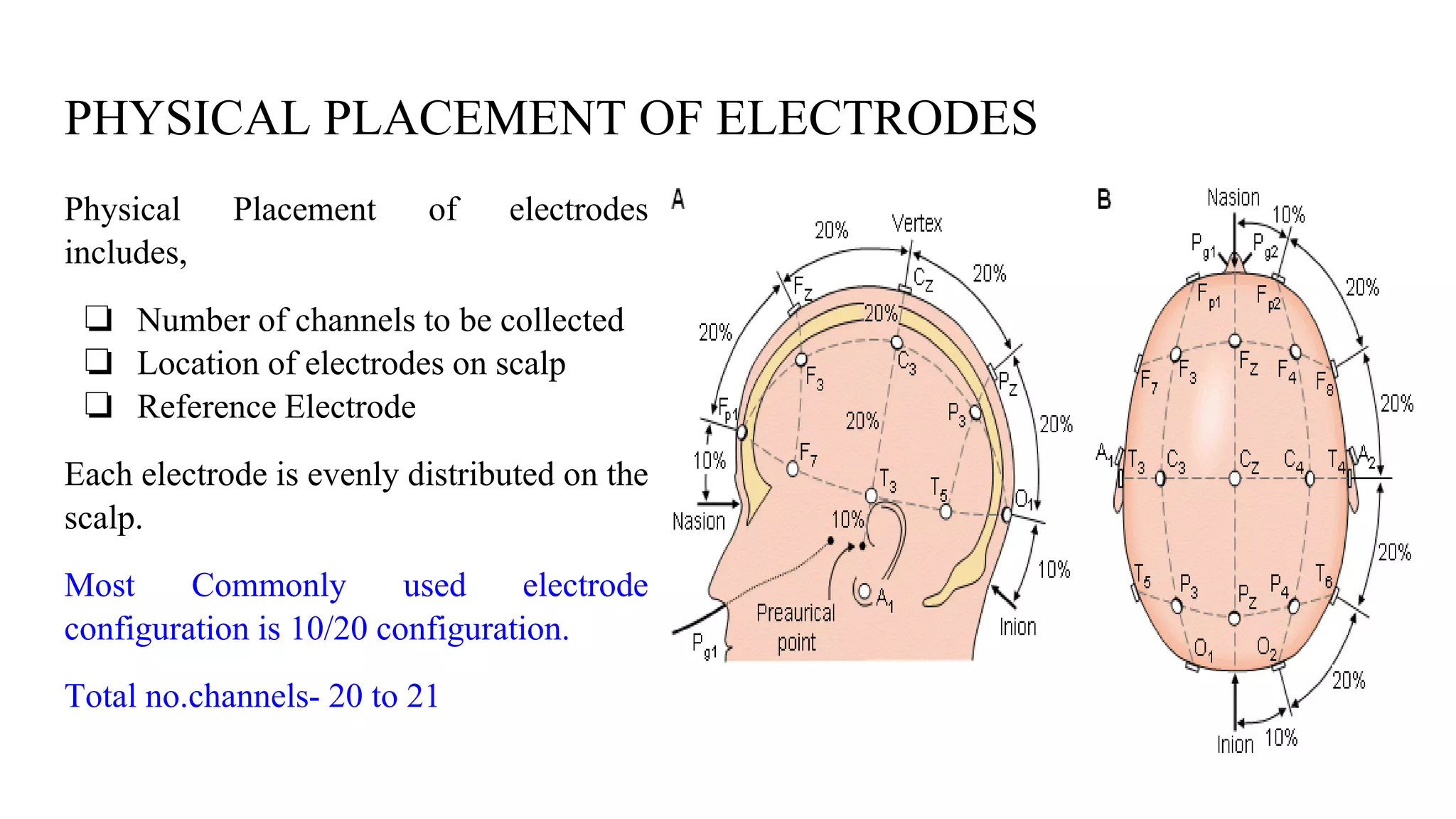
Physical Placement of electrodes
includes,
❏ Number of channels to be collected
❏ Location of electrodes on scalp
❏ Reference Electrode
Each electrode is evenly distributed on the
scalp.
Most Commonly used electrode
configuration is 10/20 configuration.
Total no.channels- 20 to 21
CHANNEL LABELS
The nomenclature of electrodes in generally based on their physical
placement on one’s scalp.
❏ Fp - Prefrontal
❏ F - Frontal
❏ T - Temporal
❏ C - Central
❏ P - Parietal
❏ O - Occipital
❏ A - Mastoid Process (bone near the outer ear)
Even-numbered electrodes are located in the right hemisphere
of the brain while odd-numbered in the left hemisphere.
Positioning of electrodes is referred to as montages as
Referential and bipolar electrodes
TYPES OF EEG WAVES
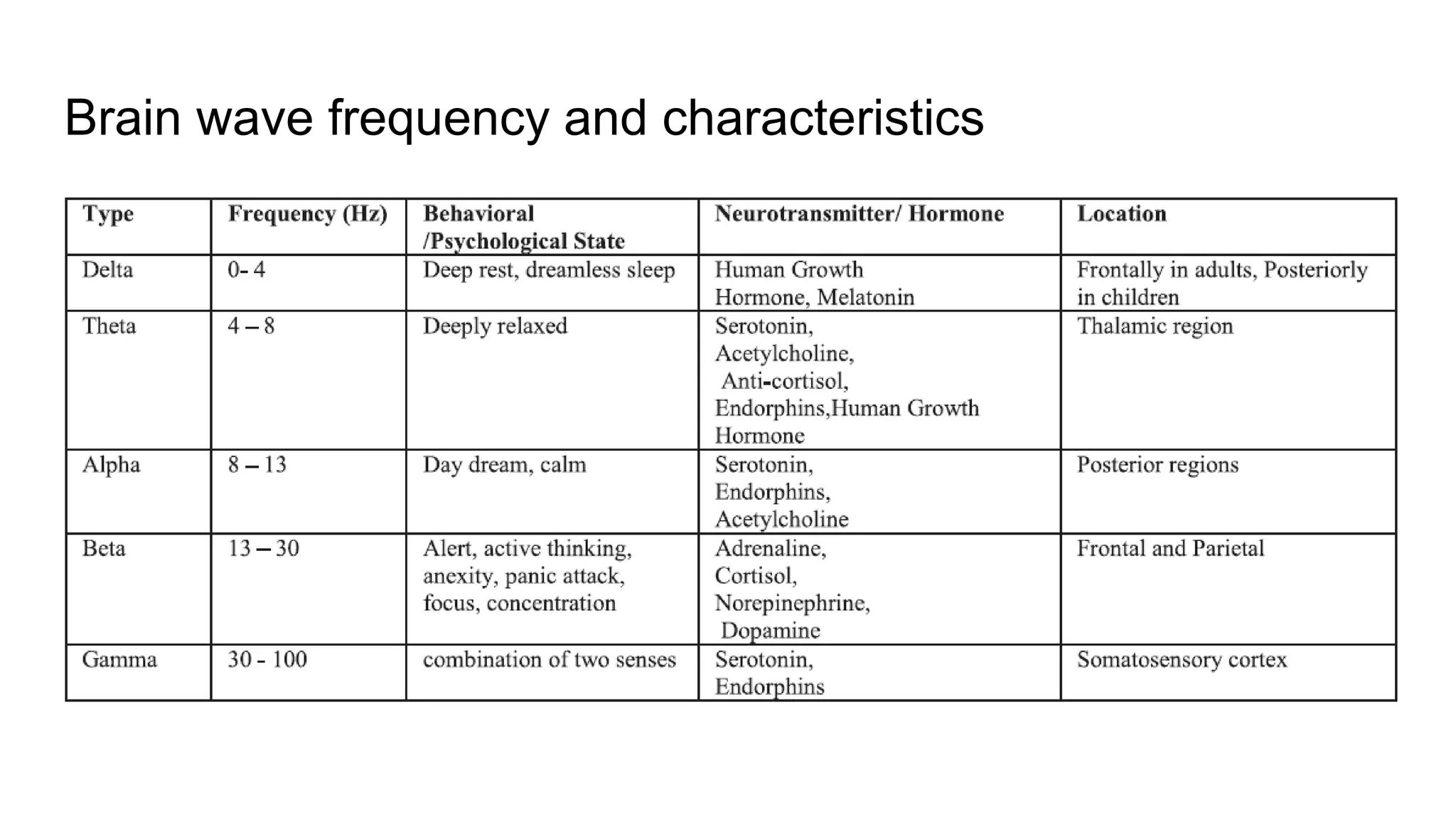
❏ Gamma wave: 3Hz to
100Hz
❏ Beta wave: 13Hz to 30Hz
❏ Alpha wave: 8Hz to 13Hz
❏ Theta wave: 4Hz to 7Hz
❏ Delta wave : <3.5Hz
Theta and Delta waves are
often regarded as slow waves.
EEG Wave Types
Delta Wave
• Highest in amplitude and slowest wave
• Sleep and dreaming
Theta Wave
• Records subconscious activities
• observed during deep relaxation and meditation
EEG Wave Types
Alpha Wave
• Occurs both sides of the brain with closed eyes
• Awake but relaxed with closed eyes
• Mental disorder detection
Beta Wave
• Related to behaviour and actions
• Busy and active state of mind (talking, running)
Gamma Wave
• perception and consciousness
• Hyper alternateness
Brain wave frequency and characteristics
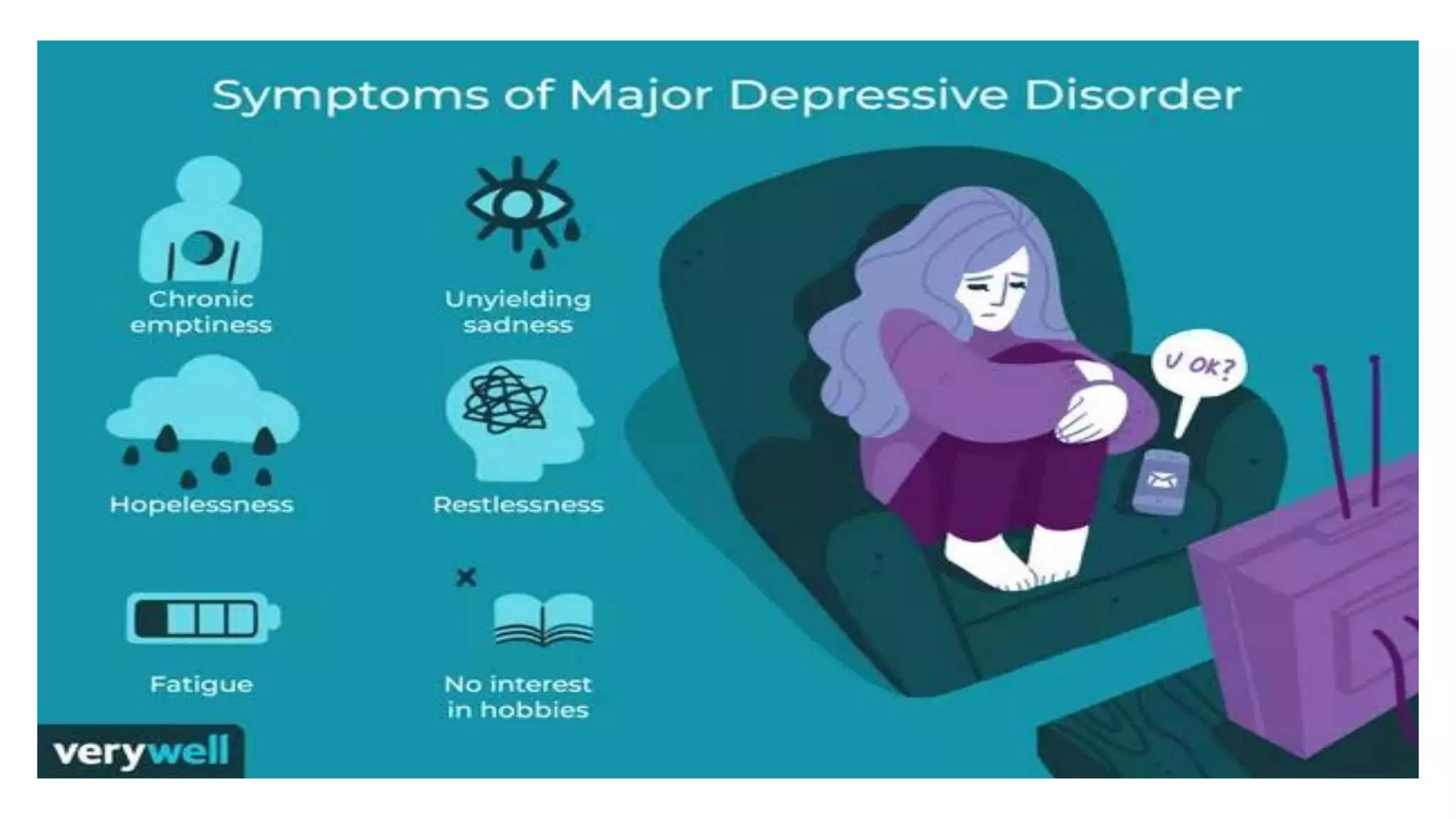
MAJOR DEPRESSIVE DISORDER
❏ Depression is a mood disorder that causes a persistent feeling of sadness and
loss of interest. It also goes by the name of Major Depressive Disorder.
❏ It is characterized by lack of motivation, difficult to experience pleasure,
impacting on daily lives activities and in extreme cases, leads to suicide.
❏ According to WHO, almost 5% of adults and 5.7% of adults over 60 years
suffer from depression. Women are more prone to depression than men.
❏ Approximately 280 million people in the world have depression.
❏ Despite of advanced medication and treatment, 75% of people from low and
middle class household receive no treatment.
THANK YOU

EEG.pdf

  • 1.
    Electroencephalography (EEG) Dr. AmitM. Joshi Assistant Professor Department of Electronics & Communication
  • 2.
    ELECTROENCEPHALOGRAM (EEG) ❏ EEGis a medical test that detects abnormalities in brain waves, or in the electrical activity of our brain. ❏ EEG is used to evaluate several types of brain disorders, such as, seizures, autisum, depression, Alzheimer, sleep disorders, etc. ❏ An EEG file consists of raw signals, which are the digitized version of the electrical potential between the electrode and the reference point. ❏ EEG signal frequency range is 0.1 Hz to 100 Hz
  • 3.
    CAPTURING OF BRAINWAVES THROUGH EEG ❏ Electrodes, consisting of small metal discs with thin wire are posted on the scalp. ❏ The electrical activity of brain ranges typically from 10 to 150 micro Volt. ❏ Tiny detected electrical charges from the brain during various activity is amplified and shown as a graph on the computer screen. ❏ Brain is divided into two hemisphere: Left & Right Hemisphere ❏ Each hemisphere has four lobes: Frontal, Temporal, Parietal and Occipital lobes
  • 4.
    Lobes of HumanBrain Frontal Lobe: ● Frontal lobe is the largest lobe which is located at the forehead. ● It is also concerned with planning, organizing, problem-solving, memory, impulse control, decision making, selective attention, controlling behaviour & emotion. Temporal lobe ● located on the sides of the brain under the parietal and behind the frontal lobe ● Responsible for sound, speech and memory ● It create hearing and sensory part like touching, smelling
  • 5.
    Lobes of HumanBrain Occipital Lobe: ● is paced the lower back of the head ● responsible for perceptual and visual information Temporal lobe ● located which integrates sensory information from different body part ● to understand the things, capturing the data
  • 6.
    EEG Device ● Comprisesof electrodes, conductive gel, amplifiers, and ADC ● Electrodes are placed at brain scalp with conducting gel (Ag-Cl) ● Multi channel device with a wearable cap
  • 7.
    PHYSICAL PLACEMENT OFELECTRODES Physical Placement of electrodes includes, ❏ Number of channels to be collected ❏ Location of electrodes on scalp ❏ Reference Electrode Each electrode is evenly distributed on the scalp. Most Commonly used electrode configuration is 10/20 configuration. Total no.channels- 20 to 21
  • 8.
    CHANNEL LABELS The nomenclatureof electrodes in generally based on their physical placement on one’s scalp. ❏ Fp - Prefrontal ❏ F - Frontal ❏ T - Temporal ❏ C - Central ❏ P - Parietal ❏ O - Occipital ❏ A - Mastoid Process (bone near the outer ear) Even-numbered electrodes are located in the right hemisphere of the brain while odd-numbered in the left hemisphere. Positioning of electrodes is referred to as montages as Referential and bipolar electrodes
  • 9.
    TYPES OF EEGWAVES ❏ Gamma wave: 3Hz to 100Hz ❏ Beta wave: 13Hz to 30Hz ❏ Alpha wave: 8Hz to 13Hz ❏ Theta wave: 4Hz to 7Hz ❏ Delta wave : <3.5Hz Theta and Delta waves are often regarded as slow waves.
  • 10.
    EEG Wave Types DeltaWave • Highest in amplitude and slowest wave • Sleep and dreaming Theta Wave • Records subconscious activities • observed during deep relaxation and meditation
  • 11.
    EEG Wave Types AlphaWave • Occurs both sides of the brain with closed eyes • Awake but relaxed with closed eyes • Mental disorder detection Beta Wave • Related to behaviour and actions • Busy and active state of mind (talking, running) Gamma Wave • perception and consciousness • Hyper alternateness
  • 12.
    Brain wave frequencyand characteristics
  • 14.
    MAJOR DEPRESSIVE DISORDER ❏Depression is a mood disorder that causes a persistent feeling of sadness and loss of interest. It also goes by the name of Major Depressive Disorder. ❏ It is characterized by lack of motivation, difficult to experience pleasure, impacting on daily lives activities and in extreme cases, leads to suicide. ❏ According to WHO, almost 5% of adults and 5.7% of adults over 60 years suffer from depression. Women are more prone to depression than men. ❏ Approximately 280 million people in the world have depression. ❏ Despite of advanced medication and treatment, 75% of people from low and middle class household receive no treatment.
  • 17.