Education technology
Presented by,
Yamini.K
I BPEd
introduction
Good teaching is the main criterion of an
effective teacher. Every individual is unique, so
teachers adopt different methods & strategies of
teaching.
The selection of the teaching method depends
upon the nature of a task, learning objectives
and learner’s abilities.
Education technology
Education technology defied as
the systematic application of
technology in the field of
education.
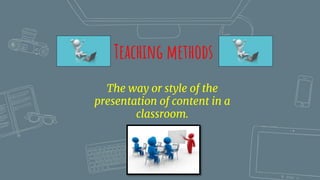
The way or style of the
presentation of content in a
classroom.
Teaching methods
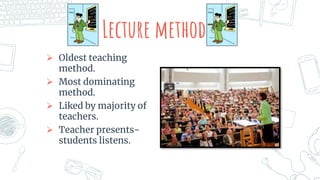
Lecture method
 Oldest teaching
method.
 Most dominating
method.
 Liked by majority of
teachers.
 Teacher presents-
students listens.
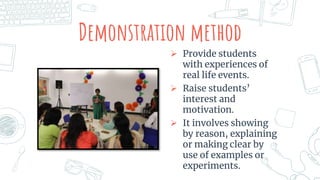
Demonstration method
 Provide students
with experiences of
real life events.
 Raise students’
interest and
motivation.
 It involves showing
by reason, explaining
or making clear by
use of examples or
experiments.
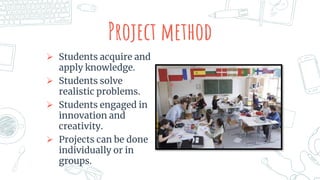
Project method
 Students acquire and
apply knowledge.
 Students solve
realistic problems.
 Students engaged in
innovation and
creativity.
 Projects can be done
individually or in
groups.
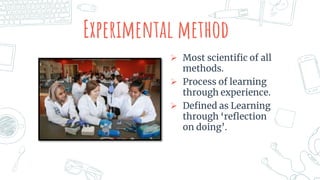
Experimental method
 Most scientific of all
methods.
 Process of learning
through experience.
 Defined as Learning
through ‘reflection
on doing’.
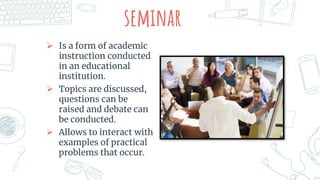
seminar
 Is a form of academic
instruction conducted
in an educational
institution.
 Topics are discussed,
questions can be
raised and debate can
be conducted.
 Allows to interact with
examples of practical
problems that occur.
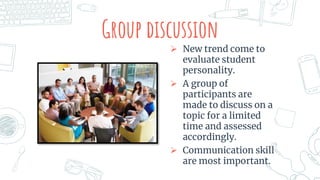
Group discussion
 New trend come to
evaluate student
personality.
 A group of
participants are
made to discuss on a
topic for a limited
time and assessed
accordingly.
 Communication skill
are most important.
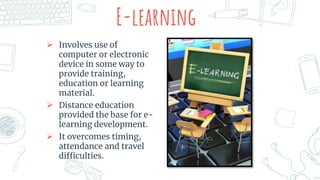
E-learning
 Involves use of
computer or electronic
device in some way to
provide training,
education or learning
material.
 Distance education
provided the base for e-
learning development.
 It overcomes timing,
attendance and travel
difficulties.
VIDEO conference
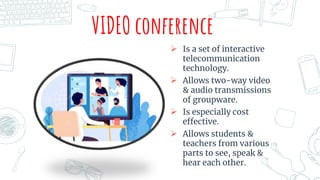
 Is a set of interactive
telecommunication
technology.
 Allows two-way video
& audio transmissions
of groupware.
 Is especially cost
effective.
 Allows students &
teachers from various
parts to see, speak &
hear each other.
ROLE PLAY
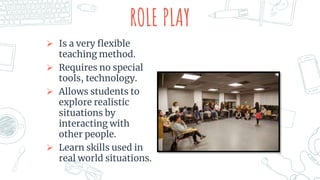
 Is a very flexible
teaching method.
 Requires no special
tools, technology.
 Allows students to
explore realistic
situations by
interacting with
other people.
 Learn skills used in
real world situations.
FIELD TRIP
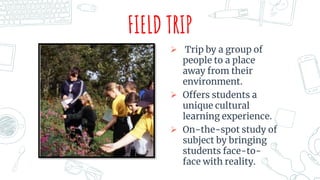
 Trip by a group of
people to a place
away from their
environment.
 Offers students a
unique cultural
learning experience.
 On-the-spot study of
subject by bringing
students face-to-
face with reality.
WORKSHOP
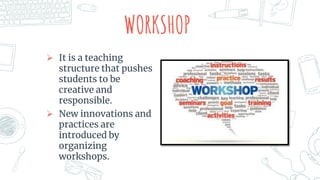
 It is a teaching
structure that pushes
students to be
creative and
responsible.
 New innovations and
practices are
introduced by
organizing
workshops.
MORDEN
TECHNOLOGOICAL
DEVICES USED IN
EDUCATION
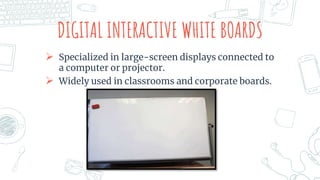
DIGITAL INTERACTIVE WHITE BOARDS
 Specialized in large-screen displays connected to
a computer or projector.
 Widely used in classrooms and corporate boards.
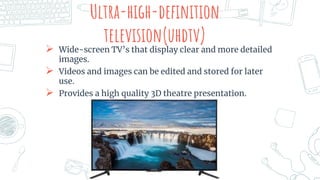
Ultra-high-definition
television(uhdtv)
 Wide-screen TV’s that display clear and more detailed
images.
 Videos and images can be edited and stored for later
use.
 Provides a high quality 3D theatre presentation.
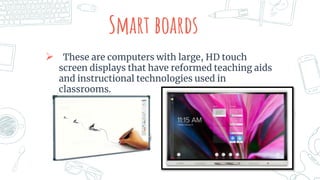
Smart boards
 These are computers with large, HD touch
screen displays that have reformed teaching aids
and instructional technologies used in
classrooms.
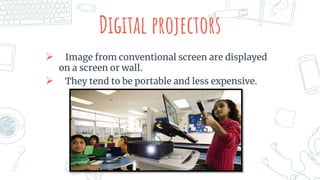
Digital projectors
 Image from conventional screen are displayed
on a screen or wall.
 They tend to be portable and less expensive.
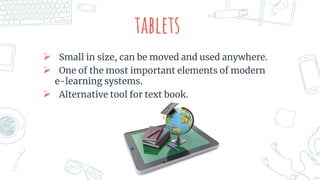
tablets
 Small in size, can be moved and used anywhere.
 One of the most important elements of modern
e-learning systems.
 Alternative tool for text book.
references
 Teaching for effective learning in higher
education, N.Hativa, 2012.
 Teaching methods, Charlotte Danielson, 2010.
 Advanced teaching methods for the technology
classroom, Petrina & Stephen, 2006.
23

Education technology

  • 1.
  • 2.
    introduction Good teaching isthe main criterion of an effective teacher. Every individual is unique, so teachers adopt different methods & strategies of teaching. The selection of the teaching method depends upon the nature of a task, learning objectives and learner’s abilities.
  • 3.
    Education technology Education technologydefied as the systematic application of technology in the field of education.
  • 4.
    The way orstyle of the presentation of content in a classroom. Teaching methods
  • 5.
    Lecture method  Oldestteaching method.  Most dominating method.  Liked by majority of teachers.  Teacher presents- students listens.
  • 6.
    Demonstration method  Providestudents with experiences of real life events.  Raise students’ interest and motivation.  It involves showing by reason, explaining or making clear by use of examples or experiments.
  • 7.
    Project method  Studentsacquire and apply knowledge.  Students solve realistic problems.  Students engaged in innovation and creativity.  Projects can be done individually or in groups.
  • 8.
    Experimental method  Mostscientific of all methods.  Process of learning through experience.  Defined as Learning through ‘reflection on doing’.
  • 9.
    seminar  Is aform of academic instruction conducted in an educational institution.  Topics are discussed, questions can be raised and debate can be conducted.  Allows to interact with examples of practical problems that occur.
  • 10.
    Group discussion  Newtrend come to evaluate student personality.  A group of participants are made to discuss on a topic for a limited time and assessed accordingly.  Communication skill are most important.
  • 11.
    E-learning  Involves useof computer or electronic device in some way to provide training, education or learning material.  Distance education provided the base for e- learning development.  It overcomes timing, attendance and travel difficulties.
  • 12.
    VIDEO conference  Isa set of interactive telecommunication technology.  Allows two-way video & audio transmissions of groupware.  Is especially cost effective.  Allows students & teachers from various parts to see, speak & hear each other.
  • 13.
    ROLE PLAY  Isa very flexible teaching method.  Requires no special tools, technology.  Allows students to explore realistic situations by interacting with other people.  Learn skills used in real world situations.
  • 14.
    FIELD TRIP  Tripby a group of people to a place away from their environment.  Offers students a unique cultural learning experience.  On-the-spot study of subject by bringing students face-to- face with reality.
  • 15.
    WORKSHOP  It isa teaching structure that pushes students to be creative and responsible.  New innovations and practices are introduced by organizing workshops.
  • 16.
  • 17.
    DIGITAL INTERACTIVE WHITEBOARDS  Specialized in large-screen displays connected to a computer or projector.  Widely used in classrooms and corporate boards.
  • 18.
    Ultra-high-definition television(uhdtv)  Wide-screen TV’sthat display clear and more detailed images.  Videos and images can be edited and stored for later use.  Provides a high quality 3D theatre presentation.
  • 19.
    Smart boards  Theseare computers with large, HD touch screen displays that have reformed teaching aids and instructional technologies used in classrooms.
  • 20.
    Digital projectors  Imagefrom conventional screen are displayed on a screen or wall.  They tend to be portable and less expensive.
  • 21.
    tablets  Small insize, can be moved and used anywhere.  One of the most important elements of modern e-learning systems.  Alternative tool for text book.
  • 22.
    references  Teaching foreffective learning in higher education, N.Hativa, 2012.  Teaching methods, Charlotte Danielson, 2010.  Advanced teaching methods for the technology classroom, Petrina & Stephen, 2006.
  • 23.