By Villegas & Lucas
Introduction, Chapters 1 and 2
   David Schwarzer - Presenter
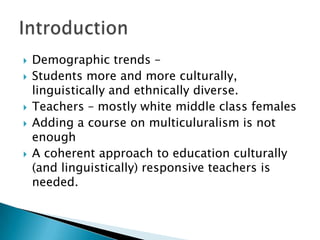
   Demographic trends –
   Students more and more culturally,
    linguistically and ethnically diverse.
   Teachers – mostly white middle class females
   Adding a course on multiculuralism is not
    enough
   A coherent approach to education culturally
    (and linguistically) responsive teachers is
    needed.
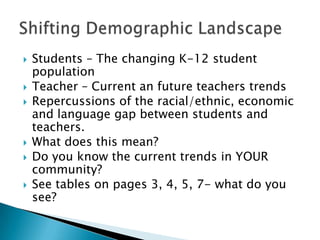
   Students – The changing K-12 student
    population
   Teacher – Current an future teachers trends
   Repercussions of the racial/ethnic, economic
    and language gap between students and
    teachers.
   What does this mean?
   Do you know the current trends in YOUR
    community?
   See tables on pages 3, 4, 5, 7- what do you
    see?
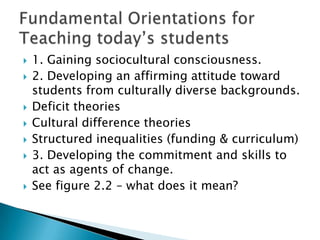
   1. Gaining sociocultural consciousness.
   2. Developing an affirming attitude toward
    students from culturally diverse backgrounds.
   Deficit theories
   Cultural difference theories
   Structured inequalities (funding & curriculum)
   3. Developing the commitment and skills to
    act as agents of change.
   See figure 2.2 – what does it mean?
   Monolingual Teachers fostering
    Multilingualism in their own content area
    teaching.
   Translingualism:
   The development of Languages and literacies
    that interact with each other in a dynamic and
    fluid way while moving back and forth
    between real and “imagined”
    glocalizedborders while transacting with
    different cultural identities within a unified
    self (Schwarzer, in preparation).
   What is sociocultural awareness? Can you
    define it?
   Chapter 1 has several graphs – find one and
    explain why is it in the book?
   Chapter 2 has several theoretical
    ideas/philosophies. Focus on one – find two
    concrete activities you can use in your
    content area to promotes these theoretical
    ideas.

Educating Culturally Responsive Teachers - intro chap 1 & 2

  • 1.
    By Villegas &Lucas Introduction, Chapters 1 and 2 David Schwarzer - Presenter
  • 2.
    Demographic trends –  Students more and more culturally, linguistically and ethnically diverse.  Teachers – mostly white middle class females  Adding a course on multiculuralism is not enough  A coherent approach to education culturally (and linguistically) responsive teachers is needed.
  • 3.
    Students – The changing K-12 student population  Teacher – Current an future teachers trends  Repercussions of the racial/ethnic, economic and language gap between students and teachers.  What does this mean?  Do you know the current trends in YOUR community?  See tables on pages 3, 4, 5, 7- what do you see?
  • 4.
    1. Gaining sociocultural consciousness.  2. Developing an affirming attitude toward students from culturally diverse backgrounds.  Deficit theories  Cultural difference theories  Structured inequalities (funding & curriculum)  3. Developing the commitment and skills to act as agents of change.  See figure 2.2 – what does it mean?
  • 5.
    Monolingual Teachers fostering Multilingualism in their own content area teaching.  Translingualism:  The development of Languages and literacies that interact with each other in a dynamic and fluid way while moving back and forth between real and “imagined” glocalizedborders while transacting with different cultural identities within a unified self (Schwarzer, in preparation).
  • 6.
    What is sociocultural awareness? Can you define it?  Chapter 1 has several graphs – find one and explain why is it in the book?  Chapter 2 has several theoretical ideas/philosophies. Focus on one – find two concrete activities you can use in your content area to promotes these theoretical ideas.