
EDEN 2014 
challenges for research into 
open and distance learning 
Developing 21st Century Skills 
through Colearning 
with OER and Social Networks 
Dr. Ale Okada (OU Kmi) 
ale.okada@open.ac.uk 
Dr. Giselle Ferreira (UNESA) 
gmdsferreira@gmail.com 
Cintia Rabello(OU Kmi) 
Cintia-rabello@hotmail.com
How is the Open University UK 
promoting open learning ?
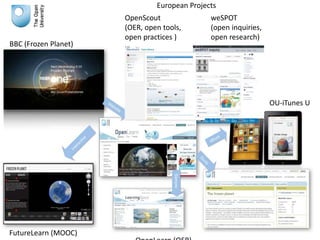
OpenLearn (OER) 
BBC (Frozen Planet) 
FutureLearn (MOOC) 
OU-iTunes U 
European Projects 
OpenScout 
(OER, open tools, 
open practices ) 
weSPOT 
(open inquiries, 
open research)
How are colearners creating 
knowledge through the OU-UK’s 
open learning projects?
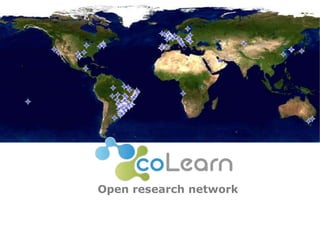
Open research network
Open research network that brings together 
educators, students and practitioners from 
across the world interested in : 
1. collaborative open learning 
2. methodologies to create OER 
3. technologies applied to open education 
4. Investigating open learning projects
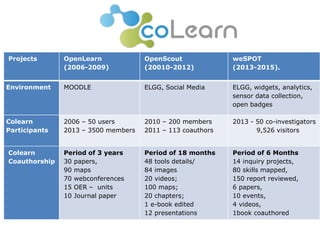
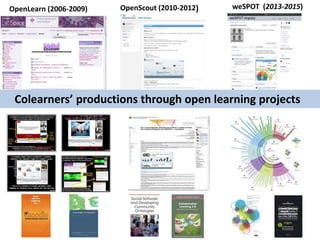
Projects OpenLearn 
(2006-2009) 
OpenScout 
(20010-2012) 
weSPOT 
(2013-2015). 
Environment MOODLE ELGG, Social Media ELGG, widgets, analytics, 
sensor data collection, 
open badges 
Colearn 
Participants 
2006 – 50 users 
2013 – 3500 members 
2010 – 200 members 
2011 – 113 coauthors 
2013 - 50 co-investigators 
9,526 visitors 
Colearn 
Coauthorship 
Period of 3 years 
30 papers, 
90 maps 
70 webconferences 
15 OER – units 
10 Journal paper 
Period of 18 months 
48 tools details/ 
84 images 
20 videos; 
100 maps; 
20 chapters; 
1 e-book edited 
12 presentations 
Period of 6 Months 
14 inquiry projects, 
80 skills mapped, 
150 report reviewed, 
6 papers, 
10 events, 
4 videos, 
1book coauthored
OpenLearn (2006-2009) OpenScout (2010-2012) weSPOT (2013-2015) 
Colearners’ productions through open learning projects
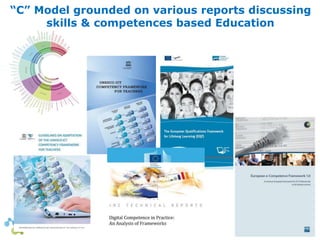
“C” Model grounded on various reports discussing 
skills & competences based Education
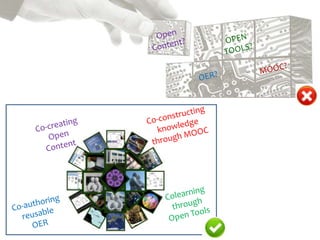
What does 
open learning mean?
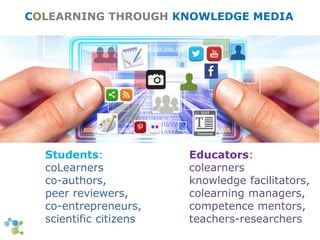
COLEARNING THROUGH KNOWLEDGE MEDIA 
Educators: 
colearners 
knowledge facilitators, 
colearning managers, 
competence mentors, 
teachers-researchers 
Students: 
coLearners 
co-authors, 
peer reviewers, 
co-entrepreneurs, 
scientific citizens
How could learners develop their 
skills for the 21st century?
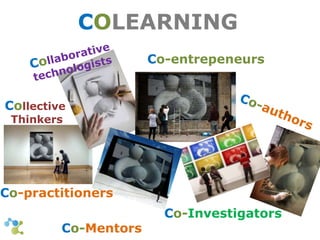
COLEARNING 
Collective 
Thinkers 
Co-practitioners 
Co-entrepeneurs 
Co-Investigators 
Co-Mentors
How could learners visualise their 
skills for colearning in 
open learning platforms?
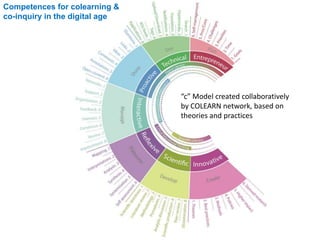
“c” Model created collaboratively 
by COLEARN network, based on 
theories and practices 
Competences for colearning & 
co-inquiry in the digital age
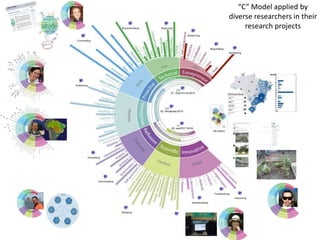
“C” Model applied by 
diverse researchers in their 
research projects
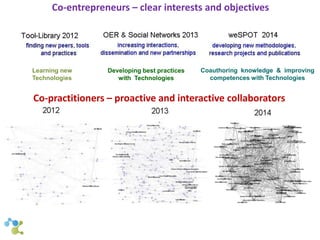
Co-entrepreneurs – clear interests and objectives 
Learning new 
Technologies 
Developing best practices 
with Technologies 
Coauthoring knowledge & improving 
competences with Technologies 
Co-practitioners – proactive and interactive collaborators
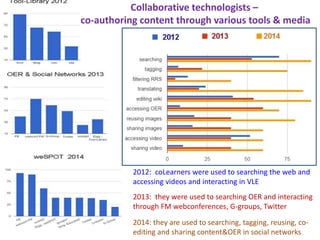
Collaborative technologists – 
co-authoring content through various tools & media 
2012: coLearners were used to searching the web and 
accessing videos and interacting in VLE 
2013: they were used to searching OER and interacting 
through FM webconferences, G-groups, Twitter 
2014: they are used to searching, tagging, reusing, co-editing 
and sharing content&OER in social networks
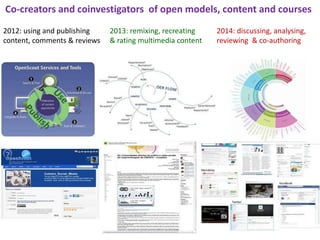
Co-creators and coinvestigators of open models, content and courses 
2012: using and publishing 
content, comments & reviews 
2013: remixing, recreating 
& rating multimedia content 
2014: discussing, analysing, 
reviewing & co-authoring 
Questions ? 
E-mail: colearn @ gmail.com Site: http://colearn.open.ac.uk
Questions and comments?
• How could we combine qualitative and quantitative 
approaches for analysing competences in the digital age? 
• How could colearners be engaged in collaborative research 
as coinvestigators? 
• How could “C” model be improved and readapted in 
diverse scenarios for formal, informal and non-formal 
learning?
Thank you!

Eden Research Open Learning

  • 1.
    EDEN 2014 challengesfor research into open and distance learning Developing 21st Century Skills through Colearning with OER and Social Networks Dr. Ale Okada (OU Kmi) ale.okada@open.ac.uk Dr. Giselle Ferreira (UNESA) gmdsferreira@gmail.com Cintia Rabello(OU Kmi) Cintia-rabello@hotmail.com
  • 2.
    How is theOpen University UK promoting open learning ?
  • 3.
    OpenLearn (OER) BBC(Frozen Planet) FutureLearn (MOOC) OU-iTunes U European Projects OpenScout (OER, open tools, open practices ) weSPOT (open inquiries, open research)
  • 4.
    How are colearnerscreating knowledge through the OU-UK’s open learning projects?
  • 5.
  • 6.
    Open research networkthat brings together educators, students and practitioners from across the world interested in : 1. collaborative open learning 2. methodologies to create OER 3. technologies applied to open education 4. Investigating open learning projects
  • 7.
    Projects OpenLearn (2006-2009) OpenScout (20010-2012) weSPOT (2013-2015). Environment MOODLE ELGG, Social Media ELGG, widgets, analytics, sensor data collection, open badges Colearn Participants 2006 – 50 users 2013 – 3500 members 2010 – 200 members 2011 – 113 coauthors 2013 - 50 co-investigators 9,526 visitors Colearn Coauthorship Period of 3 years 30 papers, 90 maps 70 webconferences 15 OER – units 10 Journal paper Period of 18 months 48 tools details/ 84 images 20 videos; 100 maps; 20 chapters; 1 e-book edited 12 presentations Period of 6 Months 14 inquiry projects, 80 skills mapped, 150 report reviewed, 6 papers, 10 events, 4 videos, 1book coauthored
  • 8.
    OpenLearn (2006-2009) OpenScout(2010-2012) weSPOT (2013-2015) Colearners’ productions through open learning projects
  • 9.
    “C” Model groundedon various reports discussing skills & competences based Education
  • 10.
    What does openlearning mean?
  • 12.
    COLEARNING THROUGH KNOWLEDGEMEDIA Educators: colearners knowledge facilitators, colearning managers, competence mentors, teachers-researchers Students: coLearners co-authors, peer reviewers, co-entrepreneurs, scientific citizens
  • 13.
    How could learnersdevelop their skills for the 21st century?
  • 14.
    COLEARNING Collective Thinkers Co-practitioners Co-entrepeneurs Co-Investigators Co-Mentors
  • 15.
    How could learnersvisualise their skills for colearning in open learning platforms?
  • 16.
    “c” Model createdcollaboratively by COLEARN network, based on theories and practices Competences for colearning & co-inquiry in the digital age
  • 17.
    “C” Model appliedby diverse researchers in their research projects
  • 18.
    Co-entrepreneurs – clearinterests and objectives Learning new Technologies Developing best practices with Technologies Coauthoring knowledge & improving competences with Technologies Co-practitioners – proactive and interactive collaborators
  • 19.
    Collaborative technologists – co-authoring content through various tools & media 2012: coLearners were used to searching the web and accessing videos and interacting in VLE 2013: they were used to searching OER and interacting through FM webconferences, G-groups, Twitter 2014: they are used to searching, tagging, reusing, co-editing and sharing content&OER in social networks
  • 20.
    Co-creators and coinvestigatorsof open models, content and courses 2012: using and publishing content, comments & reviews 2013: remixing, recreating & rating multimedia content 2014: discussing, analysing, reviewing & co-authoring Questions ? E-mail: colearn @ gmail.com Site: http://colearn.open.ac.uk
  • 21.
  • 22.
    • How couldwe combine qualitative and quantitative approaches for analysing competences in the digital age? • How could colearners be engaged in collaborative research as coinvestigators? • How could “C” model be improved and readapted in diverse scenarios for formal, informal and non-formal learning?
  • 23.

Editor's Notes

  • #6 Open research network that brings together educators, students and practitioners from across the world interested in : collaborative open learning methodologies to create OER technologies applied to open education
  • #9 Interactivity, Co-creation, colearning, co-inquiry Co-authorship (Educators, Students, Researchers) Knowledge Media for co-construction, sharing, recreation coLearners and coEducators: interactive, creative and partners
  • #12 empowering more people to access educational opportunities that were not previously available or accessible https://oerknowledgecloud.org/sites/oerknowledgecloud.org/files/pub_PS_OER-IRP_CH10.pdf How OER Support Lifelong Learning Andy Lane, Open University
  • #14 Knowledge is created in a constructive process, so our understanding of OER should include, not only teaching and learning materials shared under open licenses, but also opentechnologies, open methodologies for transparent building and sharing of OER as knowledge.
  • #15  coLearning (‘Open Education’) Educators: knowledge facilitators, colearning managers, competence mentors, teachers-researchers Students: coLearners, co-authors, peer reviewers, co-entrepreneurs, scientific citizens Content: Diverse formats, editable, reusable, high granularity, open license Production: collaborative planning, collective creation, open publishing, wide dissemination, Coauthorship: co-evaluation, peer-review, recreation, derived work, Collective feedback, shared comments, social tracks, continuous improvements Platforms: co-authoring platform, personalised environment, Interoperable repositories, Frequent update, Interfaces: Social MEDIA, micro blogs, Wikis, RSS feeders, PLE, webinars, collaborative tools
  • #16 Knowledge is created in a constructive process, so our understanding of OER should include, not only teaching and learning materials shared under open licenses, but also opentechnologies, open methodologies for transparent building and sharing of OER as knowledge.
  • #20 2012: coLearners were used to searching the web and accessing content 2013: coLearners were used to searching and accessing OER (image, video & papers) 2014: coLearners are used to searching, tagging, reuse, co-edit and share content+ OER
  • #22 Knowledge is created in a constructive process, so our understanding of OER should include, not only teaching and learning materials shared under open licenses, but also opentechnologies, open methodologies for transparent building and sharing of OER as knowledge.